
How To Figure Weight Of Steel Plate

Ever stared at a giant slab of steel and wondered, "How much does this behemoth actually weigh?" It’s a question that sparks a tiny bit of mystery, right? It's like solving a little puzzle that’s hidden in plain sight.
This isn't about your bathroom scale; this is about the heavy-duty stuff. Think of the steel plates used in bridges, massive ships, or even some pretty intense art installations. They're not just heavy; they're imposingly heavy.
Figuring out the weight of these steel plates is surprisingly fun. It’s a bit like being a detective, but instead of clues, you're using numbers and simple tools. And the best part? You don't need a science degree to crack the case.
The Secret Ingredient: Density
The whole magic trick boils down to one key concept: density. Think of density as how much "stuff" is packed into a certain amount of space. Different materials have different densities, and steel has a pretty consistent one.
Steel is a fantastic material, known for its strength and durability. But when we talk about its weight, we're really talking about how much of that strong material is squeezed into every cubic inch (or centimeter, if you're feeling fancy).
This density value is like the golden ticket. Once you have it, the rest of the puzzle pieces start falling into place. It’s the secret ingredient that unlocks the weight of any steel plate.
Let's Talk Numbers
For standard steel, the density is usually around 490 pounds per cubic foot. That’s a big number, but it’s our starting point. Imagine a cube of steel, one foot on each side. That cube would weigh about 490 pounds!
If you're using metric, the density is about 7,850 kilograms per cubic meter. So, a cube of steel, one meter on each side, would weigh a whopping 7,850 kilograms. That’s heavier than a small car!
These numbers might seem a bit abstract at first. But stick with it! They're the foundation of our weight-finding adventure. They’re the constants in our steel-plate equation.
The Other Two Musketeers: Length and Width
So, we have density. What else do we need? Well, to figure out the weight, we need to know the size of the steel plate. This means we need its length and its width.
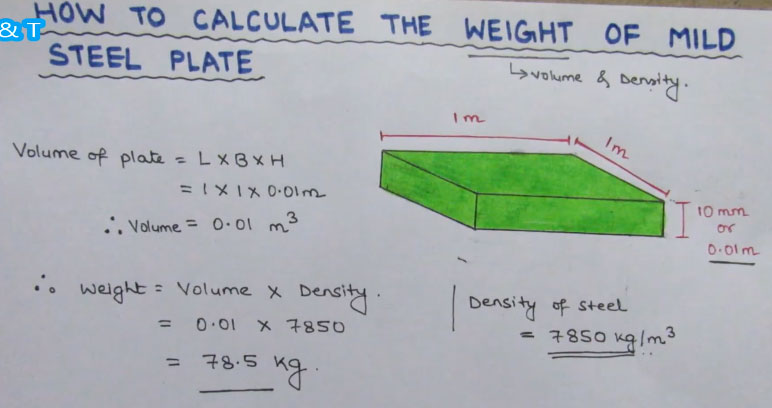
These are usually pretty straightforward measurements. You can grab a tape measure and get these numbers yourself. It’s satisfying to know you're actively participating in the weight discovery process.
Imagine you have a rectangular steel plate. You measure its length, say 10 feet. Then you measure its width, perhaps 4 feet. Now you’re getting somewhere!
Don't Forget Thickness!
This is where things get really interesting. The third dimension, thickness, is crucial. A thin sheet of steel weighs a lot less than a thick slab, even if they have the same length and width.
This measurement is often the trickiest. You might need a caliper or a micrometer for very precise measurements, especially for thinner plates. For thicker plates, a tape measure might do the trick, but be sure to get an accurate reading.
Let’s say your plate is 0.5 inches thick. This might seem like a small number, but it plays a huge role in the final weight. It's the final piece of the geometric puzzle.
Putting It All Together: The Grand Calculation
Now for the exciting part! We have density, length, width, and thickness. We need to combine these to find the volume of the steel plate first.
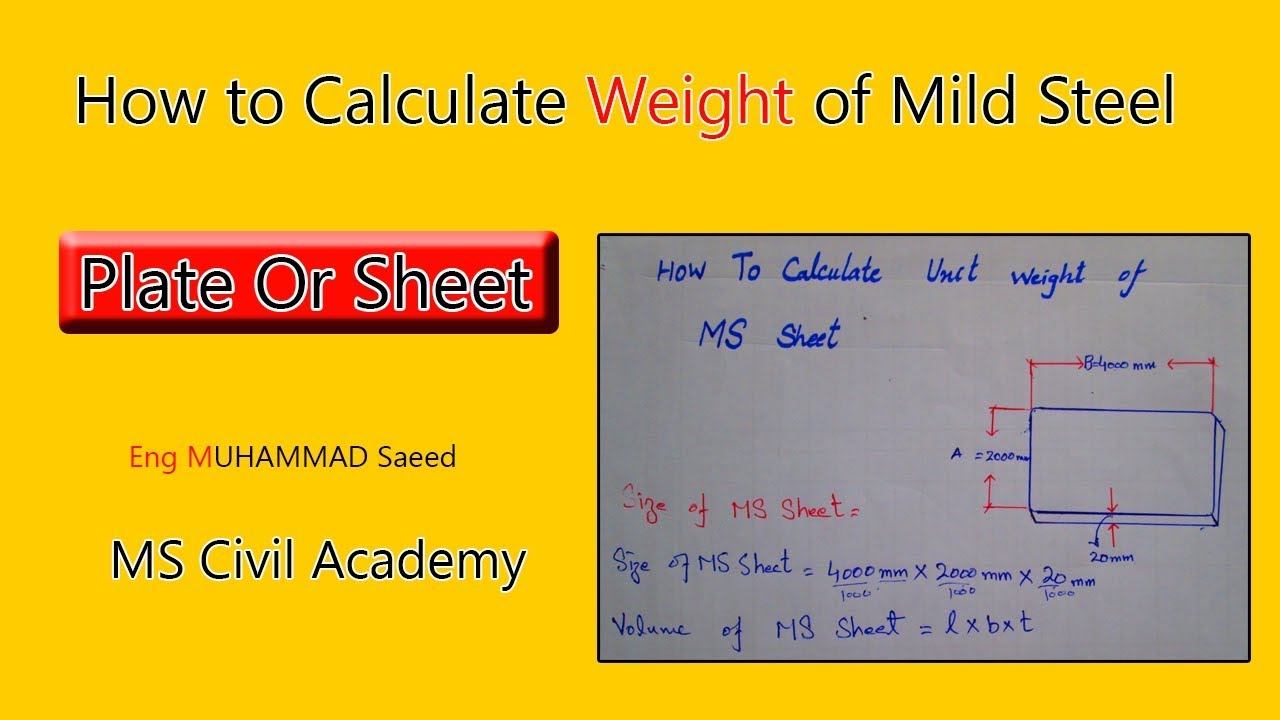
Volume is simply length times width times thickness. However, you need to make sure all your measurements are in the same units. If your density is in pounds per cubic foot, your length, width, and thickness should all be in feet.
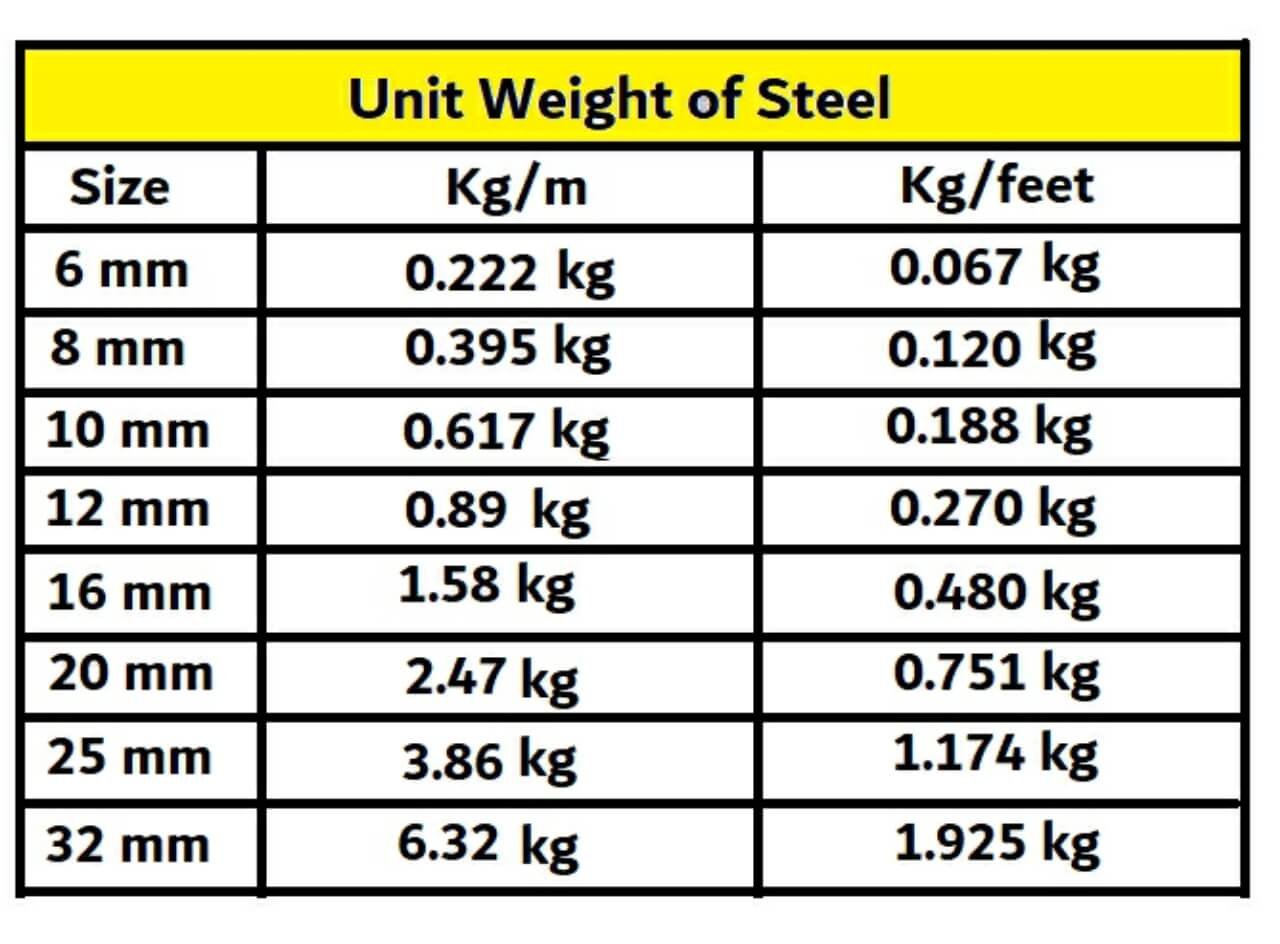
If your thickness is in inches, you'll need to convert it to feet. There are 12 inches in a foot. So, 0.5 inches becomes 0.5 / 12 feet. See? Simple conversions make the whole thing work.
Calculating Volume
Let's take our example: a steel plate that's 10 feet long, 4 feet wide, and 0.5 inches thick. First, convert the thickness: 0.5 inches / 12 inches/foot = 0.0417 feet.
Now, calculate the volume: 10 feet (length) * 4 feet (width) * 0.0417 feet (thickness) = 1.668 cubic feet. This is the volume of your steel plate.
This volume number is like the total space the steel plate occupies. It's a crucial step in our weight-finding mission.
The Grand Finale: Weight!
We have the volume and we have the density. Now, it’s time to find the weight. This is the moment of truth!
To find the weight, you simply multiply the volume by the density. It’s that easy! It’s the satisfying conclusion to our little number adventure.
So, using our example: 1.668 cubic feet (volume) * 490 pounds/cubic foot (density) = 817.32 pounds. Ta-da! Your steel plate weighs approximately 817.32 pounds.
Why It's So Cool
Isn't that neat? You can take a few simple measurements and, with a bit of arithmetic, figure out the weight of something so substantial. It’s a tangible connection to the materials that build our world.
It's also incredibly practical. Whether you're ordering steel, planning a construction project, or just curious, knowing how to do this is a valuable skill. It empowers you with knowledge.
And honestly, there's a certain thrill in understanding the science behind everyday (or not-so-everyday) objects. It makes the world feel a little less mysterious and a lot more understandable.
A Quick Metric Example
Let's say you have a steel plate that's 2 meters long, 1 meter wide, and 20 millimeters thick. First, convert millimeters to meters: 20 mm / 1000 mm/meter = 0.02 meters.
Now, calculate the volume: 2 meters (length) * 1 meter (width) * 0.02 meters (thickness) = 0.04 cubic meters.
Finally, calculate the weight: 0.04 cubic meters (volume) * 7,850 kg/cubic meter (density) = 314 kg. So, that plate weighs about 314 kilograms!
The Takeaway
The next time you see a large steel plate, you’ll have a secret superpower. You’ll know that with a few measurements and a simple formula, you can unlock its weight.

It’s a small piece of knowledge, but it’s a really satisfying one. It connects you to the physical world in a fun and accessible way.
So go ahead, try it out! Grab a tape measure, find a steel plate (safely, of course!), and become a weight-detective. You might be surprised at how much fun it is!
Remember, always prioritize safety when dealing with heavy materials. If you're unsure, ask for professional help!
It’s a simple process, really. It’s about understanding the basic properties of a material and applying some straightforward geometry and multiplication. No calculators needed if you have a brain and a piece of paper (or just your phone).
Think of it as a little mental workout disguised as a practical skill. And who doesn't love a good mental workout that also gives you a tangible answer?
The world is full of amazing materials, and steel is definitely one of them. Understanding its weight is just the first step in appreciating its incredible versatility and strength.
So next time you're at a construction site, a shipyard, or even just looking at a sturdy metal sculpture, remember the power of density, length, width, and thickness. You've got the key to unlocking the weight!