
How To Find A Metal Stud In The Wall
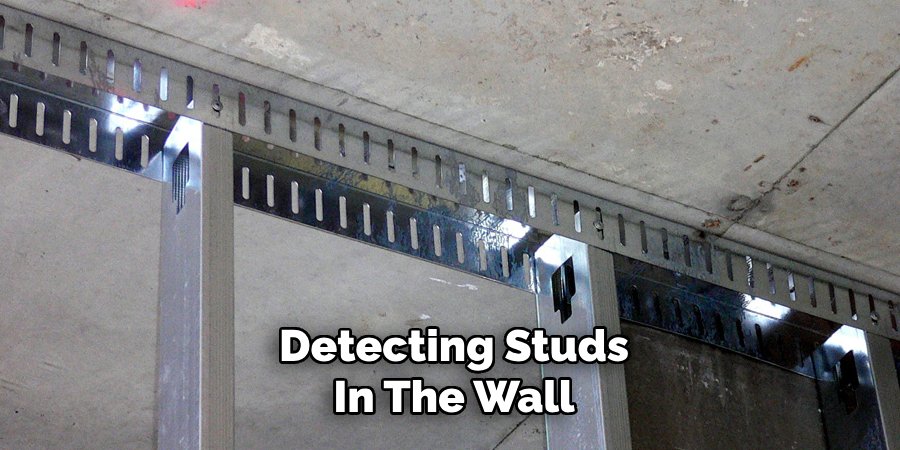
Ever stared at a blank wall, a canvas begging for a picture frame, a TV mount, or maybe even a full-blown bookshelf that could rival the Library of Congress? You’ve got the hammer, you’ve got the nails (or maybe the fancy screws), but then… the dread. You tap the wall, and it sounds like a dead thud. You tap again, and it’s still a thud. Uh oh. You're on a quest, my friend, a noble, sometimes exasperating, but ultimately rewarding quest: the quest to find a metal stud!
Think of your wall as a secret agent's hideout. Most of it is just drywall, the flimsy disguise. But hidden within, like a master spy behind a carefully constructed facade, are the studs. And when we're talking about the cool, sleek, modern kind of wall construction, we're often dealing with the stealthy, silver ninjas: the metal studs. They are the unsung heroes holding up your dreams, your art, and your entertainment systems.
Now, I know what you're thinking. "How do I find these elusive metal marvels without turning my wall into a Swiss cheese experiment?" Fear not, intrepid DIYer! We're about to embark on a grand adventure, a treasure hunt of epic proportions, where the prize is a securely mounted object and the bragging rights of a wall whisperer.
The Gentle Tap-Tap-Boom Method
This is where the real detective work begins. Forget sledgehammers and dynamite; we're going for subtlety. Grab your knuckles, or maybe the back of a screwdriver (the handle part, please!), and start tapping. Gently, mind you. Think of it as a soft serenade to your wall.
As you move across the wall, listen. Listen with the intensity of a hawk spotting its prey from a mile up. When you tap over a hollow spot – where there's just air between the drywall and whatever's behind it – you'll hear a dull, empty sound. It's like tapping on a cardboard box. Thud.
But then, as your tapping finger (or screwdriver handle) glides over the hidden metal marvel, the sound changes. It becomes a more solid, a more resonant, a more… stud-like sound. It's a distinct bonk or a sharp thunk. This is the glorious moment of discovery, the "aha!" that echoes through the room.
The Magnet Mayhem
If your ears are still in training, or perhaps you're dealing with a particularly shy stud, it's time to bring out a secret weapon: a magnet! Not just any magnet, mind you. We're talking about a reasonably strong magnet, the kind that might accidentally attach itself to your fridge and refuse to budge.

This is where the playful exaggeration comes in. Imagine a tiny, silver knight on a valiant quest, ready to embrace its metal brethren. Drag this magnet slowly across the wall, at about the height where you suspect your studs are lurking. If it suddenly leaps from your hand and clings to the wall with the tenacity of a limpet, congratulations! You've found your metal stud.
This method is particularly useful because it bypasses the need for expert auditory skills. It's like having a metal detector for your walls, but way cooler and significantly less likely to set off airport security. Just be prepared for the occasional accidental magnet-to-door-frame encounter; those metal studs can be surprisingly sociable.
The Stud Finder Soiree
Now, let's talk about the fancy gadgets. Yes, they exist, and yes, they can be your best friends in this endeavor. Think of a stud finder as your trusty sidekick, a technological marvel designed to make your life easier. There are a few types, but the most common ones are the magnetic and the electronic.
The magnetic ones work on the same principle as our independent magnet adventure, but they are specifically calibrated to detect the tiny metal screws or nails that are holding the drywall to the stud. You simply glide it over the wall, and it will beep or light up when it senses metal.

The electronic ones are a bit more sophisticated. They often use a combination of sensors to detect changes in density behind the wall. You calibrate it against a clear section of wall, and then move it across the area where you're searching. When it senses a denser object – our glorious metal stud – it will usually give you an audible alert or a visual indicator. It’s like having a little metal-detecting fairy living inside your stud finder!
The Spacing Secret
Metal studs, like most things in construction, tend to be a bit predictable. They're usually spaced evenly apart. The most common spacing you'll encounter is 16 inches from the center of one stud to the center of the next, though sometimes you'll see 24 inches.
So, if you manage to find one stud, you've just significantly narrowed down your search for the next one. Measure 16 inches (or 24 inches) over from your confirmed stud, and you're very likely to find another. It's like a secret code, and once you crack it, the whole wall becomes an open book.
This is particularly helpful when you're trying to plan where you want to hang things. Knowing the standard spacing allows you to position your mounts and brackets with confidence. No more guessing games, just pure, unadulterated stud-finding accuracy!

The "Eyeballing It" (With Caution!)
Okay, this one is for the truly adventurous, the daredevils of the DIY world. Sometimes, if you've looked at enough walls, you start to develop a sixth sense. You can almost feel where the studs are.
This is usually based on visual cues. If you're lucky, you might see faint outlines or "shadows" on the wall where the studs are. This is more common in older homes or walls that haven't been perfectly plastered. It's like seeing the ghost of a stud, just waiting to be brought back to life.
However, I must emphasize: this method is best used in conjunction with other techniques. Don't just go drilling based on a hunch. Use your newfound intuition as a starting point, and then confirm with a tap or a magnet. We want to avoid transforming your wall into abstract art unintentionally.
The Power of the Pilot Hole
You've tapped, you've magnetically embraced, you've possibly consulted your stud finder, and you're reasonably sure you've found your metal friend. Now, before you go enthusiastically driving a giant screw into the wall, take a breath.

The best practice is to drill a small pilot hole. This is a tiny hole, just slightly smaller than the screw you intend to use. It's like giving your screw a little runway to guide it directly into the stud, rather than letting it wander off course and into the drywall abyss.
When you drill that pilot hole, and you feel that satisfying resistance as the drill bit hits metal, that's your confirmation. That's the mic drop of stud finding. You've done it! You've successfully located the sturdy, silver backbone of your wall.
So there you have it! The world of finding metal studs is not a dark and mysterious realm. It’s a land of gentle taps, playful magnets, and sometimes, a bit of technological wizardry. With these simple, fun techniques, you'll be mounting that TV, hanging that mirror, or building that bookshelf with the confidence of a seasoned pro. Happy stud hunting!