
How To Find Ghost Crabs At Night

Okay, picture this: it’s a balmy summer night, the kind where the air itself feels like a warm hug. The beach is mostly deserted, just the gentle whisper of waves and the occasional squawk of a distant seagull. I’m walking along the shoreline, my feet sinking a little into the damp sand, a flashlight beam cutting a wobbly path ahead. Suddenly, a tiny speck bolts across my path, faster than anything my sleepy brain can process. It disappears into a hole in the sand faster than I can say, "What was that?" My inner detective, usually reserved for figuring out who ate the last cookie, immediately kicks in. I’d heard tales of these elusive creatures, the nocturnal residents of the beach, and my mission, should I choose to accept it (and I totally did), was to find them. That, my friends, was my very first ghost crab encounter, and it ignited a rather peculiar fascination.
So, if you’ve ever found yourself staring out at the moonlit beach, wondering what little scuttling secrets lie just beyond your flashlight’s reach, then this is for you. We’re going on a nocturnal expedition, a quest for the elusive ghost crab. Forget your daytime beach bumming; the real magic, or at least the spooky magic, happens after dark.
The Ghost Crab: Nature’s Tiny Ninjas
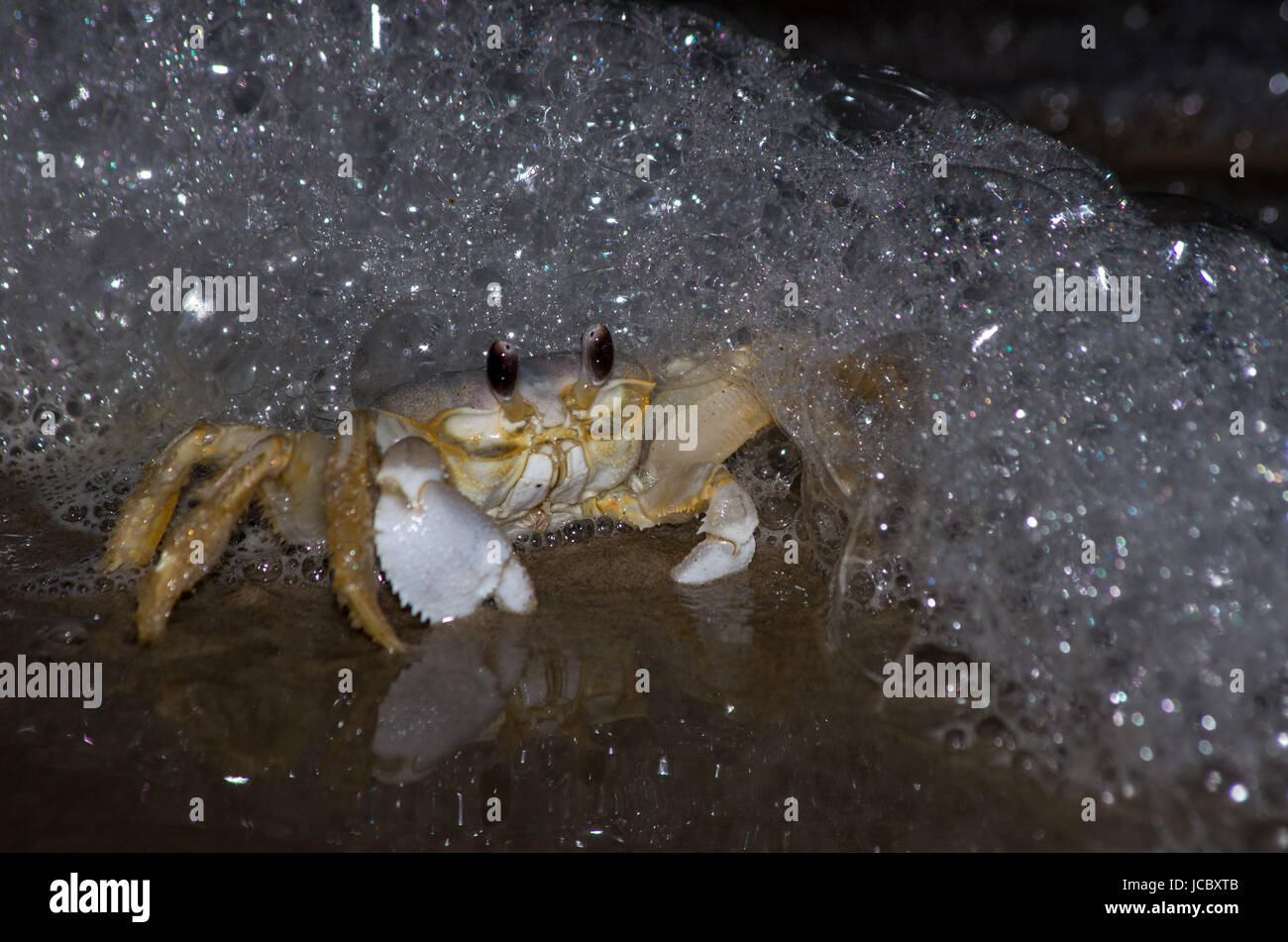
First things first, let's get acquainted with our quarry. Ghost crabs, or Ocypode quadrata if you’re feeling fancy, are essentially the night-shift workers of the beach. They’re small, about the size of your palm (give or take), and they are fast. Seriously, their speed is legendary. They get their name from their pale, sandy color, which makes them practically invisible against the beach backdrop, and their uncanny ability to vanish into thin air… or rather, into their burrows.
These guys are fascinating. They’re not your typical shore crabs you might see scuttling around during the day. Ghost crabs are primarily nocturnal, meaning they do most of their important crabby business when the sun goes down. This is their prime time for foraging, socializing (yes, they might have crab parties, who knows?), and generally being awesome. During the day, they retreat to their perfectly engineered burrows, which can be surprisingly deep and complex.
Think of them as the beach’s little ninjas. Camouflaged, quick, and masters of disappearing. It’s no wonder they’ve captured the imagination of beachcombers for ages. They’re a little bit mysterious, a little bit thrilling, and a whole lot of fun to try and spot.
Operation: Ghost Crab Hunt - Your Night Vision Checklist
Alright, so you're convinced. You want to witness these nocturnal marvels in their natural habitat. Excellent choice! But you can't just waltz out onto the beach after dark with your regular sunnies on and expect to see anything. You need to be prepared. Think of it like gearing up for a top-secret mission. You wouldn’t go on a spy mission without your gadgets, right? Same principle here.
1. The Right Time and Place (Location, Location, Location… and Timing!)
This is crucial. You’re not going to find ghost crabs in broad daylight, nor are they everywhere. They prefer sandy beaches, particularly those with dunes. They need soft sand to dig their burrows. So, head to a beach known for its sandy stretches and dune systems.
As for timing, nighttime is obviously the go-to. But when at night? Generally, the hours after sunset are prime time. The darker it gets, the more comfortable they become venturing out. A new moon night is your absolute best friend. Why? Because there’s less ambient light from the moon, making your job (and the crabs’ camouflage) even more challenging… and thus, more rewarding when you succeed! Think of it as playing on expert mode. Full moon nights can still be good, but you'll have to work a little harder to spot them.
Also, consider the tides. Ghost crabs are often more active when the tide is going out. This exposes more sand for them to forage on. So, check a tide chart before you go. It’s a little bit of research, but it can significantly increase your chances of a successful hunt. Don't scoff at the tide chart; it's a seasoned ghost crab hunter's secret weapon.

2. Your Trusty (and Unobtrusive) Light Source
This is where things get a little nuanced. You need light to see, but you don't want to scare your quarry away. Your everyday, super-bright flashlight is probably a no-go. It’s like shining a spotlight on a shy introvert; they’re going to retreat. The key here is a dim light, and ideally, one with a red or amber filter.
Why red or amber? Because many nocturnal animals, including crabs, are less sensitive to these colors. They can still see them, but it’s less jarring than bright white light. Think of it as a subtle invitation rather than a harsh interrogation. You can buy red-filtered flashlights, or you can even just wrap some red cellophane around a regular flashlight. DIY is always a good option, right?
And when I say dim, I mean dim. You want enough light to illuminate the sand in front of you, not to blind a satellite. Wave that light gently. Don't go sweeping it around like a lighthouse beam. Be a ninja with your light, not a disco ball.
3. Your Eyes: Adjusting to the Dark
This might sound obvious, but give your eyes time to adjust. When you first step onto the beach, keep your light off for a few minutes. Let your pupils dilate and soak in the natural low light. You might be surprised by how much you can see without any artificial assistance.
Once you start using your red light, use it sparingly. Shine it down at the sand, not directly into the vast expanse of the ocean where you might accidentally startle a passing dolphin. Be mindful of where your beam is going. Think of it as a gentle scout.
And patience, my friend, is your superpower here. Your eyes will eventually start to pick out the subtle movements. It's like learning to spot constellations; at first, you see nothing, and then, slowly, the patterns emerge.
4. Comfortable Footwear and Clothing
You’ll be doing some walking, and possibly some sitting and patiently waiting. Comfortable, closed-toe shoes are a must. You don't want to be tripping over driftwood or stepping on something poky. Sandals are a recipe for disaster on a dark beach. Trust me on this one; I’ve had my share of stubbed toes in the name of wildlife observation.

Dress in layers. Beach nights can get surprisingly cool, even if the day was scorching. A light jacket or hoodie is a good idea. And wear something you don’t mind getting a little sandy. This is the beach, after all!
The Hunt is On: Tips for Spotting Those Elusive Critters
Okay, you're geared up, you're in the right place at the right time. Now, how do you actually find these little sand ghosts?
Scanning the Sand: Look for the Little Things
This is where your red light comes in handy. Start scanning the sand about 20-30 feet ahead of you. Look for any tiny movements. Ghost crabs aren't huge, so you're looking for small, quick blips. They often move in short, jerky bursts. Blink-and-you'll-miss-it is their motto.
Pay attention to the edges of your flashlight beam. Sometimes, a crab will be just at the periphery, caught by the dim light before it fully registers.
Listen Carefully: The Sounds of the Night
While they are primarily visual hunters, sometimes you can hear them. That faint rustle of sand might be a ghost crab digging or moving. It's a subtle sound, but if you’re quiet and really tune in, you might catch it.
Remember that little scuttling sound I mentioned in my anecdote? That's your cue. It's not the crashing of waves; it's a much smaller, more deliberate sound. Train your ears to distinguish it.
Look for Their Homes: The Burrows
Ghost crabs dig burrows. These are often visible as small, circular holes in the sand, especially in the dunes or areas further up the beach. If you find a fresh-looking burrow, there's a good chance a ghost crab is nearby, or at least will be returning soon. Don't go poking around in the burrows. That's their private residence, and you don't want to be that person.
Sometimes, you'll see a little mound of sand kicked out in front of the burrow entrance. This is a sure sign of recent activity. It's like finding a freshly dug flowerbed; you know someone's been working there.
The Blink and Bolt: Anticipating Their Escape
This is the most common way people spot them. You’ll shine your light, and poof, a crab will bolt from beneath your beam. They are masters of the immediate escape. Don't get discouraged if this happens. It means you're getting close!
Once you see one bolt, try to keep your light trained in the general direction it went. They’ll often stop and freeze a short distance away, hoping you haven't seen them. This is your chance to get a better look. They'll often freeze in a classic crab pose, looking like tiny, sandy statues.
Respecting the Ghost Crab Ecosystem
Now, here’s a really, really important part. As you embark on your ghost crab adventures, remember that you are a visitor in their world. These are wild creatures, and we need to treat them with respect.
Leave No Trace (Except Footprints)
This is standard beach etiquette, but it bears repeating. Don't leave any trash behind. Pack out everything you pack in. Litter can harm these creatures and their habitat.
Observe from a Distance
As tempting as it might be to try and pick one up, resist the urge. Not only can they pinch (they have those formidable claws for a reason!), but the stress of being handled can be detrimental to them. Enjoy watching them from where you are. Your goal is observation, not interaction.

If you’re lucky enough to spot a crab, stay a good distance away. Let them go about their business. They are there to forage and survive, not to be a tourist attraction.
No Flash Photography! (Seriously, Don't Do It)
I cannot stress this enough. Bright, flashing lights are incredibly disruptive to nocturnal wildlife. It can disorient them, scare them, and disrupt their natural behaviors. Stick to your dim, red light.
Think about how you feel when someone suddenly blasts you with a bright light in a dark room. Annoying, right? Imagine being a tiny crab on a vast beach. It's a whole different level of sensory overload.
Be Mindful of Their Burrows
As mentioned before, treat their burrows with respect. Don't dig them up, don't stomp on them, and try not to disturb the sand around them unnecessarily. These are vital homes for them.
The Thrill of the Hunt: Why It's Worth It
Finding ghost crabs at night isn't just about ticking a box on your beach-activity checklist. It’s about connecting with nature in a different, more intimate way. It's about embracing the quiet, the darkness, and the hidden life that thrives when most of us are asleep.
There’s a unique thrill in the hunt, in the patient scanning, the listening, and the sudden, exhilarating flash of movement. It’s a testament to your observation skills and your willingness to step outside your comfort zone. And when you finally get a good, steady look at one, scuttling across the moonlit sand, it feels like you’ve discovered a secret world.
It’s a reminder that even in familiar places, there are always new wonders to uncover if you’re willing to look. So, next time you find yourself by the ocean after dark, grab your red-light, embrace the quiet, and go on a little ghost crab expedition. You might just be surprised by what you find. Happy hunting!