
How To Join Two Steel Pipes Without Welding

Ever found yourself staring at two lengths of steel pipe, a vision of a new bookshelf, a DIY irrigation system, or perhaps a truly epic fort for the grandkids dancing in your head, only to realize… gasp… you don’t have a welder? Fear not, fellow creators and weekend warriors! Joining steel pipes without resorting to the fiery embrace of welding is not only possible but can be surprisingly satisfying and, dare I say, even a little bit chic. We’re talking about a world beyond sparks and fumes, a realm where elegant solutions meet robust results. So, ditch the welding mask, grab a cup of something delightful (coffee? herbal tea? a craft beer?), and let’s dive into the art of no-weld steel pipe connection.
Think of it as the sophisticated cousin to welding. While welding is all about molecular fusion, these methods are more about intelligent assembly. They leverage clever designs and precise engineering to create strong, reliable joints that can stand the test of time, or at least your next DIY project. It’s a bit like building with LEGOs, but for grown-ups, with a distinctly industrial-chic vibe. We’re not just connecting pipes; we’re crafting functional art, building dreams, and maybe even saving ourselves a few trips to the hardware store for specialized welding gear.
The beauty of these techniques lies in their accessibility. You don't need to be a certified welder with years of experience to achieve professional-looking results. With a few basic tools and a bit of patience, you can create connections that are both strong and aesthetically pleasing. This opens up a world of possibilities for home improvement, crafting, and even some light industrial applications. So, let’s explore the magic!
The Clamp-Down Crew: Embracing Mechanical Marvels
First up in our no-weld hall of fame are the unsung heroes of pipe joining: the humble but mighty pipe clamps. These are your go-to for a straightforward, no-nonsense connection. They work by physically gripping the ends of the pipes, pulling them together with significant force, and creating a secure bond. It’s a purely mechanical solution, relying on good old-fashioned friction and pressure.
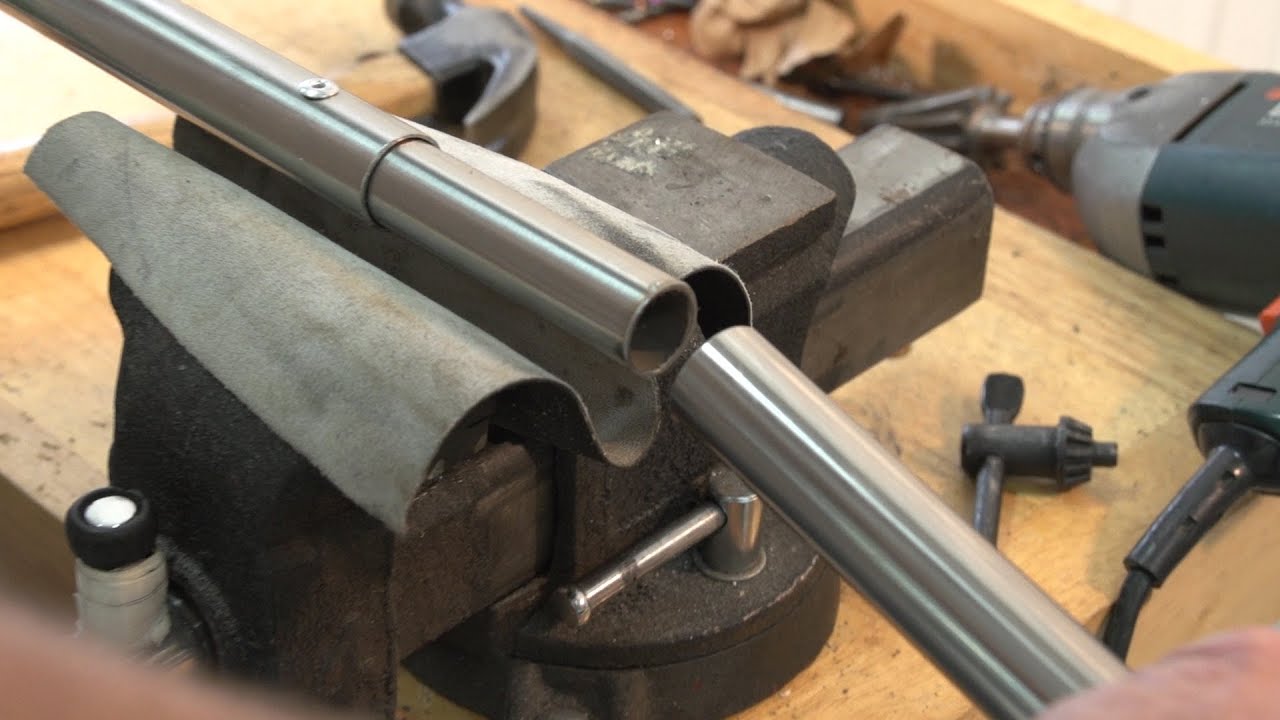
There are several types of pipe clamps, each with its own strengths. The most common is the coupler clamp, often referred to as a sleeve or union. These are essentially short sections of pipe with an internal diameter that perfectly matches the outer diameter of the pipes you want to join. They slide over the ends of the two pipes and are then secured using bolts that pass through the clamp and into pre-drilled holes in the pipes, or through an internal mechanism that tightens around the pipes.
Another popular variation is the set screw clamp. These are similar to coupler clamps but instead of bolts, they use grub screws or set screws that are tightened directly against the surface of the pipes. This method offers a very clean look, as there are no external bolt heads to contend with. It’s a favorite among those who appreciate a minimalist aesthetic.
Then there are the more industrial-grade options, like flange clamps. These are used when you need to join pipes to flat surfaces or to other flanged components. They involve attaching flanges to the ends of your pipes (which can sometimes involve welding, so we're being selective here!) and then bolting these flanges together. However, there are also specialized clamp systems that can secure pipes to existing flanges without needing to weld a new flange onto the pipe itself. These are fantastic for making modifications or repairs to existing systems.
Pro Tip: When choosing pipe clamps, always ensure the clamp’s material is compatible with your pipes and the intended environment. For example, if you’re working with galvanized steel pipes outdoors, you’ll want clamps made of rust-resistant materials like stainless steel or coated galvanized steel to prevent premature corrosion. And always, always measure twice, clamp once!
A fun little fact: The concept of using mechanical means to join pipes dates back centuries. Early plumbing systems, even those made of lead or iron, relied on sophisticated compression fittings and leaded joints, which were essentially a form of very early mechanical joining. It’s a testament to human ingenuity that we’ve been finding clever ways to connect things for so long!
Threaded Together: The Classic Screw-It-In Solution
Ah, the satisfying thunk of a perfectly screwed-in fitting. Threaded connections are arguably the most traditional and widely used method for joining pipes, and steel is no exception. This method relies on the principle of helical threads to create a strong, interlocking connection. It’s a bit like a very robust and specialized screw.
The magic here lies in the threaded fittings. These are specialized pieces of hardware that have internal or external threads designed to mate with the threads on the end of your steel pipes. You’ll find a whole universe of these fittings: elbows, tees, couplings, reducers, caps – you name it, there’s a threaded fitting for it. These fittings are typically made of the same material as the pipes, or a compatible material, to ensure a good seal and prevent galvanic corrosion.
Joining steel pipes with threads is a straightforward process, but it requires a little preparation and the right tools. First, you need to ensure that the ends of your steel pipes are properly threaded. This can be done using a pipe threader, a specialized tool that cuts precise threads onto the end of a pipe. If you’re buying pre-threaded pipes, that’s even easier. Then, you’ll apply a thread sealant, such as pipe dope (a paste-like compound) or PTFE tape (often called Teflon tape), to the male threads. This sealant fills any microscopic gaps, ensuring a watertight or airtight seal and making future disassembly easier.
Once the sealant is applied, you simply screw the fitting onto the pipe, and then the other pipe into the fitting. You’ll use pipe wrenches to tighten the connection. These wrenches have adjustable jaws that grip the pipe or fitting securely, allowing you to apply the necessary torque. Be careful not to overtighten, as this can damage the threads or the fitting. A snug, firm turn is usually sufficient.

Cultural Note: The iconic image of a burly plumber wrestling with a pipe wrench is deeply ingrained in our popular culture. Think of Mario and Luigi, the quintessential gaming plumbers who have spent decades saving the Mushroom Kingdom, often by, well, interacting with pipes. While their methods might be more fantastical, they represent the enduring utility of these threaded connections in our everyday lives.
Fun Fact: The standard for pipe threads, known as the National Pipe Taper (NPT) thread in North America, is designed to create a tapered seal as the threads are tightened. This makes the joint progressively tighter and more secure, especially important for applications involving pressure.
The Groove Revolution: Push-Fit Perfection
Let’s talk about the modern marvel that is the grooved pipe coupling. If you’re looking for speed, ease, and a surprisingly strong, vibration-resistant connection, this is your jam. It’s the go-to for many industrial applications, particularly in fire protection systems and commercial plumbing, because it’s so darn reliable and fast to install.
The magic here is in the groove. A specific groove is rolled or cut into the end of each steel pipe. This groove is then precisely engineered to accept a specialized coupling. The coupling itself typically consists of two halves that bolt together around the grooved ends of the pipes. Inside the coupling is a rubber gasket, which creates a watertight or airtight seal when the coupling is tightened.
Installation is incredibly simple. You clean the pipe ends, ensure the grooves are clear of debris, slide the gasket into place on the coupling, and then bolt the two halves of the coupling together around the pipes. The bolts tighten, compressing the gasket and creating a secure, flexible connection. This flexibility is a key advantage, as it can absorb vibrations and minor movements, making it ideal for systems that experience thermal expansion or contraction.
These systems are incredibly versatile. You can find grooved couplings for a wide range of pipe sizes and materials, and they are designed for various pressure ratings. They are also relatively easy to disassemble and reassemble, which is a big plus for maintenance and modifications.
Practical Tip: When using grooved couplings, ensure you have the correct gasket material for your application. Different gaskets are designed for different temperatures, pressures, and types of fluids. A plumber’s best friend is often a good gasket selection chart!
A Nod to Innovation: The development of grooved couplings in the mid-20th century was a game-changer for the construction industry. It significantly reduced installation time and the need for specialized skills, leading to more efficient and cost-effective projects. It’s a perfect example of how clever design can revolutionize a traditional process.
The Compression Connection: Gentle Squeeze, Strong Hold
Finally, let’s consider the world of compression fittings. While often associated with softer materials like copper or PEX, specialized compression fittings are also available for steel pipes, offering a reliable and leak-free connection without the need for threads or welding.
These fittings typically consist of a body, a ferrule (a ring that gets compressed), and a nut. The pipe is inserted into the fitting, and as the nut is tightened, it forces the ferrule to compress onto the pipe. This compression creates a tight seal between the pipe and the fitting. It’s a bit like a very sophisticated hug for your pipes.
The beauty of compression fittings is their simplicity. They require minimal tools – usually just a couple of wrenches – and no special preparation of the pipe end beyond a clean cut. They are also relatively easy to disassemble and reconnect, making them ideal for temporary installations or situations where frequent adjustments might be needed.
Important Consideration: For steel pipes, compression fittings are often used in lower-pressure applications or for specific joint types. Always verify the pressure and temperature ratings of the compression fitting to ensure it’s suitable for your project. And, as with all fittings, use them on clean, straight cuts of pipe for the best seal.
Think of the early days of pneumatic tools or pressurized gas lines. Compression fittings played a vital role in making these technologies safe and accessible, allowing for advancements in manufacturing and industry. They’re a quiet, often unseen, but incredibly important part of our modern infrastructure.
So, there you have it! A quick tour through the world of joining steel pipes without a welder. From the satisfying grip of clamps to the classic twist of threads, the speedy efficiency of grooves, and the gentle squeeze of compression, there’s a method out there for every project and every maker. It’s empowering to know that you have these options at your fingertips, allowing you to tackle those DIY dreams with confidence and creativity.
It’s funny how these seemingly technical tasks can offer a little reflection on our own lives. Just as these different methods offer distinct ways to connect and hold things together, we too rely on various connections in our daily routines. Some are strong and permanent, like the bonds of family. Others are more flexible and adaptable, like friendships that can weather distance and time. And then there are those simple, everyday connections, like a perfectly brewed cup of coffee that starts your day right. It’s all about finding the right fit, the right seal, and the right way to hold it all together. Now go forth and build something amazing!