
How To Know The Charge Of A Transition Metal

Ever looked at a cool, shiny metal and wondered what its tiny electrical charge was? It's like a secret code they hold! Transition metals are the rockstars of the periodic table, and figuring out their charge is part of their awesome mystery.
Think of it like trying to guess a superhero’s power. Some have a fixed power, but others can switch it up! Transition metals are often like that, showing off different electrical charges depending on who they're hanging out with. This makes them super versatile and important in tons of cool stuff.
It's not just a boring number; it's a clue to how they behave. This charge tells us how they’ll bond with other elements. It’s like knowing a superhero’s weakness or strength, which helps us understand how they’ll fit into a team.
So, how do we become metal detectives? We need to look at the clues around them. Usually, the other elements in a compound are easier to understand. They're like the sidekicks whose powers we already know.
The Handy Periodic Table
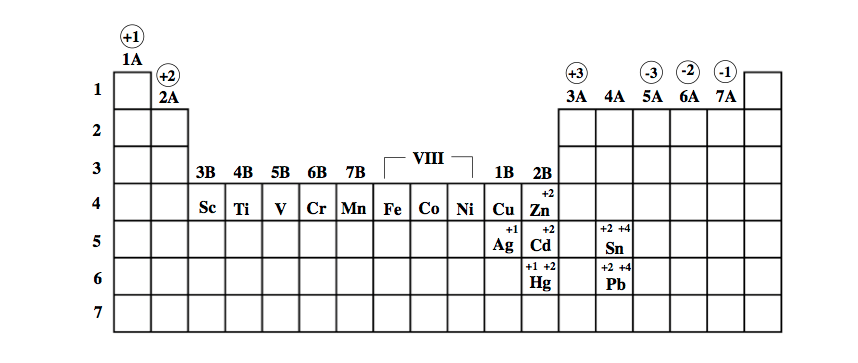
Your first best friend in this detective work is the trusty periodic table. It's like a map for all the elements. You’ll see the transition metals sitting in the middle block, looking all sophisticated.
These metals are special because their outermost electrons are in d orbitals. This makes them a bit more flexible with their charges than other elements. It’s like having extra power-ups available!
While the periodic table gives us general info, it’s not always a direct answer for their charge. It’s a starting point, a hint about their potential. We still need to do some real sleuthing.

Looking at the Neighbors
The most common way to figure out the charge of a transition metal is by looking at the other elements it's bonded with. These are called its partners or ligands. They're usually pretty predictable.
For example, if you see a compound like copper(I) chloride, the 'chloride' part is your first clue. Chlorine, as a halogen, usually likes to have a charge of -1. It’s pretty consistent with its electrical personality.
Since the overall compound needs to be neutral (no net charge), you can do some math. If you have one chlorine with a -1 charge, and the whole thing is neutral, the copper must be balancing that out. So, the copper has to be +1. Easy peasy!
This is like solving a simple puzzle. You know one piece, and you can figure out the rest!
Let’s try another. Imagine iron(III) oxide. Oxygen is typically -2. In iron oxide, you often see two iron atoms for every three oxygen atoms.
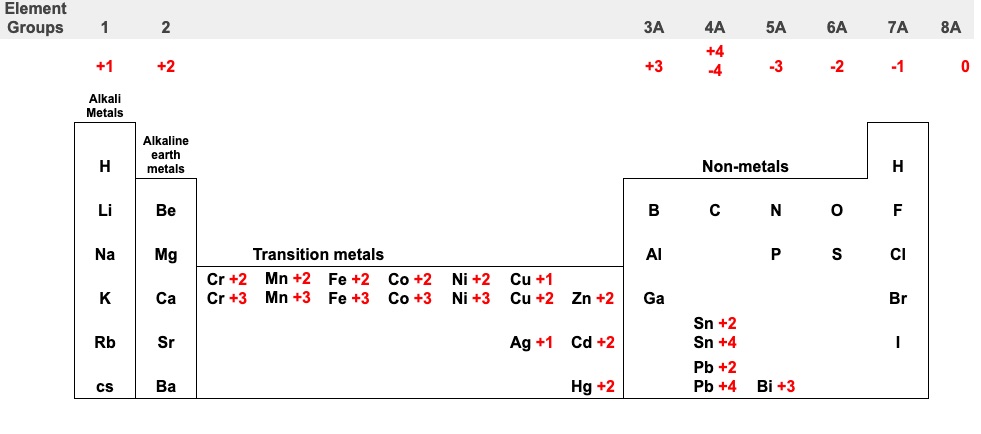
Three oxygen atoms give a total charge of 3 x (-2) = -6. To make the whole compound neutral, the two iron atoms must add up to +6. So, each iron atom must have a charge of +6 / 2 = +3. See? You’re already a charge detective!
This method works for many common compounds. The key is knowing the typical charges of the non-transition metals. They are the reliable ones in the chemical neighborhood.
The Roman Numerals Clue
Sometimes, the name itself gives you a huge hint! You’ll often see Roman numerals in the names of transition metal compounds. Like in iron(II) sulfate or manganese(IV) oxide.
Those Roman numerals (I, II, III, IV, and so on) are directly telling you the charge of the transition metal! How convenient is that? It’s like the compound is shouting its secret.
So, iron(II) means the iron has a +2 charge. Manganese(IV) means the manganese has a +4 charge. This is the easiest way to know, if the name is given in this style. It’s the chemical equivalent of a label.
This naming convention, called the Stock system, was invented to avoid confusion. Before this, naming was a bit of a wild west! This system makes it super clear which version of the metal you're dealing with.
When It Gets Tricky
Now, not all transition metals are that straightforward. Some can have a LOT of different charges. It’s like a multi-talented actor playing many roles!
For instance, iron can be +2 or +3. Manganese can be +2, +3, +4, +6, and even +7! It’s quite the chameleon. This flexibility is what makes them so useful.
When you see a transition metal with multiple possible charges, the Roman numeral naming system becomes your savior. Without it, you'd be lost in a sea of possibilities. It’s the designated driver for chemical names.

Sometimes, you might need to consult a chart or a database if the compound isn’t named with Roman numerals and the partners aren’t immediately obvious. Think of it as checking a cheat sheet for advanced levels.
Why It’s So Cool
The reason this is so entertaining is because it unlocks understanding of so many everyday things. These flexible charges are the reason transition metals are vital for things like:
- Catalysts: They speed up reactions, like in car engines or in making plastics. Their changing charges help them grab and release molecules.
- Colors: Many vibrant pigments and dyes use transition metals. The way electrons move around in their varying charge states creates those beautiful colors. Think of the bright blues of copper compounds or the rich reds of iron oxides.
- Biology: Many essential biological molecules, like hemoglobin (which carries oxygen in your blood), involve transition metals. Their ability to pick up and drop off electrons and atoms is crucial for life processes.
It’s like these metals have a secret superpower that allows them to perform these incredible feats. And by learning about their charges, you're getting a peek behind the curtain. You’re understanding the magic.
This isn’t just for scientists in labs. This knowledge helps us appreciate the complexity and beauty of the materials all around us. It’s a way to connect with the tiny, invisible world that makes our big world work.
So, next time you see a colorful paint, a shiny piece of jewelry, or even think about your own red blood cells, remember the transition metals and their amazing, adaptable charges. It’s a small piece of knowledge that opens up a world of wonder. Go ahead, be a charge detective!