
How To Light A Fire With A Flint And Steel
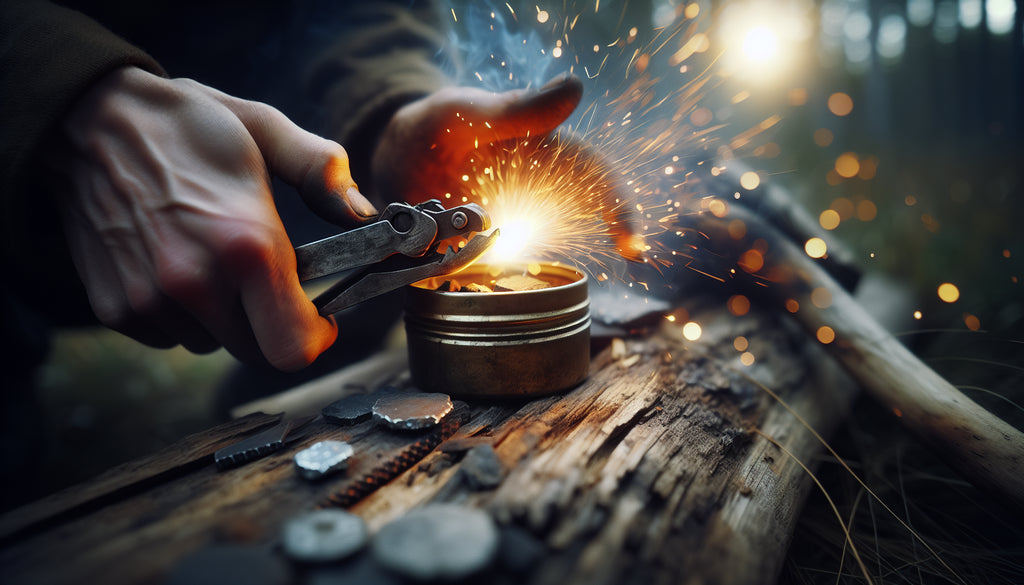
Ah, the primal allure of fire! There's something deeply satisfying, almost magical, about coaxing flames into existence with nothing more than a spark. Whether you're a seasoned outdoors enthusiast, a history buff fascinated by ancient skills, or just someone looking for a more mindful way to connect with nature, learning to light a fire with flint and steel is a truly rewarding experience.
Beyond the sheer nostalgia and the thrill of mastering a fundamental human skill, this ancient method offers some surprising benefits for our modern lives. In an era of instant gratification, it's a fantastic way to slow down and appreciate the process. It teaches patience, observation, and a deep understanding of the elements. Plus, in a world increasingly reliant on batteries and electricity, knowing how to create fire independently offers a sense of self-reliance and preparedness.
You might think this is just for hardcore survivalists, but think again! Flint and steel lighting is finding its way into a variety of applications. It's a staple for campers and hikers who want a reliable, often more eco-friendly, way to start their campfires. For reenactors and historical enthusiasts, it's an essential piece of the puzzle for authentic demonstrations. Even for backyard bonfire lovers, the satisfaction of generating your own flame from scratch is unparalleled. Imagine telling stories around a fire you literally sparked into life – a truly memorable moment.
So, how do you get started on this journey of fiery creation? First things first: gather your materials. You'll need a piece of high-carbon steel (a dedicated striker is best, but a knife spine can work in a pinch), a sharp-edged piece of flint or chert, and some excellent tinder. This is crucial! Your tinder needs to be bone-dry and fluffy. Think char cloth (a fantastic option!), dry cotton balls, finely shredded birch bark, or even dried thistle down. The finer and more receptive the material, the better your chances.

When it's time to strike, hold your flint firmly in one hand, with the sharp edge facing upwards. Place a pinch of your tinder right next to the edge where you intend to strike. Now, with a swift, downward flick of your steel striker, aim to scrape off a tiny piece of steel. The goal is to create a shower of sparks that land directly onto your tinder. It might take a few tries, and that's perfectly normal! Don't get discouraged.
Once a spark catches and begins to glow in your tinder, gently cup your hands around it and begin to blow softly. This provides the oxygen needed for the ember to grow. As it starts to smoke more, increase your blowing pressure until a tiny flame erupts. From there, carefully transfer this fragile flame to progressively larger kindling, gradually building up your fire. Patience and practice are your greatest allies. Experiment with different tinders and striking angles. The more you do it, the more intuitive it becomes, and the more you’ll appreciate the raw beauty of making fire the old-fashioned way.