
How To Make A Choose Your Own Adventure Game
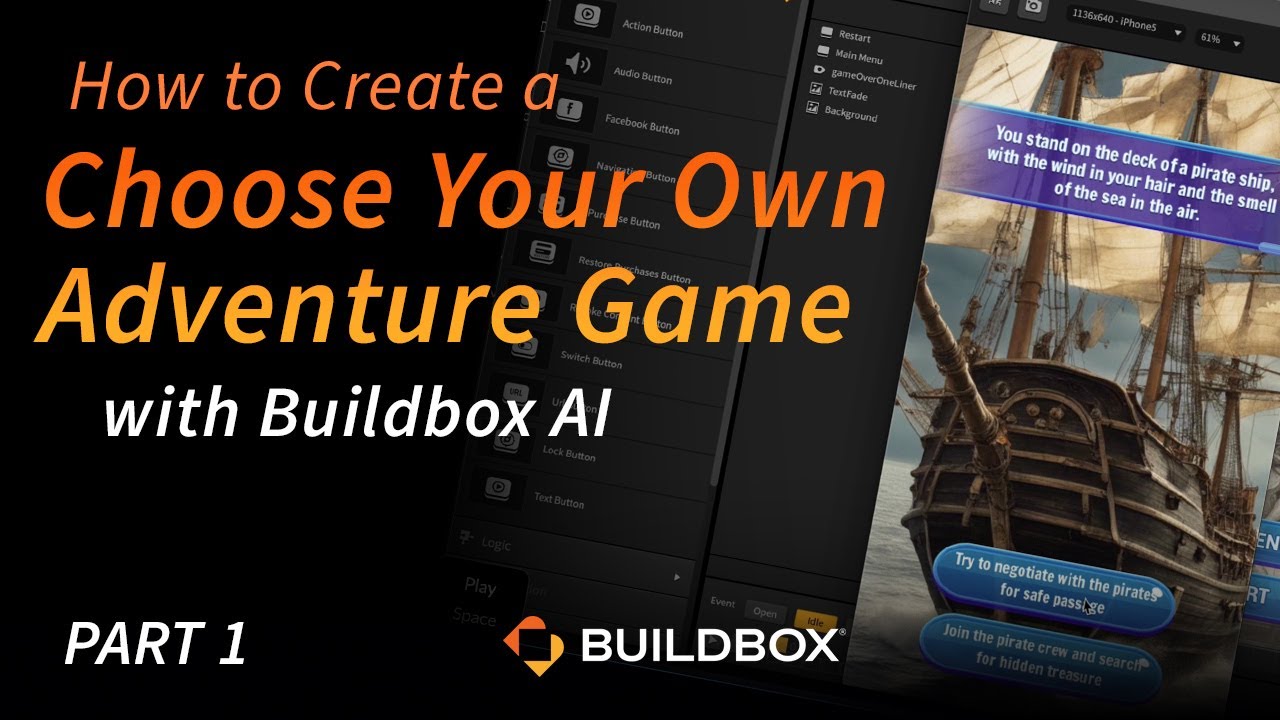
Ever stared at a book with those little choices at the end of a chapter and thought, "Hey, I could do that!"? Well, guess what? You absolutely can! Making your own Choose Your Own Adventure game is like being the wizard behind the curtain of a super-powered story, where you get to decide what happens next. It's way less complicated than learning to juggle flaming chainsaws, and a whole lot more rewarding. Think of it as building your own digital playground of epic quests, hilarious mishaps, or maybe even a surprisingly profound meditation on the merits of different types of cheese.
Let's ditch the dusty rulebooks and dive into the fun. The absolute first step, and arguably the most crucial, is to come up with a killer idea. What kind of adventure are you itching to create? Are you the brave knight venturing into the dragon's lair? The intrepid astronaut exploring a new planet? The slightly bewildered cat trying to figure out the mysteries of the vacuum cleaner? The possibilities are as endless as the universe… or at least as endless as your imagination after three cups of coffee.
Once you've got your grand idea, it's time to brainstorm your starting point. This is your "Once upon a time..." moment. For example, if you’re making a game about a pirate, your opening might be: "You are Captain Redbeard, sailing the high seas on your trusty ship, The Salty Barnacle. A storm is brewing on the horizon, and a faint speck appears on the radar. What do you do?" See? Simple, sets the scene, and immediately presents a choice.
Now, here’s where the magic really happens: the choices! These are the little breadcrumbs you leave for your player to follow. For Captain Redbeard, your choices could be:
- A. Head towards the speck on the radar. Could be treasure! Or… something else?
- B. Turn tail and ride out the storm. Safety first, right?
Each of these choices leads to a different path, a different mini-story within your grand narrative. It’s like having a bunch of tiny, branching rivers all stemming from one big lake. For each choice you present, you need to write what happens next. This is where you get to unleash your inner storyteller. If they choose to head towards the speck (choice A), maybe they find a deserted island. If they choose to ride out the storm (choice B), perhaps they end up shipwrecked on a different, much stranger island.
Don't be afraid to get a little silly or dramatic. Playful exaggeration is your best friend here. Is your hero encountering a fearsome beast? Describe it with all the gusto of a Shakespearean actor! Is it a moment of quiet contemplation? Make it so profound it makes a statue weep. Remember, you're not just writing a story; you're crafting an experience.
As you build your branching paths, you’ll quickly notice that things can get a bit… tangled. That’s totally normal! Think of it like knitting a really, really long scarf. You just keep adding stitches. For each choice, you’ll write a new section of your story. So, if they chose option A (the speck), and that leads them to the island, the next section might start with: "You've landed on a lush, tropical island. The air hums with the sound of unseen creatures. To your left, you see a dimly lit cave entrance. To your right, a narrow path winds into the dense jungle." And then, you offer more choices!

One of the coolest things about making these games is that you get to decide on the endings. And oh, the endings! They can be glorious victories, hilarious failures, or even just a quiet moment of realization. For Captain Redbeard, a glorious ending might be finding a chest overflowing with gold doubloons. A hilarious failure? Maybe he accidentally trades his ship for a pet parrot that only squawks insults. A quiet realization? Perhaps he discovers that true treasure lies in the camaraderie of his crew.
The best way to keep track of all these branches is to use a simple system. You can use numbered sections. So, section 1 is your intro. If they choose A, they go to section 2. If they choose B, they go to section 3. Section 2 might say: "You approach the speck and discover it's a small, uninhabited island. You can either explore the island (go to section 4) or set sail again (go to section 5)." See? It’s like building a little decision tree made of words.
Don't worry about making it perfect on your first try. The beauty of this is that you can always go back and tweak things. Did a choice lead to a dead end that felt anticlimactic? Add a surprise plot twist! Is a character a little bland? Give them a quirky habit or a secret motive. This is your world, and you’re the supreme architect.
So, grab a notebook (or open a word document), let your imagination run wild, and start building those adventures. It's a fantastic way to flex your creative muscles, entertain yourself, and maybe even entertain others. Who knows? You might just create the next legendary tale that people talk about for years to come. Or, at the very least, you’ll have a really fun time deciding whether to fight the dragon or offer it a cup of tea. Happy adventuring!