
How To Make Carbon Nanotubes

So, you wanna make carbon nanotubes, huh? Sounds super sci-fi, right? Like something out of a mad scientist's lab, or maybe a super-advanced video game. And honestly, it kinda is! We're talking about tiny, tiny tubes made of pure carbon. Like, ridiculously small. We're talking about something a million times smaller than a human hair. Yeah, I know, mind-blowing stuff. But before you go imagining yourself wielding a laser beam in your kitchen, let's get real. Making these little guys isn't exactly a weekend baking project. It's more like, uh, a very advanced chemistry experiment. But hey, curiosity is a great thing! And who knows, maybe one day you'll be churning these out in your own garage. (Okay, maybe not your garage, but you get the idea!) Let's dive in, shall we?
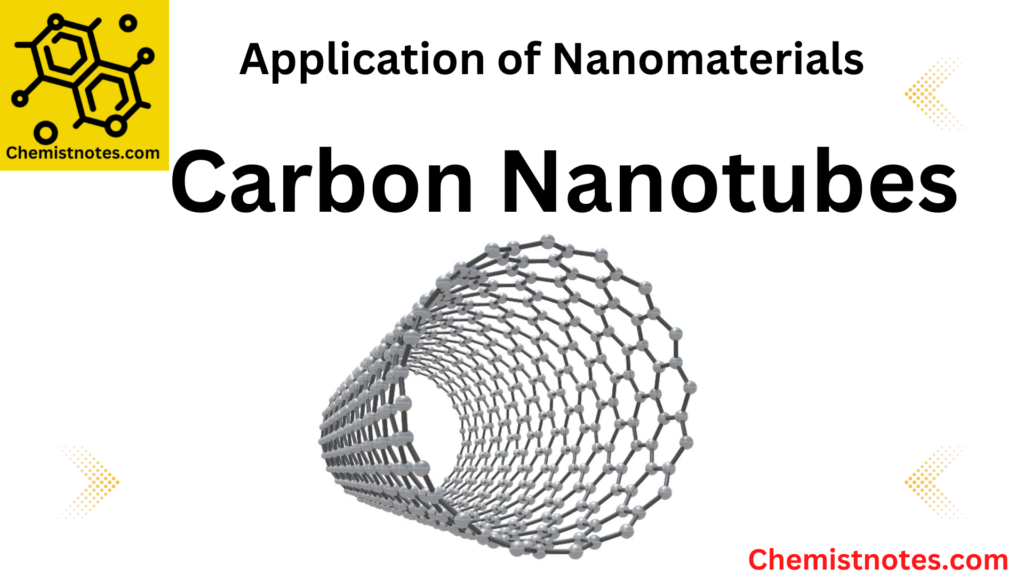
First things first, what are these mystical nanotubes anyway? Think of a sheet of chicken wire, but way, way cooler. That's basically a sheet of graphene. Now, imagine rolling that chicken wire up into a perfect little tube. Boom! You've got yourself a carbon nanotube. Pretty neat, huh? These things are seriously strong, incredibly lightweight, and have some wild electrical properties. We're talking materials that could revolutionize everything from electronics to aerospace. Seriously, the possibilities are endless. Imagine super-strong, super-light airplane wings, or tiny medical robots that can zip around inside your body. It’s enough to make you want to learn chemistry, right? (Or at least pretend to!)
Now, the million-dollar question (or maybe the billion-dollar question, depending on the lab!): how do we actually make them? Well, there are a few main ways, and they all involve some pretty intense conditions. We're not talking about mixing things in a beaker and stirring. Nope. We're talking about heat, lots of it, and special environments. Think furnaces that get hotter than the surface of the sun. Okay, maybe not that hot, but pretty darn hot. And you need the right ingredients, of course. Carbon, duh! But not just any carbon. We need it in a form that's ready to be shaped into these little tubes.
The Big Three: How We Do It
So, let's talk about the most common methods. Scientists have figured out a few ways to coax carbon atoms into forming these tubular structures. It's all about controlling how those carbon atoms arrange themselves. It's like giving them a specific set of instructions and the perfect environment to follow them. Imagine a very precise dance, and we're the choreographers, telling the carbon atoms exactly where to move and when.
1. Chemical Vapor Deposition (CVD): The Star of the Show
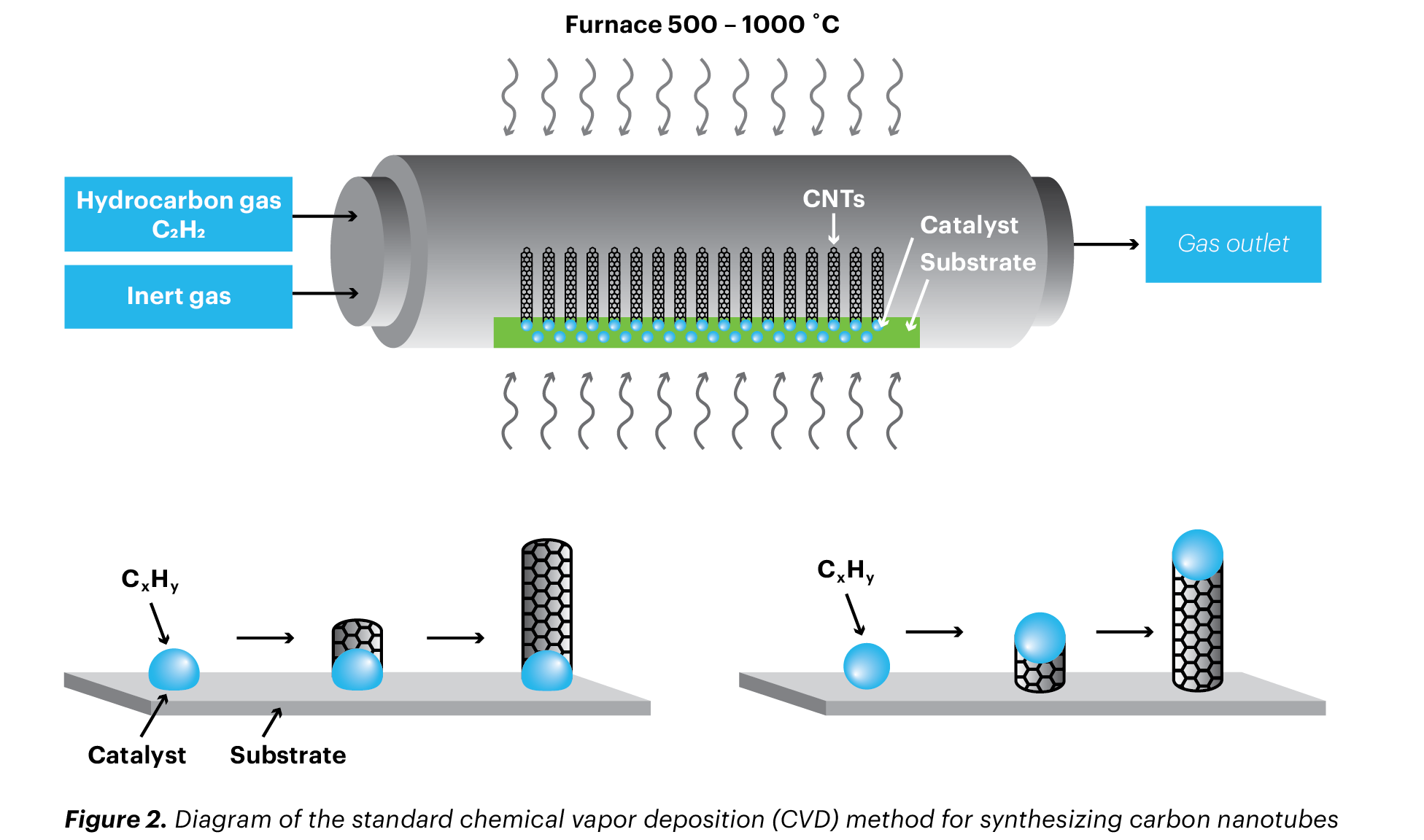
This is probably the most popular method out there. Think of it as using a gas to "grow" your nanotubes. Sounds a bit like magic, doesn't it? But it's really clever chemistry. You start with a substrate, which is basically a fancy word for a base material, like a silicon wafer. And on this substrate, you put some tiny metal catalyst particles. These catalysts are super important. They act like little seeds for your nanotubes to grow on. Without them, it’s much harder to get things started. It’s like trying to grow a plant without soil, you know?
Then, you heat everything up. We're talking temperatures of around 700 to 1000 degrees Celsius. Yes, that's hot. Like, really hot. You're basically creating a miniature furnace. Then, you pump in some carbon-containing gas. Think of gases like methane (the stuff in natural gas, but purified, of course) or acetylene. This gas is our carbon source. As the gas flows over the hot substrate with the catalyst particles, the carbon atoms in the gas start to break free. And where do they go? You guessed it! They land on those tiny metal catalyst particles.
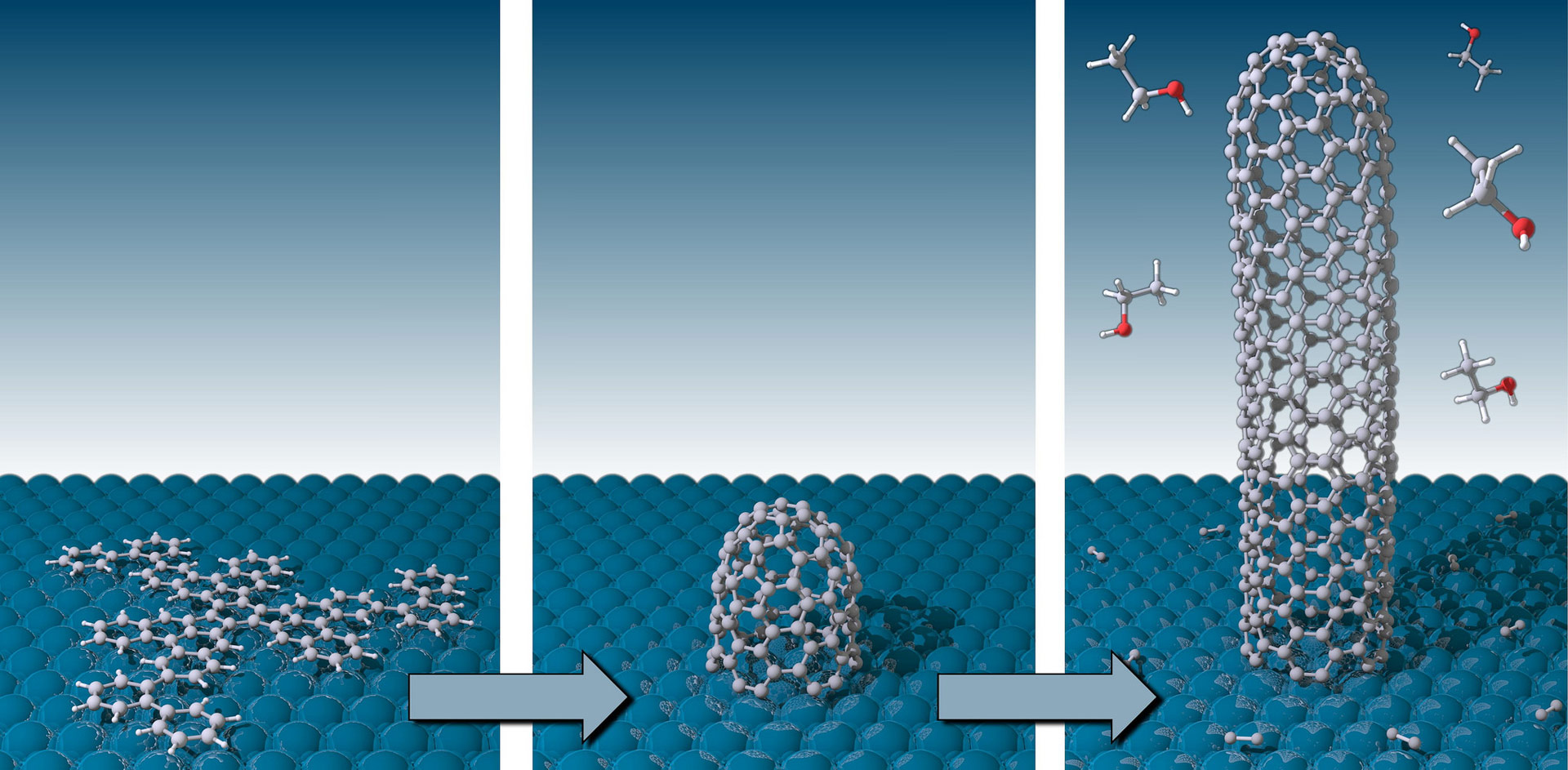
And here's the cool part: the catalyst helps the carbon atoms arrange themselves into those perfect little hexagonal rings. And then, those rings start to link up, growing upwards from the catalyst particle, forming the tubular structure. It’s like a tiny chimney being built, one carbon atom at a time. The catalyst essentially guides the process, ensuring the carbon atoms connect in the right way to form the nanotube. And you can control the type of nanotube you get – single-walled or multi-walled – by tweaking the conditions. Pretty neat, right? It's like having a little nanotube factory on a chip.
The beauty of CVD is that you can control the alignment of the nanotubes. You can get them to grow in specific directions, which is super important for certain applications. Imagine if you wanted to use them in circuits; you’d want them to be all neat and orderly, not just a tangled mess. CVD allows for that kind of precision. Of course, there are different variations of CVD, like thermal CVD and plasma-enhanced CVD (PECVD), which use plasma to help break down the gas even more efficiently. Each has its own little quirks and advantages, but the core idea is the same: heat, catalyst, and carbon gas.
2. Arc Discharge: The Sparky Method
This method sounds a bit more dramatic, doesn't it? Arc discharge! It's like creating a mini lightning strike, but on purpose. And it’s been around for a while, one of the earliest ways to make nanotubes. So, how does it work? You take two graphite electrodes, which are basically rods made of pure carbon. You then put them in a chamber filled with an inert gas, like helium or argon. This gas is there to prevent the carbon from burning up in oxygen. We don't want soot, we want nanotubes!
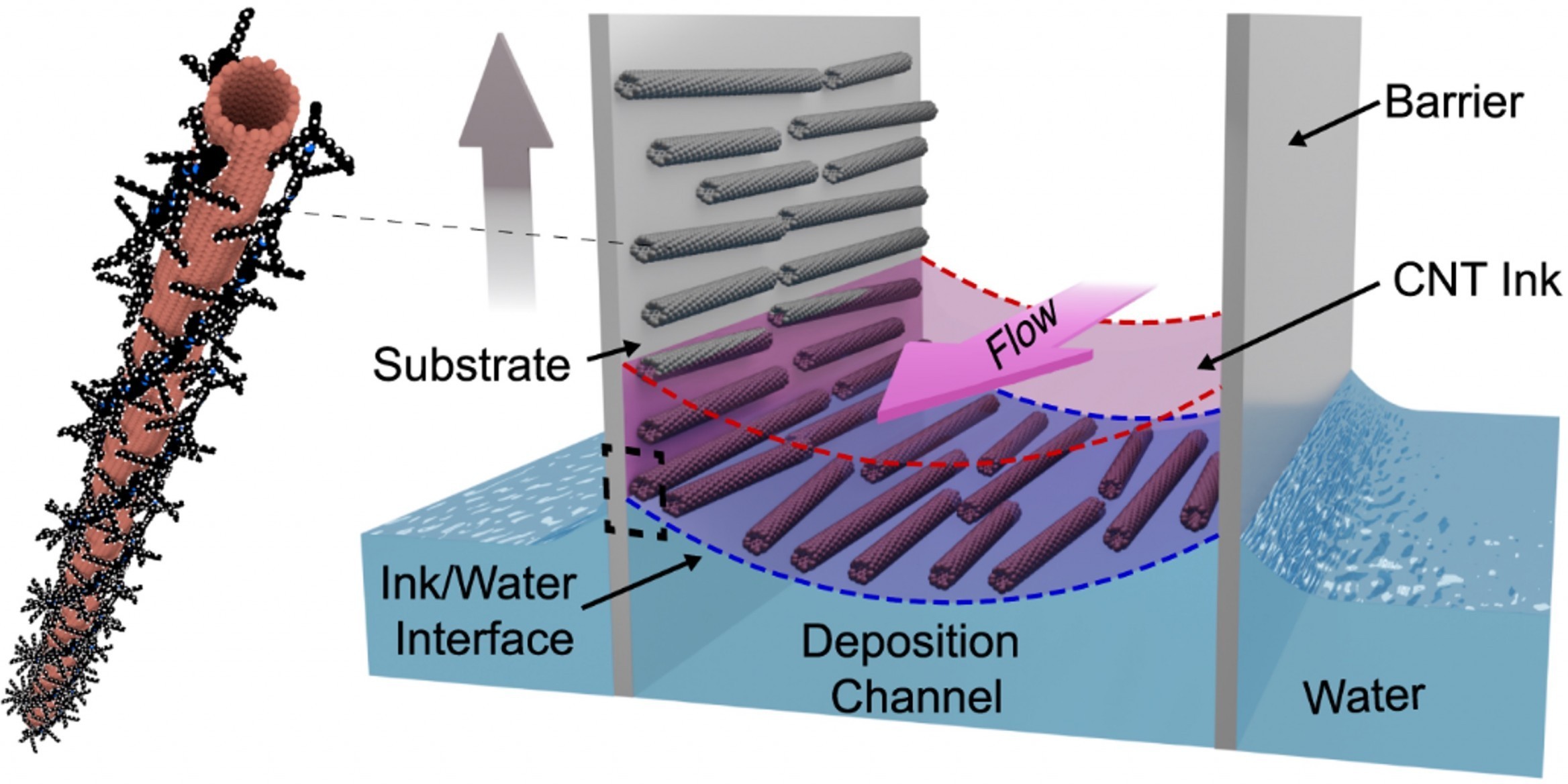
Then, you bring the two electrodes really close together, and you zap them with a huge amount of electricity. We’re talking thousands of amps. This creates a super hot arc between the electrodes, reaching temperatures that can be over 3,000 degrees Celsius. It’s seriously intense! The heat vaporizes the graphite electrodes, turning the carbon into a hot gas. And, as this hot carbon vapor cools down, the carbon atoms start to condense and form nanotubes. They literally just… appear! It's like magic happening in the plasma. Pretty wild to think about, isn't it? A tiny, controlled explosion creating these amazing structures.
Now, the nanotubes that form in arc discharge can be a bit of a mix. You often get a combination of single-walled and multi-walled nanotubes, along with other carbon structures like fullerenes. So, after you're done zapping, you have to do a whole bunch of purification to get just the nanotubes you want. It's a bit like sifting through a pile of stuff to find the treasure. You get a lot of product, but it needs a lot of cleaning up. Think of it as the wild west of nanotube production – lots of raw materials, a bit chaotic, but you can get some good stuff out of it.
The arc discharge method can produce high-quality nanotubes, especially single-walled ones, if you get the conditions just right. It's a good way to make a lot of them relatively quickly. But the downside is that it's not as precise as CVD. You don't have as much control over the alignment or the exact structure of the nanotubes. So, while it's great for bulk production, it might not be the first choice if you need perfectly ordered nanotubes for a specific high-tech application.
3. Laser Ablation: The Focused Beam Approach
This one is kind of similar to arc discharge, but instead of a big electrical zap, you're using a laser. Think of a super powerful laser beam focused onto a graphite target. This laser vaporizes the graphite, just like the arc did. And again, the carbon atoms cool down and form nanotubes. It's like a precise melting and re-forming process, all driven by light!
You typically do this in a furnace, again with an inert gas flowing. And you often have a metal catalyst mixed in with the graphite target. This catalyst helps to promote the formation of the nanotubes. The temperature here can be around 1200 degrees Celsius, so still pretty toasty, but not as extreme as arc discharge. The laser vaporizes the target, and the catalyst helps the carbon atoms assemble into those tubular structures as they cool.
Laser ablation is known for producing very high-quality, single-walled carbon nanotubes. Because you're using a laser, you have a bit more control over the energy input and the reaction. This can lead to a higher yield of pure, single-walled nanotubes. It's a bit like using a scalpel versus a hammer; it's a more precise tool. However, it can be more expensive than arc discharge, mainly due to the cost of the laser and the overall process. So, it's often used when you need the absolute best quality and purity, and the cost isn't the primary concern.
Again, like arc discharge, you still need to purify the product afterwards. There will be some leftover catalyst and maybe some amorphous carbon (just random carbon atoms not in a tube form). So, purification is a key step for all these methods. It’s like baking a cake; you put in all the ingredients, you bake it, but then you still need to frost it to make it perfect! The purification process itself can involve using acids to dissolve the catalyst, or specific solvents to separate the nanotubes from other impurities. It’s a whole science in itself, really.
So, Is It Easy?
Now, after all this talk of hot furnaces and lasers, you might be thinking, "Can I really do this at home?" And the honest answer is… probably not. Unless you happen to have a laboratory-grade furnace that can reach a thousand degrees Celsius, a steady supply of pure gases, and a good understanding of chemical safety, it's a bit of a stretch. These methods require specialized equipment and a lot of technical expertise. It’s not like you can just grab some charcoal and a Bunsen burner and expect nanotubes to pop out.
But hey, that shouldn't stop you from learning more! The world of nanotechnology is incredibly exciting. And who knows what the future holds? Maybe one day, with advancements in technology, making nanotubes will become more accessible. Imagine a future where you can order a nanotube-growing kit for your science fair project. Wouldn't that be something? For now, though, it’s the domain of dedicated researchers in well-equipped labs. They’re the ones pushing the boundaries and figuring out how to make these incredible materials even better.
It’s a constant process of refinement, trying to get higher yields, purer products, and more control over the structure and properties of the nanotubes. They're tweaking catalysts, experimenting with different gases, and optimizing temperatures. It's a bit like a chef trying to perfect a new recipe; they try different ingredients and cooking times until they get it just right. And the "just right" for carbon nanotubes can unlock some truly amazing technologies. We’re talking about stuff that could change the way we live, work, and even heal. It’s pretty inspiring, when you think about it.
So, while you might not be personally synthesizing these tiny marvels anytime soon, you can definitely appreciate the ingenuity and hard work that goes into it. It's a testament to human curiosity and our drive to understand and manipulate matter at its most fundamental level. And that, my friend, is pretty cool in itself. Keep asking questions, keep learning, and who knows what you might discover!