
How To Make Metal Trusses
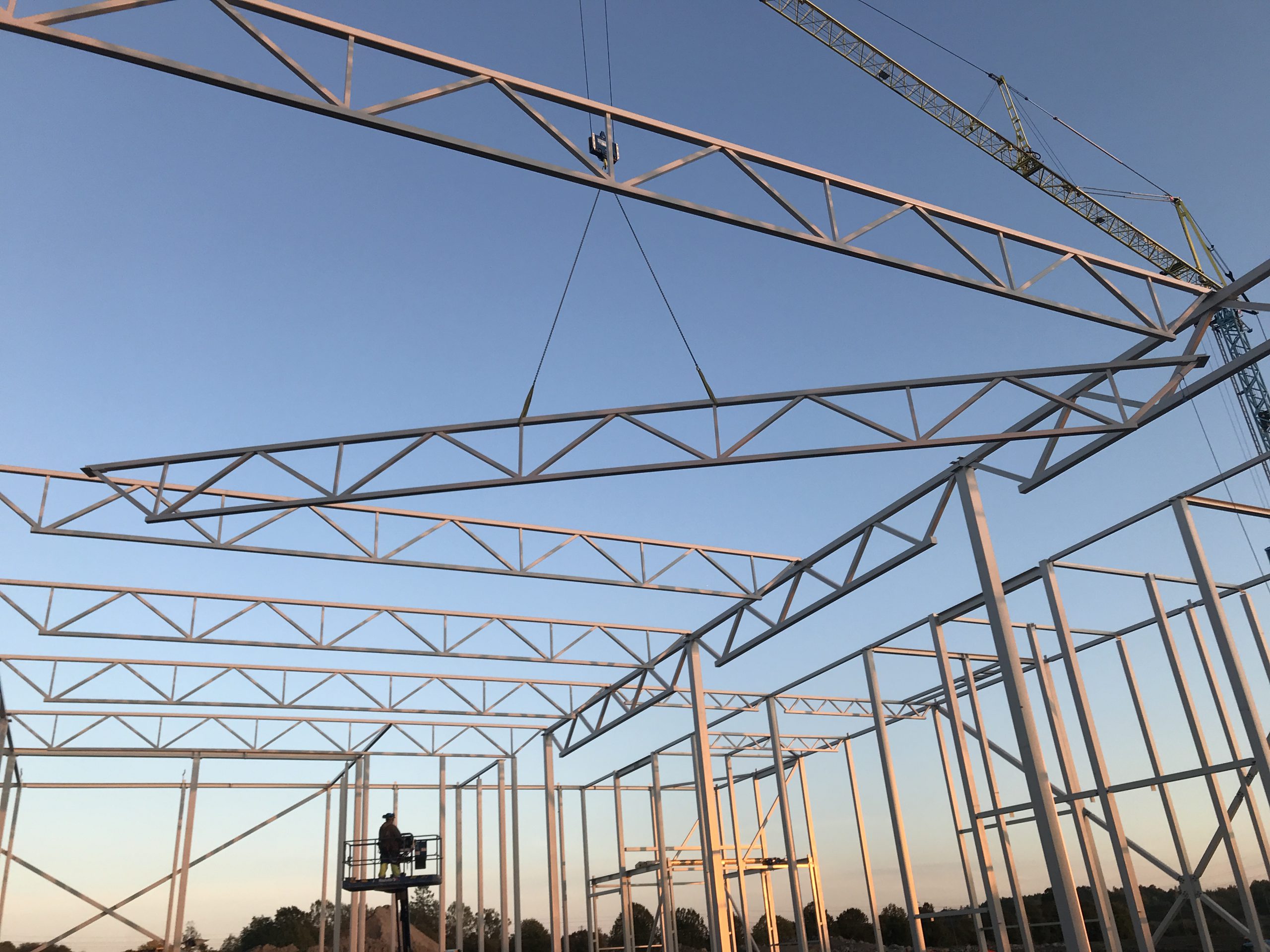
So, you wanna build something that scrapes the sky, huh? Or maybe just a really, really sturdy shed that can withstand a herd of stampeding rhinos? Whatever your architectural ambitions, you've probably heard whispers of these magical things called "metal trusses." Don't let the fancy name intimidate you. They're basically just glorified triangles, but oh boy, can these triangles do some heavy lifting – literally!
Think of a truss as the superhero of structural engineering. It’s like that friend who’s always got your back, no matter how much weight you pile on them. And unlike your average superhero, they don't usually have a dramatic backstory involving alien planets or radioactive spiders. Their origin story is a lot more… well, practical.
So, how do we whip up these structural titans? Grab a virtual coffee, settle in, and let's dive into the wonderfully weird world of making metal trusses. It's not exactly baking a cake, but it's a heck of a lot more satisfying when your creation can hold up a gymnasium.
The Grand Idea: Triangles Are Your Best Friends (Seriously!)
The secret sauce, the absolute bedrock of truss construction, is the triangle. Yep, that simple three-sided shape. Why triangles, you ask? Because they're inherently stable. Unlike a square, which can easily be squashed into a parallelogram (think of a wobbly card table), a triangle is like a stubborn mule – it refuses to change its shape under pressure. This rigidity is key when you're dealing with massive loads, like, say, the roof of a football stadium or a particularly enthusiastic flock of pigeons.
Engineers, bless their logical hearts, figured this out ages ago. They realized that by arranging these unyielding triangles in specific patterns, they could create incredibly strong and surprisingly lightweight structures. It’s like building with LEGOs, but instead of plastic bricks, you’re using hunks of steel, and instead of a Millennium Falcon, you’re aiming for something that won’t collapse when a rogue gust of wind decides to audition for a hurricane.
The Anatomy of a Truss: More Than Just Sticks
A typical metal truss is made up of several components, each with its own important job. Think of it as a well-rehearsed orchestra, where every instrument plays a crucial part in the symphony of stability.

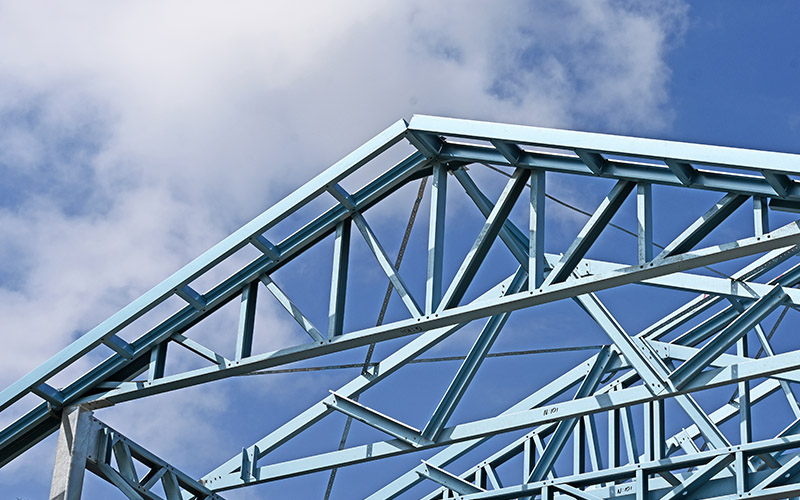
- The Chords: These are the outer members of the truss, usually the top and bottom. They’re the ones taking most of the bending forces. The top chord is typically in compression (getting squished), and the bottom chord is in tension (getting stretched). Imagine trying to bend a ruler – the top side gets squashed, the bottom side stretches. Metal trusses are built to handle this kind of polite disagreement.
- The Web Members: These are the diagonal and vertical pieces connecting the chords. They form those glorious triangles we talked about. Their job is to transfer the loads from the chords to the supports. They’re the unsung heroes, the stagehands making sure the stars (the chords) can shine without the whole production crashing down.
- The Joints (or Nodes): These are where all the members meet. This is where the magic happens, where all the forces are transferred. They need to be strong enough to handle the stress. A weak joint is like a chain with a rusty link – it’s only as strong as its weakest point, and nobody wants a weak point when you’re holding up the sky.
The Making Process: It's Not for the Faint of Heart (Or the Unprepared)
Alright, so you've got your triangle obsession and your understanding of truss anatomy. Now, how do you actually make one? Well, it’s not as simple as grabbing a hammer and some nails. We’re talking about serious engineering here, folks.
Step 1: Design and Engineering – The Brainy Bit
Before a single piece of metal is cut, there’s a whole lot of math. And I mean a lot. Engineers will use sophisticated software to calculate exactly what forces the truss will experience. Wind load? Snow load? The weight of your eccentric uncle doing a celebratory jig on the roof? All of it is factored in. They’ll determine the precise size, shape, and grade of steel needed for each member. This isn’t guesswork; this is the difference between a majestic structure and a pile of very expensive scrap metal.
Think of it like this: if you’re building a sandcastle, you can wing it. If you’re building a nuclear power plant, you’re going to want some highly qualified individuals with calculators and stern expressions involved. Trusses fall somewhere in between, leaning heavily towards the latter.
Step 2: Material Selection – Steel, Glorious Steel!
The material of choice for most metal trusses is steel. Why steel? Because it’s strong, durable, and can be shaped into all sorts of useful forms. It’s also surprisingly elastic, meaning it can bend a bit under load without breaking, which is a good thing when the wind decides to play a spirited game of tug-of-war with your building. Different grades of steel exist, each with its own properties. Your engineer will specify which type is needed for maximum awesomeness and minimal catastrophic failure.
Aluminum can also be used for lighter-duty trusses, but for heavy-duty work, steel is the undisputed champ. It’s the Arnold Schwarzenegger of building materials.
Step 3: Fabrication – Cutting, Shaping, and Welcoming the Sparkle
This is where things get hands-on. The raw steel beams are cut to the precise lengths determined by the design. We’re talking high-tech saws and plasma cutters here, not your grandpa’s rusty handsaw. Then, these pieces are shaped, if necessary, and prepared for joining.

The real spectacle, though, is the welding. This is where the magic *really happens. Skilled welders join the members together, creating those crucial nodes. It’s a fiery, electrifying process, and when done correctly, it creates a bond stronger than a toddler’s grip on a forbidden cookie. The sparks fly, the metal glows, and a beautiful, albeit slightly intimidating, triangle starts to take shape. It’s like watching a blacksmith from the future forge the very bones of a building.
Sometimes, instead of welding, mechanical fasteners like bolts are used. This is common for trusses that might need to be disassembled or transported in sections. It’s like a giant, heavy-duty Meccano set. Still strong, just a bit more… un-weld-able.
Step 4: Assembly and Quality Control – The Final Check
Once the individual truss members are joined, the whole truss is assembled. This is often done in a fabrication shop, on a large, flat surface. Every weld, every bolt, every measurement is checked and double-checked. This is the crucial quality control phase. You don't want a truss that's even slightly off, because even a millimeter can make a big difference when you’re dealing with tons of force.

Imagine a surgeon meticulously checking their instruments before a vital operation. That’s the level of precision we’re talking about. A faulty truss is a recipe for disaster, and nobody wants to be the reason the sky falls.
The Payoff: Strength, Efficiency, and Maybe a Few Compliments
So, after all that engineering, cutting, welding, and checking, you have a metal truss. What’s the big deal? Well, these things are incredibly efficient. They use less material to achieve greater strength compared to a solid beam. This means lighter structures, which translates to lower foundation costs and easier erection.
Plus, let’s be honest, they look pretty cool. Those intricate patterns of steel, supporting massive loads with apparent ease, are a testament to human ingenuity. You can stand under a well-designed truss and feel a sense of security, a quiet confidence that this triangle-y marvel has your back. So, the next time you see a building with a prominent truss system, give it a nod of respect. It’s more than just metal; it’s a carefully engineered masterpiece, a testament to the power of triangles and the magic of a good weld.