
How To Measure Expanded Steel
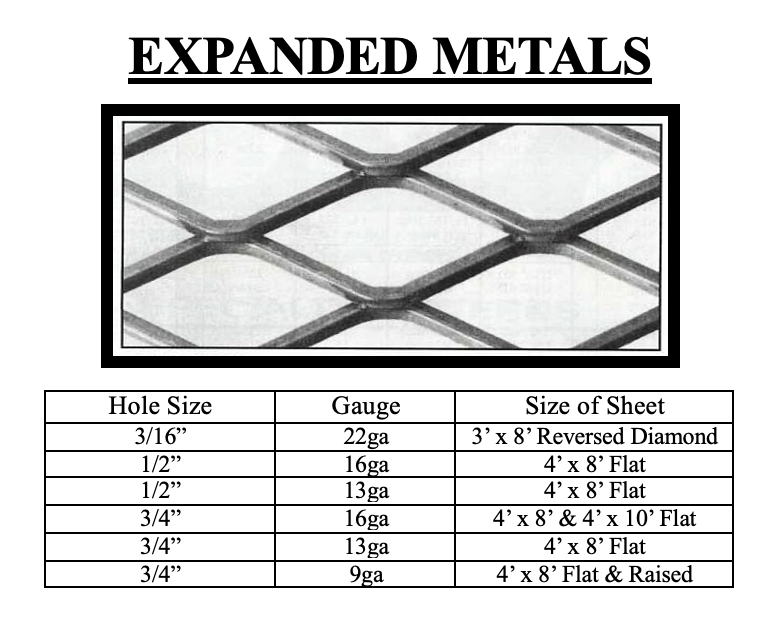
So, you’ve got this… thing. This metal mesh that looks like it’s been stretched out of its mind, right? Expanded steel! It’s super handy for all sorts of projects, from reinforcing stuff to making cool garden trellises. But then comes the moment of truth: you gotta measure it. And sometimes, it’s not as straightforward as grabbing your tape measure and going, "Yep, that's 5 feet!"
Don’t sweat it, though! Measuring expanded steel is totally doable. Think of it like trying to measure a tangled ball of yarn – a little tricky, but not impossible. We’re gonna break it down, no fancy engineering degrees required. Grab your coffee, maybe a biscuit (you’ve earned it!), and let’s dive in. It’ll be fun, I promise! Mostly.
The Usual Suspects: Basic Measurements
Alright, first things first. Most of the time, you’ll just need to know the overall dimensions of your sheet or piece of expanded steel. This is where your trusty tape measure comes into play. Yep, the same one you use to figure out if that couch will actually fit in your living room. Handy, huh?
So, you've got your sheet of expanded steel. Lay it flat. Now, imagine it’s a regular old rectangle (even though it’s got all those holes, bless its heart). You’re going to measure the length and the width. Simple enough, right?
Hold your tape measure at one edge and stretch it across to the other. Make sure you’re pulling it taut. No saggy tape measures allowed! We want accuracy here, people!
Now, the tricky part. Because of those diamond-shaped holes, you might be tempted to measure along the edge of the metal strands. Don't do it! Well, unless you really want to be precise about the metal itself, but for most practical purposes, you're measuring the overall area. Think of it like measuring a piece of fabric. You're not measuring every single thread, are you? No, you're measuring the whole darn piece!
So, measure from the outside edge of the frame, if there is one, or from the very tip of one outer strand to the very tip of the opposite outer strand. You get the gist. Just get those big, overall dimensions. Easy peasy, lemon squeezy!
What About Those Holes? The "Mesh" Part!
Now, this is where things get a little more interesting, and maybe a tad confusing for newbies. Expanded steel isn’t just a flat sheet; it’s got those cool, open patterns. And sometimes, you do need to know about that pattern. Like, how big are the openings? Or how thick is the metal strip that makes up the pattern?
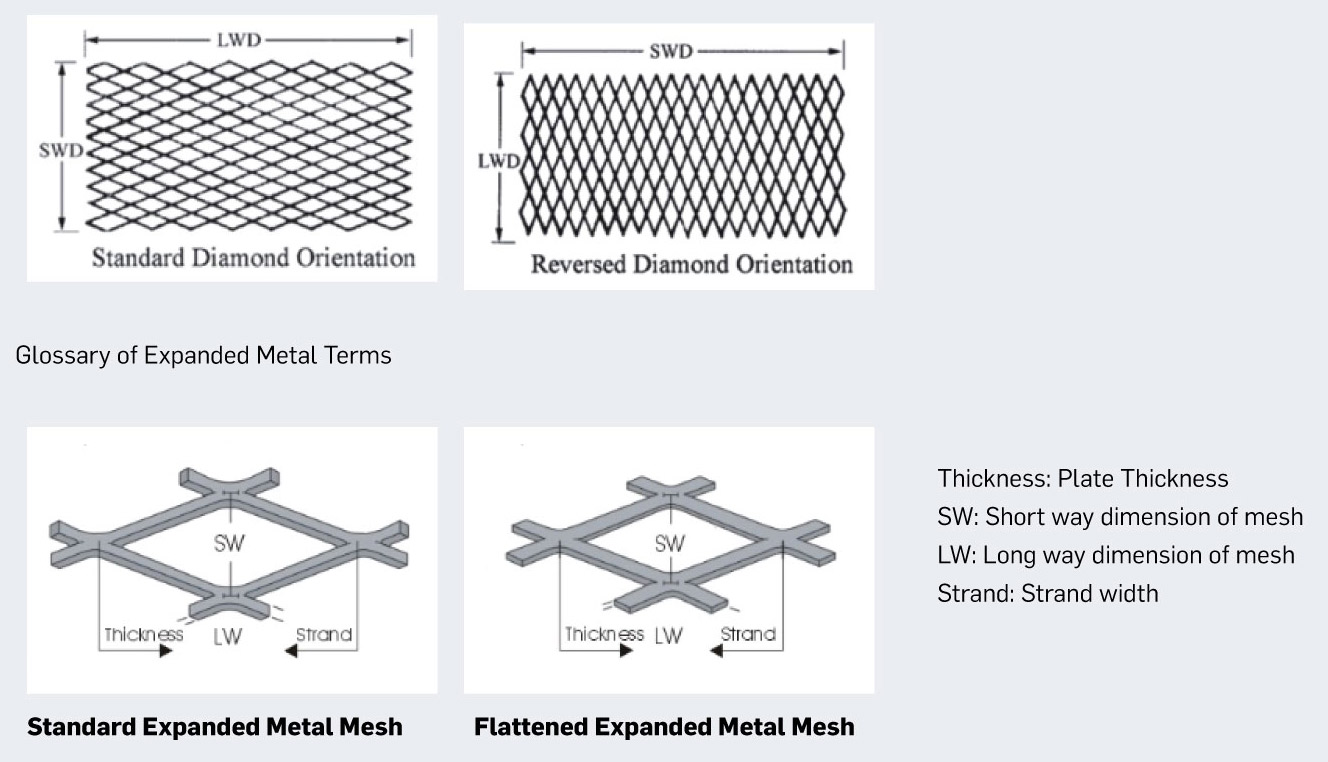
Let’s tackle the openings first. These are often called the mesh size or aperture. You’ll see them described in two ways: Short Way of the Diamond (SWD) and Long Way of the Diamond (LWD). Get ready for some fun acronyms!

Imagine one of those diamond shapes. The SWD is the distance from one point of the diamond to the opposite point, measuring across the shorter diagonal. The LWD is the distance across the longer diagonal. Simple, right? Well, kind of.
Here’s a little trick: when you’re measuring these, try to pick a center point in one of the openings. This helps avoid getting skewed measurements if your sheet isn’t perfectly cut. You might even want to use a ruler or a smaller measuring tape for this part, as the openings can be quite small.
Don't measure from the very edge of the metal strands. Instead, measure from the inside of one strand to the inside of the opposite strand. Think of it as measuring the empty space. It’s all about clarity, my friends!
Why does this matter, you ask? Good question! The mesh size tells you about airflow, visibility, and what kind of stuff can pass through. Need to keep small critters out? You’ll want a smaller mesh. Need good drainage? A larger mesh might be your jam.
Strand Width and Thickness: The Nitty-Gritty
Okay, so you've got the overall size and the mesh size. But what about the metal itself? Sometimes, you need to know how thick the strands are, or how wide they are. This is especially important if you're trying to match an existing piece, or if the structural integrity of the expanded steel is a big deal for your project.
This is where things can get a little more fiddly. You’ll likely need a precise measuring tool. A good old-fashioned ruler might not cut it. We're talking calipers here, folks! Or maybe a very accurate ruler with fine markings. If you don't have these, you might have to estimate, or just rely on the manufacturer's specs if you bought it new.
To measure the strand width, find a strand and measure its width from side to side. Again, try to pick a straight section if possible. If the strand is tapered (which is rare but possible!), you might have to measure at a few points and take an average.
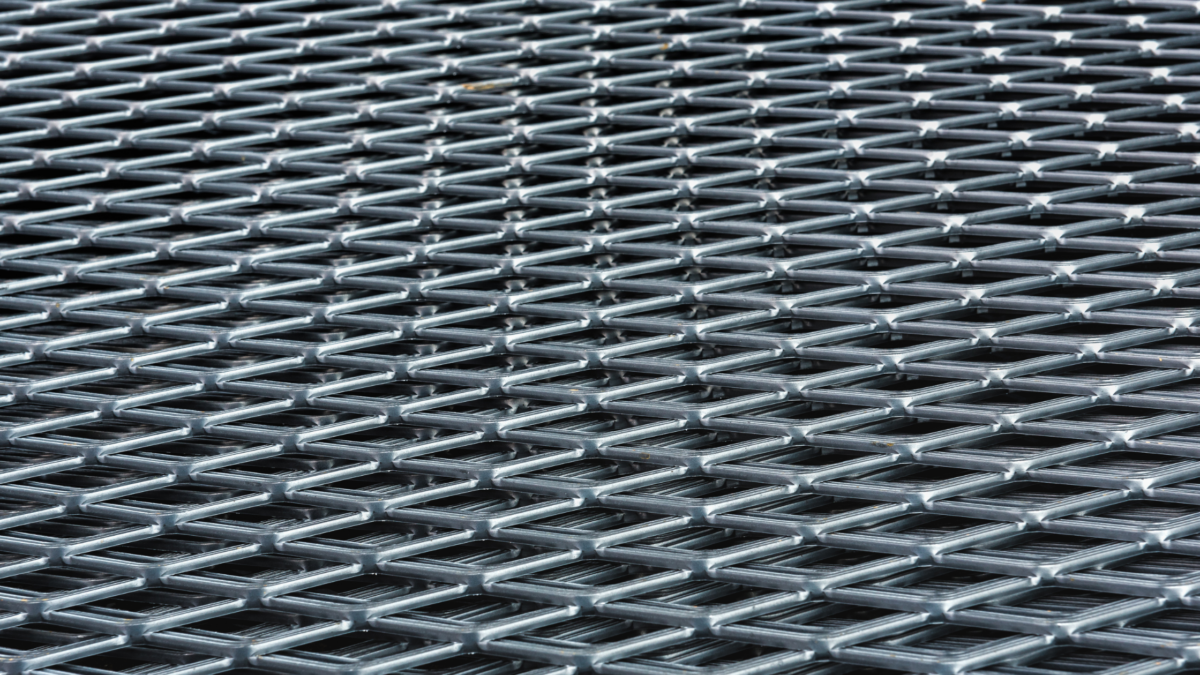
The strand thickness is probably the most challenging to measure accurately without specialized tools. You’re looking at the depth of the metal strand. If you’ve got a really thin piece, you might be able to use a very fine caliper. For thicker stuff, it’s often a visual estimation or relying on the product description.
These measurements tell you about the strength and durability of the expanded steel. Thicker, wider strands mean a sturdier, stronger piece. Important if you’re, say, building a ramp for your pet dinosaur. You don’t want that collapsing, right?
The "Standard" Sheet Sizes: What to Expect
When you buy expanded steel, it often comes in pre-cut sheets. These have "standard" sizes, which are good to know so you’re not surprised. Think of them as the off-the-rack suits of the expanded steel world. They’re not custom, but they get the job done for most people!
Common sizes include 4 feet by 8 feet, or 4 feet by 10 feet. You might also see it in smaller rolls, like 1 foot by 5 feet or something similar. These are usually for smaller DIY projects. If you’re building a fortress, you’ll probably need the bigger sheets!
The mesh size also has its own standards. You’ll hear terms like "standard expanded metal" or "heavy expanded metal." Standard usually has smaller diamond openings, and heavy has larger, thicker strands. It’s like the difference between a dainty scarf and a thick wool blanket – both are fabric, but they serve different purposes!
When you’re looking at product descriptions, you’ll often see a combination of dimensions and mesh size. For example, you might see "4’ x 8’ x 1.5” x 0.5”". That's a lot of numbers, I know! But it’s usually broken down like this: overall dimensions (4ft x 8ft), then LWD (1.5 inches), then SWD (0.5 inches). Sometimes they might list strand width or thickness instead of SWD. It can be a little like deciphering hieroglyphics at first, but you'll get the hang of it!
Why Are We Measuring All This, Anyway?
So, why all this fuss about measurements? Why can’t we just eyeball it? Well, because sometimes, even a little bit off can cause big problems. Especially in construction or when you need things to fit perfectly.
Imagine you’re building a security cage for your prize-winning collection of garden gnomes. If the mesh is too big, those mischievous squirrels might get in and relocate your gnomes. Disaster! If the sheet is too small, you can’t even enclose them. Double disaster!
Or think about using expanded steel as a reinforcement for concrete. The size and spacing of the mesh directly impact how well it holds the concrete together. Too flimsy, and your concrete might crack. Too bulky, and it might not integrate properly. It’s a delicate balance, my friends.
And let’s not forget aesthetics! If you’re making something decorative, like a unique screen for your patio, you want those diamonds to be just right. You want that perfect, uniform pattern. Nobody wants a wonky trellis, right?
Tips and Tricks for Accurate Measuring
Here are a few little nuggets of wisdom to make your measuring experience smoother:
1. Get the Right Tools: A good, sturdy tape measure is essential. For more detailed measurements of the mesh, a ruler with clear markings or even calipers can be a lifesaver. Don’t try to measure tiny holes with a floppy measuring tape, it’s a recipe for frustration.
2. Good Lighting is Your Friend: Seriously. Trying to read tiny numbers or distinguish between different strands in dim light is a recipe for mistakes. Find a well-lit area, or bring a flashlight. Your eyes will thank you.
3. Flat Surface is Key: Always try to lay your expanded steel on a flat, stable surface. This prevents it from bending or warping, which can throw off your measurements. Unless, of course, you’re intentionally measuring it in a bent state, but that’s a whole different ballgame!

4. Measure Twice, Cut Once: This old adage is a classic for a reason. Double-check your measurements before you make any cuts. It’s much easier to re-measure than to try and fix a botched cut. Trust me on this one.
5. When in Doubt, Ask: If you’re buying expanded steel and you’re confused about the specifications, don’t hesitate to ask the seller or manufacturer. They’re the experts, and they can usually clarify what all those numbers mean. Better to ask a silly question than make a costly mistake!
6. Consider the Gauge: While you might not be able to easily measure it, know that the thickness of the metal itself is often referred to as the "gauge." Lower gauge numbers mean thicker metal. This is usually listed by the manufacturer, but it’s good to be aware of if strength is a concern.
7. Understand the Direction: Expanded steel has a "long way of the metal" (LW) and a "short way of the metal" (SW). This refers to the direction of the diamond pattern. When you’re buying or specifying it, knowing which way the pattern runs can be crucial for certain applications. Usually, this is indicated in the product specs.
It’s Not Rocket Science… Mostly!
See? Measuring expanded steel isn't some dark art reserved for metal wizards. It’s just about being a little bit careful and knowing what you’re looking for. You’ve got the overall dimensions, the mesh size, and the nitty-gritty details of the strands. With a little practice, you’ll be measuring this stuff like a pro!
So, the next time you’re faced with a sheet of this wonderfully versatile material, you’ll know exactly what to do. You can confidently grab your tape measure, maybe your calipers if you’re feeling fancy, and get those numbers down. And if all else fails, just remember: measure twice, cut once, and for goodness sake, don't let those squirrels get your gnomes!
Go forth and measure, brave DIYer! You’ve got this. And if you’re ever in doubt, just imagine you’re measuring for the ultimate gnome fortress. That should provide plenty of motivation!