
How To Put Out Fire Without Water

Hey there! Grab your mug, settle in. Ever had one of those moments where a tiny flame decides to throw a party it wasn't invited to? Yeah, me too. And the panic, right? Your brain just screams "WATER! GET WATER!" But what if there's no water nearby? Or worse, what if water is the absolute last thing you want to use? Like, on a grease fire? Nightmare fuel, my friends. So, let's have a little chat, over this imaginary coffee, about how to be a fire-fighting ninja, even when the hose is nowhere to be seen. No capes required. Mostly.
First things first, let's get one thing straight: fire needs three things to keep its party going. Think of it as the unholy trinity of toastiness. It's fuel, oxygen, and heat. Get rid of just one of those, and poof! The fire waves goodbye. It’s like breaking up with a bad date. You gotta remove what makes them stick around, you know?
So, our mission, should we choose to accept it (and we totally should, because, you know, safety), is to disrupt that little fiery friendship. We're not going to be pouring buckets, oh no. We’re talking about smarter, sometimes surprising, ways to shut down the show.
The 'Smothering' Superpower: Cut Off the Air Supply
This is where the "no water" rule really shines. Think about it: a candle in a jar. You put a lid on it, and what happens? It fizzles out. That's because you've just cut off its oxygen. Simple, right? Fire is basically a drama queen, and it needs an audience of air molecules to perform. Take away the audience, and the show’s over.
So, what can we use for this smothering business? Well, it depends on the type of fire, of course. We'll get to the specifics, but the general idea is to create a barrier. Something that says, "Sorry, buddy, no air for you today."
The Kitchen Calamity: Grease Fires, You Scoundrel!
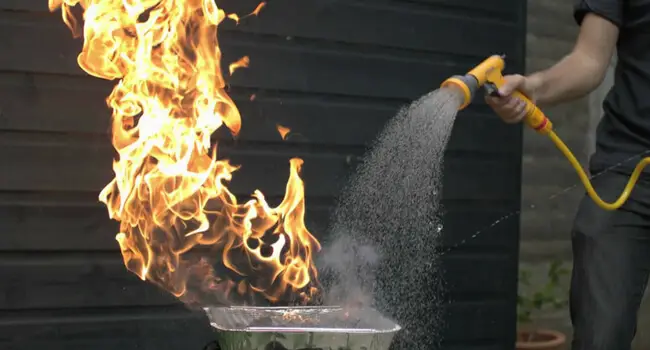
Okay, let's talk about the worst-case scenario for water. You're frying up some bacon, feeling like a culinary god, and suddenly, whoosh! The oil catches fire. Your first instinct might still be to grab that pitcher. STOP. DO NOT. I REPEAT, DO NOT USE WATER ON A GREASE FIRE. Seriously, this is the most important fire-safety tip you'll hear today, maybe ever. Water and hot oil? It’s a recipe for disaster, like putting socks on a cat. It creates steam, which then explodes and throws flaming oil everywhere. Suddenly, your kitchen looks like a scene from a superhero movie, but not the fun kind.
So, what do you do? You smother it. With a lid! If the fire is in a pan, and it’s not too big, carefully slide a metal lid over the pan. This cuts off the oxygen like a pro. Leave it there until it’s completely cool. Don't peek! Peeking is for curious cats, not for grease fire wranglers. You can also use a baking soda. Yep, that stuff in your fridge that fights smells? It’s also a fire retardant! Pile it on, and it’ll help smother the flames. Salt can work in a pinch too, though baking soda is generally better. Think of it as a dry hug for the fire. A very effective, flame-killing dry hug.

What about those fancy kitchen fire extinguishers? Those are great! They're designed for Class K fires (that's the kitchen grease category). They release a special foam that smothers the fire and cools it down. If you cook a lot, it’s a seriously good investment. Like, life-saving good. And your countertops will thank you.
The Electrical Emergency: Zap! Goes the Fire
Another no-water zone: electrical fires. Water conducts electricity, duh. So, dousing an electrical fire with water is like playing a game of fiery roulette with a very unhappy outcome. You'll be in a world of hurt, and not the good kind of hurt, like after a really good workout. You need to cut the power first, if you can do so safely. Like, flip the breaker. If you can't reach the breaker without getting close to the fire, don't be a hero. Just get out.
Once the power is off, you might still have some smoldering. For electrical fires (Class C fires), you need a Class C fire extinguisher. These are usually dry chemical extinguishers. They work by interrupting the chemical reaction of the fire. It’s like a fire-fighting superhero that doesn't involve water. Who knew?
If you don't have a fire extinguisher and the power is off, you might be able to smother it with something non-conductive. Think a thick blanket, but make sure it's made of natural fibers like wool. Synthetics can melt and make things worse. And again, never use water. Seriously, I can't stress this enough. It's a no-go zone.
The 'Cool Down' Crew: Removing the Heat
So, we’ve talked about cutting off air. What about heat? Fire needs heat to keep burning. If you can remove the heat source, or cool down the fuel, the fire will eventually lose steam. Literally, if you were using water, but you're not. So, less literal steam.
For small fires, sometimes you can just remove the burning material. If a piece of paper is on fire on your desk, and you can safely pick it up with tongs and drop it into a metal bin, you've just removed the fuel and the heat source from its immediate vicinity. Easy peasy, lemon squeezy, if you can do it without setting yourself on fire. Safety first, always!
The 'Sandwich' Strategy: Burying the Flames
Remember sandboxes as a kid? They were little havens of fun, right? Well, sand is also a fire-fighting friend. Think about it: sand is non-flammable, and it’s dense. If you can dump a whole bunch of sand on a fire, it can smother it (cutting off oxygen!) and help cool down the fuel. It’s like giving the fire a heavy, suffocating blanket made of tiny rocks. Not exactly a spa treatment for a flame.
This is especially effective for Class B fires (flammable liquids, not grease, but similar principles) and Class A fires (ordinary combustibles like wood and paper). If you live in an area prone to wildfires, you might even see people using sandbags to try and contain or extinguish smaller fires. It’s not as glamorous as a fire hose, but it can be surprisingly effective.
The 'Dry Blanket' Method: Natural Fibers to the Rescue
We touched on this with electrical fires, but it’s worth reiterating. Certain materials, when used to smother, can also help reduce the heat. Think about a thick, woolen blanket. If you can carefully wrap it around a small fire (again, no water!), the wool can help starve the fire of oxygen. It's not as effective as a fire blanket specifically designed for fire fighting, but in a pinch, a heavy wool blanket can be your best friend.

The key here is to use materials that are non-flammable or slow to ignite. Cotton can burn, synthetics can melt and drip, so be careful. Always err on the side of caution. If you’re not sure, it’s probably better to just focus on getting out and calling for help. No one’s judging you for being safe.
When to Be a Hero and When to Be a Smartie Pants
Okay, let's get real. These non-water methods are for small fires. We're talking about a little grease flare-up, a small trash can fire, or a tiny electrical spark that you can safely extinguish. If the fire is growing rapidly, if it’s spreading, or if you feel any doubt whatsoever, your priority is to get yourself and others to safety.
Seriously. Your life is worth more than your toaster oven, even if it makes the most perfect toast. Get out, close doors behind you to slow the spread, and call the fire department. Let the professionals handle the big stuff. They have the gear, the training, and the sheer bravery to deal with flames that have gone wild. It’s not cowardly to evacuate; it’s smart. It’s strategic. It’s the sensible thing to do. Think of it as a tactical retreat, not a surrender.
Fire Extinguishers: Your Pocket-Sized Fire Fighters
So, what’s the best non-water weapon to have in your arsenal? Fire extinguishers, my friends! They are designed for specific types of fires. You’ll see them rated: Class A (ordinary combustibles), Class B (flammable liquids), Class C (electrical), and some are multipurpose (like ABC extinguishers).
For most homes, an ABC extinguisher is a good all-rounder. Keep one in the kitchen, maybe one in the garage or workshop. Learn how to use it! It’s not just for show. Remember the acronym PASS: Pull the pin, Aim at the base of the fire, Squeeze the handle, and Sweep from side to side. It’s like a little dance of destruction for flames. A very important, life-saving dance.
And remember to check the pressure gauge regularly. You don't want to grab a dud when disaster strikes. It's like having a superhero sidekick who’s always napping. Not very helpful.
The Takeaway: Be Prepared, Stay Calm
So, there you have it. Fire is a tricky beast, but it’s not invincible. By understanding what makes it tick – fuel, oxygen, heat – you can learn how to tick it off. And sometimes, that means going against your gut instinct of "water, water, everywhere!"
The key is to be prepared. Have a plan. Know where your exits are. Have a fire extinguisher, and know how to use it. For those common kitchen fires, remember the power of a lid and baking soda. For electrical fires, remember to cut the power and use the right extinguisher.
And most importantly, when in doubt, get out and call for help. There’s no shame in that game. Being safe is always in style. So, keep this little chat in the back of your mind. You never know when you might need to be a fire-fighting ninja, sans the water. Now, go on, finish that coffee. And maybe check the batteries in your smoke detectors while you're at it. Just a friendly suggestion!