
How To Read Hematocrit Tubes

Ever wondered what’s really going on inside those tiny glass tubes doctors use? They look so simple, right? But there’s a whole tiny world of information packed in there. We’re talking about hematocrit tubes, and trust me, they’re more interesting than you might think!
Think of them like a miniature science experiment you can hold in your hand. They’re these little glass straws, super thin and often red-tipped. When you see one, you’re looking at a snapshot of your blood’s inner workings.
And the best part? Reading them is like cracking a secret code. It’s surprisingly easy once you know the trick. You don’t need a fancy lab coat or years of medical school.
The Big Reveal: What's Inside?
So, what exactly are we looking at when we hold up a hematocrit tube? It’s essentially a way to separate your blood into its different parts. Blood isn’t just one uniform liquid, you see.
It’s made of a few key players. You have the red blood cells, which are the workhorses carrying oxygen. Then there are the white blood cells and platelets, which are your tiny defenders and repair crew.
The rest? That’s mostly plasma, the yellowish liquid that carries everything around. The hematocrit tube lets us see how much of each is in there.
The Centrifuge: The Magic Machine
Before we can read anything, these little tubes go for a spin. And not just any spin, oh no! They’re placed in a special machine called a centrifuge. This thing is a whiz! It spins at super-high speeds.
Imagine a tiny rollercoaster for your blood cells. The centrifugal force pushes the heavier stuff to the bottom. It’s like shaking up a salad dressing, but way more precise.
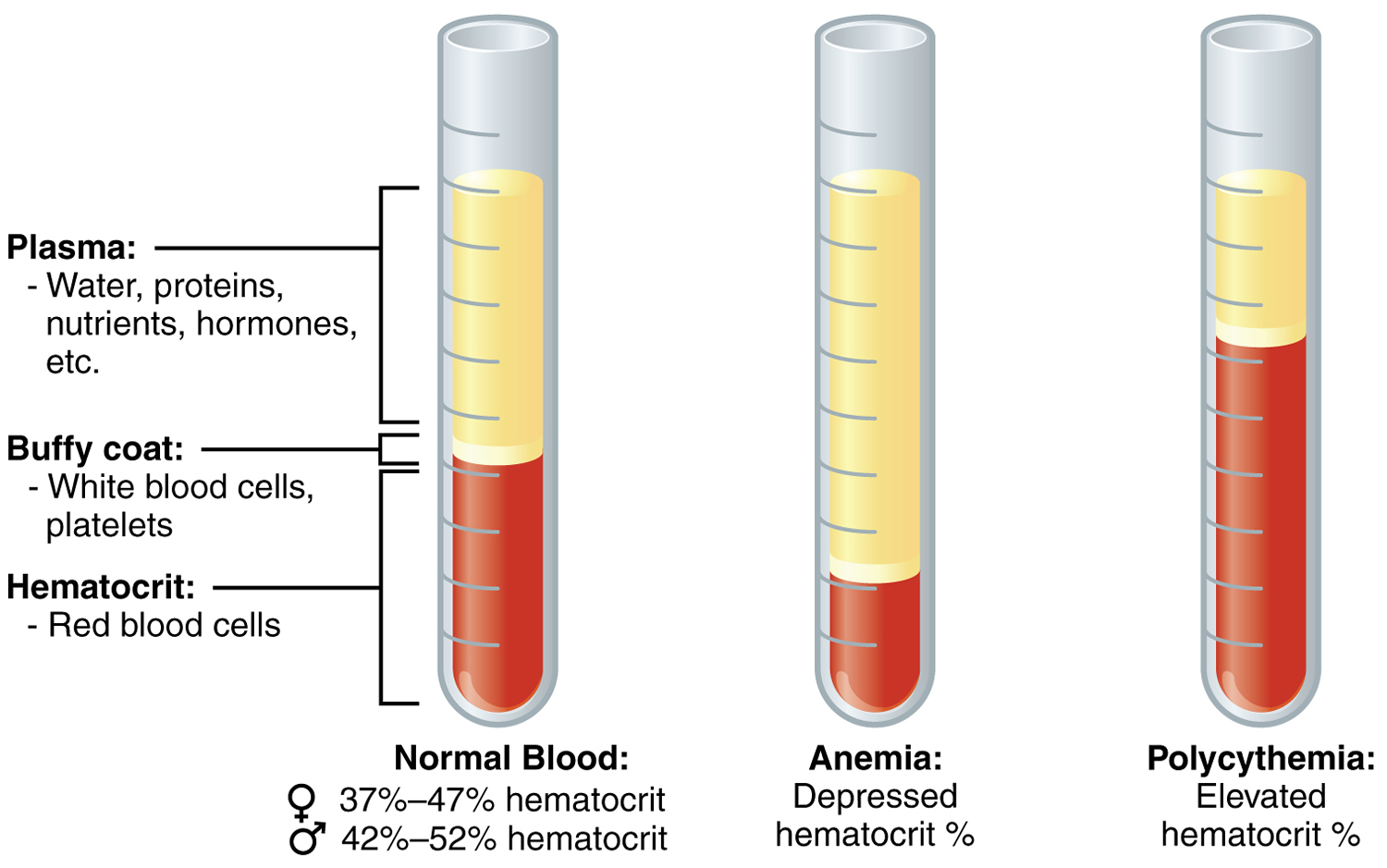
After a few minutes in the centrifuge, the magic happens. The blood separates into distinct layers, like a mini geological survey of your bloodstream.
The Layers of Your Blood: A Tiny Spectacle
Now, let’s talk about the show! When the hematocrit tube comes out of the centrifuge, you’ll see clear bands. The bottom layer is your packed red blood cells. They’re dense and settle down first.
Above that, there’s a thin, often whitish or buff-colored layer. This is your buffy coat. It contains the white blood cells and platelets. It’s a tiny but mighty group!
And finally, at the very top, you have the straw-colored plasma. This is the liquid part, where all the dissolved nutrients and proteins hang out.
Reading the Results: The Simple Science
So, how do we actually read these layers? It’s all about proportions. The main number we’re interested in is the hematocrit, often called HCT.
This number tells us the percentage of your blood volume that is made up of red blood cells. Think of it as how much space the red blood cells are taking up.
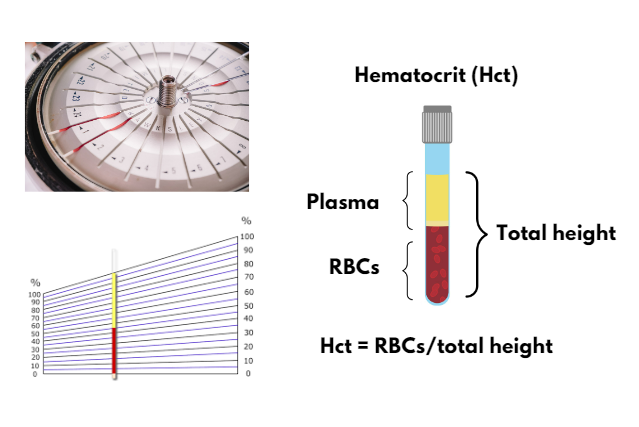
On the side of the hematocrit tube, or often on a special card that comes with it, there are markings. These markings are like a ruler for your blood layers.

The Ruler and the Numbers: Your Guide
You align the bottom of the packed red blood cells with the zero mark. Then, you look at where the top of the red blood cell layer ends. This point lines up with a number on the scale.
That number is your hematocrit percentage! It’s that straightforward. You're literally measuring the height of the red blood cell column compared to the total blood column.
It’s a visual representation of how much oxygen-carrying capacity you have. Pretty neat, huh?
Why It's So Special: A Window into You
What makes reading a hematocrit tube so special? It’s a direct, visual connection to your own body. You’re not just hearing a number from a doctor; you’re seeing it.
It’s a tiny piece of personal science. It shows you how your body is functioning on a fundamental level. It’s like having a little dashboard for your blood.
And the simplicity is part of the charm. No complicated charts, no confusing jargon. Just layers, a ruler, and a clear number.

The Entertainment Factor: It's Like a Mini-Mystery
There’s a certain fun, almost detective-like quality to it. You're deciphering a message from your own biology. What does this percentage mean today?
It can be surprisingly engaging. You might find yourself curious about how different things, like hydration or activity, could affect those layers. It sparks a natural curiosity.
It’s a small moment of self-discovery, delivered in a small glass tube. It makes the abstract concept of blood health feel tangible.
The "Wow" Moment: Seeing the Science
The real "wow" moment is when you see the separation. The distinct bands are so clear. You can’t help but be impressed by the power of the centrifuge.
And then, when you find that number, you’ve unlocked a piece of your health puzzle. It’s a small victory of understanding.
It’s a reminder that our bodies are incredibly complex and fascinating machines.
Making it Easy: Tips for Your Own Curiosity
If you ever get a chance to see one up close, embrace it! Don’t be shy about asking what the numbers mean.
Pay attention to the layers. Notice the color and thickness of each band. It’s a visual lesson in anatomy.
And remember, it’s not about diagnosing yourself. It’s about gaining a little more insight and appreciation for what’s happening inside.
A Tiny Treasure of Information
So, the next time you encounter a hematocrit tube, don’t just see a medical tool. See a miniature marvel of science.
See a direct link to your own health story. See a little piece of art, made of your own blood cells.
It’s a simple object, but it holds a world of fascinating information, just waiting for you to discover it.