
How To Read Steel Beam Sizes
Hey there, you! Ever look at a skyscraper, a fancy bridge, or even just your neighbor's new patio cover and wonder, "What's holding all that up?" Chances are, it’s steel beams. And not just any old steel beams, but sized steel beams. It sounds a bit like we're talking about a fancy new diet for girders, but it’s actually super important and, dare I say, a little bit cool once you get the hang of it.
So, you’ve probably seen these giant metal things, right? They’re the backbone of so many structures. But how do you know which beam is which? It's not like they have little name tags saying, "Hi, I'm Bob, the 12-inch Wide Flange." Nope! It’s all coded into numbers. And today, we’re going to crack that code together. Think of me as your friendly neighborhood steel-beam whisperer, ready to translate the hieroglyphics of structural engineering. No intimidating jargon, no confusing formulas (unless you really want them, in which case, we can save that for another day!). We’re just going to get a good, basic understanding. Ready to flex those brain muscles and feel a little bit like a construction guru? Let’s do this!
The Big Reveal: What Does a Steel Beam Size Actually Tell Us?
Alright, let’s dive right in. When you see a steel beam's designation, it's usually a string of letters and numbers. The most common types you'll encounter in North America are Wide Flange beams, often abbreviated as W-beams. You might also hear them called "I-beams" because, well, they kind of look like a capital 'I' if you squint hard enough. They are actually more like an 'H' if you look at them from the end, which is why some people call them H-beams. Tomato, tomahto, right?
The size designation for a W-beam is typically something like W12x26. See that? Not exactly a Shakespearean sonnet, but it holds all the vital information. Let’s break it down, piece by delicious piece. Think of it like a secret handshake for steel.
Deconstructing the Code: The "W" Factor
First up, the letter. In our example, we have a 'W'. This 'W' is like the captain of the team, proudly announcing, "I am a Wide Flange beam!" This tells you the general shape and intended use of the beam. Wide Flange beams are incredibly versatile. They’re used for everything from supporting floors and roofs to acting as columns. They’re the workhorses of the structural steel world.
There are other types of beams, like S-beams (American Standard beams), which have a more traditional I-shape with tapered flanges. But honestly, W-beams are the rockstars of modern construction. You'll see 'S' beams in older buildings or for specific applications, but for the most part, when someone's talking about a standard beam, they're probably thinking 'W'. So, remember: 'W' means Wide Flange. Easy peasy, right?
The First Number: The Depth of the Matter
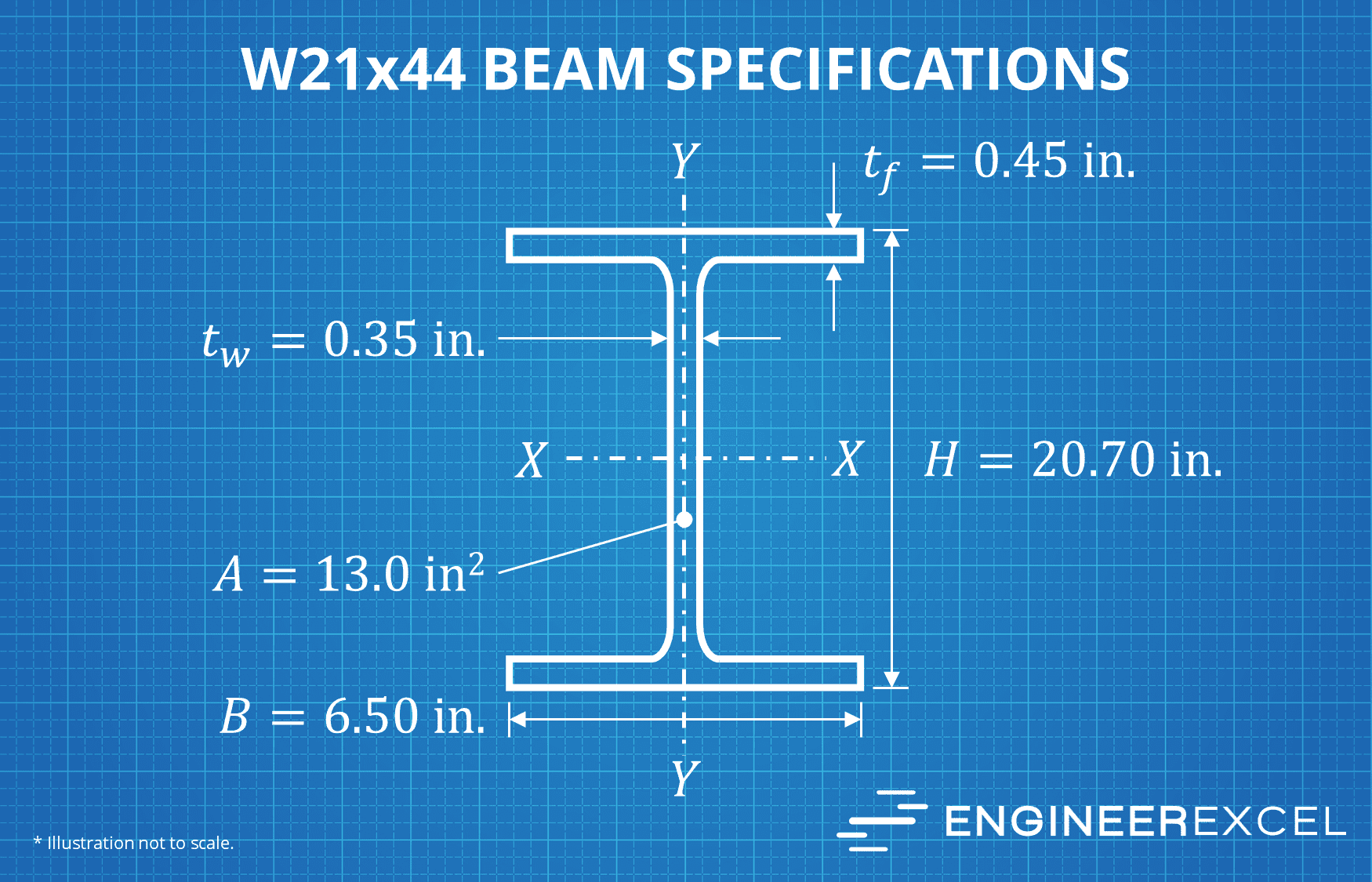
Now, let’s tackle the first number in our W12x26 example: the '12'. This number is super important. It refers to the nominal depth of the beam in inches. Nominal just means "in name only" or "approximately." It's not going to be exactly 12 inches from top to bottom, but it's darn close. Think of it as the beam's height.
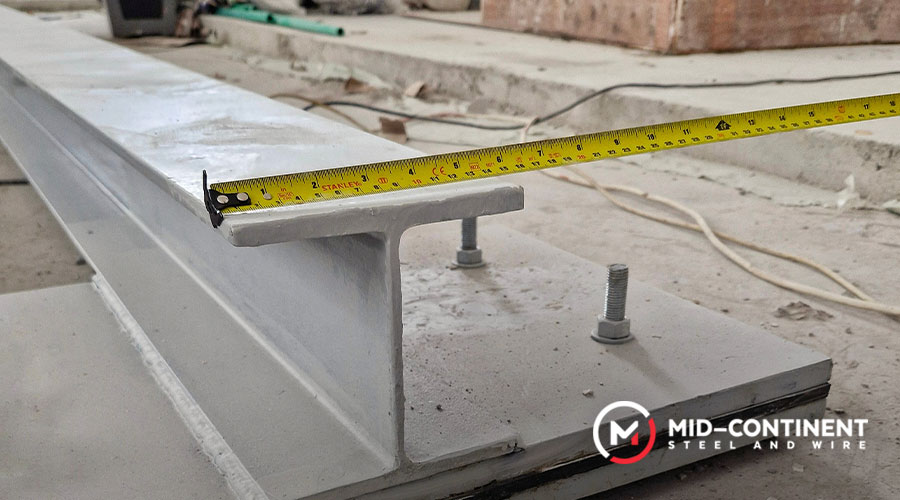
So, a W12 beam is, roughly, 12 inches tall. A W16 beam would be around 16 inches tall. Makes sense, doesn't it? The bigger the number, the taller the beam. This height is a big factor in how much load a beam can carry. A taller beam generally has a greater moment of inertia (don't worry if you don't know what that means, just know it's a good thing for strength!) and can therefore support more weight. It's like how a taller person can usually reach higher shelves – simple physics, but applied to steel!
It’s worth noting that this depth is measured from the very top of the top flange to the very bottom of the bottom flange. So, when you’re visualizing it, imagine that vertical spine and the horizontal bits sticking out on either side. The distance from the peak of the top horizontal bit to the bottom of the bottom horizontal bit is your nominal depth.
The Second Number: The Weighty Issue
And then we have the second number in our W12x26 example: the '26'. This number is a bit of a trickster because it doesn't directly represent a physical dimension. Instead, it tells you the weight of the beam per linear foot, in pounds. So, a W12x26 beam weighs approximately 26 pounds for every foot of its length.
This is crucial for engineers. The weight of the beam contributes to the overall load on the structure, and it's also an indicator of the beam's thickness and the amount of steel used. A heavier beam of the same depth is generally stronger. Think of it this way: if you have two people who are the same height, but one is significantly heavier, they probably have more muscle and bone density, making them stronger, right? Steel works similarly. A W12x26 is stronger than a W12x20 because it has more "stuff" packed into it, making it weigh more.

So, when you see that second number, don’t think "12-inch depth, 26 inches wide." No, no, no! Think "12-inch deep, and each foot of this beam tips the scales at about 26 pounds." It’s a density thing, a heft thing, a strength indicator.
Putting It All Together: The W12x26 Story
Let's recap our star player: W12x26.
- W: It's a Wide Flange beam. The king of versatility!
- 12: It's approximately 12 inches deep (from top flange to bottom flange).
- 26: It weighs about 26 pounds per linear foot. This is a good proxy for its strength and thickness.
So, if you’re looking at a beam and someone says, "Yeah, that’s a W12x26," you now know they're talking about a beam that's roughly a foot tall and weighs about 26 pounds for every foot of its length. Pretty neat, huh? You’re basically fluent in basic steel beam speak now. Go you!
A Little More Detail (For the Curious Minds)
Now, while the 'W' and the two numbers are the core of it, sometimes you’ll see other stuff. For instance, you might see a W12x26M. The 'M' usually stands for metric, which means the dimensions might be in metric units, or it's a beam that conforms to metric standards. Less common in everyday US construction, but good to know it exists.
You might also see designations like WT or WTC. These indicate a W-shape cut into a 'T' shape (WT) or a W-shape cut into two 'T' shapes (WTC). These are derived from standard W-shapes but are used for different purposes, often as columns or lighter framing. Think of them as the cousins of the W-beam, with a slightly different family tree.
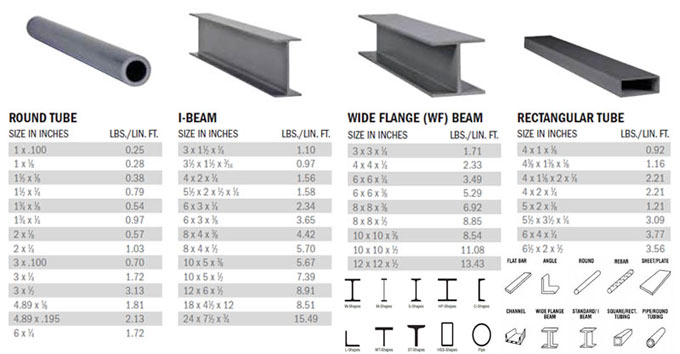
And sometimes, you’ll see a beam designated by its actual depth and flange width, like HP12x53. The 'HP' stands for Bearing Pile. These are designed to be driven into the ground to support foundations. They have a more symmetrical shape, often called "H-piles" because they look like a really thick 'H'. The numbers here also relate to depth and weight per foot, but the 'P' tells you its primary job is foundation support, not necessarily spanning between columns.
But for most general construction purposes, the W[depth]x[weight] is what you'll see. It’s the bread and butter of the steel beam world.
Why Does This Even Matter to Me?
You might be thinking, "Okay, cool facts about steel, but why should I care?" Well, understanding this isn't just for the architects and engineers (though they really need to know!). It can be helpful for:
- DIYers: If you're planning a project that involves structural changes, knowing basic beam sizes can help you understand what professionals are talking about and ensure you’re not under-specifying materials. Nobody wants their new deck to decide it wants to be a trampoline.
- Homeowners: Ever had a contractor quote you on a beam? Understanding the designation helps you grasp the scale of the work and the materials involved.
- Anyone with a Curious Mind: Seriously, it's a little piece of practical knowledge that connects you to the built world around you. It’s like knowing what kind of engine is in your car, but for buildings!
It’s about demystifying the big, heavy things that make our lives possible and safe. It’s about turning a confusing number into meaningful information.

A Quick Note on Standards
It's important to remember that these designations follow specific standards, like those set by the American Institute of Steel Construction (AISC). These standards ensure that a W12x26 beam from one manufacturer is essentially the same as a W12x26 beam from another. This consistency is what allows engineers to design confidently, knowing that the steel they specify will perform as expected.
So, when you see a beam size, you're not just seeing random numbers; you're seeing a standardized product designed to precise specifications. It’s a testament to engineering and manufacturing excellence.
Conclusion: You're Now a Steel Beam Size Super Sleuth!
And there you have it! You’ve just unlocked the secret language of steel beam sizes. You can now confidently look at a beam designation like W14x38 and know that you’re dealing with a Wide Flange beam that’s approximately 14 inches deep and weighs about 38 pounds per linear foot. You’re basically a structural engineer in training, or at least a very informed observer!
This knowledge isn’t just about steel; it’s about understanding the incredible engineering that goes into creating the world we live in. Every beam, every bolt, every rivet is a piece of a puzzle that makes our cities stand tall and our lives secure. So next time you’re out and about, take a moment to look up. See those mighty beams? Now you know a little bit more about what makes them so strong and reliable.
Keep that curiosity alive, and remember, even the biggest, strongest structures are built with understandable components. You've just learned one of their fundamental secrets. Go forth and impress your friends, family, or even just yourself with your newfound steel-savvy. You've got this!