
How To Read Steel I Beam Sizes
Ever found yourself staring at a big, chunky piece of metal holding up a bridge, a building, or even just your local supermarket roof, and wondered, "What's the deal with that shape? And how on earth do they know how much it can hold?" Well, friend, you've stumbled upon the humble, yet mighty, steel I-beam. They’re the unsung heroes of construction, silently doing the heavy lifting in our world.
Now, I know what you might be thinking. "Steel I-beams? That sounds like something only engineers and super-nerds talk about." But stick with me, because understanding how to read their "sizes" isn't as intimidating as it sounds. In fact, it's kind of like learning to read the ingredients on your favorite snack box. Once you know what the numbers and letters mean, everything becomes a lot clearer, and maybe, just maybe, you'll start noticing them everywhere!
So, why should you, the everyday person who probably just wants to enjoy a latte without worrying about structural integrity, care about this? Simple! It gives you a little peek behind the curtain of how our world is built. It's like knowing why your bread stays fluffy (thanks, yeast!) or how your phone screen works (tiny pixels, my friend!). Plus, the next time you’re chatting with a contractor or just admiring a new construction project, you can drop a casual, "Oh yeah, they’re using a W12x26 there, smart choice for that span," and feel like a total pro. It’s the little bits of knowledge that make life a little more interesting, right?
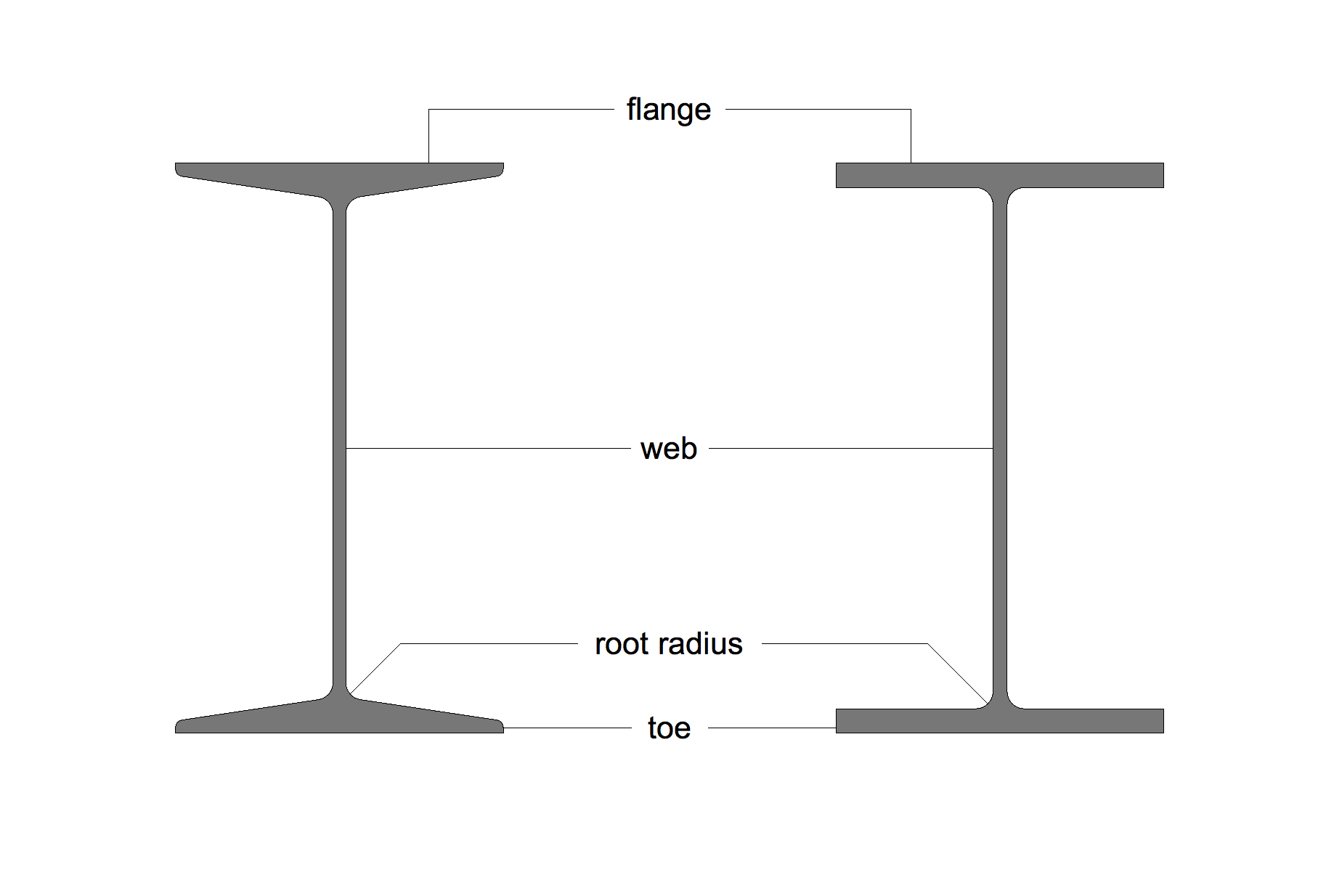
Let’s dive in! Imagine you’re at the hardware store, looking for a specific type of wood for a DIY project. You'll see labels like "2x4" or "4x6." Steel I-beams have their own lingo, but it's just as straightforward once you break it down. The most common type you'll see are called "W shapes". "W" stands for "wide flange," which basically means it's got nice, broad "wings" – the flat parts on top and bottom. Think of it like a bird's wings, ready to carry a load!
Decoding the W Shape: It's Not Rocket Science!
When you see a steel I-beam described, you'll typically see something like W10x30 or W14x53. See that? A letter and a couple of numbers. Piece of cake. Let’s take our example, W10x30.
The first part, the "W", we’ve covered. That tells us it's a wide flange beam. Easy peasy.
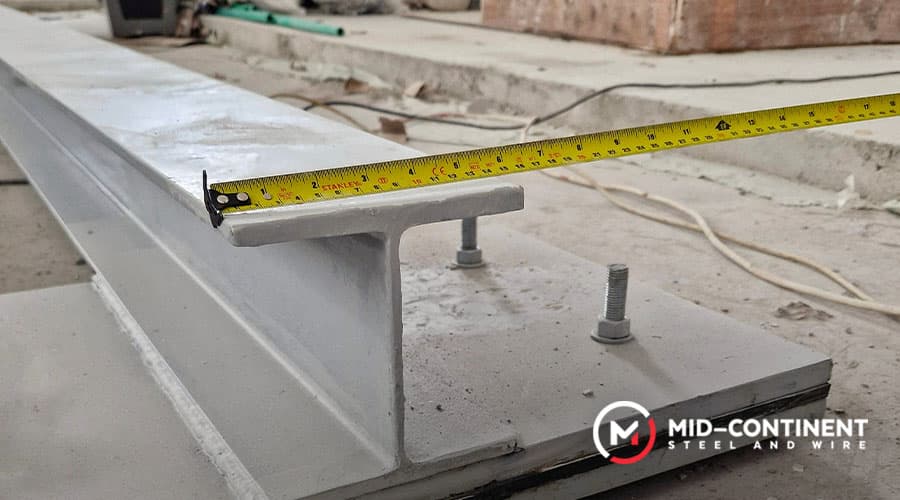
The second part, the "10", this is where things get really interesting. This number, in our W10x30 example, tells you the nominal depth of the beam. Now, "depth" sounds simple, but in beam talk, it's a pretty important measurement. It’s the approximate height of the beam from the very top of its upper flange to the very bottom of its lower flange. So, for a W10, you're looking at a beam that's roughly 10 inches deep. Think of it like measuring the height of your coffee mug. A taller mug (a deeper beam) can hold more coffee (support more weight).
The last number, the "30" in W10x30, this is the part that tells you about the beam's weight per linear foot. Yes, you read that right! It's not a mystical code; it's just how much that 10-inch deep beam weighs for every foot of its length. So, a W10x30 beam weighs approximately 30 pounds per foot. Imagine you're buying spaghetti by the pound – the heavier the package, the more spaghetti you get, and in the case of a beam, the more strength you generally have.

Let's try another one. How about W14x53? What does that mean? You got it! It's a wide flange beam (W), with a nominal depth of approximately 14 inches, and it weighs about 53 pounds per foot. See? You're already a beam-reading whiz!
Why Does This Even Matter to You?
Okay, so you can read the label. But why should you care about the depth and weight? Well, think about it like this: if you’re trying to build a sturdy shelf to hold your collection of antique teacups, you wouldn't use a flimsy piece of cardboard, would you? You'd use something more substantial. The depth and weight of an I-beam directly relate to its strength and its load-carrying capacity. A deeper, heavier beam is generally stronger and can support more weight over a longer span.

Imagine you’re planning a backyard barbecue and need to build a temporary ramp for your friends to get their grills onto the deck. You’d want a ramp that won’t buckle under the weight, right? An engineer would look at the weight of the grills, the number of people likely to be on it, and the length of the ramp, and then select the appropriate I-beam size. A W12x26 might be perfect for one scenario, while a beefier W18x50 might be needed for a more demanding job.
It's all about matching the right tool (the beam) to the job (the load). The depth (the "10" or "14") gives you a good initial idea of its potential strength, and the weight per foot (the "30" or "53") gives you a more precise indication of its robustness. The thicker the flanges and web (the middle part connecting the flanges), the more material there is, and the stronger the beam. It’s like comparing a thin piece of paper to a thick board – the board can handle a lot more pressure.
Sometimes, you might see letters after the numbers, like W10x30-M. The "-M" usually indicates that the beam is metric. Don't let that scare you! The principle is the same: the first number is the approximate depth, and the second is the weight per meter. It’s just a different measurement system, like Celsius versus Fahrenheit for temperature.
You might also encounter beams that aren't W shapes. There are other profiles like S-beams (American Standard beams) and HP-beams (H-piles, often used for foundations). However, the W shape is by far the most common in general construction. If you see an S-beam, the numbers often refer to depth and weight per foot too, but the cross-section shape is a bit different – more like a traditional "I" shape, with the flanges not as wide.
Think of it like choosing a chair. A small stool can hold one person. A dining chair can hold a person comfortably. A heavy-duty bench can hold several people. The size and construction of the chair determine how much weight it can support. I-beams are the same, just on a much, much grander scale, supporting entire buildings!
So, the next time you see one of these metal giants, take a moment. You're not just looking at a piece of steel; you're looking at a precisely engineered component with a story told in its size. You can now appreciate that a W12x26 isn't just a random collection of numbers; it's a promise of strength, a carefully chosen piece of the puzzle that keeps our world standing tall and safe. And hey, if anyone asks, you can casually explain the W, the depth, and the weight. You've earned your stripes as a steel-beam size decipherer!