
How To Repair Stripped Screw Holes In Metal
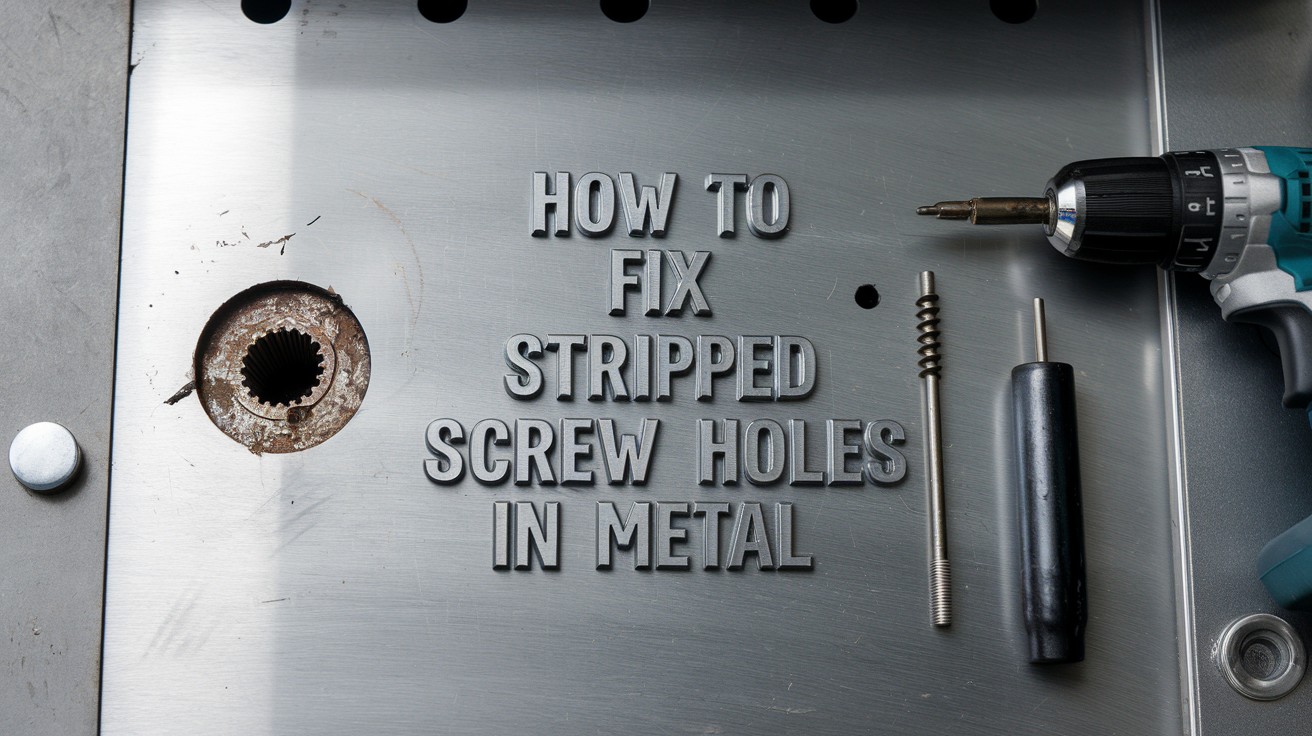
Ever found yourself wrestling with a screw that just spins and spins, refusing to tighten? You're not alone! That frustrating little problem, known as a stripped screw hole, is a common hiccup for anyone who tinkers, builds, or simply tries to hang a picture. But here’s the exciting part: fixing it is surprisingly straightforward, and learning this skill can be incredibly satisfying. Think of it as a little bit of DIY detective work, where you uncover a hidden solution and bring something back to its functional glory.
The core purpose of repairing a stripped screw hole is to restore the integrity of the connection. When the threads inside a metal hole become damaged or worn down, they can no longer grip the screw effectively. This means whatever was held in place by that screw is now wobbly, loose, or worse, about to fall apart. By learning how to fix it, you gain the ability to make repairs that last, saving you the hassle and expense of replacing entire components or dealing with a precarious situation.
This skill is incredibly useful in a variety of settings. In a workshop, it means you can continue working on projects without being derailed by a tiny imperfection. For students learning about mechanics or engineering, understanding how to address such issues is a foundational lesson in problem-solving and practical application. Even in your own home, it’s a lifesaver for everything from assembling furniture to fixing a loose hinge on a metal cabinet, or even reattaching a decorative plate to an appliance. It’s about keeping things in good working order, and that’s a universally valuable pursuit.
So, how do we tackle these stubborn holes? One of the most accessible methods involves using a slightly larger screw. Sometimes, the existing threads are just a bit too rounded. By carefully choosing a screw with a similar thread pitch but a marginally bigger diameter, you can often create new, stronger purchase in the metal. It’s important to go slow and apply steady pressure to avoid further damage.
Another popular and effective technique is using threaded inserts. These are essentially small, metal sleeves that you install into the stripped hole. They come with their own set of internal threads designed to grip a new screw perfectly. Think of them as giving the old hole a brand new, robust lining. Installation usually involves drilling out the old hole to a specific size and then screwing or pressing the insert into place. It’s a more permanent and professional-looking solution, and many DIY enthusiasts find the process quite rewarding.

For a quicker fix, especially for lighter-duty applications, some people turn to epoxy metal repair compounds. You mix a two-part epoxy, fill the stripped hole, and let it cure. Once hardened, you can often drill and tap a new thread into the cured epoxy. This method requires a bit of patience while the epoxy sets, but it can be remarkably effective. Always follow the manufacturer's instructions when working with epoxies for the best results.
If you're curious to explore this further, start by looking around your home for any loose items that might have stripped screw holes. Don't be afraid to experiment with a spare screw or two. Watching some online tutorials can also be incredibly helpful, as they visually demonstrate the techniques. It’s a fantastic way to build confidence in your own abilities and to gain a deeper appreciation for the mechanics of how things are put together – and how to keep them that way.