
How To Splice Steel Cable
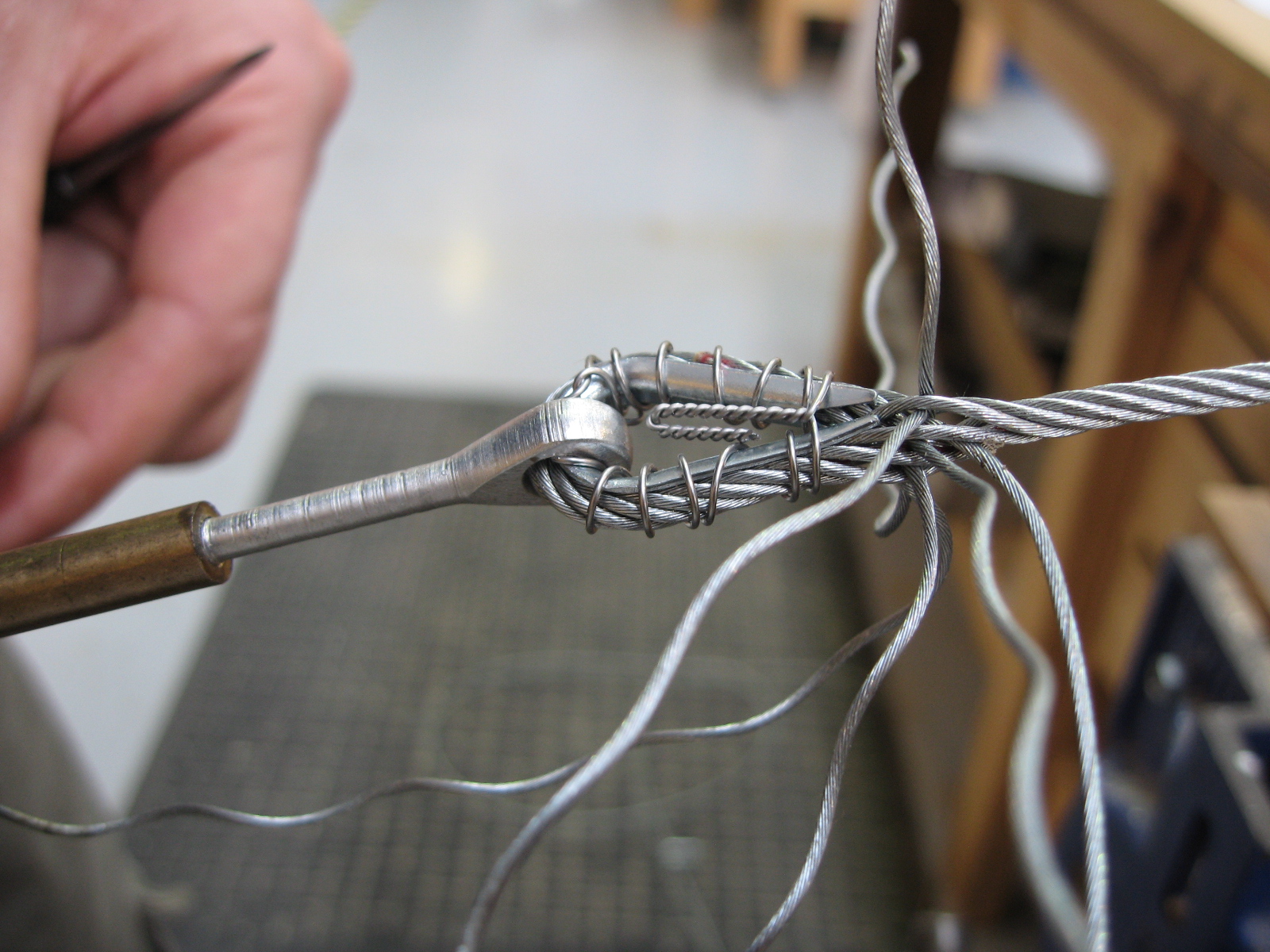
Ever found yourself staring at a thick, twisted rope of metal and wondered, "How do they even do that?" You're not alone! Learning how to splice steel cable might sound like something reserved for riggers on a massive construction site or sailors on ancient galleons, but there's a certain satisfying ingenuity to it that appeals to anyone who likes to understand how things work. It’s a bit like learning to tie a really, really strong knot – a skill that feels both practical and… well, a little bit cool.
So, what exactly is steel cable splicing? At its heart, it’s the art of joining two pieces of steel cable together, or creating a loop or eye at the end of a single cable, without relying on crimps or clamps that can sometimes be the weak link. Instead, you're using the cable's own strength and a clever technique to weave the strands back into themselves. The primary purpose is to create a permanent and secure connection that maintains as much of the cable's original strength as possible. Think about it – no weak points, no external hardware that can corrode or break. It's all about the inherent integrity of the steel itself.
The benefits are pretty clear. For starters, it’s incredibly strong and reliable. This is crucial in situations where safety is paramount. Beyond that, a well-executed splice can be surprisingly elegant. In educational settings, understanding splicing can be a fantastic way to teach principles of engineering, material science, and even problem-solving. Imagine a physics class exploring tension forces or a shop class building a sturdy winch; a spliced cable is a tangible example of these concepts in action. In daily life, while you might not be splicing cables for your car's towing setup (though some specialized applications exist!), the principles are related to the robust connections you see everywhere. Think of playground swings, overhead lighting rigs, or even the cables on a ski lift – many rely on strong, expertly made connections, often involving techniques born from splicing.
Curious to dip your toes in? You don't need a ship to start. For a simpler exploration, consider looking up videos on how to splice natural fiber ropes. The fundamental idea of weaving strands is surprisingly similar, and it's a much gentler introduction. You can even find smaller gauge, softer steel wires designed for crafts or hobbyist projects. A good starting point might be to get a short length of flexible steel cable and a basic marlinspike (a pointed tool used in splicing). Just remember, safety first! Steel cable can be stiff and has sharp ends. Always wear sturdy gloves and eye protection. The key is to gently tease apart the strands, insert the new end, and meticulously weave it back in. It takes patience and a bit of dexterity, but the satisfaction of creating a strong, integrated connection is a reward in itself. It’s a glimpse into a world of robust engineering, made with just your hands and a bit of know-how.