
How To Test For Eustachian Tube Dysfunction
So, you’ve been feeling like you’re permanently stuck on a commercial airplane, constantly needing to pop your ears. Or maybe it’s that weird, muffled hearing that makes your significant other’s gentle whispers sound like a drill sergeant yelling through a pillow. If this sounds suspiciously like your life lately, my friend, you might be rocking a little something called Eustachian tube dysfunction, or ETD for short. Don’t worry, it's not as scary as it sounds. It’s basically your ear’s tiny elevator to the outside world having a bit of a meltdown.
Think of your Eustachian tube as a microscopic, but very important, passageway. It connects the middle ear – that's the bit behind your eardrum, where all the tiny bone action happens – to the back of your throat, near your nose. Its job? To balance the air pressure on both sides of your eardrum. When it’s working, you barely notice. When it’s not… well, let’s just say your ears will start throwing a tantrum that even a toddler on a sugar rush would envy.
Now, before you book a one-way ticket to a soundproof padded room, let’s talk about how you can figure out if your Eustachian tube is staging a tiny, internal protest. You don't need a lab coat or a degree in ear whispering for this. In fact, some of these tests you can do yourself, right here, right now. Just try not to startle your cat. Or yourself. We’re going for mild amusement, not a full-blown "I think I have alien parasites" panic.
The "I'm About to Make a Silly Face" Tests
Your doctor, or an audiologist (that's a fancy ear doctor, not a magician who turns water into earwax), will likely try a few things. But let's get you started with some self-discovery. Remember, these are for screening, not diagnosing. If you’re convinced you’ve got a rogue bubble in your ear that’s refusing to pop, it’s still a good idea to see a real human ear expert.
The Valsalva Maneuver: Prepare for Peak Awkwardness
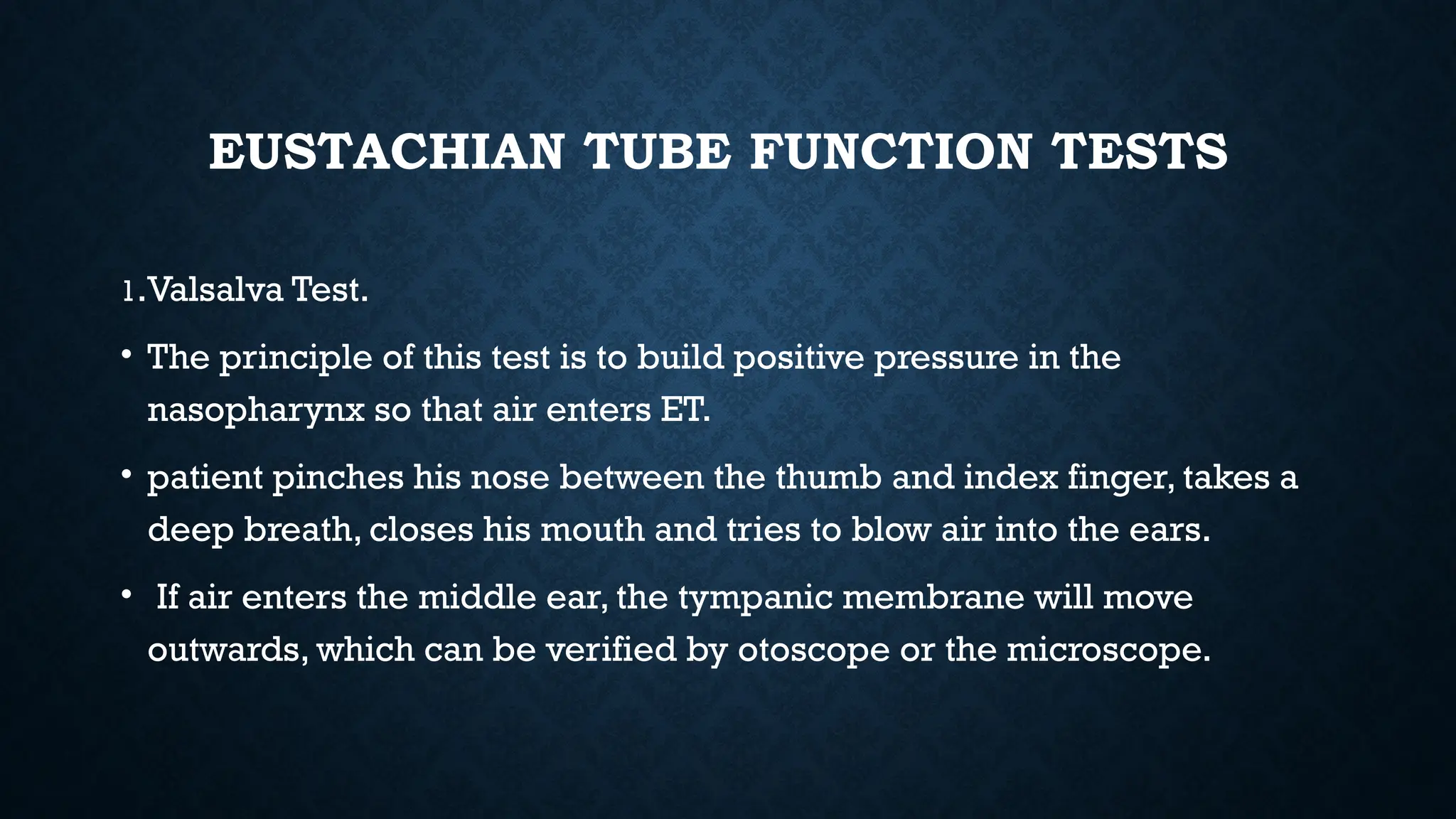
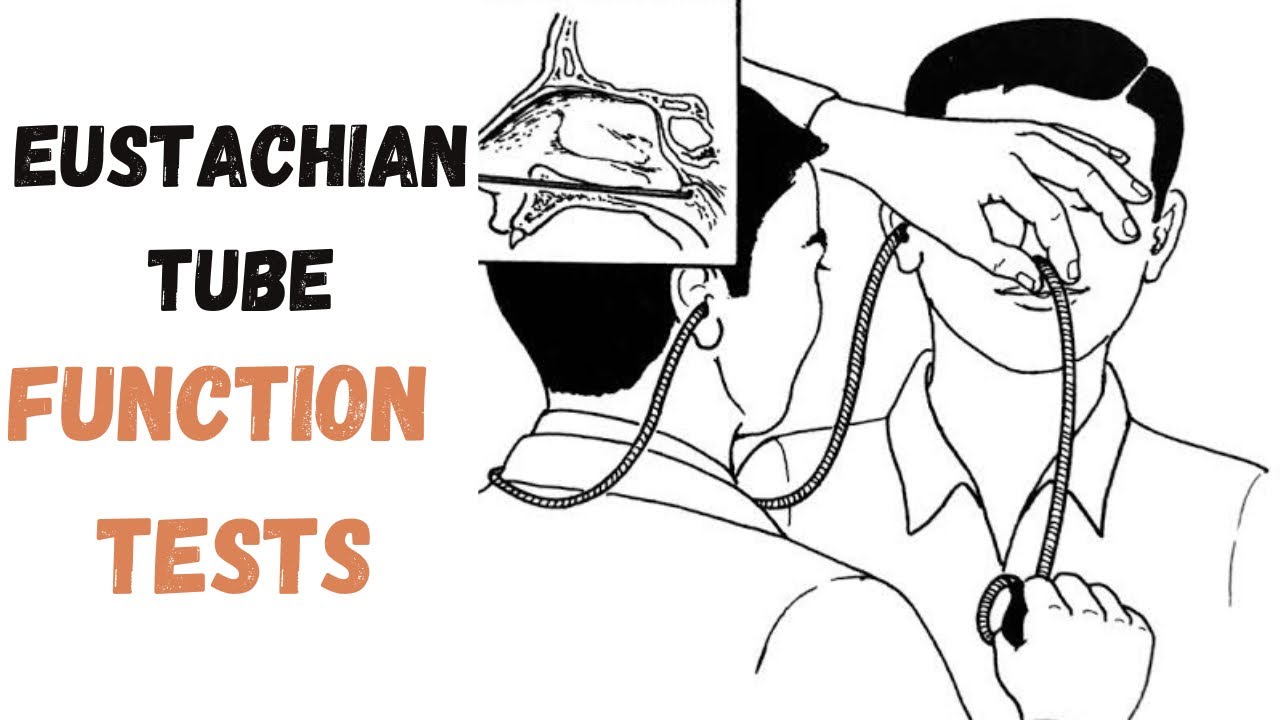
This is the granddaddy of self-tests. It sounds scientific, but it's basically an attempt to blow your ear whistle. Here’s how it works: take a deep breath, close your mouth, pinch your nose shut, and then try to gently exhale. Imagine you’re trying to blow out a single, stubborn birthday candle with your nose and mouth sealed. Not with the force of a hurricane, mind you, but with a controlled puff.

What you’re hoping for is to feel a pop or a click in your ears. That little sensation means your Eustachian tube just did its job and equalized the pressure. Hooray! If you feel nothing, or if it feels harder to push air through, it could be a sign your tube is blocked.
Warning: Don’t go full-on "I'm trying to inflate a blimp" with this. You can actually damage your eardrum if you blow too hard. Think more "gentle nudge" and less "extreme sports." Also, if you’ve recently had ear surgery or have a cold, maybe skip this one until you’re feeling a bit more… pneumatic.
The Toynbee Maneuver: The Understated Ear Whisper
This one is a bit more subtle, and some people find it less… dramatic. For this, you’ll again pinch your nose shut, but this time, instead of blowing, you’ll swallow. That’s it. Just a nice, relaxed swallow. Think about that last bite of delicious cake. That’s the kind of swallow we’re talking about.

If your Eustachian tube is functioning like a champ, you might feel that same familiar pop or click. It’s like a secret handshake between your throat and your ear. If you don’t feel anything, or if it still feels stubbornly plugged, ETD might be paying you a visit.
Why both? Because sometimes one maneuver works better than the other, especially if the blockage is at a specific point. It’s like having two different keys to try in a stubborn lock.
The "Is That My Own Voice or a Distant Echo?" Symptoms
Beyond the actual popping tests, your body is probably sending you a few other hints. It’s like your ears are little spies, reporting on the state of affairs. Pay attention to these:
- The "Underwater World" Effect: Everything sounds muffled, like you’re listening to music through a thick layer of Jell-O. Conversations can become a guessing game, and you might find yourself nodding along even when you have no idea what’s being said. "Yes, I’d love another… mumble mumble… yes, that sounds… mumble… delightful!"
- Ear Fullness or Pressure: This is that persistent feeling that your ears are stuffed with cotton balls, even if you haven’t recently emerged from a particularly fluffy cloud. It can be annoying enough to make you want to walk around with a cotton swab permanently embedded in your ear canal (don't do that).
- Clicking or Popping Sounds: Not the good kind that signal relief, but random, disconcerting clicks and pops that happen when you chew, yawn, or even just talk. It’s like your ear is trying to communicate with Morse code, but only knows the "oof" sound.
- Autophony: The Sound of Your Own Orchestra: This is a classic ETD symptom. Your own voice sounds unnervingly loud and hollow, as if you’re speaking inside a barrel. Your sneezes might sound like a minor explosion in your own head. It’s a surreal experience, and frankly, it’s kind of distracting when you’re trying to concentrate.
- Pain: The Uninvited Guest: Sometimes, if the blockage is significant or leads to fluid buildup, you might experience actual pain. This is usually a sign that things are getting a bit more serious and definitely warrants a trip to the ear doctor.
The "Okay, I'm Pretty Sure My Ears Are Up to Something" Next Steps
If you’ve performed your at-home ear diagnostics and the results are pointing towards ETD, it’s time to involve the professionals. Think of them as the highly trained ear detectives. They have tools that can give you a much clearer picture.
Tympanometry: The Ear's Pressure Cooker Test
This is a common one. A little probe is placed in your ear canal, and it measures how your eardrum moves in response to changes in air pressure. It’s not painful, and it helps the doctor understand how well your eardrum is vibrating, which is a key indicator of middle ear pressure. It’s basically giving your ear a mini-workout and seeing how it performs.
Audiometry: The Hearing Spectrum Safari
This is the standard hearing test, but it can also reveal hearing loss patterns that are consistent with ETD. If your hearing is generally muffled, this test can quantify how muffled it is and in which frequencies.

Nasopharyngeal Endoscopy: Peeking Down the Rabbit Hole
This is for when the situation is a bit more complex. A tiny, flexible camera is gently inserted into your nose to get a direct look at the opening of your Eustachian tube. This can help identify physical obstructions like swollen tissues, polyps, or even adenoids that might be hogging the space.
It sounds a bit sci-fi, but it’s a very useful tool for understanding what’s really going on. Just try not to imagine tiny ear goblins living in there. That’s definitely not helpful.
So there you have it. While ETD can be a persistent annoyance, understanding how to test for it is the first step to getting your ears back in tune. Remember, a little self-assessment can go a long way, but when in doubt, let the ear experts work their magic. Your ears will thank you, and you’ll finally be able to hear your partner’s sweet nothings without wondering if they’re actually ordering pizza.