
How To Use A Anvil In Minecraft
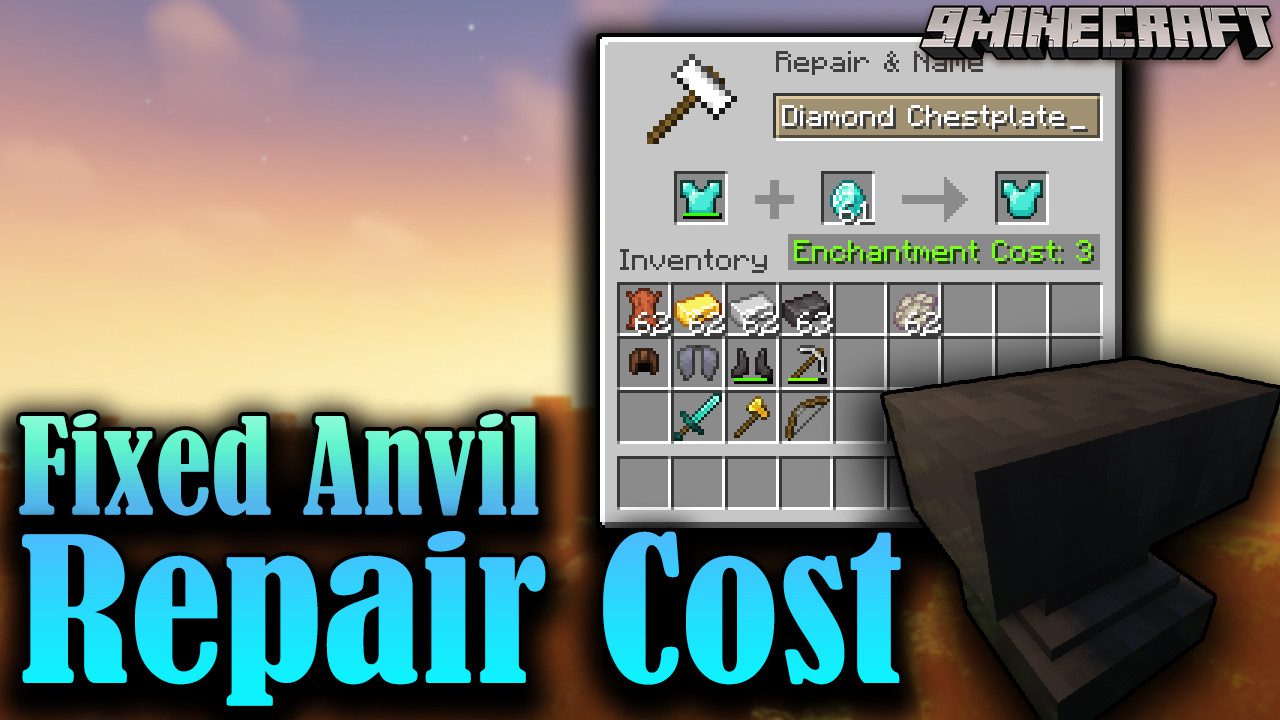
Alright, fellow pixel wranglers and dirt diggers, let’s talk about something a little… clunky. We’re diving headfirst into the glorious, metallic world of the Anvil in Minecraft. Now, I know what you’re thinking. “Anvil? Isn’t that for blacksmiths in old movies with sweaty foreheads and biceps the size of watermelons?” And yeah, you’re not entirely wrong. But in our blocky universe, the anvil is less about dramatic hammer swings and more about, well, making your gear way less likely to shatter into a million pieces when a creeper decides to give you a surprise hug. Think of it as your trusty, albeit heavy, sidekick in the constant battle against the elements and, let’s be honest, our own questionable crafting decisions.
You see, in real life, anvils are pretty darn important. Imagine trying to shape a horseshoe or mend a broken plow without one. It’d be like trying to iron a shirt with a potato. Messy and utterly ineffective. Minecraft’s anvil? It’s that same principle, just miniaturized and less likely to attract a swarm of flies. It’s your personal, in-game forge for all things tools, armor, and weaponry. And trust me, once you get the hang of it, you’ll be wondering how you ever survived with those flimsy, un-enchanted, easily-broken items. It’s like upgrading from a flip phone to a smartphone – suddenly, the world makes so much more sense, and your phone doesn’t die after a single phone call.
So, What Exactly IS This Thing?
Okay, let’s break it down. The anvil is a crafting station. But it’s not your standard crafting table, where you can whip up anything from a wooden pickaxe to a suspiciously lumpy cake. Nope. The anvil is for refining. It’s for taking your existing gear, giving it a good whack (figuratively, of course), and making it better. It’s the Hogwarts Sorting Hat for your diamonds, deciding their fate for the better.
Visually, it’s a sturdy block of iron, looking exactly like what you’d expect an anvil to be. It’s got that satisfying heft to it, even if it’s just pixels on a screen. You can’t just punch it into existence, though. This bad boy requires some serious commitment. You’ll need three iron blocks and four iron ingots. That’s a decent chunk of mining, so it’s not something you’ll be building on your first day out of spawn. Think of it as a mid-game achievement, a sign that you’re no longer a noob just fumbling around with dirt and sticks. You’re entering the realm of the serious adventurer.
The beauty of the anvil is its dual nature. It serves two main purposes: repairing items and enchanting items. Sounds simple enough, right? But oh boy, is there more to it than meets the eye. It’s like learning to cook. You know you can boil water, but mastering that perfect soufflé? That takes a bit more finesse. And the anvil, my friends, is your culinary school for your inventory.
Repairing Your Precious Loot (Without Wasting Good Resources!)
Let’s talk about the bane of every Minecraft player’s existence: durability. That little bar on your items that just keeps… going… down. It’s like a hunger bar, but for your tools. And the worst is when your favorite diamond pickaxe, the one you painstakingly mined for hours, decides to give up the ghost right as you hit that last block of obsidian. Devastating. Truly, soul-crushingly devastating. I’ve lost more pickaxes to sheer impatience and the cruel hand of durability than I care to admit. It’s a rite of passage, really.
This is where the anvil shines. Forget that clunky old crafting table recipe where you have to fill the whole grid with more of the same material. With the anvil, you can simply combine two of the same damaged item to repair them. Think of it as taking two slightly ripped socks and magically creating one perfectly good sock. It’s efficient, it’s satisfying, and it saves you from drowning in a sea of half-broken tools.
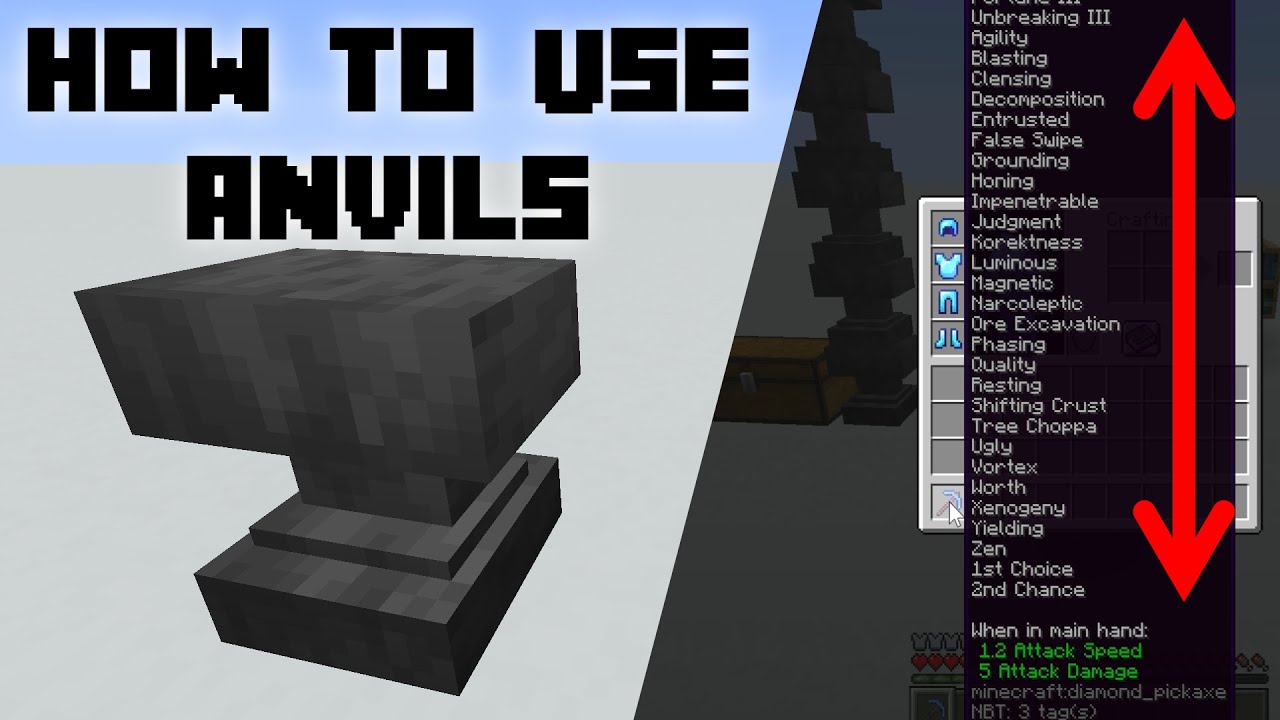
So, how does it work? It’s ridiculously easy. Open the anvil interface. You’ll see three slots. The first two are for your items. Take your damaged item and place it in the first slot. Then, take another identical item (even if it’s also damaged) and place it in the second slot. Voila! The third slot will show you the resulting repaired item. Simple as pie. Or, you know, simple as crafting a dirt block.
Now, here’s the slight snag, the tiny little asterisk at the bottom of this glorious repair contract: experience levels. Yeah, the anvil doesn’t work for free. It’s not a charity. You have to pay up in shiny little experience orbs. The more damaged your item is, and the more enchantments it has, the more XP it’ll cost you to repair. It’s like going to a mechanic; the more work they have to do, the more you’re gonna shell out. So, while you’re saving resources by combining two items, you’re spending your hard-earned XP. It’s a trade-off, a delicate balance between material wealth and adventurer experience points.
But here’s the golden rule, the sacred text of anvil repair: don’t throw away your damaged items! Unless they’re absolutely beyond repair (which is rare), always keep them. That cracked sword? Keep it. That chipped helmet? Keep it. That pickaxe with only one durability left? Definitely keep it. Because when you get that second one, you can bring them together on the anvil and make them whole again. It’s like a superhero reunion, but for your gear.
Enchanting Extravaganza: Making Your Gear Truly Epic
Alright, let’s talk about the real magic. Enchanting. This is where you take your perfectly good, freshly repaired diamond sword and turn it into a flaming, soul-sucking harbinger of doom for your enemies. Or your pickaxe into something that mines so fast, you’ll think you’ve broken the game (you haven’t, you’ve just mastered the anvil). Enchanting is what separates the average Joe from the legend. It’s the difference between a regular knight and Sir Lancelot himself.
![How To Craft, Repair & Use an Anvil in Minecraft [Guide]](https://cdn.appuals.com/wp-content/uploads/2023/10/DALL·E-2023-10-15-13.32.29-Photo-of-an-authentic-Minecraft-style-anvil-pixelated-and-blocky-centrally-placed-on-a-classic-grass-block.-The-background-features-the-iconic-blue-.png)
You can’t directly apply enchantments with the anvil. That’s the job of the enchanting table. You use that to generate random enchantments on new items. But the anvil? The anvil is where you get fancy. It’s where you can combine enchanted books with items, or combine two items that have the same enchantment to level it up.
Let’s say you’ve got a sword with “Sharpness I” and an enchanted book with “Sharpness II”. You can take your sword, put the enchanted book in the anvil, and boom! You’ve got a sword with “Sharpness II”. This is where the magic really happens. You can stack enchantments, combining the powers of multiple books or items to create truly overpowered gear.
Think of it like collecting trading cards. You’ve got a rare card, but you’ve also got a duplicate. Or maybe you have a special power-up card. You can combine these things to make your ultimate deck. The anvil is your binder, and your enchanted items are your prized possessions.
The process is similar to repairing. Two slots for items, one for the combined result. You can put an enchanted item in the first slot and an enchanted book with the same enchantment in the second slot. Or, you can put two enchanted items with the same enchantment in the first two slots. Again, this costs experience levels. The higher the enchantment level, and the more enchantments you’re trying to combine, the more XP you’ll need. It’s a steep price to pay for god-tier gear, but is it worth it? Absolutely.
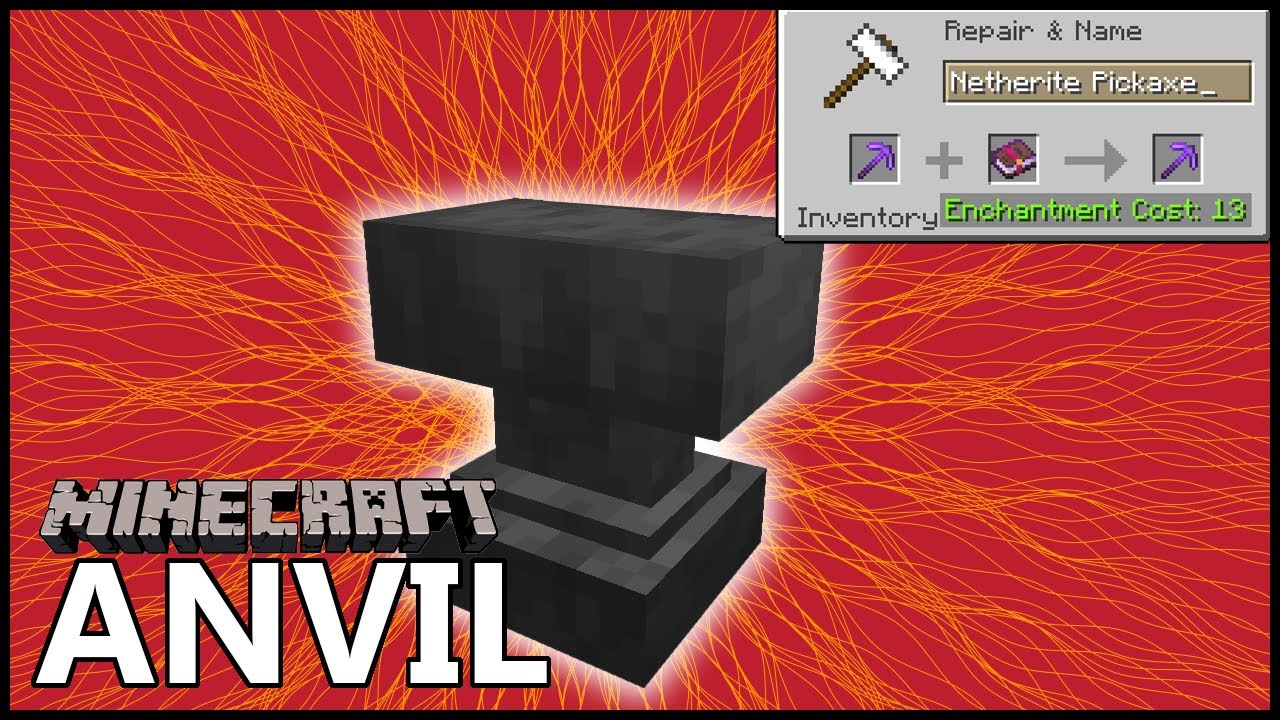
Now, here’s a crucial bit of anvil wisdom: prioritize your enchantments. Some enchantments are game-changers. “Unbreaking” means your gear lasts longer. “Mending” uses XP to repair your gear while you use it. Imagine! Your armor fixing itself as you fight! That’s like a superhero getting stronger every time they get punched. And “Efficiency” on your pickaxe? It’s like drinking a triple espresso before you start digging.
You can’t just slap any old enchantment onto anything. There are rules. For example, you can’t combine “Protection IV” on armor with “Fire Protection IV” on the same piece. The anvil will just say “Nope!” and refuse to do it. It’s like trying to put square pegs in round holes; it just doesn’t work. You have to be strategic. Do you want more damage, or better defense? Do you want to mine faster, or have your pickaxe never break?
The Anvil Grind: It’s Not Always Sunshine and Rainbows
Let’s be real for a second. Using the anvil can get… expensive. Not just in iron, but in that precious, precious XP. And there’s a little hidden mechanic that can make you weep tears of pixelated sorrow: anvil decay. That’s right. Every time you use the anvil, there’s a small chance it takes “damage.” It’s not like a broken block, but it increases the cost of future repairs and enchantments. It’s like a toll booth on the road to awesome gear. Eventually, if you use it too much, the anvil can become “too costly” to use, and it’ll effectively break. You can’t fix a broken anvil, you have to craft a new one.
This is why you don’t want to be mindlessly enchanting every single item you get. You want to be deliberate. Think about what you’re building. Save up your XP. Don’t waste it on enchanting a wooden shovel with “Sharpness I”. It’s just… sad. It’s like buying a lottery ticket for five cents and expecting to win millions. You need to invest wisely.

The trick is to combine enchantments strategically. Get your desired enchantments on separate books or items, then bring them to the anvil. This is usually cheaper than trying to get a high-level enchantment directly from an enchanting table or applying multiple low-level enchantments one by one. It’s about efficiency, about getting the most bang for your buck, or rather, the most enchantment for your XP.
And here’s a pro-tip that will save you a lot of headaches: label your enchanted books! Seriously. When you have a bunch of books with “Unbreaking III”, “Mending”, and “Fortune III”, they all look pretty much the same. Use an anvil to name them! Rename “Unbreaking III” to “Long Lasting” or something memorable. It’s a small thing, but it makes sorting through your enchantments so much easier when you’re planning your next anvil session. It’s like having a color-coded filing system for your magical treasures.
The Anvil: Your Gateway to Minecraft Mastery
So, there you have it. The humble, yet incredibly powerful, anvil. It’s not just a block of iron; it’s a tool for progression, for making your Minecraft life easier, and frankly, way more fun. From bringing your battered tools back to life to forging legendary weapons and armor, the anvil is your best friend on your journey through the blocky wilderness.
It teaches you about resource management, about planning, and about the satisfying reward of investing time and effort into something truly special. It’s the difference between getting by and truly thriving. It’s the difference between a squishy mob encounter and a glorious boss fight where your gear is practically invincible.
So go forth, gather your iron, grind some XP, and get yourself an anvil. Your tools will thank you. Your enemies will tremble before you. And you, my friend, will be well on your way to becoming a true Minecraft master. Now, if you’ll excuse me, I have some diamonds that are about to get a serious glow-up.