
How To Use A Honing Steel

Okay, let's talk knives. We all have 'em, right? The trusty chef's knife, that little paring one that gets all the nitty-gritty done, maybe even a fancy bread knife that looks like it belongs in a medieval torture chamber. But here's the thing: even the sharpest knife in the land loses its mojo over time. It's not that the metal is bad; it's just that those tiny, microscopic edges get a little… fluffy. Like a well-loved teddy bear after a toddler wrestling match.
And that, my friends, is where the magical, often misunderstood, honing steel swoops in like a superhero in disguise! Seriously, this thing is like a tiny spa treatment for your blades. Forget the fancy sharpening machines for a sec. Today, we're all about the humble honing steel. It's way cooler than you think.
The Steel: Not What You Think It Is
First things first, let's bust a myth. That thing you've got? It's probably not a sharpening steel. Confusing, I know! Sharpening removes metal to create a new edge. A honing steel, on the other hand, is more like a gentle masseuse for your knife's edge. It realigns those tiny, bent-over bits of metal. Think of it as giving your knife a good straightening out. So, your knife isn't actually getting dull; its edge is just getting a bit frowny and needs a pep talk.
Why is this distinction important? Because using the wrong tool can actually damage your knife. A sharpening steel used too often on a good knife is like giving your favorite sweater a vigorous scrub with a brillo pad. No bueno. So, get to know your steel. Is it smooth and shiny? Probably a honing steel. Does it have ridges or feel gritty? That's likely a sharpening rod, and we'll save that chat for another day.
Why Bother with a Honing Steel?
So, why all the fuss about this metal stick? Simple: a well-honed knife is a happy knife. And a happy knife makes a very happy cook. You'll slice through tomatoes like butter. Vegetables will practically leap onto your cutting board. No more frustrating squishing and tearing. Plus, and this is a biggie, sharp knives are actually safer. Yep, you heard me. A dull knife requires more force, making it more likely to slip. A sharp one grips and slices with precision. It's the culinary equivalent of wearing sensible shoes – less chance of a tumble.
Think of it like this: a dull knife is a whiny toddler. A honed knife is a perfectly choreographed ballet dancer. Which one do you want in your kitchen?

The Anatomy of a Honing Steel
Most honing steels are made of steel (duh!), but you'll also find them made of ceramic or even diamond-infused materials. Ceramic is a bit gentler, great for everyday use. Diamond-infused ones are a bit more aggressive and can actually do a tiny bit of sharpening, but for our purposes today, let's stick with the classic steel. They usually have a nice, sturdy handle (important for safety!) and a long, slender rod. Some have a little loop for hanging, which is a nice touch for keeping things organized. No one wants a rogue steel clanking around in the utensil drawer, right?
Let's Get Down to Business: The Honing Technique
Alright, time to get our hands dirty… well, not really, but you get the idea! Grab your knife. Hold it firmly by the handle. Now, find a stable surface. Some people like to rest the tip of the steel on a damp towel to prevent it from slipping. Smart cookies, those people. You can also just hold it upright on your cutting board.
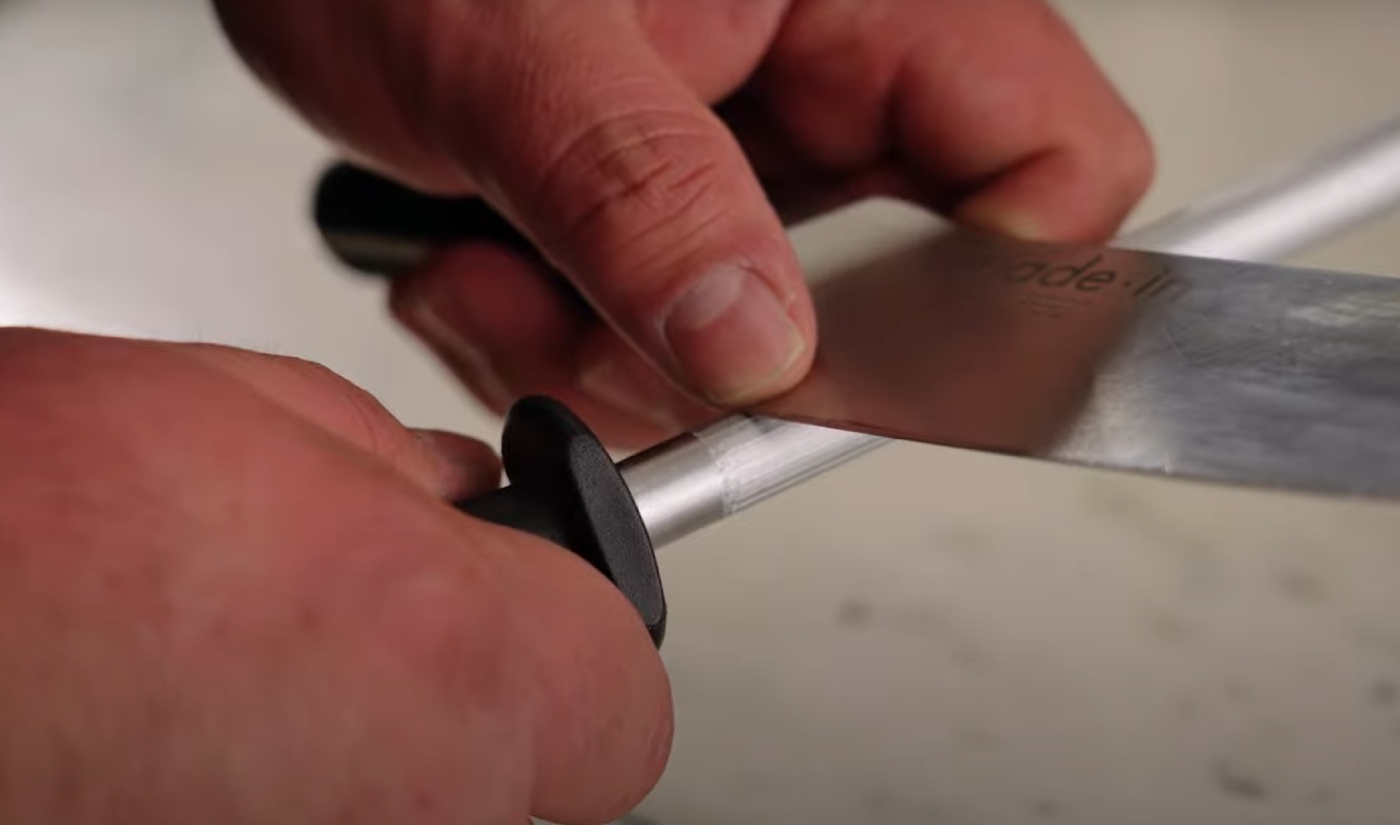
Here's the dance. Angle your knife so the edge is meeting the steel. We're talking a pretty shallow angle here, somewhere between 15 and 20 degrees. Imagine you’re drawing a very thin line on the steel with the side of your knife. Now, gently glide the knife down the steel, starting from the heel (the part of the blade closest to the handle) and moving towards the tip.
You want to use light, even pressure. Think of it as a whisper, not a shout. You're not trying to grind away metal; you're just coaxing it back into place. Do this about 4-6 times per side. Some folks prefer to do 8-10 passes per side, but for beginners, a few gentle passes are perfect.
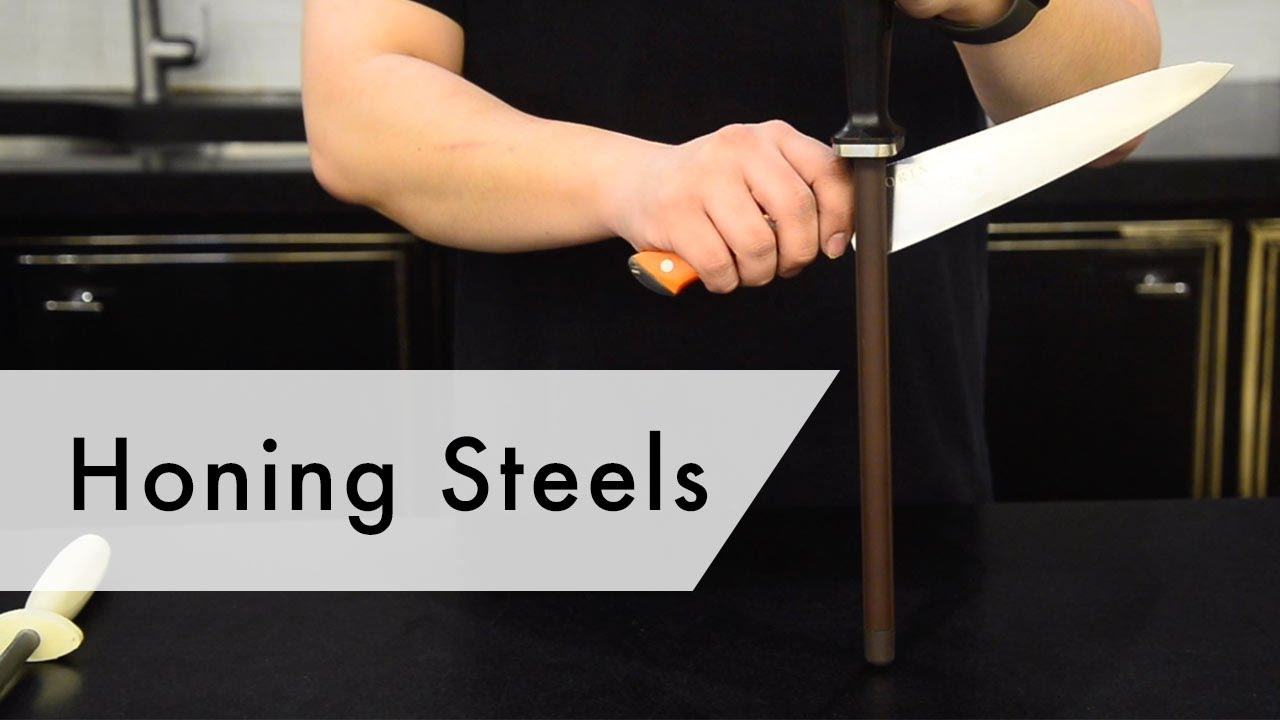
Now, switch to the other side of the blade. Same gentle glide, same angle, same light pressure. Heel to tip. Repeat for about 4-6 passes. And there you have it! Your knife has just had its moment of zen.
Quirky Fact Time!
Did you know that the angle you hold your knife is super important? Different knife manufacturers recommend different angles for their blades. Some Japanese knives are famously sharper and prefer a steeper angle, while Western knives often like a more relaxed 20-degree hug. If you're feeling fancy, you can even get angle guides for your honing steel! It's like putting training wheels on your knife-honing adventure.
What NOT To Do (Because We've All Been There)
Let's avoid some common pitfalls, shall we?
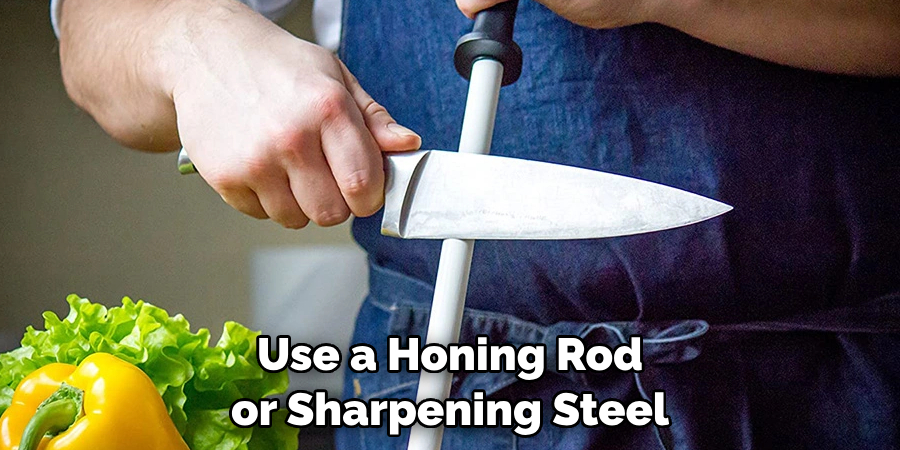
Don't press too hard. Seriously, this is the most common mistake. You're not trying to buff out a scratch on your car. Gentle, folks, gentle.
Don't saw back and forth. It's a smooth, gliding motion. Like a figure skater doing a beautiful triple axel. Not a frantic woodpecker.
Don't use a dull steel. If your honing steel looks like it’s been through a war zone itself, it's probably not doing much good. They’re not meant to last forever, but they’ll give you years of good service if treated well.
Don't forget about safety. Always keep your fingers well away from the blade's edge. And make sure your steel is stable. We're aiming for kitchen zen, not a trip to the ER.
How Often Should You Hon?
This is the million-dollar question, right? The answer is: it depends! If you're a culinary wizard who cooks every single day and chops with abandon, you might want to hone before or after every use. For the average home cook, maybe once a week is plenty. Or, you can just hone when you notice your knife isn't slicing as smoothly as it used to. It’s a feeling, really. Your knife will tell you when it needs some love.
Think of it like flossing. Some people do it religiously every night. Others do it when they feel a rogue piece of spinach stubbornly clinging on. Whatever your routine, consistency is key to maintaining that blade bliss.
The Big Reveal: Is it Really that Fun?
Okay, maybe "fun" is a strong word for a metal rod. But there's a certain satisfaction, a chef's kiss moment, when you nail that smooth honing motion and then pick up your knife to slice through something effortlessly. It's a little victory. It's about taking care of your tools, respecting them, and getting the best performance out of them. It's a small act of culinary love.
So, go forth! Grab that honing steel. Give your knives a little spa day. You'll be amazed at the difference. And who knows, you might even find yourself humming a little tune as you glide that blade. Happy honing!