
Iron Fusion Cannot Support A Star Because Iron

So, you've probably heard of stars, right? Those sparkly things in the night sky that seem to go on forever. They're like the ultimate celestial celebrities, putting on a grand show every single night. We look up at them and think, "Wow, what's going on up there? How do they do that?" Well, a big part of what they do is a process called nuclear fusion. It's basically how they generate all that light and heat, the stuff that makes them shine. Think of it like the ultimate cosmic barbecue, constantly cooking up new elements.
Now, the fuel for this cosmic barbecue is usually lighter stuff, like hydrogen. Hydrogen atoms are like the tiny, eager chefs, ready to get fused together to make helium. It's a pretty straightforward recipe, and for most of a star's life, it's business as usual. They're happily churning out helium, feeling all smug and bright. It’s like your favorite restaurant, consistently serving up that one dish you love, time after time. Reliable and comforting, you know?
But then, things get a little more… complicated. As a star ages, it starts to run out of its easy-to-fuse fuel. It's like that restaurant, after years of serving the same popular dish, starts to run low on the key ingredients. They have to start looking for alternatives, or things get a bit dicey. And this is where our friend, iron, comes into the picture. Iron is like the ingredient that, at first glance, seems like it could be the next big thing. "Hey, maybe we can fuse iron!" you might think. And you wouldn't be the first to have that thought. Many a curious mind has pondered this very question.
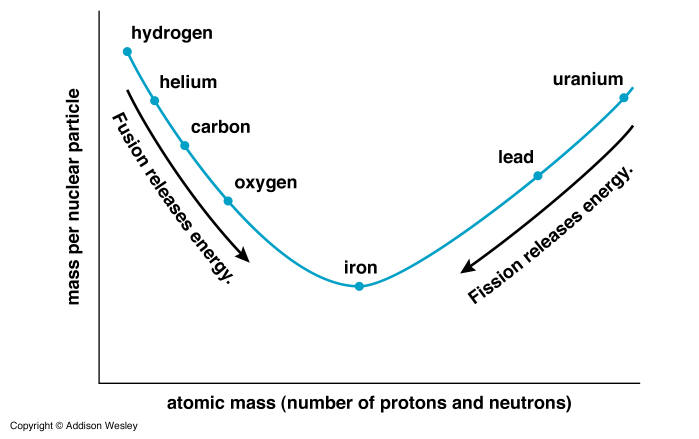
But here's the funny thing, and it’s a bit of a cosmic punchline: iron is the universe's ultimate "nope" ingredient when it comes to stellar fusion. It's like trying to power your car with a bag of sand. It just doesn't work. In fact, it's the opposite of what you want. Instead of releasing energy, like hydrogen fusing into helium does, trying to fuse iron sucks energy in. It's like ordering a meal at that restaurant and instead of getting food, the waiter takes money out of your wallet and then gives you… nothing. A real energy drain!
Imagine you're building a Lego tower. You start with small bricks, and each time you connect them, you feel a little satisfying click, and the tower gets a bit taller and sturdier. That's like hydrogen fusing into helium – energy is released, and the star grows brighter. Now, imagine you're trying to force two really big, stubborn Lego pieces together that just don't want to connect. You push and push, and your fingers get sore, and you feel like you're losing energy, not gaining any. That’s pretty much what happens when you try to fuse iron.
It’s a bit like trying to do your taxes. You’ve got all these numbers flying around, and instead of things getting clearer and more organized, it just feels like a black hole of confusion, sucking up your time and sanity. That’s iron for a star – a black hole of energy.
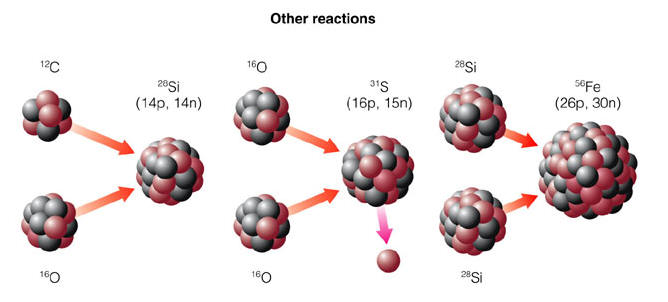
So, why is iron such a party pooper in the stellar fusion world? It all comes down to its atomic structure. Iron has a really stable nucleus. Think of it as a perfectly balanced group of people at a table, all holding hands. They're really comfortable, really happy, and they don't want anyone else joining the circle, and they certainly don't want to let go of anyone's hand. To break them apart and fuse them with something else would take a massive amount of energy, far more than you'd get back.
It's like trying to get a group of introverts to spontaneously start a dance party. They're perfectly happy in their quiet corners, reading books or contemplating the universe. You can’t just force them to jump up and join the conga line. It would take a herculean effort, and they'd probably just stare at you blankly. Iron nuclei are the introverts of the atomic world – happy in their stability, not eager for energetic newcomers.
For a star, this is a huge problem. Fusion is its entire livelihood. It's how it pays the cosmic bills, so to speak. When a star starts producing iron in its core, it's like a chef realizing their signature ingredient is now costing them money to use. They can't keep the restaurant open! The star, faced with this energy-sucking iron, reaches a critical point. It can no longer generate the outward pressure needed to counteract the inward pull of gravity. It's like gravity is the ultimate landlord, and the star can no longer afford to pay the rent.

Think about your own household budget. You've got your income, and you've got your expenses. Fusion is your income, providing the energy that keeps everything going. If your expenses suddenly skyrocket, and your income stops coming in, you're in trouble. For a star, iron represents those runaway expenses. It consumes energy instead of producing it, and that's a recipe for disaster. The star's internal furnace, which has been burning brightly for eons, starts to sputter and die.
When this happens, gravity, which has been patiently waiting in the wings, takes over. It's like the universe saying, "Okay, you're done here. Time to pack it in." The core of the star begins to collapse under its own immense weight. It’s a dramatic implosion, a cosmic equivalent of a building caving in. And this collapse is what triggers some of the most spectacular events in the universe: supernovae.
So, while iron might be a useful metal in our everyday lives – we build bridges with it, cook with it, even have it in our blood – in the grand scheme of stellar evolution, it’s a dead end. It's the ingredient that signals the end of the line for a star's nuclear furnace. It’s the plot twist nobody saw coming, but it’s a vital part of how the universe creates the heavier elements we see all around us. Those elements that make up you, me, and everything we can touch and see? They were forged in the fiery death throes of stars that met their iron-clad doom.
It's a bit like how some of our favorite snacks are made from ingredients that aren't exactly appealing on their own. Take cheese, for example. It starts as milk, but through a whole process, it becomes something delicious. Iron fusion, however, is like taking milk and trying to turn it into… well, something that actively makes you less milky and more tired. It just doesn't compute!
You see, the universe is a bit like a cosmic recycling plant. Stars are the furnaces that create lighter elements, and when they die, they scatter these elements out into space. These elements then become the building blocks for new stars, new planets, and eventually, for us. But for a star to get to that point of scattering its goodies, it needs to have gone through the whole fusion process. And iron puts a hard stop to that energy-producing part of the show.
So, next time you look up at the night sky and see those twinkling lights, remember iron. Remember that while it's a useful element for us down here, it's the ultimate cosmic roadblock for stars. It's the reason why stars can't just keep on fusing indefinitely, turning everything into iron. It's a fundamental rule of the universe, a cosmic law that ensures stars have a lifespan, a beginning, and a very dramatic end. And in that dramatic end, the universe gets its ingredients for the next act. It’s a tough gig, being a star, but the universe wouldn’t be the same without iron’s final, energy-sucking act!
Think of it like a marathon runner. They're fueled by carbs, running strong for mile after mile. But imagine if, halfway through, their fuel source suddenly started absorbing energy from them, making them slower and weaker. That's iron for a star. It’s the ultimate metabolic curse. The star is left with no choice but to give up the race, leading to its spectacular collapse. It's a powerful reminder that even the most brilliant celestial bodies have their limits, and sometimes, those limits are made of iron.
It’s a bit like trying to inflate a balloon by sucking air out of it. You’re going to get a very flat, very disappointed balloon, and a very tired person. Iron fusion is that cosmic suck. No inflation, no shine, just a big, cosmic sigh and a gravitational embrace.
And that, my friends, is the simple, yet profound, reason why iron cannot support a star. It's not because it's shy, or too heavy, or doesn't have the right personality. It's because, fundamentally, it's an energy sink, not an energy source, in the context of stellar fusion. A cosmic party pooper, indeed!