
Is Moc Toe The Same As Steel Toe

So, I was at this construction site the other day, trying to look all professional and important, you know, clipboard in hand and everything. My buddy Dave, who’s been in the trades longer than I’ve been alive (okay, maybe not that long, but a good chunk of time), calls out to me. "Hey, you need to grab those new boots I ordered!"
I, being the eager beaver I am, bounded over to the toolbox where they were stashed. They looked… well, different. The front of them had this sort of stitched, rounded-off look. "These are the new ones, huh?" I asked, picking one up. Dave nodded, a grin spreading across his face. "Yep. Got 'em with the... uh... the moc toe."
And that's when it hit me. My brain, which is usually a well-oiled machine for remembering obscure movie quotes and song lyrics, drew a complete blank. Moc toe? Was that… a thing? Was it, dare I even think it, a safety feature? Or was it just, like, a fashion statement for construction guys? I mean, I'd heard of steel toe boots, obviously. Who hasn't? They’re practically synonymous with hard work and the occasional stubbed toe saved from oblivion.
But moc toe? Was it the same? Was it a less intimidating version? A more stylish one? My curiosity, which is a dangerous beast indeed, was officially piqued. I had to know.
And guess what? You’re probably wondering too, right? Because let’s be honest, when you’re out shopping for work boots, or even just admiring a particularly rugged-looking pair, you see a lot of different styles. And that distinctive, often stitched, rounded front? That’s the moc toe. But does it offer the same kind of protection as its tough-sounding cousin, the steel toe?
Let’s break it down, folks, because it’s actually a lot simpler than you might think. And it’s definitely not the same.
Moc Toe vs. Steel Toe: The Big Reveal!
Alright, so the short and sweet answer is: No, a moc toe is NOT the same as a steel toe. They serve fundamentally different purposes, though they can, and often do, coexist in the same boot. Mind. Blown. I know, right? It’s like discovering your favorite pizza place also serves amazing ice cream – unexpected and delightful.
Think of it this way: The toe part refers to the front of the boot, the bit that encases your toes. The moc and the steel are descriptors of what’s in or how that toe is constructed. One is about style, and the other is about safety. Pretty clear distinction, wouldn't you say?

What Exactly is a Moc Toe? (It’s Not About Moccasins, Mostly)
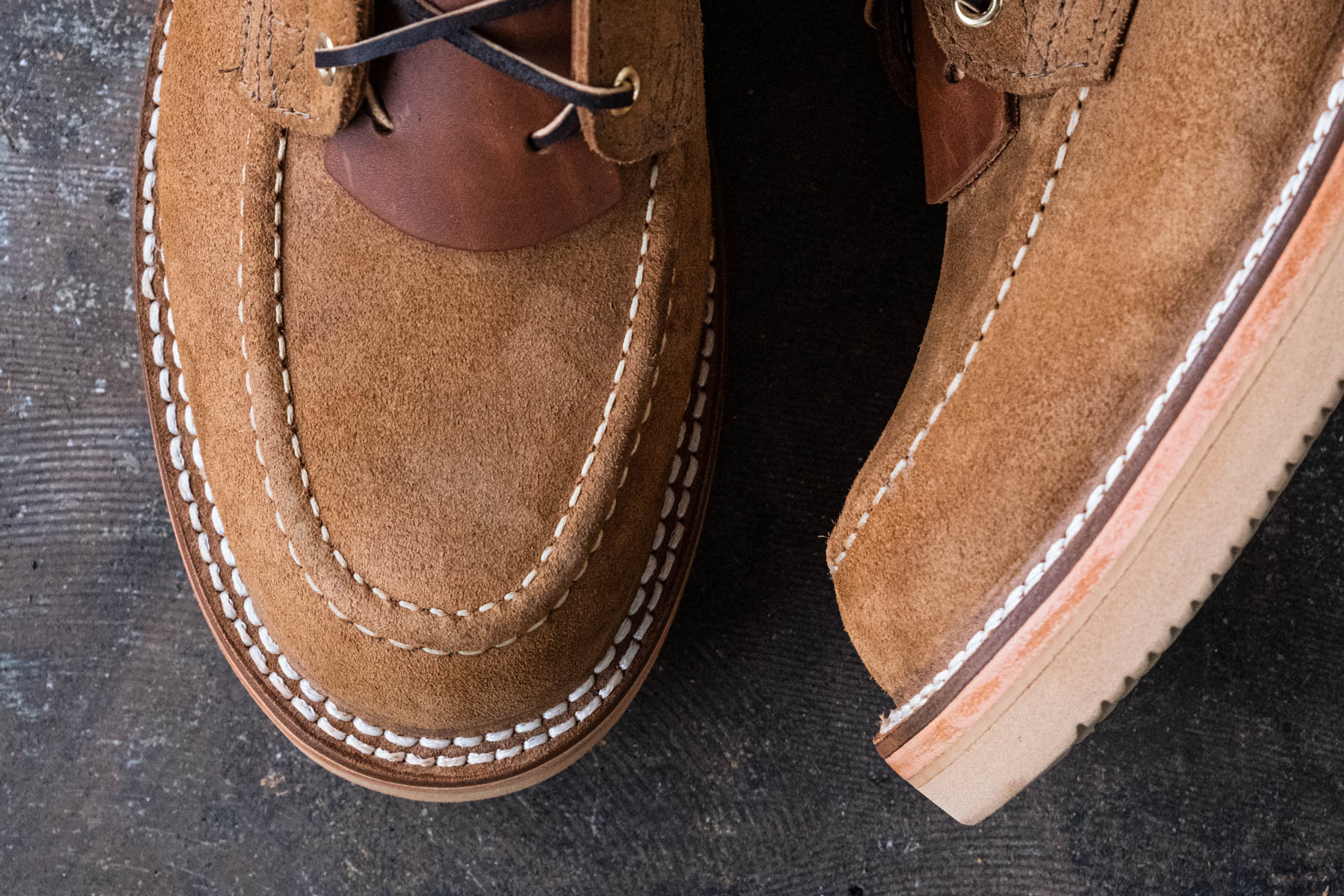
So, let’s start with the moc toe. The name itself can be a little misleading. While it shares some aesthetic similarities with traditional Native American moccasins, the modern work boot moc toe is more about its construction and look. It’s characterized by that distinctive, U-shaped stitching that forms a sort of pouch or pocket around the toe box. It often looks like three separate pieces of leather stitched together.
This stitching creates a classic, somewhat rounded, and often more casual appearance. You’ll see moc toe boots in a wide variety of settings, from workshops and garages to even more casual wear. They're popular because they tend to be more comfortable right out of the box, often requiring less break-in time than other boot styles. They have a softer, more forgiving feel.
The construction itself, with the stitched vamp, can sometimes offer a bit more flexibility in the toe area. It’s a design that's been around for a while, and it’s proven to be both durable and appealing to a lot of people. Think of that classic work boot look – a lot of those are moc toes.
Now, here’s the crucial part: A standard moc toe boot, by itself, does not inherently contain any protective reinforcement in the toe box. It’s primarily a stylistic and construction choice. So, if you’re looking for protection against falling objects or crushing forces, a plain moc toe boot isn't going to cut it. It’s like wearing a stylish helmet that’s made of cardboard. Looks good, but not much protection.
And What About the Mighty Steel Toe? (The Real Protector)
Ah, the steel toe. This is where the serious business of foot safety comes in. A steel toe boot, as the name suggests, features a protective cap made of hardened steel (or sometimes other strong materials like composite or alloy) embedded within the toe box of the boot.

This isn't just a cosmetic addition. The steel toe is designed to withstand significant impact and compression. It’s there to prevent serious injury if something heavy falls on your foot or if your foot gets caught in machinery. Think of it as a knight’s armor for your toes. It’s the kind of boot that’s often required in industries where heavy equipment and falling objects are a daily concern – construction, manufacturing, warehousing, mining, and so on.
These boots are typically tested to meet specific safety standards, like ASTM (American Society for Testing and Materials) standards. You’ll often see markings on the boot indicating the level of protection, such as resistance to a certain pound of impact or crush force. This is the real deal when it comes to protecting your digits from disaster.
The downside? Steel toes can sometimes feel a bit heavier and stiffer, and they might require a bit more break-in time. And, let’s be honest, they don't always have the most fashionable look, though modern manufacturers are doing a better job of integrating them into more stylish designs.
The Best of Both Worlds: When Moc Toe Meets Steel Toe
Now, here’s where things get really interesting, and where my initial confusion at Dave's toolbox stemmed from. You see, a boot can be BOTH a moc toe AND a steel toe. Yes, you heard that right!
Many work boots are designed with the moc toe aesthetic but also include a steel toe cap for protection. So, you get that classic, comfortable moc toe look, but with the added peace of mind that comes with serious toe protection. It’s like getting a comfortable armchair that also has built-in lumbar support. Who knew safety could be so stylishly practical?
In these hybrid boots, the steel (or composite) toe cap is integrated within the moc toe construction. The stitching you see on the outside is purely for the style and the way the leather is assembled. The actual protective element is hidden inside, doing its important job. These boots often meet all the necessary safety standards while still offering that beloved moc toe look.
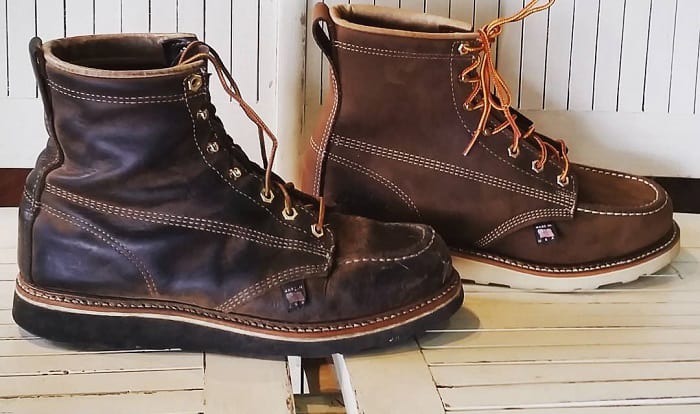
This is probably what Dave had ordered. He’s a practical guy, but he also appreciates a good-looking boot. He’s not going to sacrifice safety, but he’s not going to wear something that makes him look like he just stepped out of a 1970s workwear catalog either (unless that’s his thing, which, you know, no judgment!).
Why Does This Distinction Even Matter? (Hint: It’s Your Toes!)
So, why all the fuss? Why bother distinguishing between them? Well, it all comes down to safety and intended use.
If your job involves any risk of falling objects, heavy machinery, or anything that could potentially crush or impact your feet, then you absolutely need boots with a protective toe cap, like steel toe, alloy toe, or composite toe. Wearing a plain moc toe boot in such an environment would be incredibly dangerous and frankly, a bit foolish. It’s like going into a battle with a shield made of foam.
On the other hand, if you’re looking for comfortable work boots for lighter-duty tasks, or if you simply prefer the aesthetic of a moc toe for casual wear or less demanding work environments, a plain moc toe boot might be perfectly suitable. They’re great for tasks where durability and comfort are key, but there’s minimal risk of serious toe injury. Think gardening, light workshop tasks, or just looking good while running errands.
The confusion often arises because the term "work boot" can encompass a wide range of footwear, and many popular work boot styles happen to feature the moc toe design. People see a tough-looking boot with a stitched toe and assume it has the protective capabilities of a steel toe, which isn't always the case.
Decoding Boot Descriptions: What to Look For
When you're out shopping, don't just go by the look. You need to be a bit of a boot detective. Here’s what to keep an eye out for:
- "Steel Toe," "Alloy Toe," "Composite Toe," "Safety Toe": These are your keywords for protection. If you see any of these, the boot has a protective cap.
- "Moc Toe," "Moc-Toe," "Three-Piece Toe": These terms refer to the construction and style of the toe box. They don't automatically imply safety features.
- ASTM Standards: Look for markings that indicate the boot meets ASTM F2413 standards (or the equivalent in your region). This tells you it's been tested for impact and compression resistance.
So, that boot that looks like a classic work boot with the distinctive stitching? It might be a steel toe moc toe, offering the best of both worlds. Or it might be a plain moc toe, focusing purely on style and comfort for less hazardous environments. You’ve got to read the label, folks! It’s not just about the cool stitching; it's about what’s going on underneath that stitching.
A Personal Revelation (and a New Pair of Boots)
After my little revelation at the construction site, I had to admit, my understanding was a bit… incomplete. I’d always just seen the styles, and frankly, the safety aspect was the part that jumped out at me when I thought of work boots. But that’s the beauty of learning, isn’t it? You think you know, and then the universe (or your friend Dave) steps in to gently nudge you in the right direction.
I ended up helping Dave carry his new boots to his truck. And lo and behold, they had the classic moc toe stitching. But then I saw the small emblem on the side – a little shield with some lettering. Yep, a steel toe moc toe. He was all set. Safe and looking good. I’m almost jealous. My current boots, while comfortable, are definitely lacking in the high-impact protection department.
So, the next time you’re looking at boots, remember this little chat. Don't confuse the style with the substance. A moc toe is a design. A steel toe (or alloy or composite) is a safety feature. And the best part? You can often get both in one awesome package. Your feet will thank you, trust me.
It’s a pretty cool world when you realize that fashion and function can not only coexist but can actually enhance each other. Now, if you'll excuse me, I have some boot shopping to do. For safety, of course. And maybe a little bit for style.