
Is Stainless Steel Magnetic Or Nonmagnetic
Ah, stainless steel. It’s everywhere, isn’t it? From your trusty kitchen pots and pans that have survived more questionable culinary experiments than you’d care to admit, to the gleaming sink that’s seen countless loads of dishes, to even the occasional piece of jewelry you swear doesn’t tarnish. It’s the quiet workhorse of our modern lives, dependable and, let’s be honest, pretty good-looking.
But here’s a little secret, a tiny whisper of mystery that might just make you look at your favorite stainless steel spatula with a whole new sense of wonder. Is it magnetic? Or is it, perhaps, a bit of a diva, too proud to be bothered by the humble magnet?
For the longest time, we just assumed. You know, because it’s steel. Steel is magnetic, right? Like that old, rusty swing set in your childhood backyard that practically ate lost marbles. Or the car door you once leaned against, only to find your keys mysteriously clinging to it.
So, imagine the surprise when you take a magnet, a perfectly innocent, everyday magnet (maybe the one holding your grocery list to the fridge, or that souvenir from your last vacation), and you hold it up to your beautiful, polished stainless steel saucepan. And… nothing. Zip. Nada.
It’s like that friend who you know has the best gossip but refuses to spill the beans. You’re just waiting for that clink, that satisfying little thwack of attraction, and it never comes. It can be a little bewildering, can’t it? You start to question your own sanity. Is the magnet broken? Did you accidentally buy a fake piece of stainless steel? Did a tiny, invisible shield appear out of nowhere?

The truth is, it’s not your fault, and it’s not the magnet’s fault either. It’s all about what’s inside the stainless steel. Think of it like a recipe. Regular steel is like a simple cookie recipe: flour, sugar, eggs, and a bit of that basic magnetic stuff. Stainless steel, on the other hand, is like a gourmet baking creation with a secret ingredient. That secret ingredient is often chromium. Lots and lots of chromium. We’re talking at least 10.5% by weight, sometimes more!
This chromium joins forces with the iron (which is the magnetic bit in regular steel) and forms a super-thin, invisible shield on the surface. It's called the passive layer. And this layer is the superhero cape of stainless steel. It protects it from rust, from corrosion, from all sorts of nasty things that would make other metals cringe. It’s what keeps your sink looking shiny and your knives sharp without turning into a rusty disappointment.
It’s this protective shield that sometimes makes stainless steel play coy with magnets.
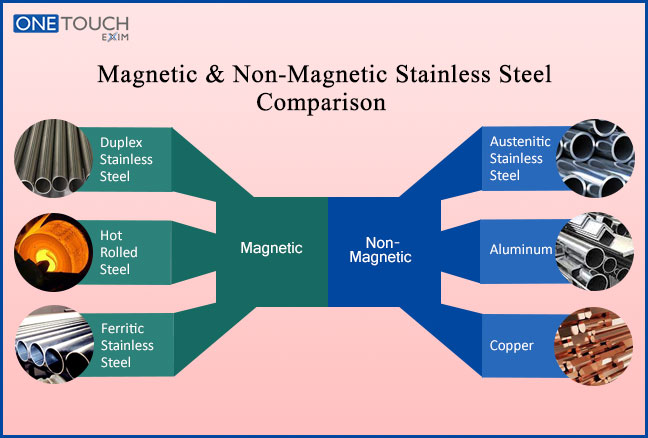
Now, here’s where it gets really interesting, and a little bit fun. Not all stainless steel is created equal, and not all stainless steel is completely uninterested in magnets. There are different “families” of stainless steel, like cousins in a big, slightly eccentric family reunion. Some are naturally very magnetic, while others are much less so, and some are basically saying, “Magnets? Please.”

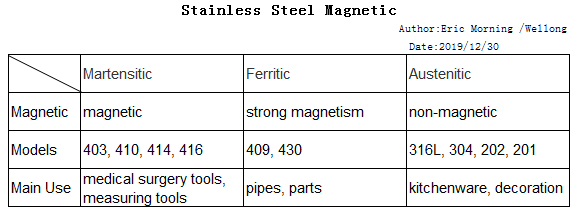
The most common types you’ll find in your kitchen are usually the austenitic stainless steels. These are the ones that often give magnets the cold shoulder. They’re fantastic because they’re so resistant to rust and can be shaped easily. Think of your classic coffee mug that keeps your brew warm, or the fancy cutlery you only bring out for special occasions (or just because you feel like it). They’re generally non-magnetic, or only very weakly so.
Then you have the ferritic and martensitic stainless steels. These guys are more like their magnetic cousins. They’re still stainless, still tough, but they’re also much more likely to get along swimmingly with a magnet. You might find these in things like your car exhaust, or certain types of knives where hardness is super important. They’re the dependable, always-there-for-you type of stainless steel.
So, next time you’re in the kitchen, or admiring a piece of stainless steel jewelry, or even just absentmindedly fiddling with a magnet, try it out! Grab that magnet and see what happens. Does your favorite pan stick like a barnacle? Or does it politely decline the invitation? It’s a little everyday experiment, a tiny moment of discovery that can reveal the hidden personality of the materials we use every day. It’s a reminder that even the most common things can hold a little bit of magic, and a whole lot of science, just waiting to be explored. And who knew something as mundane as a magnet could lead to such a fascinating little story about the world around us?