
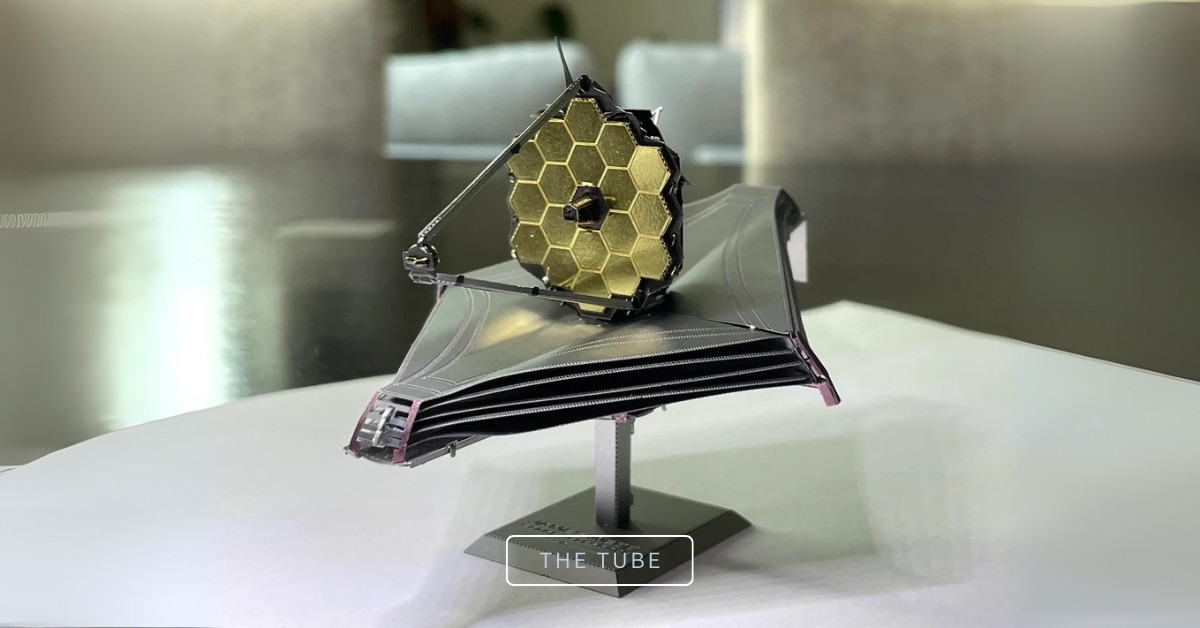
Have you ever looked up at the night sky and dreamed of touching the stars? Or maybe you’re fascinated by the incredible achievements of NASA’s latest space missions. If so, there’s a way to bring the cosmos into your hands—literally. The James Webb Space Telescope Model Kit is more than just a hobby project; it’s a fun, educational, and hands-on way to connect with one of the greatest scientific instruments of our time.
This article is your guide to understanding what makes the James Webb Space Telescope (JWST) model kit so exciting, who it’s for, and why building it is an out-of-this-world experience for space lovers of all ages.
Also Read
What Makes the James Webb Space Telescope So Special?
Launched on December 25, 2021, the James Webb Space Telescope is NASA’s most ambitious space observatory. It orbits around 1.5 million kilometers from Earth, capturing images in infrared light that let us see galaxies, stars, and exoplanets in unprecedented detail.
Compared to the Hubble Telescope, JWST has:
- 6.5-meter primary mirror (vs. Hubble’s 2.4-meter mirror)
- Infrared vision that peers through cosmic dust
- The ability to observe objects over 13.5 billion light-years away
With this kind of prestige, it’s no wonder that science fans are eager to get their hands on a detailed model version.
Who Is This Kit For?
The James Webb Space Telescope Model Kit is designed for:
- STEM students and educators
- Space enthusiasts
- Hobbyists and model builders
- Parents and kids looking for engaging educational projects
- Anyone curious about space exploration
Whether you’re a seasoned model builder or just dipping your toes into astronomy, this kit offers an interactive, detailed way to learn about the largest and most powerful space telescope ever built.
Imagine holding a miniature replica of a $10 billion marvel, the telescope that’s capturing the oldest light in the universe. The JWST model kit lets you recreate this cutting-edge observatory with your own two hands. You’re not just building a model—you’re assembling a piece of history.
From the iconic gold hexagonal mirrors to the tennis-court–sized sunshield, this kit brings the wonder of the real James Webb Space Telescope right to your desk or classroom.
What’s in the Model Kit?
While different versions of the JWST model kit are available, high-quality kits typically include:
- Pre-cut parts (plastic, wood, or metal) for easy assembly
- Detailed instruction manual or digital guide
- Laser-etched mirror segments
- Components representing the telescope’s deployable sunshield, spacecraft bus, and mirror array
- Scale accuracy: Usually 1:50 or 1:100 depending on the kit
Some kits even include educational booklets about the telescope’s mission, technology, and major scientific goals.
If you’re new to model building, look for kits labeled “beginner” or “snap-together” to avoid needing glue or special tools.
Educational Value: Learning by Building
Model kits like this aren’t just for display—they’re powerful STEM learning tools. Assembling the JWST model helps users:
- Understand space engineering and telescope design
- Learn spatial reasoning and mechanical structure
- Gain insights into how real telescopes unfold and operate in space
For teachers and students, the JWST model kit can be used in classrooms to explain:
- Optics and light
- Astronomy and the electromagnetic spectrum
- Engineering challenges of space deployment
The hands-on experience reinforces concepts that might otherwise seem abstract in textbooks.
Let’s face it: watching space documentaries is cool, but doing something space-related with your hands hits differently. Whether you’re building solo, with your child, or as part of a science club, the JWST model kit becomes a shared adventure.
- For parents, it’s a chance to bond with kids while sparking their curiosity.
- For students, it’s a project that can turn into a science fair star.
- For space fans, it’s a collector’s item with a meaningful story.
Even if you’re not an engineer or a scientist, this model gives you a chance to walk in their footsteps, gaining a tangible sense of what it takes to put technology in orbit.
Don’t just take our word for it—the buzz around JWST model kits is real. NASA itself offers educational printable versions of the telescope. Meanwhile, physical model kits from manufacturers like Metal Earth, Wood Trick, and others have received glowing reviews online:
- ⭐⭐⭐⭐⭐ “My son loved this! He learned so much about JWST and felt proud of finishing it.”
- ⭐⭐⭐⭐ “Challenging but rewarding. Looks beautiful on my bookshelf!”
- ⭐⭐⭐⭐⭐ “Used this in my classroom. It got the kids genuinely excited about space.”
Some kits are even featured in science museums and planetariums, showing their value goes beyond a simple hobby.
No matter your background or skill level, the JWST model kit is designed to be accessible. Many kits include color-coded parts and step-by-step guides, so even first-timers won’t feel overwhelmed.
And if you love customization, you can paint or modify your build. Add LEDs, color accents, or a custom display stand to make your model truly one of a kind.
For community learning, model-building events are often held in libraries, science centers, or astronomy clubs. You can even host your own JWST building party to share the fun.
Where to Buy the James Webb Model Kit
Ready to start building? Here are some reliable places to find your JWST model kit:
- NASA Store (for educational printables and recommendations)
- Amazon (search “James Webb Space Telescope model kit”)
- Science museum gift shops
- Educational retailers like STEMfinity, Eduporium, or Fat Brain Toys
- Etsy for custom-made or 3D-printed versions
Prices range from $10 to $100+ depending on materials, size, and complexity.
The James Webb Space Telescope Model Kit is more than just a replica—it’s an invitation to explore, to learn, and to connect with the universe. By building it, you’re not just stacking parts; you’re assembling a gateway to deep space, and bringing home a symbol of human achievement and scientific wonder.
Whether for education, inspiration, or decoration, this kit offers lasting value. It reminds us that science isn’t just out there—it’s something we can hold, understand, and be part of.
So go ahead—grab your model kit, roll up your sleeves, and start building the future of space science right from your living room. Because the stars are closer than you think.