
Length Of Telescope Tube
So, you've been bitten by the stargazing bug, eh? Suddenly, you're looking up at the night sky and thinking, "Man, I wanna see what's really going on up there!" And then, bam! You start looking at telescopes. And before you know it, you're neck-deep in jargon. Aperture, focal length, magnification... it's enough to make your head spin faster than a drunk astronaut on a joyride. But there's one thing that often gets overlooked, yet it’s as important as getting your coffee order right: the length of the telescope tube.
Think about it. It’s not just some random stick that holds your fancy lenses. Oh no, my friends. The length of that tube is a bit like the length of your sock drawer. Too short and you're just fumbling around, not really getting anywhere. Too long and, well, let’s just say things can get a little unwieldy. And much like a pair of really stinky gym socks, an ill-suited tube length can really ruin your cosmic experience.
I remember my first telescope. It was a beginner's refractor, and honestly, the tube was about as long as my forearm. Cute, I thought. Perfect for my little balcony! Turns out, it was like trying to see a squirrel convention across a football field through a pair of opera glasses. You squint, you strain, and all you get is a blurry mess. It was less "journey to the stars" and more "mildly interesting tree branch."
The length of that tube, you see, has a direct impact on how much light your telescope can gather and how much detail it can resolve. It’s kind of like having a bigger bucket to catch rain. A longer tube, generally speaking, can accommodate a larger objective lens or mirror, which is the main light-gathering component. More light means you can see fainter objects, like distant galaxies that look like smudged fingerprints in a short tube. It means you can tease out the subtle details of planets, like Jupiter's swirling cloud bands or Saturn's rings, which can look more like a smudge of chalk dust in a short, stubby tube.
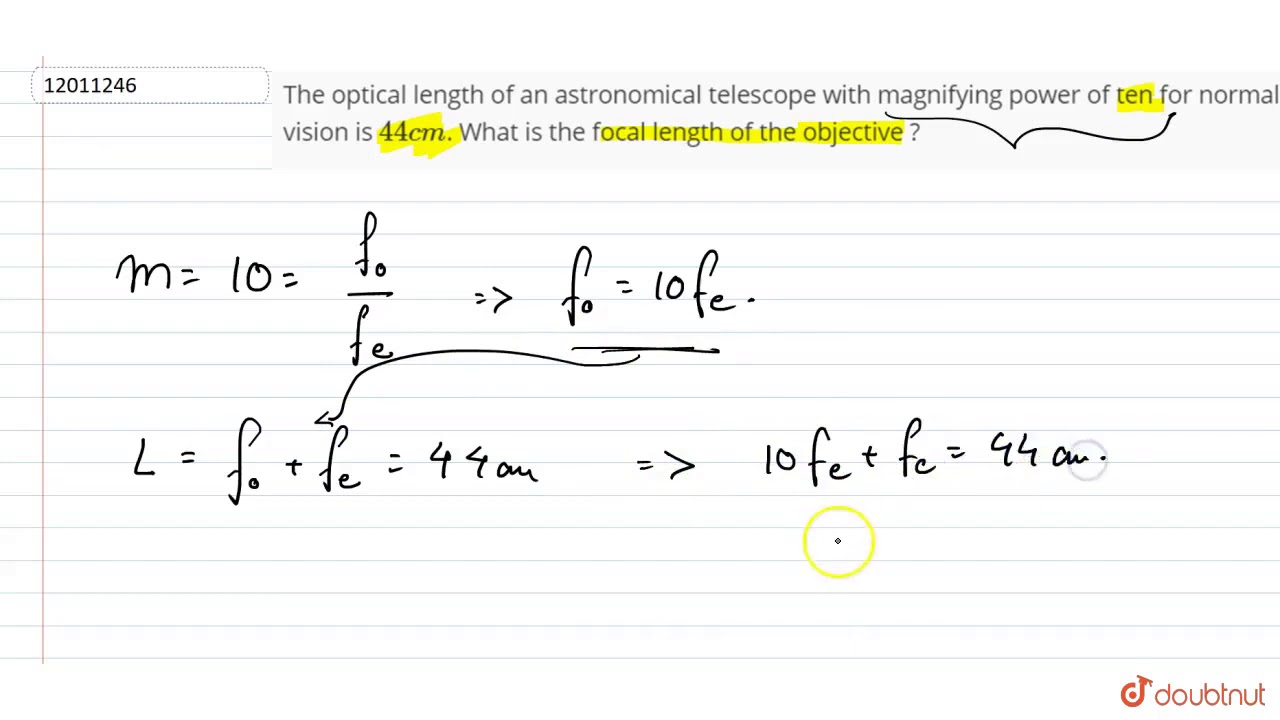
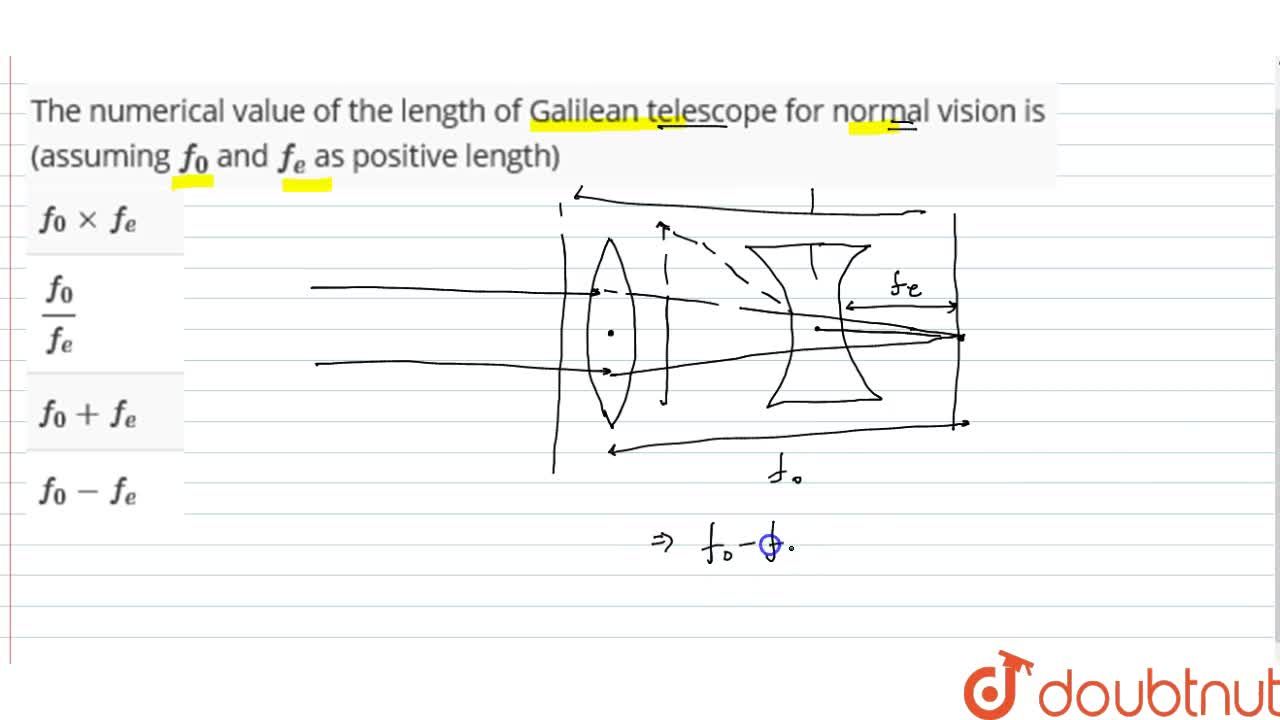
And it's not just about seeing fainter stuff. The length of the tube is also intimately tied to the focal length of the telescope. Now, focal length is a whole other can of worms, but in simple terms, it's the distance from the objective lens or mirror to where the light converges to form an image. A longer tube usually means a longer focal length. And a longer focal length, when paired with a suitable eyepiece, gives you higher magnification. It’s like having super-powered zoom!
Imagine you're trying to read a tiny label on a medicine bottle from across the room. If you have just your eyes, it's a no-go. If you have a short magnifying glass, you might get a little help. But if you have a long, powerful magnifying glass (or, you know, a telescope tube with a decent focal length), suddenly those tiny letters are practically shouting at you. That's the magic of a longer tube – it allows for that glorious, high-magnification viewing that makes you feel like you're practically brushing shoulders with the moon.
But here's where things get a bit nuanced, like trying to fold a fitted sheet perfectly. A longer tube isn't always the answer. There's a trade-off, you see. Longer tubes tend to be heavier and bulkier. Trying to lug a 6-inch Schmidt-Cassegrain telescope with a tube longer than a pool noodle through your house can be an adventure in itself. You’ll be playing a game of Tetris with your furniture, and your partner might start giving you the "is that thing necessary?" look. Trust me, I’ve seen that look. It’s a classic.
And it’s not just about brute strength. A longer tube can be more susceptible to vibrations. Imagine you’re trying to balance a toothpick on your nose while someone is running a jackhammer next door. That’s kind of what happens with a long, wobbly tube. Any tiny tremor – a car driving by, a cat jumping on the table, your own excited breathing – can shake your carefully focused image into a blurry mess. It’s like trying to sip soup with chopsticks. Frustrating, to say the least.
So, what's the sweet spot? Well, it depends on what you’re trying to look at, and where you're looking from. For planet viewing, where you often want higher magnifications, a longer focal length telescope (and thus, generally a longer tube) can be fantastic. You’ll be able to see those fine details that make planets so captivating. It’s like going from watching a fuzzy movie on an old TV to a crisp, high-definition IMAX experience.
But if you're more into deep-sky objects – nebulae, star clusters, galaxies – which tend to be fainter and spread out, a telescope with a shorter focal ratio (which often means a shorter, more compact tube) can be very appealing. These telescopes are usually faster, meaning they gather light more efficiently for their size and can give you a wider field of view. Think of it as a really good wide-angle lens on your camera. You can fit more of the grand cosmic landscape into your view. It’s like swapping that cramped studio apartment for a sprawling mansion with a view.
This is where the type of telescope really comes into play. Refractor telescopes, those classic long tubes with lenses at the front, often have longer focal lengths and therefore longer tubes. They're like the trusty old sedans of the telescope world – reliable and straightforward. Reflectors, on the other hand, use mirrors. Depending on their design (like Newtonians or Cassegrains), they can come in a wider range of tube lengths for similar focal lengths. They're the SUVs and sports cars, offering different strengths and capabilities.
Let's talk about portability. If you're a balcony stargazer, or if you have to hike your telescope to a dark sky site (which, by the way, is highly recommended!), a shorter, more manageable tube length is your best friend. Trying to navigate a crowded campsite with a 6-foot-long telescope tube is like trying to do the cha-cha in a phone booth. It’s not going to end well for anyone involved, especially your telescope.
I once saw a guy wrestling with a ridiculously long Dobsonian telescope at a star party. The tube was so long, it had its own zip code. Every time he moved it, it was like watching a slow-motion ballet of potential disaster. People were subtly backing away, muttering things like, "hope that thing doesn't swing around." It was pure comedy, but I could see the frustration on his face. He was clearly getting great views, but the sheer effort involved was taking away from the joy.
On the flip side, I’ve also seen people with tiny, stubby telescopes trying to peer at nebulae. They're pointing their little eye-candy at the sky, and you can almost hear the internal monologue: "Is that... is that a fuzzy spot? Or is that just my eyelashes?" It’s not their fault, of course. They’re working with what they have. But it really highlights how the tube length, and the associated optical design, can significantly impact what you can see.
It’s also worth considering the eyepiece you're using. The eyepiece screws into the back of the telescope tube, and it's the final piece of the magnification puzzle. A longer focal length telescope will naturally allow for higher magnifications with standard eyepieces, which is great for planets. But you can also use shorter focal length eyepieces with a shorter focal length telescope to achieve high magnification, though this can sometimes result in a narrower field of view and more chromatic aberration (those annoying color fringes)."
Think of it like this: a long tube gives you the potential for a bigger engine. But you still need the right gearbox (eyepiece) to get the best performance. You can put a sports car engine in a tractor, but it's not going to be the most efficient way to plow a field, or go fast.
So, when you're browsing for your next celestial companion, don't just get blinded by the aperture. Take a moment to appreciate the length of the tube. Does it seem like a sensible length for your viewing habits and your living situation? Is it going to be a friendly, portable sidekick or a beast you’ll wrestle with every time you want to see Saturn’s rings? It’s the unsung hero of your stargazing journey, the silent partner in your cosmic quest. And a well-chosen tube length can make all the difference between a frustrating night and a truly awe-inspiring journey through the cosmos. Now go forth, and may your tubes be ever the right length for your astronomical adventures!