
Liquid Metal Thermal Paste Vs Thermal Paste

So, I was recently helping my buddy, Dave, upgrade his rig. Dave, bless his heart, is the kind of guy who still thinks "cloud storage" means a fluffy white thing in the sky. We’re talking about a PC that’s seen better days, probably powered by sheer willpower and a prayer. He’d decided it was time to slap in a new, shiny graphics card, something that promised to make his favorite esports titles look… well, less like pixelated potato salads.
Everything was going swimmingly. We got the old card out, dusted off the motherboard (which, let's be honest, looked like a fine layer of ancient civilization had settled on it), and I reached for the trusty tube of thermal paste. The usual suspect, you know the one. It’s got that satisfying grey goo consistency. But then, Dave, in his infinite wisdom, pulls out this other tube. A gleaming, silver tube. "Dude," he says, "my cousin told me about this 'liquid metal' stuff. Says it's like, totally next level."
And that, my friends, is how I found myself staring at a substance that looked suspiciously like something you’d find oozing out of a sci-fi robot. It got me thinking. What is this liquid metal thermal paste, and is it really as revolutionary as Dave’s cousin implied? Or is it just fancy, potentially hazardous, goo?
The Grey Goo of Yesteryear (and Today!)
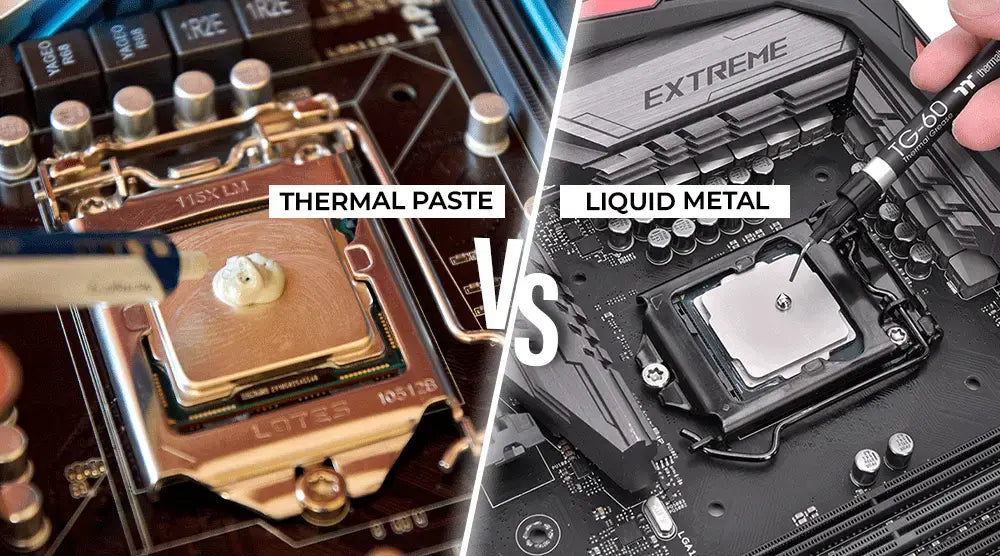
Let's start with the familiar. You know, the stuff that’s been keeping our CPUs from spontaneously combusting for years. We’re talking about your standard, run-of-the-mill thermal paste. For the uninitiated, it’s essentially a viscous compound that’s applied between the CPU (or GPU) and its heatsink. Its main job is to fill in the microscopic gaps and imperfections on the surfaces of both components. Think of it like this: even though they look smooth to the naked eye, the surfaces of your CPU and heatsink are actually pretty rough. Air, as you probably know, is a terrible conductor of heat. So, if you just clamped a heatsink directly onto a CPU, you'd have tiny pockets of air trapped in those imperfections, acting like a thermal barrier.
Thermal paste, with its much higher thermal conductivity, bridges those gaps, allowing heat to flow efficiently from the CPU to the heatsink, where it can then be dissipated by fans or a liquid cooling system. It’s the unsung hero of our powerful machines. Without it, your computer would be sobbing in a corner, overheating and shutting down every five minutes. And trust me, nobody wants to witness that.
These pastes are typically made from a base of silicone or oil, with various additives to improve their thermal conductivity. Common additives include ceramic particles (like aluminum oxide or zinc oxide), metallic particles (like silver or aluminum), and sometimes even diamond dust. The higher the concentration and the better the quality of these additives, the better the thermal paste’s ability to transfer heat.
They come in a variety of colors – white, grey, black, sometimes even a sparkly silver. And they’re generally quite forgiving. If you accidentally get a bit too much on, or it spreads a little unevenly, it's usually not the end of the world. A quick wipe and reapplication, and you're good to go. They’re also relatively safe to handle, though you wouldn't want to eat them (probably). Think of them as the reliable, sensible uncle of the thermal management world.
So, What's the Big Deal with Liquid Metal?
Now, let’s talk about Dave’s cousin’s shining beacon of thermal performance: liquid metal. As the name suggests, this stuff is literally metal, but in a liquid state at room temperature. The most common liquid metal thermal paste is an alloy of gallium, indium, and tin. Gallium is the real star here, being a metal that melts at a surprisingly low temperature (around 29.76 °C or 85.57 °F). So, even at slightly above room temperature, it becomes a mercury-like liquid. And mercury, you might recall from your high school science class, is also a liquid metal, though significantly more toxic.
The theoretical advantage of liquid metal is its incredible thermal conductivity. We’re talking numbers that make your average thermal paste look like it’s trying to conduct heat with a pool noodle. We're talking about conductivity values that can be 10-20 times higher than even the best traditional pastes. This means it’s theoretically much better at transferring heat away from your CPU or GPU.
Imagine the microscopic imperfections on your CPU’s surface. Traditional paste fills them. Liquid metal? It’s so fluid, it essentially forms a near-perfect, continuous layer of metal between the CPU and the heatsink. It’s like going from a bumpy dirt road to a perfectly smooth, multi-lane highway for heat. The potential for cooling is enormous.
The Catch-22: Why It's Not for Everyone (Especially Dave)
Okay, so if it's so much better, why isn't everyone slathering their CPUs in the stuff? Ah, the plot thickens. Liquid metal comes with a whole host of… let's call them 'quirks'. For starters, it’s extremely conductive electrically. Your standard thermal paste is an electrical insulator. That’s a good thing. You don't want electricity zipping around where it shouldn't be.
Liquid metal, on the other hand, is a conductor. If you get even a tiny drop of it on your motherboard, on any of the electronic components, or even on the wrong part of your CPU or GPU, you can create a short circuit. And a short circuit usually spells doom for your hardware. It’s like giving your computer a sudden, fatal electrical shock. So, when you're applying liquid metal, it's less of a gentle spread and more of a surgical operation.
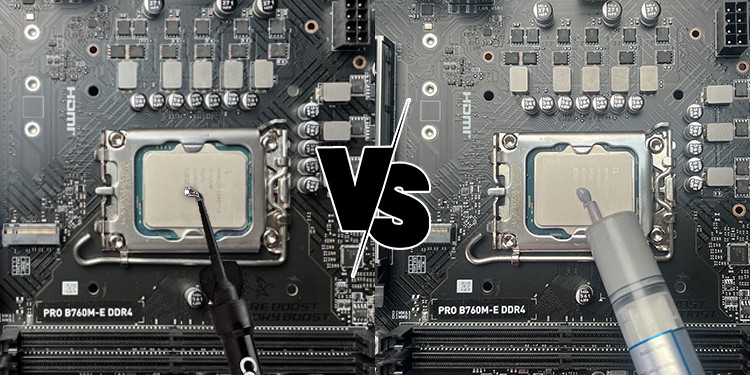
This is why most liquid metal applications are recommended for experienced builders or those who are willing to go the extra mile with preparation. You often need to "mask" off certain areas of the CPU and motherboard with non-conductive materials (like electrical tape or specialized coatings) to prevent accidental spills. It’s a level of caution that’s generally not required for regular paste. You know how you just squeeze a bit on and go? Yeah, don't do that with liquid metal. Seriously, don’t.
Then there’s the issue of compatibility. Liquid metal can react with certain metals, particularly aluminum. Many CPU coolers and some heatsinks have aluminum bases. Applying liquid metal directly to an aluminum surface can cause it to corrode and degrade over time. This is why most manufacturers recommend using liquid metal only on nickel-plated copper heatsinks, which are much more resistant. So, before you even think about buying liquid metal, you have to meticulously check the material of your heatsink. It's like choosing a date; you need to make sure you're compatible!
Another point of contention is longevity and consistency. While initially incredibly effective, some liquid metal compounds can dry out or break down over extended periods, losing their efficacy. The "drying out" isn't like your grandma's old glue; it's more about the components of the alloy separating or oxidizing. This means you might need to reapply it more frequently than traditional paste, or at least monitor its performance closely. For a system that’s just meant to sit there and run, that’s a bit of a hassle. For enthusiasts who are constantly tweaking and benchmarking, it might be a trade-off they're willing to make.
The Application Process: A World Apart
Let's talk about the actual application. With traditional thermal paste, it’s pretty straightforward. Clean the surfaces with isopropyl alcohol, apply a pea-sized dot (or a thin line, or a cross – there are many schools of thought!) in the center of the CPU’s integrated heat spreader (IHS), and then gently press the heatsink down. The pressure from the heatsink will spread the paste evenly. Easy peasy, lemon squeezy.
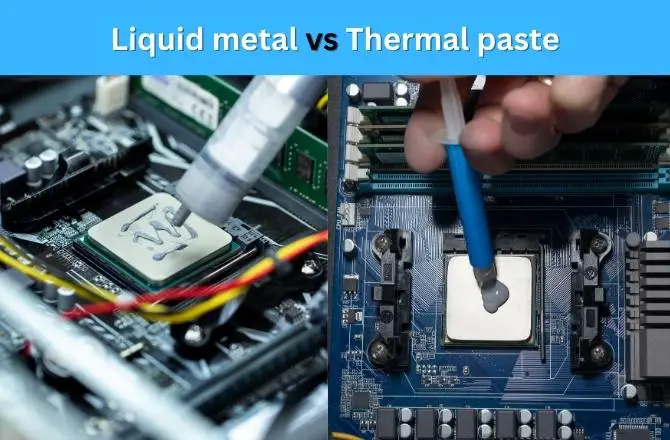
Liquid metal? It's a whole different ballgame. First, you definitely need to clean the CPU and heatsink thoroughly with isopropyl alcohol. Then comes the masking. You need to carefully apply a non-conductive barrier around the edges of the CPU, the socket, and any exposed capacitors or solder points on the motherboard that could come into contact with the liquid. This can be tedious. Some people use Kapton tape, others use specialized paints or sealants. You have to be precise. Extremely precise.
Once everything is masked, you apply the liquid metal itself. Usually, it's a small, controlled amount. You don't want to flood the area. Then, when you mount the heatsink, you need to be very careful not to allow any of the liquid metal to spill or spread beyond the intended area. It’s a high-stakes dance, and a single misstep can be very costly.
And then there’s the clean-up. If you ever need to remove the heatsink, you have to be just as careful. You don't want to leave any residue behind that could cause issues later. This often involves more isopropyl alcohol and very careful wiping.
Who is Liquid Metal For? (Hint: Not Dave)
So, after all this, who should be considering liquid metal? Honestly, it's primarily for the extreme enthusiast. The person who is pushing their CPU to its absolute limits, overclocking aggressively, and chasing every last degree of thermal performance. Think of the extreme benchmarkers, the competitive overclockers, or someone who is running a server that needs absolute maximum cooling efficiency and they're willing to manage the risks.
For the average gamer, the student using their laptop for essays, or even Dave upgrading his graphics card so he can stop seeing polygons that look like they're from a PlayStation 1 demo, standard thermal paste is more than sufficient. The performance gains from liquid metal, once you factor in the difficulty, the risk, and the potential for disaster, are often negligible for everyday use.
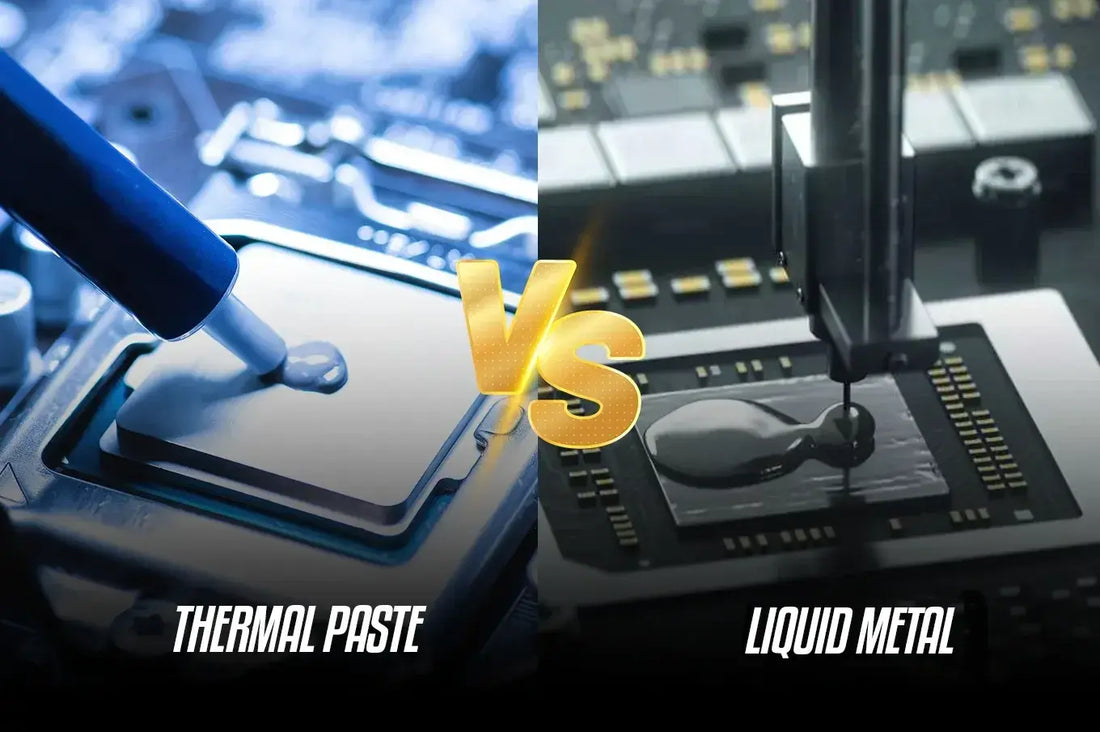
I mean, for Dave's PC, which was already running a bit warm and likely hadn't been cleaned in its entire lifespan, a good quality traditional thermal paste would have made a huge difference. It would have brought his temps down significantly, improved stability, and been a completely stress-free process. Slapping on that fancy silver tube of liquid metal? That would have been like giving a toddler a power tool – potential for amazing results, but a very high chance of something going horribly wrong.
We ended up using a high-end, ceramic-based thermal paste for Dave's upgrade. The difference was night and day. His games ran smoother, his CPU temps dropped by a good 10-15 degrees Celsius, and he was happier than a pig in mud. And I didn't have to spend an hour afterwards trying to surgically remove metallic goo from his motherboard with a toothbrush and a prayer.
The Verdict: Stick to the Tried and True (Mostly)
So, to sum it up: Liquid metal thermal paste offers the potential for superior thermal performance due to its incredibly high thermal conductivity. However, this comes at the cost of significant risks due to its electrical conductivity, potential material incompatibilities, and a more complex application and maintenance process. Traditional thermal pastes, while not as theoretically efficient, are far more forgiving, safer, and perfectly adequate for the vast majority of users.
If you're a seasoned builder, comfortable with meticulous application and aware of the risks, then by all means, experiment with liquid metal. But for most of us, the tried and true grey goo is still the king. It's reliable, it gets the job done, and it won't electrocute your components or corrode your heatsink. Sometimes, the most advanced solution isn't the most complicated one, but the one that works best for you.
And that, my friends, is the tale of Dave, his cousin, and the alluring, yet terrifying, world of liquid metal. Keep those temperatures in check, but also keep your sanity (and your hardware) intact!