
List Of Corrosion Resistant Metals

Ever have that moment when you notice a little bit of rust peeking out on your favorite old bike chain, or maybe a spot on your kitchen sink that just won't come clean? Yeah, that’s corrosion doing its thing. It’s basically the slow, quiet takeover of metal by its surroundings, usually a bit of moisture and air. Think of it like a grumpy old hermit, slowly but surely wearing down even the toughest characters.
But here's the good news: not all metals are equally susceptible to this grumpy hermit's advances. Some are way tougher, like superheroes in disguise, practically laughing in the face of rust and grime. And knowing about these "superhero" metals can save you a whole lot of hassle and money. Seriously, who wants to deal with a leaky pipe or a garden gate that’s practically crumbling away?
So, let's dive into the world of corrosion-resistant metals. It’s not as dry as it sounds, I promise! We’re talking about the unsung heroes that keep our world from falling apart, one shiny surface at a time.
The Usual Suspects (and Why They Get Grumpy)
You’ve probably got some of these metals lying around your house right now. Take plain old iron, for instance. It’s strong, it’s cheap, and it’s everywhere. But boy, does it have a short fuse when it comes to moisture. A little rain, a little humidity, and poof – you get that tell-tale reddish-brown rust. It’s like your phone battery draining way too fast; it’s a bummer and it degrades things.
Think about a cast-iron skillet. It’s fantastic for cooking, right? But you have to treat it right. Keep it dry, season it, or else you'll be scrubbing away rust instead of delicious browned bits. That’s iron’s vulnerability showing itself.
Other metals, like plain steel (which is mostly iron with some carbon), are a bit better but still prone to the same issue. This is why you see so many things made of steel coated with something else, like paint or plating, to give them a fighting chance.
Enter the Superheroes: The Real Corrosion Fighters
Now, let's meet the crowd-pleasers, the metals that just don't get as bothered by the elements. These are the ones you want for things that are going to be out in the wild, exposed to rain, sun, and who knows what else.
Stainless Steel: The Versatile Champion
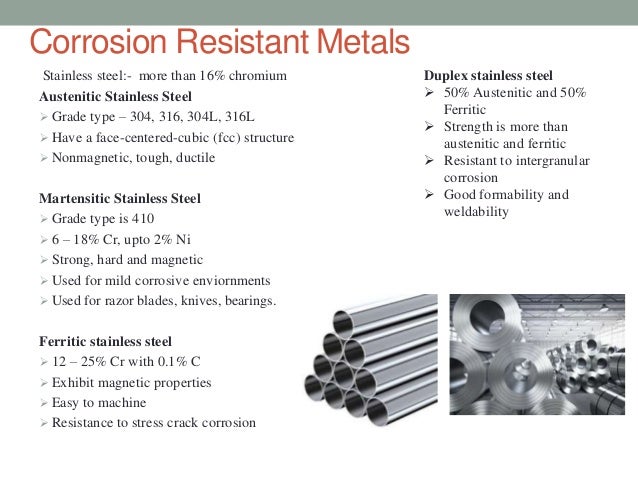
Ah, stainless steel. This is probably the most familiar superhero on our list. It’s in your cutlery, your kitchen sink, your car trim, and even in some fancy architectural features. What makes it so "stainless"? It's the addition of chromium. This little bit of chromium forms a super-thin, invisible layer of chromium oxide on the surface. Think of it like a tiny, self-healing shield. If it gets scratched, the shield basically reforms itself. Pretty neat, huh?
You know how some knives stay shiny for ages, while others get those dark spots? That’s often the difference between a good quality stainless steel and something less robust. It’s why we trust our kitchen tools with it – we don’t want our dinner forks turning into rust sculptures by the end of the week.
There are different "grades" of stainless steel too, each with its own superpowers. The most common, like 304 and 316, are super reliable for most everyday jobs. If you're near the ocean, where salt spray is a constant challenge, you might opt for a more robust grade like 316, which has a bit of molybdenum added to give it extra oomph against corrosive environments.
Aluminum: The Lightweight Boxer
Next up, we have aluminum. This metal is a real lightweight champ. It’s used in everything from airplane bodies to soda cans to window frames. Like stainless steel, aluminum also forms a protective oxide layer, but it does it incredibly quickly and effectively. It’s like it has a built-in panic button that activates immediately upon exposure to air!

While its oxide layer is great, it’s not quite as invincible as stainless steel’s chromium oxide shield in all situations. However, for most common uses, especially where weight is a concern, aluminum is a fantastic choice. Think of your car's alloy wheels – they're made of aluminum for a reason. They look good, they're light, and they can handle a bit of road grime and weather without falling apart.
One thing to note with aluminum is that it can be a bit more reactive with certain chemicals, so while it’s great outdoors, you might want to check its suitability if you’re planning to use it with strong acids or bases. But for the most part, it’s a solid, dependable material.
Copper: The Classic Charmer (with a Twist)
Copper is a classic, isn't it? It’s beautiful, it’s malleable, and it’s been used for centuries. Think of those gorgeous old copper kettles or the distinctive green patina on old copper roofs. That green stuff, called verdigris, is actually a sign of corrosion, but in copper's case, it’s a protective layer. It’s like a well-earned badge of honor.
The verdigris layer actually seals the underlying copper, preventing further degradation. So, while it looks like it's "corroding," it's actually protecting itself! It’s a bit like how a wise old person might look a bit weathered, but they’re perfectly content and well-protected from the world. You see copper used in plumbing, electrical wiring, and decorative items because it’s durable and has these unique properties.
Plus, let's be honest, copper just looks good. That warm, reddish-brown hue is timeless.
Titanium: The Ultimate Warrior (and the Pricey One)
Now we’re getting into the really high-performance stuff. Titanium is like the superhero’s superhero. It’s incredibly strong, incredibly light, and incredibly resistant to corrosion. It can handle pretty much anything you throw at it, from harsh chemicals to salt water. This is why it’s used in aerospace, high-end medical implants, and even in some very durable sporting equipment.
The reason titanium is so tough is its remarkable ability to form a stable, passive oxide layer very quickly. This layer is incredibly strong and doesn't let much get through. Imagine a knight in shining armor, but the armor is so good it’s practically part of the knight themselves, and it never rusts.
The only downside to titanium is its price. It’s significantly more expensive than stainless steel or aluminum, so you usually see it used where its extreme properties are absolutely necessary. You probably won't find a titanium toilet seat (thank goodness!), but you might find titanium in a high-performance watch or a top-of-the-line bicycle frame.
Nickel and its Alloys: The Silent Protectors
Nickel itself is quite corrosion-resistant, and it's often used as a plating over other metals to give them a shiny, protective layer. But its real strength comes when it’s combined with other elements to form alloys, like Monel (nickel and copper) and Inconel (nickel, chromium, and iron). These alloys are absolute tanks when it comes to resisting harsh environments, especially those with strong acids or high temperatures.
Think about industrial settings, chemical plants, or offshore oil rigs – these are the places where materials face extreme challenges. Alloys containing nickel are often the go-to choice because they simply refuse to break down. They’re the silent protectors, working tirelessly behind the scenes to keep things running smoothly.
Why Should We Even Care?
Okay, so we have these tough metals. Why is this relevant to your average Tuesday? Well, for starters, it’s about longevity. When things are made of corrosion-resistant materials, they last longer. That means you’re not constantly replacing things. Imagine your garden gate not rusting and falling off after just a few years. That’s money saved and less frustration.
It’s also about performance. Think about that really nice set of kitchen knives you invested in. You want them to stay sharp and rust-free, right? That’s thanks to good quality stainless steel. Or the plumbing in your house – nobody wants to deal with a burst pipe because the metal corroded through. Good materials mean things work as they should, without unexpected failures.
And then there’s safety. In critical applications, like in bridges, airplanes, or medical devices, the failure of a component due to corrosion can have serious consequences. Using the right corrosion-resistant materials is absolutely vital for ensuring safety.
So, next time you’re looking at a metal object, take a moment. Is it shiny? Is it exposed to the elements? Chances are, it's made of one of our superhero metals, quietly doing its job. And that's pretty cool when you think about it!