
Location Of Alkali Metals On Periodic Table
Ever wondered about those special ingredients that make up everything around us? Well, the periodic table is like a giant, super-organized recipe book for the universe! And nestled in a cozy spot on this book are a group of elements that are, frankly, a little bit dramatic.
These are the Alkali Metals. Think of them as the "diva" elements of the periodic table. They’re not shy about making their presence known, and they certainly don't like to be left alone.
Where Do These Dramatic Elements Hang Out?
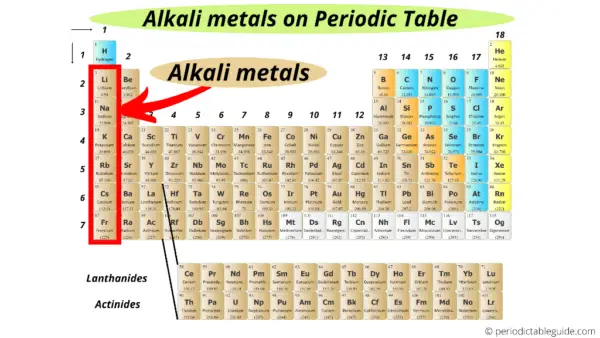
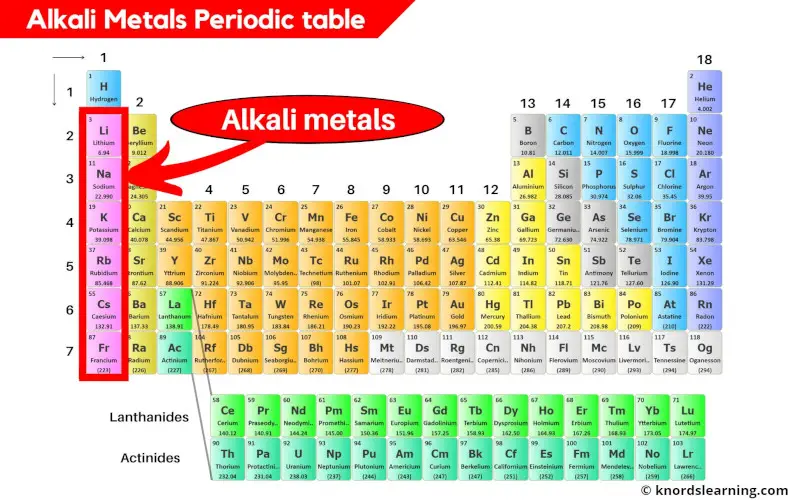
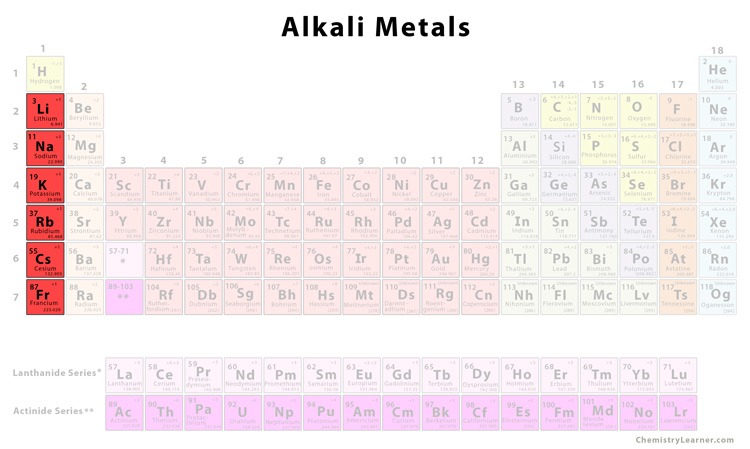
If you've ever peeked at a periodic table (or even seen a cool poster of one), you'll notice it's arranged in rows and columns. These columns are super important because they group elements that share similar personalities. The Alkali Metals are all stacked up nice and neat in the very first column, all the way on the left.
Imagine the periodic table as a big apartment building. The Alkali Metals have snagged the prime real estate on the left-hand side, in the first floor. They're the first group you encounter when you start reading from left to right, top to bottom.
Meet the Family: The Alkali Metals
So, who are these flamboyant characters? There's Lithium, the smallest and perhaps the most sensible of the bunch. You might know it from your phone battery or even some mood-regulating medications.
Then comes Sodium. Ah, Sodium! This is the element that gives table salt its salty kick. Imagine a world without chips or fries! Sodium is quite the life of the party, but it's always paired with something else.

Next up is Potassium. Potassium is like the helpful older sibling. It’s vital for keeping our bodies working properly, from our muscles to our nerves. You can find it in bananas, for goodness sake!
After Potassium, we have Rubidium. Rubidium is a bit more exotic, not something you'll find in your kitchen pantry. It’s a bit more reactive, more eager to join in on chemical adventures.
Then there’s Cesium. Cesium is the element that practically jumps at the chance to react. It's so eager, in fact, that it melts in your hand if you're not careful! Definitely a summer-loving element.
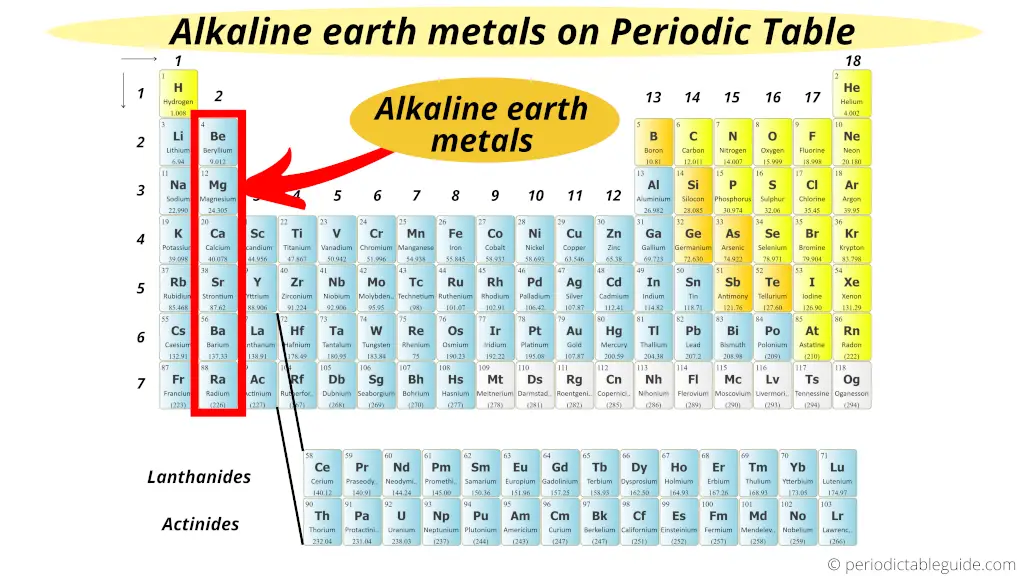
And finally, at the bottom of this esteemed group, is Francium. Francium is the shyest and the rarest. It’s so radioactive and unstable that it disappears almost as soon as it’s created, like a fleeting celebrity sighting.
Why Are They All Together?
The reason these elements are all buddies in the first column is because of their electrons. Specifically, they all have one lonely electron hanging out in their outermost shell. Think of this electron as a little eagerness to make friends.
This single, eager electron is the secret to their energetic personalities. They just love to give it away to other elements. This makes them incredibly reactive, always ready to form new bonds and create new compounds.
It's like they're all holding out a shiny new toy, just waiting for someone to take it. This generosity is what makes them so useful in chemistry, but also why they can be a bit tricky to handle on their own.
A Little Bit About Their Wild Side
Because they’re so keen to share that electron, Alkali Metals have a bit of a wild side. If you were to take a chunk of, say, Sodium and plop it into water, it would be a spectacle! It fizzes, it pops, and it can even burst into flames.
It's not malicious, mind you. It’s just their nature! They’re so eager to react with water that they create a lot of energy in the process. It's like a tiny, chemical firework show.
This is why you’ll never find pure Alkali Metals just lying around. They’re usually found combined with other elements, like Sodium happily hanging out with Chlorine to form our beloved table salt. They’re much more agreeable when they have a friend to balance them out.
So, the next time you see a periodic table, give a little nod to the first column. These are the Alkali Metals, the energetic, reactive, and surprisingly essential building blocks of our world, all gathered together in one row, ready for their next chemical adventure. They’re a testament to how even the most energetic personalities can find their place and contribute to the grand tapestry of the universe.
They're the elements that prove that sometimes, being a little bit extra is exactly what makes you special and important. From powering our gadgets to seasoning our food, these vibrant characters from the leftmost column are truly the stars of their own chemical show!