
Lord Of The Flies And Coral Island

Ever found yourself wondering what happens when civilization checks out and the wild takes over? Or perhaps you're intrigued by those classic tales that explore the darker, and sometimes surprisingly hopeful, sides of human nature? Well, buckle up, because we're diving into two literary adventures that do just that, with a friendly exploration of Lord of the Flies and Coral Island. These aren't just dusty old books; they're fascinating thought experiments that continue to spark conversation and offer a juicy look into what makes us tick, especially when the grown-ups are nowhere in sight.
So, why is this a fun dive? Because these stories tap into universal themes: survival, leadership, morality, and the eternal struggle between order and chaos. Thinking about these concepts isn't just for English class; it helps us understand ourselves and the societies we live in. It’s like looking at a mirror, but one that reflects some pretty intense scenarios. Plus, who doesn't love a good story about kids on an island? It’s a classic setup that allows authors to strip away all the usual rules and see what emerges. These books are popular because they’re incredibly thought-provoking, offering a dramatic contrast in their approach to a similar premise, and that contrast is where the real fun begins.
The Descent into Darkness: Lord of the Flies
First up, the one that probably rings a bell for many: William Golding’s Lord of the Flies. Imagine a plane crash, a group of British schoolboys, and a deserted tropical island. Sounds like a potential paradise, right? Well, Golding uses this scenario to explore a rather grim, yet undeniably powerful, idea: that savagery lurks beneath the surface of civilized society, and that without the structures and rules we're accustomed to, humans can quickly descend into primal instincts.
The story follows Ralph, who is elected chief, and his attempts to establish a functional society based on rules, reason, and the ultimate goal of getting rescued. He’s the voice of order, represented by the conch shell, a symbol of democratic power and civilized discourse. But then there’s Jack, the charismatic leader of the choir, who represents a different kind of appeal – one based on hunting, fear, and brute force. As the boys struggle with their basic needs and the fear of a mythical "beastie," Jack's power grows, leading them away from Ralph's structured leadership towards a terrifying, tribalistic existence.
The beauty of Lord of the Flies, and what makes it so enduringly popular, is its unflinching look at human nature. It’s a cautionary tale, suggesting that the capacity for evil isn’t something alien, but something intrinsic to us. The transformation of these boys, from choirboys to hunters adorned with war paint and driven by bloodlust, is both shocking and compelling. It forces us to ask uncomfortable questions: What are the real foundations of civilization? What happens when those foundations crumble? The benefits of reading this book lie in its ability to provoke critical thinking about morality, power dynamics, and the fragile nature of societal order. It’s a literary exploration of the dark side of the human psyche, and while it might be unsettling, it’s undeniably brilliant.
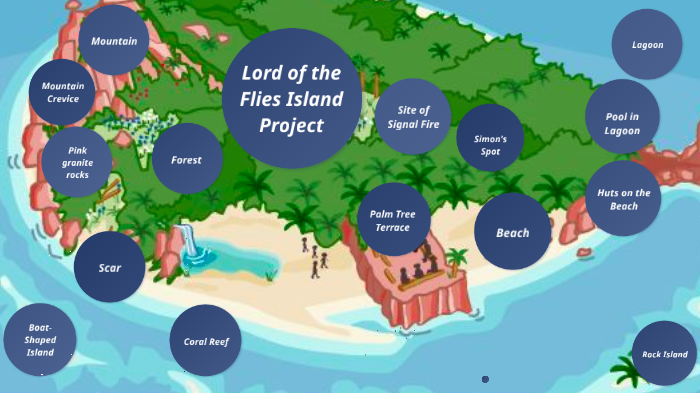
The inherent savagery that Golding portrays makes for a gripping, albeit disturbing, narrative.
A Brighter Vision: Coral Island
Now, let’s pivot to a story that, while also featuring young boys on an island, offers a much more optimistic outlook: R.M. Ballantyne’s Coral Island. Published nearly a century before Lord of the Flies, this novel presents a distinctly different perspective on the same core premise of shipwrecked youths.
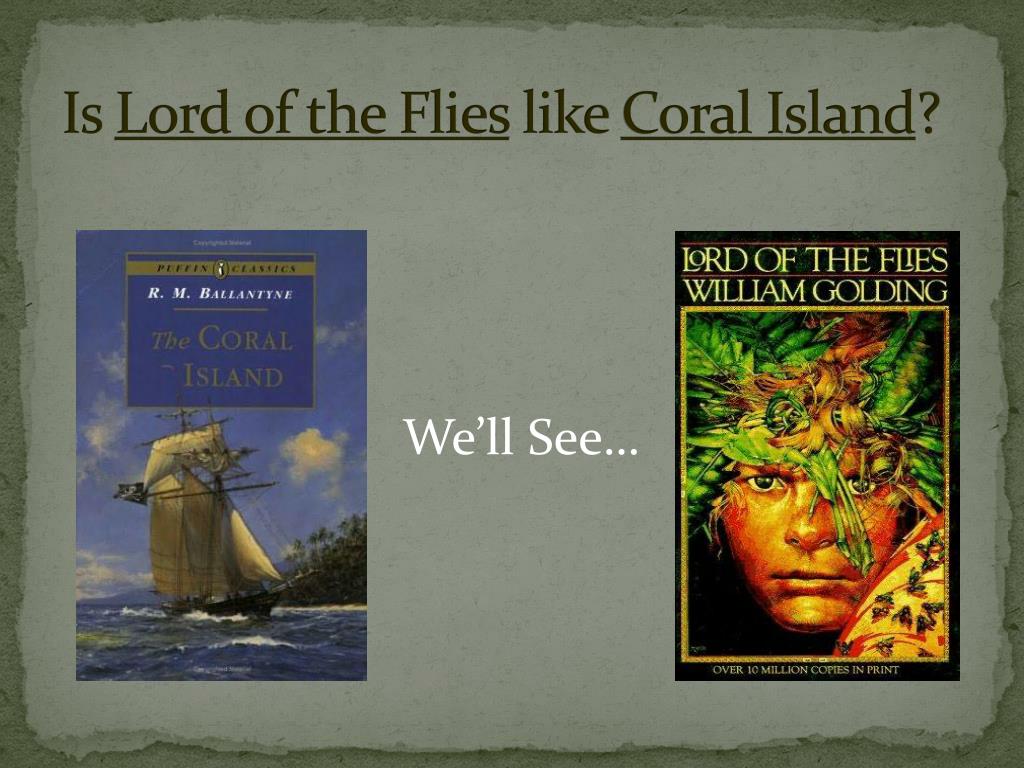
Here, we meet three boys: Ralph (a rather different Ralph from Golding's!), Peterkin, and Jack (yes, another Jack!). They find themselves stranded on a beautiful, idyllic island in the Pacific. Ballantyne’s vision is one of adventure, discovery, and the triumph of good over adversity. Instead of succumbing to savagery, these boys embody the Victorian ideals of resourcefulness, piety, and moral fortitude. They work together, learn from their environment, and face challenges with courage and a strong sense of right and wrong.
The purpose of Coral Island, especially from a Victorian perspective, was to showcase the virtues of Christian upbringing and the resilience of the human spirit when guided by sound moral principles. The boys build shelters, find food, and even encounter (and generally behave nobly towards) the indigenous population. There are dangers, of course – storms, wild animals, and even pirates – but these are overcome through their collective effort and their unwavering belief in doing the right thing. The benefits of reading Coral Island, compared to its darker counterpart, lie in its inspirational narrative. It’s a story that champions innocence, the power of friendship, and the idea that even in challenging circumstances, goodness and order can prevail.
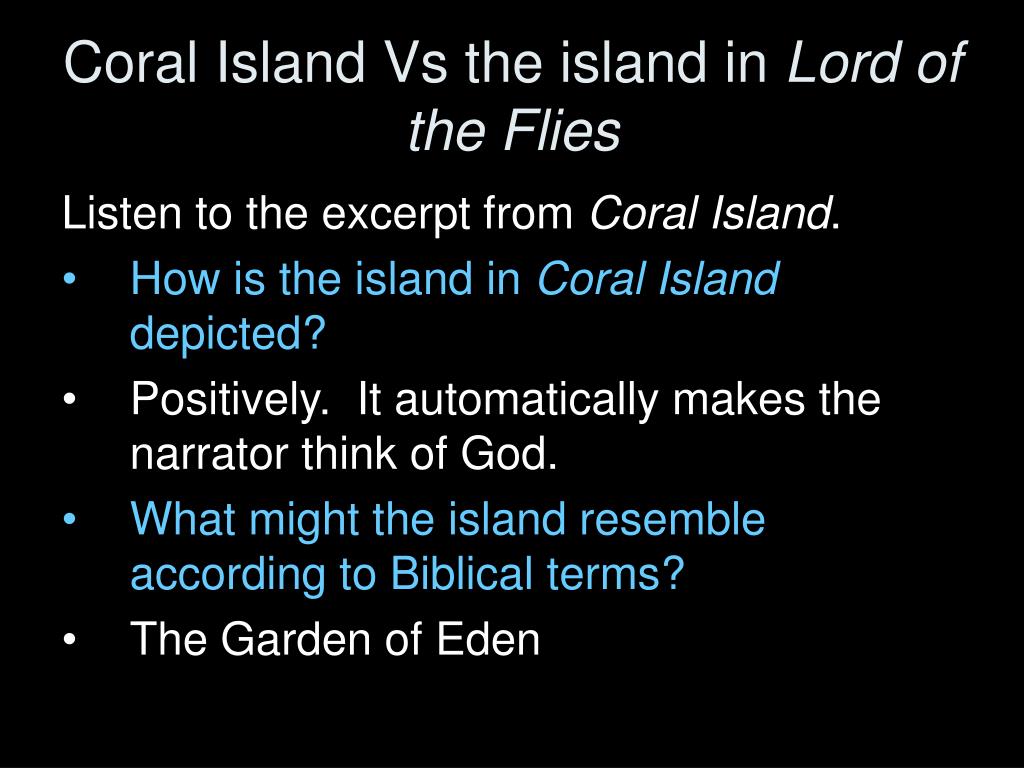
Ballantyne's tale is a celebration of adventure, resilience, and the enduring power of youthful virtue.
A Tale of Two Islands
The fascinating aspect of comparing Lord of the Flies and Coral Island is the stark contrast they present. Both tell stories of young boys isolated on a tropical island, yet their outcomes are vastly different. Golding uses the island as a stage for the unraveling of civilization, highlighting the potential for darkness within humanity. Ballantyne, on the other hand, uses it as a proving ground for youthful virtue, demonstrating the potential for good and resilience.
These stories are popular because they offer us two extreme lenses through which to view human nature. Are we inherently good, or inherently flawed? Do we need societal structures to keep our baser instincts in check, or can we rise above them with innate morality? Exploring these themes through narrative is a fantastic way to engage with complex philosophical and psychological ideas in an accessible and exciting way. Whether you lean towards the cautionary starkness of Lord of the Flies or the adventurous optimism of Coral Island, both offer a rich tapestry of human experience that continues to captivate readers.