
Metal Bed Frame Support Parts
Okay, so picture this: it’s like, 3 AM. The house is silent except for the gentle hum of the refrigerator and the occasional creak of the floorboards that always sounds way more sinister in the dead of night. I’m deep in dreamland, probably chasing a unicorn made of pizza, when suddenly… CRACK. It wasn't a tiny, polite crack. Oh no. This was a full-blown, existential crisis of a crack. My bed, my sanctuary, my trusty mattress-holder, decided to throw in the towel. Or, more accurately, a metal slat gave up the ghost. I jolted awake, convinced the ceiling was about to collapse on me, only to find myself with a gaping hole where my supportive foundation used to be. My pizza unicorn dreams were instantly replaced by nightmares of rogue springs and imminent bed destruction. So yeah, that’s how I learned that sometimes, the most unglamorous parts of our lives are actually the absolute bedrock of our comfort. And today, we're diving headfirst into the often-overlooked world of metal bed frame support parts.
Seriously, who even thinks about these things until they break? You buy a bed frame, it looks sleek, it holds your mattress, and you’re off to dreamland. You don’t usually get a detailed diagram of the structural integrity of your sleeping surface. But let me tell you, when that frame decides to buckle or a crucial piece goes missing, suddenly those tiny, unassuming bits become the most important things in the universe. They’re the unsung heroes, the silent guardians of your slumber. Without them, your fancy mattress is just a very expensive, very lumpy… well, something you definitely don't want to sleep on.
The Backbone of Your Bed: Why Support Parts Matter (More Than You Think)
So, what exactly are these magical support parts? It’s a broad category, I know. Think of your metal bed frame as a mini-skeleton. You’ve got the main bones, which are the obvious rails and legs. But then you have the smaller, yet equally vital, components that hold everything together and distribute the weight. These are your support parts.
We’re talking about things like:
- Bed Slats: These are probably the most common culprit when things go south. They're the horizontal pieces that lay across the frame and directly support your mattress. They can be made of wood or metal, but we're focusing on the metal brethren today, because they're often more robust… until they’re not.
- Center Support Legs/Rails: For larger beds (think queen, king, California king), a single set of side rails just won't cut it. They need a little extra help in the middle. That's where center support legs and sometimes a connecting rail come in. These guys are crucial for preventing sagging and ensuring even weight distribution.
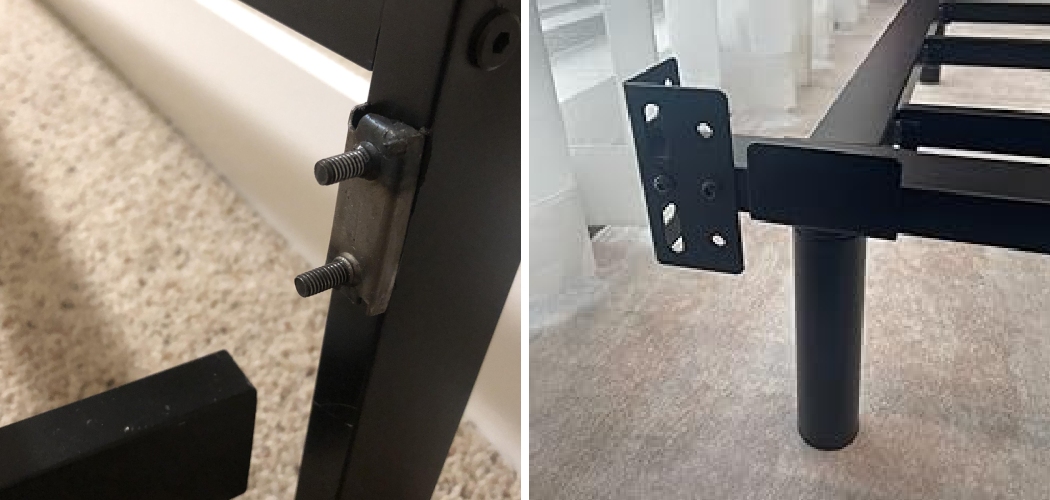
- Brackets and Connectors: These are the often-tiny but mighty pieces that actually hold the frame together. They’re the elbows and knees of your bed’s skeleton. They connect the side rails to the headboard and footboard, and sometimes connect slats to the frame itself.
- Hardware: Screws, bolts, nuts, washers – the whole gang. You’d be amazed at how much a single loose bolt can compromise the entire structure. It’s like one missing cog in a complex machine; the whole thing grinds to a halt (or in our case, collapses).
Each of these parts plays a specific role, and when one falters, the whole system is at risk. It's a delicate ecosystem of metal, designed to keep your mattress perfectly level and your sleep uninterrupted. And as I learned the hard way, when that ecosystem is disrupted, it’s not pretty.
The Silent Scream of a Failing Slat
Let’s talk about slats specifically, because they’re the most common offenders in the "sudden bed collapse" scenario. Metal slats are generally favored for their durability. They can often handle more weight than their wooden counterparts and are less prone to warping. But there’s a limit to everything, right? Even the strongest metal can bend, break, or fatigue over time, especially if it’s subjected to… well, let’s just say vigorous use.
Sometimes, it’s not a dramatic snap. It’s a slow, insidious bend. You start to notice a bit of a dip in the middle of your mattress. You might think, "Oh, my mattress is just getting old." Nope. More often than not, it’s the slats underneath crying out for help. They’re slowly bowing under the pressure, and if left unaddressed, that little dip can turn into a full-blown chasm.
And then there’s the noise. The dreaded squeaking. You know the one. It’s the soundtrack to late-night… activities. And while it might be a sign of other things, often it’s just those metal slats rubbing against each other or the frame. A little lubrication can sometimes help, but more often than not, it's a precursor to a more serious issue.

I remember once, after a particularly… enthusiastic evening, I noticed my bed felt a bit “soft” in the middle. The next morning, I rolled over, and my hip sank through the mattress. I swear I heard a metallic groan as it happened. It was like the bed itself was saying, "You asked for it." My poor mattress ended up with a permanent crater, and I spent the next week sleeping on the couch, contemplating the fragility of human engineering and my own questionable judgment.
When Your Frame Starts to Wiggle (and Not in a Good Way)
It’s not just the slats, though. The entire frame can become compromised. Imagine your bed frame as a perfectly constructed bridge. If the supports holding up the bridge start to weaken, the whole structure becomes unstable. This is where those center support legs and connecting brackets become crucial.
If you have a queen or king-sized bed, you absolutely need a center support system. Without it, the weight of the mattress and its occupants is concentrated on the outer edges of the frame. This leads to the dreaded mattress sag, which is not only uncomfortable but can also damage your mattress over time. It’s like trying to hold up a heavy table with just two legs on one side – it’s not going to end well.
And those brackets and connectors? They’re the unsung heroes of frame integrity. They ensure that your headboard stays firmly attached to your footboard, and that your side rails don’t decide to take a vacation in opposite directions. If you ever notice your frame wobbling or hear creaking sounds when you move, check these connections first. A loose bolt or a cracked bracket can quickly escalate into a full-blown bed disaster.
I once had a friend who swore their bed was haunted because it would mysteriously shift during the night. Turns out, one of the main connecting bolts had worked itself loose. Every time they moved, the whole frame would rock. Not ghosts, just gravity and a missing bolt. Quite the anticlimax, I know.

Common Problems and What to Look For
So, you’re lying in bed, and something feels… off. What are the tell-tale signs that your metal bed frame support parts are staging a silent rebellion?
- The Sag: As mentioned, a noticeable dip in the middle of your mattress is a big red flag. This is usually caused by bent or broken slats, or a failing center support system.
- The Squeak/Creak: While not always a structural issue, persistent squeaking is often a sign that metal parts are rubbing against each other or the frame is under stress.
- The Wobble: If your bed feels unstable, especially when you get in or out of it, that’s a sign of loose connections or structural weakness.
- Visible Damage: Are any of your slats bent or cracked? Are the legs of your frame wobbly? Do you see any signs of rust or corrosion that might be weakening the metal?
- Mattress Issues: Is your mattress uneven? Does it feel like it’s not getting proper support? Your mattress is a sensitive creature, and it will tell you when its foundation is failing.
Don't ignore these signs! They're your bed frame's way of politely (or not so politely) asking for attention. And trust me, it's much easier to deal with a minor issue now than a full-blown bed catastrophe later.
The Quest for Replacement Parts: A Noble Pursuit
So, you've diagnosed the problem. A slat is toast, a leg is wobbly, or a bracket has vanished into the ether. Now what? The good news is, unlike a whole new bed frame, replacing individual support parts is usually pretty straightforward and much, much cheaper. The bad news? Sometimes finding the exact right part can feel like a treasure hunt.
Where to Find Your Bed Frame’s Missing Pieces
Your first stop should always be the manufacturer of your bed frame. If you still have the original packaging, manual, or even a receipt, there might be contact information. Many manufacturers offer replacement parts, especially for newer models. This is often your best bet for a perfect fit.
If the manufacturer is a no-go (maybe it was a hand-me-down, or you’ve had it for ages), then it’s time to get creative. Online retailers are your friend here. Websites like Amazon, eBay, and dedicated furniture parts stores often have a vast selection of universal bed frame parts. You'll need to do some measuring and careful comparison, but you can usually find what you need.

Key things to measure and look for when buying replacement parts:
- Slat width, length, and thickness: Make sure the new slats can span the distance and fit securely into their slots.
- Center leg height and diameter: Ensure the new leg will reach the floor and fit snugly into its bracket.
- Bracket dimensions and hole spacing: This is crucial for ensuring the new bracket will align with the existing holes on your frame.
- Bolt size and thread count: If you’re replacing hardware, take the old bolts with you to a hardware store for a perfect match.
Don’t be discouraged if you can’t find an exact match for a specific bracket. Sometimes, a slightly different but compatible universal bracket can do the trick. You might need to get a little handy with a drill, but it’s often feasible.
DIY Fixes: When a Quick Patch Will Do (Or Won't)
Now, I’m not saying you should go full MacGyver on your bed frame unless you’re absolutely confident. However, for minor issues, a little DIY can save the day. For a slightly bent slat that hasn’t quite given up the ghost, sometimes a gentle bending back into shape can buy you some time. Just don’t overdo it, or you’ll weaken the metal further.
For wobbly legs, tightening bolts is the obvious first step. If the bolt holes are stripped, you might be able to use a slightly larger bolt or a bit of wood filler to create a more secure connection. Again, be cautious. We’re aiming for stability, not a structural experiment.
However, if you’re dealing with a completely snapped slat or a severely damaged frame component, it’s usually best to replace it. Duct tape and optimism, while admirable qualities, aren’t always the best structural supports. Your back will thank you.

The "Just Buy a New Frame" Dilemma
There comes a point, however, when you have to ask yourself: is it worth fixing, or is it time for a whole new bed frame? If multiple parts are damaged, if the frame is old and showing signs of significant wear and tear, or if it’s a cheap, flimsy frame to begin with, it might be more cost-effective and safer in the long run to invest in a new one.
Think of it this way: a good bed frame is an investment in your sleep, your comfort, and your overall well-being. A collapsing bed frame is an investment in waking up with a sore back and a bruised ego. We know which one we’d rather have!
When looking for a new frame, consider the type of support it offers. Do you want a slatted base? A platform bed with solid support? What material are the support components made of? Are they robust and well-constructed?
And if you do go the replacement parts route, remember that the goal is to restore your bed’s integrity. A properly supported bed will not only feel better to sleep on but will also prolong the life of your mattress. It’s a win-win!
So, the next time you hear a suspicious creak or feel a slight dip in your mattress, don’t just ignore it. Take a moment to investigate. Those humble metal bed frame support parts are working tirelessly to keep you comfortable and safe. Give them the attention they deserve, and they’ll keep you sleeping soundly. And who knows, maybe you’ll even get to finish that pizza unicorn dream.