
Metal Film Resistor Vs Carbon Film Resistor
Imagine tiny little electronic superheroes that control the flow of electricity. These are resistors! They're everywhere in your gadgets, from your phone to your toaster.
Today, we're going to peek behind the curtain at two popular types of these electrical guardians: the Metal Film Resistor and the Carbon Film Resistor. Think of them like two different flavors of your favorite ice cream – both do the same job, but with their own unique charm.
Let's start with the classic, the one that's been around the block a bit. Meet the Carbon Film Resistor! This guy is like the friendly neighborhood volunteer. It’s reliable, gets the job done, and is generally pretty affordable.
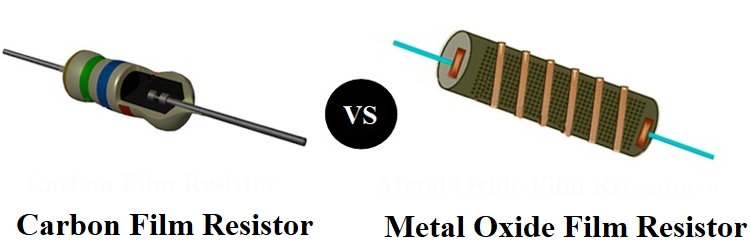
Its secret ingredient? A thin film of carbon. This carbon layer is carefully deposited onto a ceramic rod. When electricity tries to zoom through, the carbon gets a little bit in the way, slowing it down.
Think of it like a busy street. The carbon film is like the speed bumps. They don't stop traffic completely, but they definitely make things a bit more controlled.
What's really cool about the Carbon Film Resistor is its history. It's been a workhorse in electronics for ages. It's the kind of component you'd find in older radios and early computers. It's got that vintage vibe!
Plus, they're super easy to make. This makes them a really economical choice for many projects. So, if you're building something on a budget or just need a dependable resistor, the carbon film is often your go-to buddy.
However, like any well-loved classic, it has its quirks. The Carbon Film Resistor isn't the most precise little hero. Its resistance can sometimes drift a bit with temperature changes. It’s like a friend who gets a little grumpy when it’s too hot or too cold.
It also tends to be a bit noisier. In the world of electronics, "noise" means unwanted little fluctuations in the electrical signal. For most everyday applications, this isn't a big deal. But for super-sensitive stuff, it might be a tiny bit of a distraction.

Now, let's introduce the new kid on the block, or rather, the more sophisticated sibling: the Metal Film Resistor. This one is like the meticulously trained athlete of the resistor world. It's all about precision and consistency.
Instead of carbon, this resistor uses a super-thin film of metal. Typically, it's a metal alloy like nickel-chromium. This metallic film is coated onto a ceramic rod, just like its carbon cousin.
The magic here is in the metal. Metals are generally much better at offering a stable and predictable resistance. It’s like comparing a perfectly paved highway to a bumpy country road.
What makes the Metal Film Resistor so special is its accuracy. It's known for its tight tolerances. This means that the actual resistance value is very, very close to the value printed on it.
Think of it like a chef who follows a recipe to the letter. The result is always exactly what you expect. This precision is super important in circuits where every little bit of accuracy counts.
Another fantastic trait of the Metal Film Resistor is its stability. It doesn't get as easily flustered by changes in temperature as the carbon film does. So, whether it's a chilly morning or a warm afternoon, this resistor keeps its cool and maintains its resistance value.
It's also a much quieter resistor. Remember that electronic "noise" we talked about? The Metal Film Resistor produces significantly less of it. This makes it ideal for audio equipment, sensitive measurement devices, and anything where signal clarity is king.
The manufacturing process for metal film resistors is a bit more advanced. It often involves vacuum deposition or sputtering techniques. This extra care and precision contribute to its superior performance.
So, why is this a fun topic? Because it’s like comparing two amazing tools, each with its own superpower! The Carbon Film Resistor is your reliable, budget-friendly workhorse. It’s the sturdy hammer that gets the job done for countless everyday tasks.
And the Metal Film Resistor? It’s the precision laser-guided screwdriver. When you need absolute accuracy, minimal fuss, and a clean, stable performance, this is your hero. It’s the one you call for the delicate surgery of electronics.
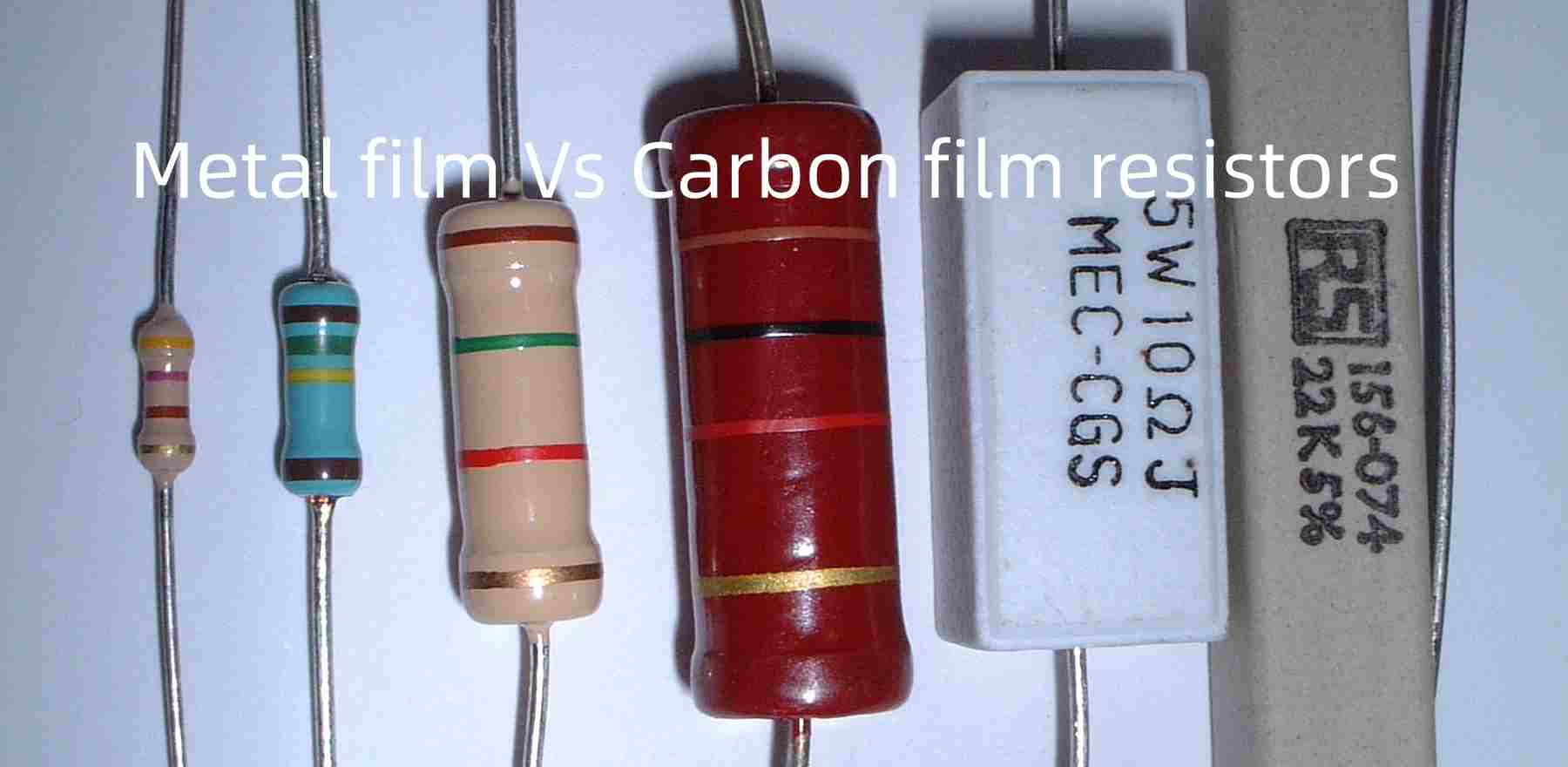
You can often tell them apart by their color. Carbon Film Resistors tend to have a more distinct, sometimes slightly rougher, dark brown or black coating. Metal Film Resistors often have a sleeker, smoother, and more uniform appearance, frequently in colors like blue or green. It's like their uniforms!
The value of a resistor is usually indicated by colored bands printed on its body. Both types use this system. However, due to the tighter tolerances of metal film, their bands often represent more precise values.
Think about when you're baking. If you're making a simple batch of cookies, standard ingredients and a good recipe will do the trick. That's your Carbon Film Resistor territory.

But if you're creating a fancy, multi-layered cake for a special occasion, you'll want the finest ingredients and precise measurements. That's where the Metal Film Resistor shines.
In the grand scheme of electronics, resistors are fundamental. They are the unsung heroes that ensure everything works as it should. Without them, your devices would be chaos!
When engineers design circuits, they choose resistors based on what the circuit needs. Do they need absolute precision? They'll lean towards metal film. Is cost a major factor and the application less critical? Carbon film might be the answer.
It's fascinating to think about how these simple components, made from humble materials like carbon and metal, are the building blocks of our complex digital world. They're like the bricks and mortar of our electronic cities.
So, the next time you're admiring your smartphone or using your microwave, remember the little resistors inside, quietly doing their job. And if you ever decide to tinker with electronics yourself, you'll have a better understanding of these two distinct, yet equally important, electrical guardians.
The choice between them often comes down to a balance of cost, required accuracy, and environmental stability. It's a delightful little puzzle for electronics enthusiasts!

It's not about one being "better" than the other. It's about choosing the right tool for the right job. Both have their place and their own special way of contributing to the magic of electricity.
The world of electronics can seem intimidating, but understanding these basic components is like learning the alphabet. Once you know the letters, you can start to read the language of circuits.
So, go forth and be curious! Next time you see a circuit board, try to spot these little components. Maybe you'll even be inspired to learn more and start building your own electronic creations. Who knows what amazing things you'll invent!
It's a simple concept, but the impact is enormous. These tiny resistors are the gatekeepers of our electrical flow, ensuring everything operates smoothly and predictably. It’s truly remarkable when you think about it.
And that’s the fun of it! Digging into the details of how everyday technology works, even the smallest parts, can be surprisingly captivating.
So, whether you’re a seasoned tinkerer or just someone who enjoys understanding how things work, the humble resistor, in its various forms, offers a fascinating glimpse into the world of electronics. Keep exploring!
Metal Film Resistors are like the precision surgeons of resistance, while Carbon Film Resistors are the dependable general practitioners. Both vital, both fascinating!
It's a delightful little dance of physics and engineering, all packed into tiny, colorful cylinders. Pretty neat, right?