
Metal That Melts In Your Hand

Ever had one of those days where everything just feels a bit… gooey? Like your plans are solid one minute, and the next, they’ve sagged into a puddle of well-intentioned but ultimately unfulfilled ambition? Yeah, me too. And it got me thinking about something truly magical, something that bends the rules of what we expect solid things to do. I’m talking about metal that melts in your hand. No, seriously. Not like your average butter knife left on the dashboard in July, but metal that’s practically begging for a hug and then promptly decides to become one.
It sounds like something out of a wizard's workshop, right? Or maybe a really, really messy science experiment gone wonderfully right. But the truth is, this stuff is out there, and it’s not just for lab coats and laser beams. Think of it like a superhero power, but instead of flying or super strength, it’s the ability to shapeshift on demand, just because your body heat is that special.
We’re talking about low-melting-point alloys. Fancy name, I know. Makes it sound like it belongs in a sterile, high-tech environment. But honestly, it’s more like that quirky friend who always has a surprise up their sleeve, except their sleeve is made of metal.
Imagine this: you’re at a quirky novelty shop, or maybe a maker fair, and you see a little metal trinket. It looks like a solid little figurine, maybe a tiny robot or a miniature animal. You pick it up, and instead of feeling that usual cool, firm sensation, it’s… warm. And then, as you hold it, it starts to get softer. Not like it’s going to drip all over your fingers (though, you know, watch out for that if you’re not careful!), but it becomes pliable. You can literally bend it. Maybe even mold it a little with your thumb. It’s like your own body heat is a secret superpower that can change the state of matter. Pretty neat, huh?
It’s the opposite of what we’re used to. Think about steel. You can forge steel, you can hammer it, you can bend it when it’s red hot – but you certainly don’t expect it to yield to the warmth of your palm. That stuff is built to withstand the apocalypse, or at least a really tough day at the office. This is the anti-steel. This is the metal that says, "You know what? Today, I feel like being a bit more… impressionable."
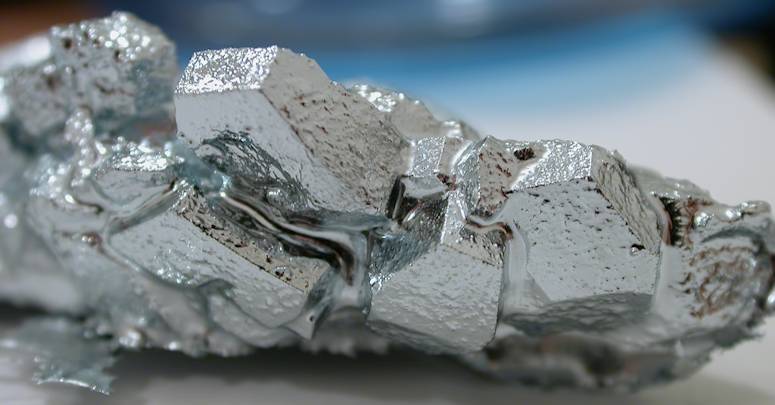
It’s all about the magic ingredients. These alloys are usually made from metals like gallium, indium, and tin. Individually, some of these are pretty interesting. Gallium, for instance, is famous for doing that very thing: melting when you hold it. It’s been a classic science demonstration for ages. You get a little metal ring, you put it in ice water, it looks solid. Then you pull it out, hold it, and poof, it’s liquid. It’s the kind of thing that makes kids’ eyes widen and adults mutter, "Well, I'll be..."

But when you mix them together in the right proportions, you get alloys that are even more remarkable. They can be engineered to melt at incredibly low temperatures, often just a little above room temperature. We’re talking about melting points that are practically in the same ballpark as your average body temperature. So, your hands, which are usually just there to hold your coffee or tap on your keyboard, become a personal melting device. How’s that for a multitasking superpower?
Think about the sheer novelty of it. It's like the metal equivalent of a perfectly ripe avocado – it’s only good for a short window, and you have to catch it at the right moment. Hold it too long, and it might get a bit… enthusiastic about its liquid state. Too short, and it’s just a regular old piece of metal. It requires a certain finesse, a gentle touch.
This isn’t the kind of metal that’s going to build your car or hold up your bridge. This is the metal that’s about fun, about surprise, about demonstrating the cool quirks of physics in a way that’s utterly tangible. It’s the “wow” factor, distilled into a metallic form.
So, where do you find this fantastical stuff? Well, you might stumble upon it in science kits, educational toys, or even some artistic creations. Artists are using it to create sculptures that can be reshaped or manipulated, blurring the lines between art and performance. Imagine a sculpture that subtly shifts its form throughout the day, reacting to the ambient temperature and the presence of people. That’s not just art; that’s a living, breathing (well, melting) entity.

And the applications, while perhaps not world-changing in the way of superconductivity, are still pretty darn cool. Think about the potential for educational demonstrations. Instead of just telling kids about phase changes, you can show them in the most direct and memorable way possible. A metal ring that melts in their hand? That’s an instant science lesson that sticks. It’s the kind of experiment that doesn’t require goggles and a fume hood, just a bit of curious curiosity and a willingness to get your hands (slightly) warm.
It’s also a great way to spark conversation. Imagine showing this off to friends. You hand them a little metal object, and as they hold it, their eyes go wide. “Whoa! What is this?” you say, with a knowing smile. It’s the ultimate icebreaker, the kind of thing that turns a casual gathering into a mini-science exhibition. You become the wizard, the magician, the bringer of low-melting-point marvels.
There’s a certain element of trust involved, too. You have to trust that the metal won’t, you know, suddenly decide to become molten lava. And that trust is built on understanding the science behind it. These alloys are carefully formulated. They’re not going to spontaneously combust or turn into a puddle of goo without a specific trigger. That trigger, in this case, is your own body heat, which is generally a rather benign force, unless you’ve been running a marathon and then, well, maybe hold off.

Think about the analogy of ice. We know ice melts when it gets warm. It’s a natural process. But with metal, our brains are hardwired to think of it as fundamentally, unequivocally solid. Even when it’s superheated in a forge, it’s still metal. It’s not going to suddenly turn into water. So, when you encounter metal that does, it’s a delightful jolt to our expectations. It’s a gentle reminder that the world is full of surprises, and sometimes, those surprises are in the palm of your hand.
It’s also about appreciating the subtle shifts. We’re so used to things being one way or another – solid or liquid, hot or cold. But there’s a whole spectrum in between. And these low-melting-point metals live in that beautiful, in-between space. They’re not quite solid, not quite liquid, but something wonderfully, wonderfully fluid. They exist in a state of delightful uncertainty, much like a good plot twist in a movie.
And let’s be honest, it’s a bit rebellious. In a world that often values rigidity and permanence, here’s a metal that says, “Nah, I’m feeling a bit flexible today. Let’s go with the flow.” It’s the antithesis of a stubborn mule, the epitome of easy-going. It’s the metal that understands that sometimes, the strongest thing you can be is adaptable.
I’ve seen these metals used in some really creative ways. There are “puzzle boxes” where the latch is made of a low-melting-point alloy. To open it, you have to gently warm the latch, making it pliable enough to slide open. It’s a brilliant blend of engineering and almost theatrical presentation. It’s like a secret handshake, but with your hands.
And then there’s the sheer joy of the unexpected. You buy a little metal charm, and you don’t realize its special property until you’re wearing it, and it starts to feel… different. It’s not an alarm bell; it’s a gentle whisper. A suggestion. “Psst,” it says, “I’m getting a little warm. Fancy a change?” And before you know it, you’re holding a miniature, personal, metal puddle.
It’s important to remember that while these metals are safe to handle under normal circumstances, it’s always good to be mindful. You wouldn’t want to leave a gallium trinket on your car seat on a scorching summer day, just like you wouldn’t leave a chocolate bar there. Common sense, really. But the magic is in the intentional melting, the way your own body heat can be the catalyst.
It’s a reminder that even in the most seemingly mundane aspects of our lives, there can be extraordinary properties waiting to be discovered. Your hands, those everyday tools we often take for granted, have the power to interact with the world in ways we rarely consider. They can not only grasp and manipulate but also, in a very specific and delightful way, transform.
So, the next time you encounter a piece of metal that feels a little too warm for comfort, or seems to yield just a bit too easily, don’t dismiss it as a defect. It might just be one of these remarkable, hand-melting metals, offering you a moment of scientific wonder and a gentle reminder that even the hardest things can sometimes be the most adaptable. And that, my friends, is a lesson worth holding onto, even if the metal itself might not stay that way for long. It’s the kind of cool science that makes you smile and think, "You know what? The world is a pretty amazing place, and my hands are pretty amazing tools."