
Metal To Metal Corrosion Chart
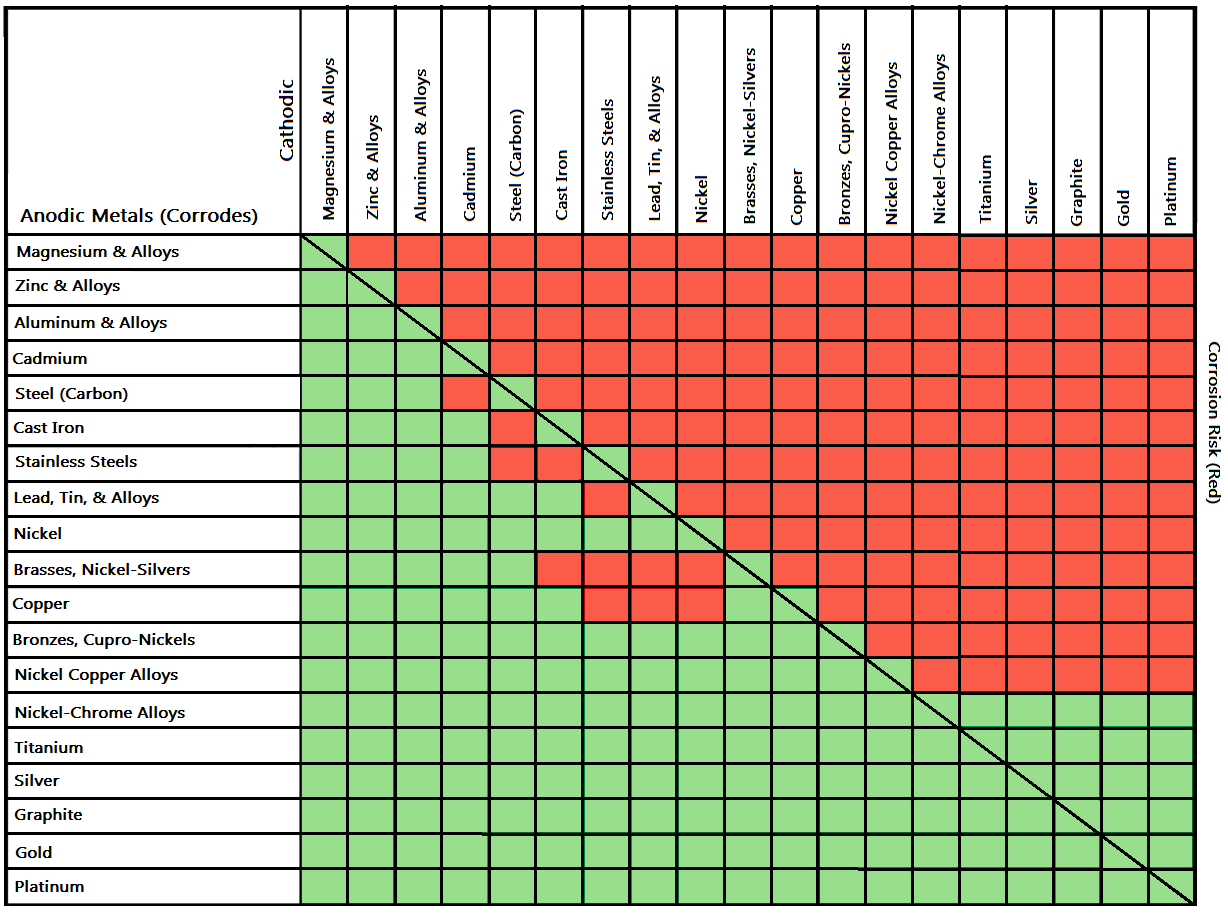
Hey there, metalheads (and non-metalheads too)! Ever looked at two pieces of metal touching each other and thought, "Hmm, are they going to get along?" Well, turns out, sometimes they don't! It’s like a high school cafeteria for metals, and some are just not compatible. Today, we're going to dive headfirst into the wonderfully weird world of metal-to-metal corrosion, and more specifically, the handy-dandy metal corrosion chart that helps us avoid some seriously sticky situations.
Now, before you start imagining tiny metal arguments and dramatic breakups, let’s break down what we’re actually talking about. Corrosion, in a nutshell, is basically metal's way of saying, "I'm not a fan of this environment, and I'm going to start changing into something else." Think rust on your bike or that greenish patina on old copper statues. It's a natural process, a bit like how we get wrinkles as we age, but for metals, it's a bit more… destructive.
And when we talk about galvanic corrosion, that's when things get really interesting (and sometimes a little annoying). This happens when two different types of metals are in direct contact, and there's an electrolyte present. An electrolyte? Sounds fancy, right? Basically, it's something that can conduct electricity, like saltwater, or even just plain old moisture from the air. So, think of it as a tiny, electrochemical party happening between your metals, and one metal is always the sacrificial lamb.
Galvanic corrosion is all about which metal is more "noble" and which is more "active." Imagine a popularity contest for metals. The more active metal is the one that’s more eager to give up its electrons and basically dissolve into the electrolyte to protect the nobler metal. It’s like one metal saying, “You go have fun, I’ll be over here, slowly disintegrating.” A bit dramatic, I know!
So, why should you even care about this whole metal drama? Well, if you're building anything with metal, from a fancy boat to a simple garden gate, understanding how different metals interact can save you a ton of headaches, and more importantly, a ton of money. Nobody wants their new deck railing to start looking like it’s been through a war after just a year, right? Prevention is key!
Enter the Hero: The Metal Corrosion Chart!
This is where our trusty metal corrosion chart swoops in like a superhero in a shiny, non-corroding cape. These charts are essentially a guide, a cheat sheet, if you will, for knowing which metals can hang out together and which ones should probably have a "friends with benefits" relationship, only touching when absolutely necessary and with proper insulation.
They typically list metals in order of their galvanic potential or electrochemical potential. This sounds super scientific, and it is, but the concept is pretty straightforward. Metals higher up on this list are more "active" (less noble), and those lower down are more "noble" (less active). Think of it as a ladder of reactivity. The bigger the jump between two metals on this ladder, the greater the risk of galvanic corrosion.
Let’s take a peek at a simplified version of what you might find on such a chart. Remember, these are general guidelines, and actual corrosion can be influenced by environmental factors, surface conditions, and the specific alloy of the metal. But it’s a fantastic starting point!
The "Do's" and "Don'ts" of Metal Friendship
Generally, metals that are close to each other on the galvanic series chart are pretty good pals. They’re like two peas in a pod, or perhaps two very similar shades of grey. Think of metals that are close in their electrochemical potential as being less likely to cause each other trouble.

Good buddies might include:
- Aluminum alloys and Carbon steel (when properly coated or insulated). They’re not identical, but they’re not sworn enemies either.
- Stainless steel and Carbon steel. Again, a bit of distance, but manageable with care.
- Various types of aluminum with other types of aluminum. This is like asking if two identical twins can get along – usually, they’re fine!
Now, for the metals that should probably maintain a safe distance, or at least have a mediator (like a good coating) between them. These are the ones with a significant difference in their galvanic potential. They’re like your overly enthusiastic, slightly clumsy friend trying to high-five your super-delicate, easily-startled grandma. It’s a recipe for disaster.
Friendships to approach with caution (or avoid altogether!):
- Zinc (Galvanized Steel) and Copper. This is a classic bad pairing. Zinc is more active and will sacrifice itself very quickly to protect copper. So, if you have copper pipes and a galvanized fitting, the zinc fitting is going to have a bad time.
- Aluminum and Copper. Another big no-no. Similar to zinc and copper, aluminum is much more active than copper and will corrode rapidly when in contact. Ever seen those weird aluminum fasteners used with copper wiring? Yeah, that's asking for trouble.
- Stainless Steel and Aluminum. While stainless steel is noble, aluminum is pretty active. The difference here can lead to pitting corrosion on the aluminum.
It’s like knowing that if you mix certain cleaning chemicals, you might end up with a toxic fume. You just don’t do it! A metal corrosion chart is your "don't mix these" guide for metals.
Decoding the Galvanic Series
Let’s get a little more technical, but I promise, it’s still fun! The galvanic series is usually presented with metals at the very top being the most anodic (least noble, most likely to corrode) and metals at the very bottom being the most cathodic (most noble, least likely to corrode).
Here’s a super simplified, and by super simplified, I mean very simplified, snapshot of how some common metals might appear:
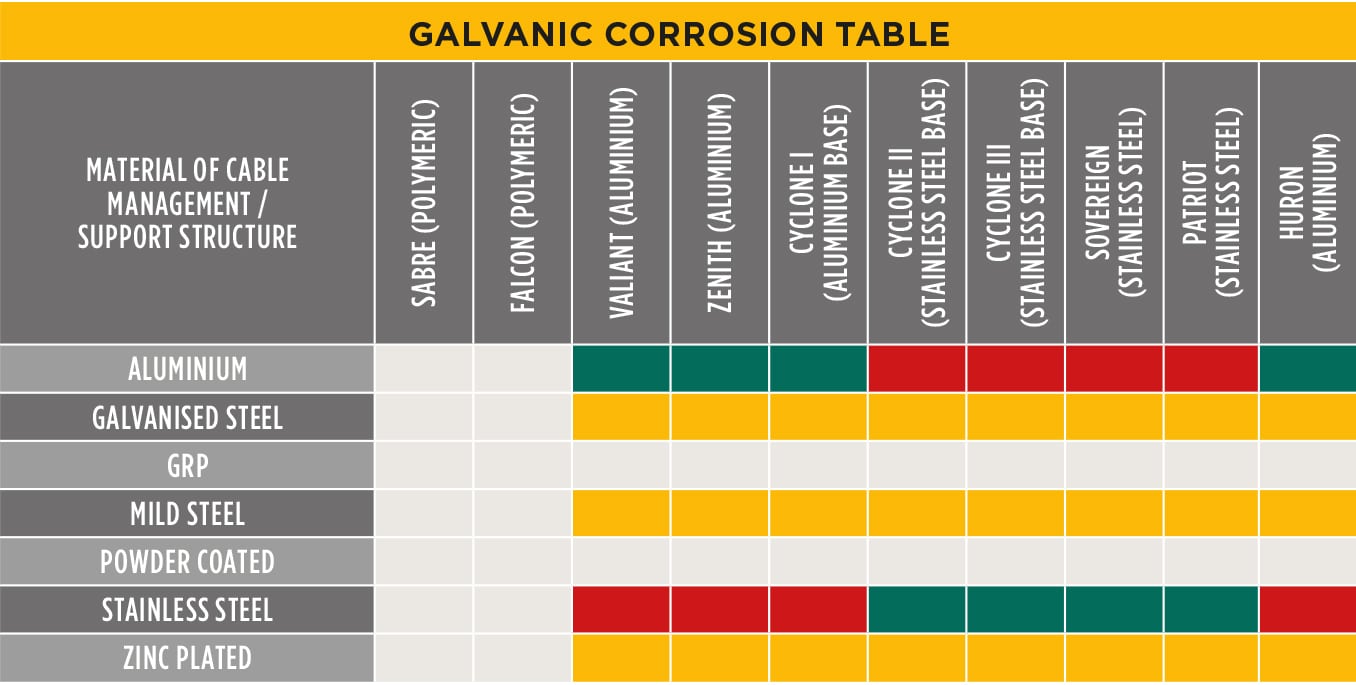
The (Very) Rough Ladder of Reactivity:
Most Anodic (Will Corrode First):
- Magnesium and its alloys
- Zinc
- Aluminum and its alloys
- Cadmium
- Steel (carbon steel, iron)
- Cast Iron
In the Middle (Can be either, depending on what they're with):
- Lead
- Tin
- Nickel
Most Cathodic (Will Be Protected):
- Copper and its alloys (bronze, brass)
- Silver
- Gold
- Platinum
See how there's a big jump from Aluminum to Copper? That’s a red flag! You wouldn’t want to leave your pet hamster in charge of a bag of candy, and you don’t want to leave aluminum touching copper in a damp environment. The aluminum will be the sacrificial hamster, and the copper will be the happily munching candy.
The key takeaway is that the greater the difference in position on this list, the more severe the galvanic corrosion will be. A small difference means mild corrosion, which might be acceptable or easily managed. A large difference means rapid, aggressive corrosion, which you definitely want to avoid.
Putting the Chart to Work: Practical Tips
So, how do you actually use this knowledge? It’s not just for trivia night (though it could be!).
1. Design with Compatibility in Mind: When you're planning a project, think about the metals you're using. If you're building a boat trailer that will be in saltwater, using different metals that are far apart on the galvanic scale is a recipe for disaster. You’ll be replacing parts faster than you can say "barnacles."
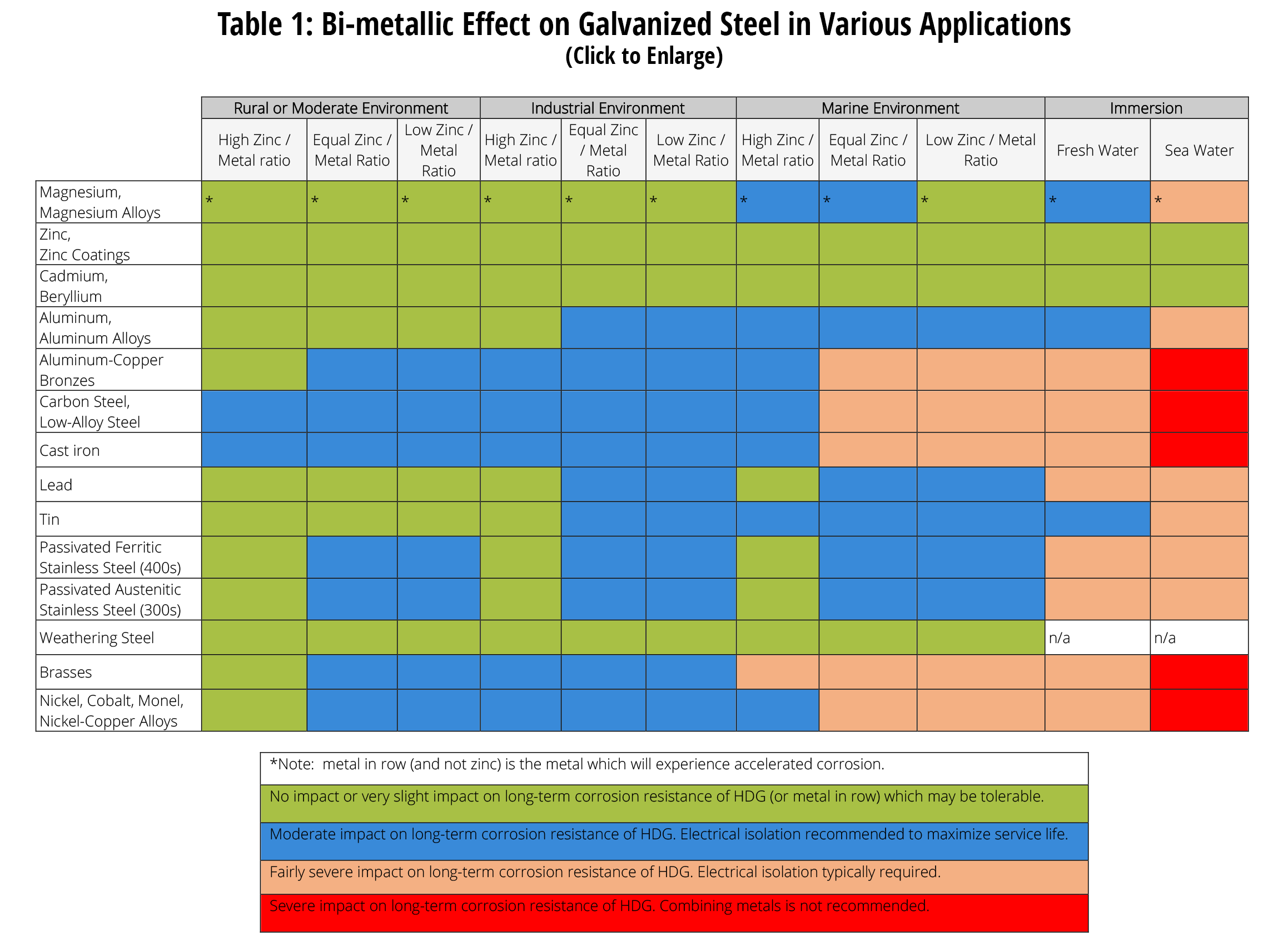
2. Insulate, Insulate, Insulate! If you absolutely must use dissimilar metals together, your best friend is insulation. Think of putting a non-conductive washer between a stainless steel bolt and an aluminum bracket. This breaks the electrical path, preventing the galvanic action. It’s like putting a referee in between those two arguing metals!
3. Coatings are Your Allies: A good paint, powder coating, or plating can act as a barrier, separating the metals and preventing contact with the electrolyte. However, be careful! If the coating gets damaged and exposes both metals, the corrosion can be even worse because the smaller area of the more active metal will be forced to corrode faster.
4. Sacrificial Anodes: This is a clever trick, especially for large structures like boats or water heaters. You intentionally attach a more active metal (like zinc or magnesium) to the structure. This "sacrificial anode" corrodes instead of the main metal you want to protect. It’s like sending a decoy to distract the enemy while your real treasure is safe.
5. Choose the Right Material for the Job: Sometimes, the simplest solution is to just pick metals that are compatible from the start. If you’re working with saltwater, using materials that are inherently resistant to corrosion in that environment is crucial.
A Few More Niggles and Nuances
Now, the world of corrosion is a bit like a box of chocolates – you never quite know what you’re going to get! There are a few other things that can influence how metals behave:
- The Electrolyte: As we’ve mentioned, the electrolyte is crucial. Saltwater is much more conductive than freshwater, which is more conductive than dry air. So, metals that might be fine in one environment could cause trouble in another.
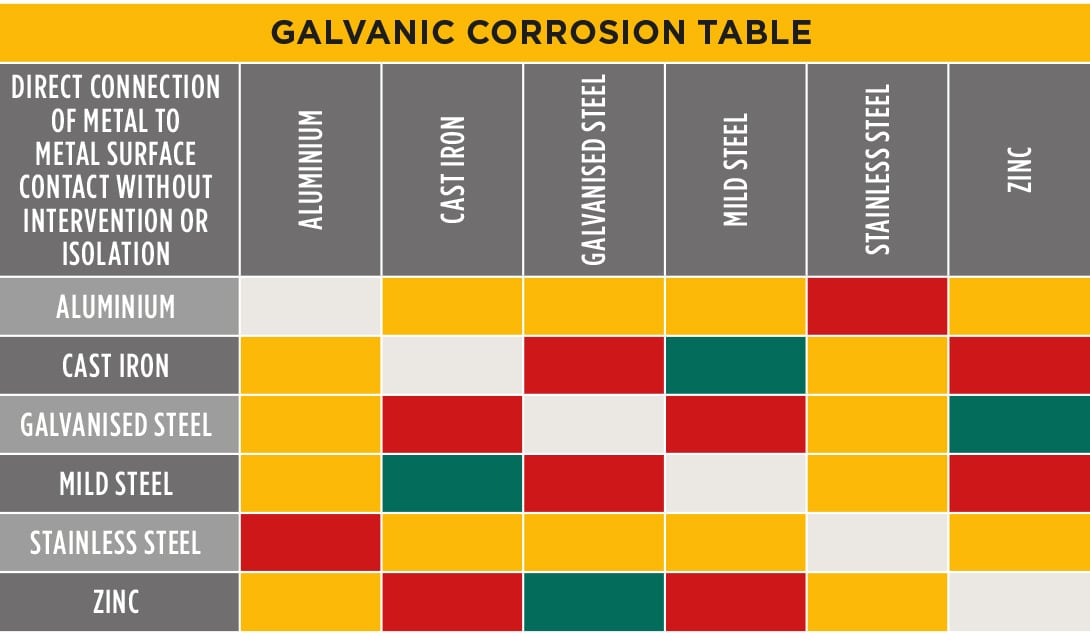
- Surface Condition: A rough, pitted surface can trap moisture and create localized corrosion cells. Clean, smooth surfaces are generally better.
- Alloying Elements: The exact composition of a metal alloy can affect its galvanic potential. A specific grade of stainless steel might behave slightly differently from another.
- Area Ratio: The relative surface areas of the two metals also play a role. If you have a very large area of noble metal in contact with a small area of active metal, the corrosion on the active metal will be accelerated.
So, while the metal corrosion chart is an invaluable tool, it’s not the only thing to consider. It’s like a really good map – it tells you the general terrain, but you still need to watch out for potholes and rogue squirrels.
The End of the Metal Drama (For Now!)
Phew! We’ve journeyed through the electrochemical playground of metals, explored the importance of their friendships (or lack thereof), and armed ourselves with the knowledge of the trusty metal corrosion chart. It’s a bit like learning a new language, but this one can save your possessions from looking sad and crumbly.
Remember, understanding galvanic corrosion isn't about being a hardcore scientist; it's about being a smart builder, a savvy DIYer, or just someone who appreciates things lasting a little longer. It’s about making sure your metal creations can stand the test of time, or at least the test of a few rainstorms, without falling apart.
So, the next time you see two different metals touching, you’ll have a little knowing smile. You’ll be the metal whisperer, the corrosion connoisseur! And that, my friends, is pretty cool. Go forth and build, create, and repair, armed with this metal-mending wisdom. May your metals be ever compatible, and your projects stand strong and true!