
Metallic Minerals And Non Metallic Minerals
Hey there, design gurus and everyday adventurers! Ever stop to think about what makes our world tick, literally? From the gleaming skyscrapers that kiss the clouds to the humble spoon you’re probably holding right now, our lives are deeply intertwined with the earth’s hidden treasures. Today, let’s take a chill dive into the fascinating world of metallic and non-metallic minerals. Forget stuffy textbooks; we’re talking about the bling, the build, and the everyday brilliance that these natural wonders bring to our doorsteps.
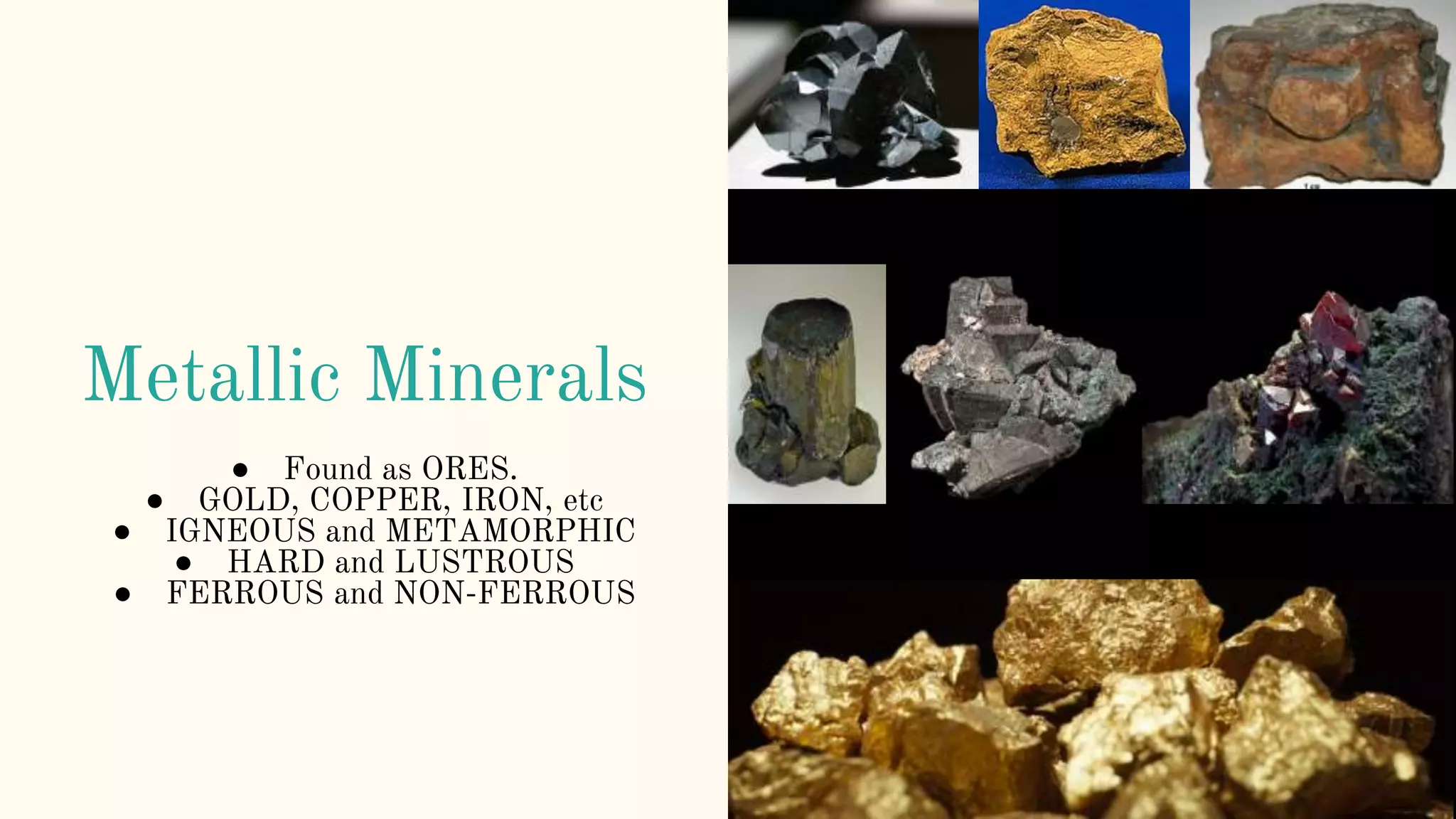
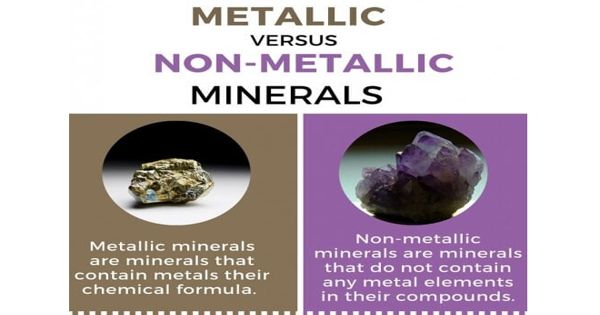
Think of minerals as Earth’s personal jewelry box. Some of them are all about that shine and conductivity – we call these metallic minerals. They’re the show-stoppers, the ones that conduct electricity and heat like nobody’s business and often have that distinct metallic gleam. Then there are the unsung heroes, the non-metallic minerals. These guys are just as crucial, but they’re more about the structure, the color, the insulation – the foundational elements that make our world functional and, dare I say, beautiful.
The Sparkle and Shine: Metallic Minerals
Let’s start with the dazzling ones, shall we? Metallic minerals are the reason we have everything from our smartphones to the sleek architecture that defines modern cities. They're the powerhouse elements that conduct electricity, making our digital lives possible, and they’re often malleable, meaning they can be shaped and molded into countless forms.
Think about iron. It’s the backbone of so much of our infrastructure! Without iron ore, we wouldn’t have the sturdy steel beams that hold up our homes and offices. It’s in bridges, cars, trains – you name it. It’s the quiet, strong guy in the room, always dependable.
And then there’s copper. Ah, copper! This reddish-brown beauty is a rockstar when it comes to electrical conductivity. That’s why it’s all over your wiring, from your home’s electrical grid to the intricate circuits inside your laptop. Ever noticed how old phone cords had that classic copper color? It’s a testament to its enduring usefulness. Plus, it’s got this lovely patina that can add a touch of vintage charm to anything it adorns.
Don’t forget aluminum. This lightweight champ is everywhere! It’s in your soda cans, airplane parts, and those sleek foil sheets in your kitchen. It’s corrosion-resistant, which is a fancy way of saying it doesn’t rust easily, making it super practical for everyday use. Plus, its lightness is a game-changer for industries where every ounce counts.
And for the bling lovers? We’re talking about precious metals like gold and silver. Gold, with its unparalleled luster and resistance to tarnish, has been a symbol of wealth and beauty for millennia. It’s not just for jewelry; it’s used in high-tech electronics and even dentistry! Silver, too, is prized for its shine and its antimicrobial properties, making it a staple in jewelry and even some medical applications.

A fun fact for you: The oldest known gold artifact dates back to around 4000 BC in Bulgaria! Talk about timeless appeal.
Practical Tip: When you’re decluttering or renovating, consider what you’re tossing. Old electronics, even the seemingly defunct ones, can contain valuable metals like copper and gold. Recycling them not only helps the environment but can even recover precious resources.
From the industrial might of iron to the delicate shimmer of gold, metallic minerals are the engines of innovation and the adornments of our lives. They are the conductors of our modern world, literally.
The Foundation and the Flair: Non-Metallic Minerals
Now, let’s shift gears and talk about the incredible world of non-metallic minerals. These are the workhorses that don't conduct electricity or heat as well as their metallic counterparts, but they are absolutely essential for building, decorating, and basically, living!
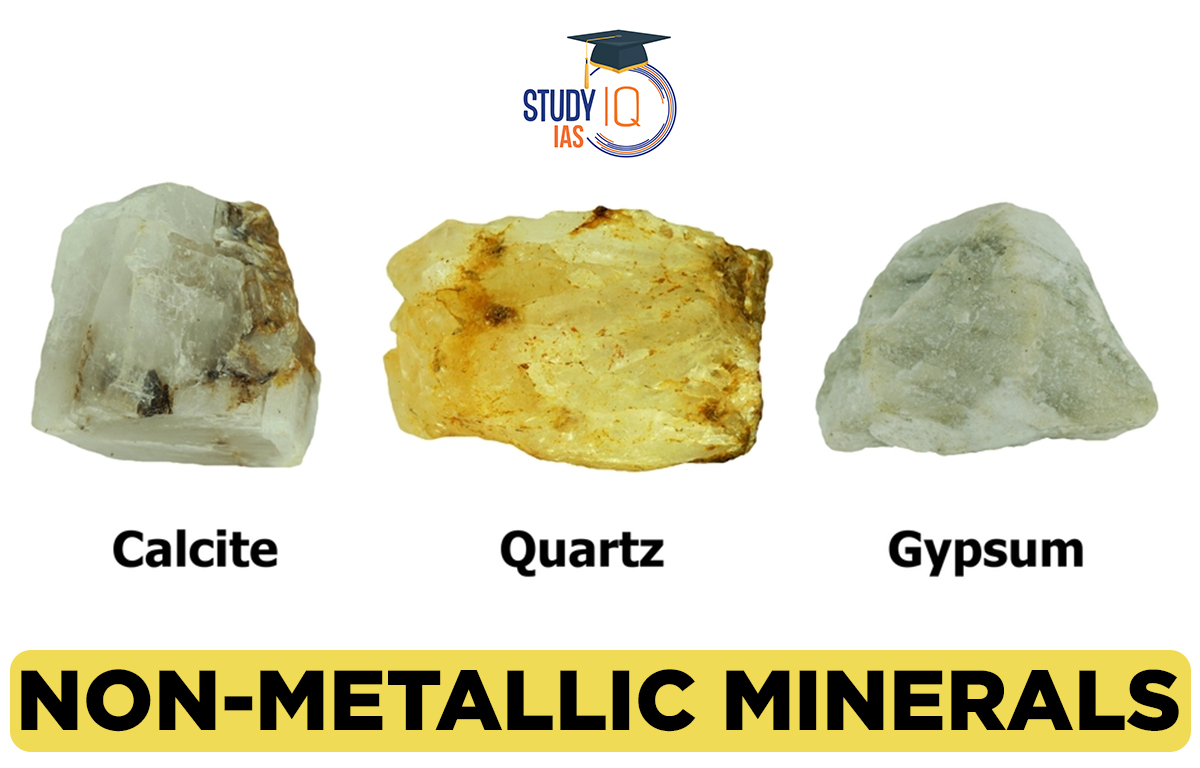
Think about quartz. This is a seriously versatile mineral! It’s the main component of sand, which we use to make glass, concrete, and pretty much build our beaches. But it’s also known for its piezoelectric properties – meaning it can generate an electric charge when subjected to mechanical stress. That’s why it’s used in watches, radios, and other electronic devices for timing and frequency control. Pretty cool for something that looks like it just belongs in a pretty rock collection, right?

Then there’s mica. This flaky mineral is a marvel of natural engineering. It’s an excellent electrical insulator and a great heat retainer. Ever seen those little windows in old ovens or even in high-end decorative lighting? That’s often mica doing its thing. It’s also used in cosmetics for that subtle shimmer and in paints to add a pearlescent effect. Talk about adding a touch of magic!
Limestone might not sound glamorous, but it’s a foundational building block of our civilization. It's the key ingredient in cement, which is the binder that holds concrete together. Think of all the roads, buildings, and dams that are built with cement – that’s limestone working its magic. It’s also used in agriculture to neutralize soil acidity and in the purification of water.
And what about the colors that brighten our world? Many pigments are derived from non-metallic minerals. Think of the vibrant blues of lapis lazuli, historically used in paintings by masters like Vermeer and Raphael, or the earthy reds and yellows of ochre, used by indigenous cultures for millennia. These minerals aren’t just decorative; they’re part of our artistic heritage.
Gypsum is another unsung hero. This soft sulfate mineral is the primary component of drywall, the material that forms the walls of most modern homes and offices. It’s fire-resistant and a good insulator, making our living spaces safer and more comfortable. It’s also used to make plaster of Paris, which is great for crafts and medical casts.
A fun fact: Some ancient civilizations used powdered gypsum as a cosmetic to lighten their skin. It’s been a beauty secret for thousands of years!
Practical Tip: When choosing paints for your home, consider the pigments. Many natural, non-metallic mineral pigments can offer beautiful, rich colors and are often more environmentally friendly than synthetic alternatives. Look for paints with terms like "mineral-based" or "natural pigments."
Non-metallic minerals are the quiet providers, the ones that offer stability, color, and essential functionality. They are the bedrock upon which so much of our daily existence is built.
A World of Wonders, From the Ground Up
It’s truly amazing when you start to connect the dots. The phone in your hand, powered by the conductivity of copper and the precise timing of quartz. The chair you’re sitting on, perhaps with metallic legs and a frame that owes its strength to iron. The paint on your walls, possibly colored by pigments derived from the earth.
These minerals aren’t just abstract geological terms; they are the tangible elements that shape our experiences. They are the silent partners in our routines, the unseen forces that enable our comfort and convenience.
Think about the cultural impact. From the ancient Egyptians using gold for their pharaohs’ tombs to the Renaissance artists relying on mineral pigments for their masterpieces, these materials have always held a special place in human history and creativity. Even today, we associate certain minerals with specific qualities – the strength of granite, the clarity of diamond, the vibrant color of emeralds.
The extraction and use of minerals have also shaped economies and societies. The “Gold Rush” era in the United States is a prime example of how the discovery of mineral wealth can transform a landscape and its people. Of course, with great power comes great responsibility, and the responsible sourcing and sustainable use of these resources are increasingly important topics.
Your Daily Mineral Connection
So, the next time you’re scrolling through social media, brewing your morning coffee, or simply admiring a piece of art, take a moment to appreciate the minerals at play. That sleek phone case? Might be aluminum. The vibrant blue of a favorite ceramic mug? Could be cobalt or copper oxides. The light illuminating your room? Thanks, copper wiring!
It’s a reminder that we are truly living on a planet rich with resources, and understanding these basic elements can give us a deeper appreciation for the world around us. From the macro-level of global industry to the micro-level of your personal belongings, minerals are woven into the fabric of our lives.
It’s easy to get caught up in the hustle and bustle, the digital streams and the fast-paced trends. But sometimes, taking a moment to look down, to consider the very ground beneath our feet, and the incredible materials it provides, can be incredibly grounding. These metallic and non-metallic minerals are not just geological wonders; they are the quiet, constant companions that enable our modern existence, offering both functionality and a touch of everyday magic.