
Metallic Trends In The Periodic Table
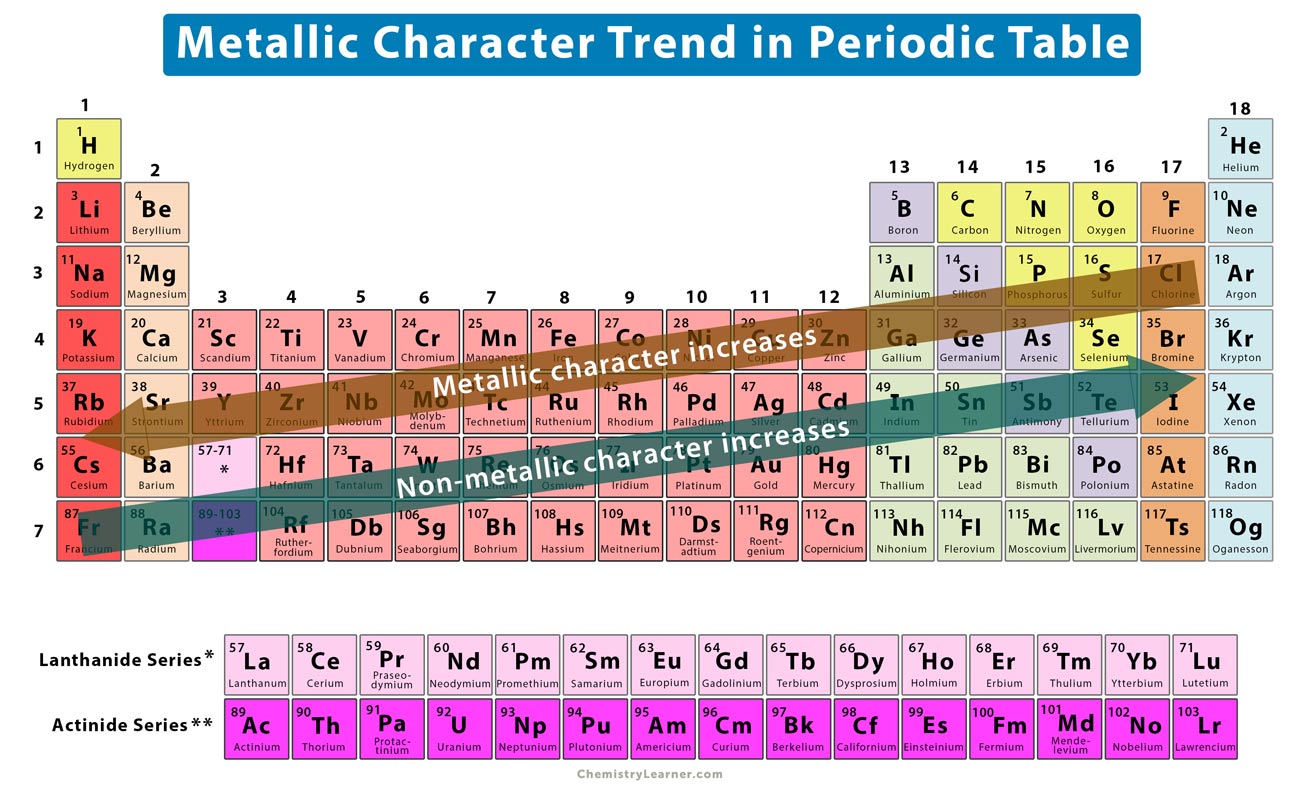
Ever looked at a picture of the periodic table and thought, "Wow, that's a lot of shiny stuff!"? Well, you're not wrong! The periodic table, that magical chart of all known elements, is absolutely bursting with metals. Seriously, it’s like the universe decided to throw a party, and metals were the VIP guests who brought all the bling.
Think about it. When you hear the word "metal," what pops into your head? Probably something strong, something that glints, something you can shape into awesome things. That’s the spirit of metals! They're the workhorses, the showstoppers, and the silent heroes of our everyday lives. From the spoon you stir your morning coffee with to the giant skyscrapers that pierce the clouds, metals are everywhere, doing all the heavy lifting and looking good doing it.
Now, the periodic table organizes these metallic marvels into different groups, kind of like assigning them to different neighborhoods based on their personalities. And let me tell you, these neighborhoods are anything but boring!
First up, we have the Alkali Metals. These guys are in Group 1, and they’re like the super-enthusiastic, slightly dramatic teenagers of the metallic world. They're so eager to make friends that they're practically begging to give away one of their electrons. This makes them incredibly reactive! Imagine trying to keep a bunch of super-excited puppies contained – that’s kind of like an alkali metal waiting to react. They’re soft enough to cut with a butter knife (though please, PLEASE don't try this at home with actual chemicals!) and they gleam like polished silver when you get a fresh look at them.
Then there are the Alkaline Earth Metals. These are the slightly more reserved, but still very energetic, cousins of the alkali metals. Found in Group 2, they’re also pretty reactive, but not quite as "hold my beer, I'm going in!" as their neighbors. They’re the backbone of many important things. Ever heard of calcium in your bones? That’s an alkaline earth metal! It’s like they’re the builders, providing the solid structure for so much around us. They're a little harder than the alkali metals, but still wonderfully metallic and useful.

Now, let’s talk about the real showstoppers, the ones who practically own the stage: the Transition Metals. This is the biggest group on the periodic table, and it's like the Hollywood of metals. We're talking iron, copper, gold, silver, platinum – the names roll off the tongue like a red carpet. These are the metals that are tough, that conduct electricity like nobody's business, and that often have those gorgeous, shiny finishes we associate with luxury and power. Iron? The stuff of bridges and cars! Copper? The wiring that powers your life! And don't even get me started on gold and silver – the ultimate status symbols, shining brightly through history. These transition metals are the true celebrities of the periodic table, strong, versatile, and always ready to shine.
But the metallic party doesn't stop there! We have the Lanthanides and Actinides. These are the two rows that often get tucked away at the bottom of the periodic table, like the special VIP lounge. They’re a bit more exotic, with some of them being radioactive (so, definitely keep them in their designated spots!). But even within this exclusive club, there are gems. Some of these elements are crucial for things like magnets, and others are the stars of nuclear energy. They might be less familiar to you, but they play incredibly important, often mind-blowing, roles in technology and science.
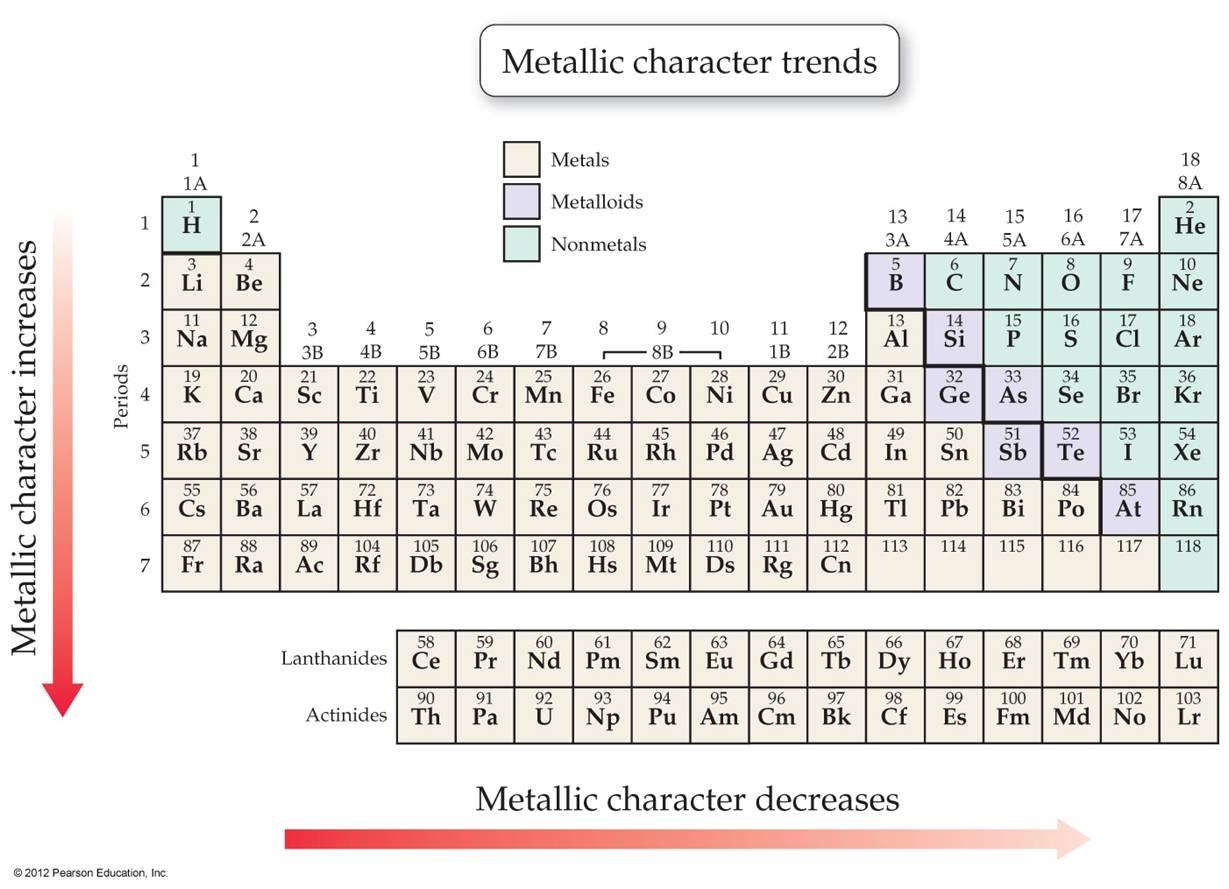
And then, scattered amongst the non-metals like colorful confetti, we have the Post-Transition Metals. These are like the friendly neighbors who are a bit of a mix. They’re metals, for sure, but they’re not quite as hard or as reactive as the transition metals. Think of aluminum, the super-lightweight champion of cans and airplane parts, or lead, which used to be everywhere (though we're getting smarter about that now!). They’re the handy-dandy, do-it-all types, bridging the gap and showing us just how diverse the metallic family can be.
What's so cool about all these metallic trends is that the periodic table isn't just a bunch of symbols; it's a map of how these elements behave. As you move across the table, or down the groups, you see predictable patterns in their shininess, their strength, and their willingness to get involved in chemical reactions. It's like the elements are all playing a giant, cosmic game of musical chairs, and their position tells you a lot about their metallic swagger.
So, next time you glance at the periodic table, don't just see a grid of numbers and letters. See the gleaming promise of untold discoveries, the strength that builds our world, and the sheer, unadulterated sparkle of metallic awesome-ness. These elements are the building blocks of everything we know and love, and the metallic majority is here to remind us that sometimes, the shiniest things are also the most important.