
Metals And Non Metals In The Periodic Table

Ever glanced at your sparkling jewelry, felt the satisfying heft of a metal pot, or admired the sleek design of a smartphone? We’re surrounded by the magic of metals and nonmetals every single day. They're not just abstract concepts from your high school chemistry class; they're the fundamental building blocks that shape our world in incredibly stylish and functional ways. Think of them as the ultimate A-listers of the elemental universe, each with their own unique vibe and personality, all neatly organized in that iconic chart: the Periodic Table.
Let’s be honest, the Periodic Table can look a little intimidating at first. Rows, columns, symbols… it’s like a secret code for the universe. But break it down, and it’s actually a super clever system that tells us so much about how these elements behave and interact. It's the ultimate cheat sheet for understanding everything from why your phone can charge wirelessly to why certain metals are perfect for cooking and others for building skyscrapers.
We’re going to dive into the glamorous world of metals and the equally fascinating, though often subtler, realm of nonmetals. Forget dry textbooks; we're talking about their coolest features, their everyday impact, and how to appreciate them like the design elements they truly are. Ready to get a little elemental?
The Dazzling Divas: Metals
When you think of metals, what comes to mind? Probably something that shines, feels heavy, and is often pretty malleable – meaning you can bend and shape it without it snapping. That’s the classic metal profile, and it’s not wrong! These guys are the rockstars of the Periodic Table, commanding attention with their lustrous appearance and impressive strength.
Take gold, for instance. The ultimate symbol of wealth and beauty, it’s been coveted for millennia. It’s so non-reactive that the gold coins from ancient civilizations are still pretty much pristine. Imagine that! Gold is used in everything from intricate jewelry and crowns to, surprisingly, advanced electronics and even dentistry. It’s the perfect blend of beauty and brains, making it a perennial favorite.
Then there’s silver. Almost as dazzling as gold, it’s also a fantastic conductor of electricity and heat. This is why it’s a go-to for electronics, from circuit boards to the tiny components inside your gadgets. And who can forget silver’s antibacterial properties? It’s been used for centuries in cutlery and even wound dressings. Pretty nifty, right?
Copper is another everyday hero. That warm, reddish-brown gleam is instantly recognizable. It’s the backbone of our electrical grids because it’s an excellent conductor. Look around your home: the wires in your walls, the heating elements in your appliances, even the pipes that bring you water – chances are, copper is involved. Plus, it gives us those cool antique pennies and is essential for healthy bodily functions (yes, really!).
And we can’t forget the mighty iron. The workhorse of the industrial world. It might not be as flashy as gold, but without iron and its alloy, steel, we wouldn't have bridges, cars, or skyscrapers. It’s incredibly strong and durable, making it essential for construction and manufacturing. Even your cast-iron skillet, that culinary workhorse, owes its existence to iron!
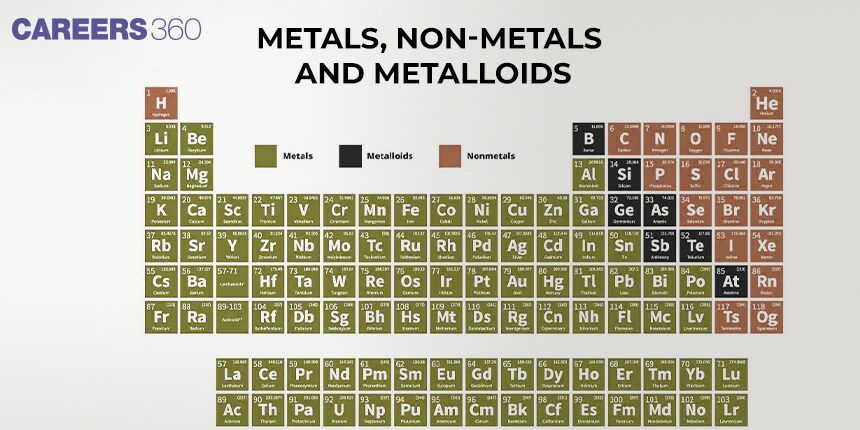
What Makes Metals, Well, Metal?
Chemically speaking, metals tend to lose electrons easily. This "electron-donating" tendency is key to their reactivity and how they form bonds with other elements. It’s like they’re always happy to share their electron bounty. This property also contributes to their excellent electrical conductivity – those free-moving electrons are the charge carriers!
Most metals are solid at room temperature, with the notable exception of mercury. This silvery liquid metal is fascinatingly eerie. It’s dense and can be quite toxic, which is why we’re moving away from mercury thermometers and into safer digital alternatives. Still, its unique properties have found niche uses in specific scientific instruments and fluorescent lighting.
Metals are generally characterized by their:
- Luster: They reflect light and appear shiny.
- Malleability: They can be hammered or pressed into thin sheets without breaking (think aluminum foil!).
- Ductility: They can be drawn into thin wires (like copper wires).
- High melting and boiling points: Most metals need a lot of heat to change state.
- Good conductors of heat and electricity: Essential for our modern lives.
Metal Moods: Beyond the Obvious
Not all metals are created equal, of course. Some are super reactive, like sodium and potassium, which will actually explode if they come into contact with water! These are often kept under oil to prevent them from reacting with the air. Talk about a dramatic entrance!
On the other end of the spectrum, we have the noble metals like gold, silver, and platinum. They're incredibly unreactive, which is why they’re so prized for jewelry and investments. They just don't like to get involved in chemical drama.

And then there are the essential metals for life, like calcium in our bones and teeth, magnesium in our muscles, and iron in our blood (it’s what makes blood red!). We literally can’t live without these metallic powerhouses.
The Essential Supporting Cast: Nonmetals
Now, let's shift gears and talk about the nonmetals. These elements are the quiet achievers, the backbone of organic life, and the invisible force behind many essential processes. They might not always be as flashy as metals, but their roles are absolutely critical.
The most abundant nonmetal on Earth? That’s oxygen, of course! We breathe it in, plants release it – it's the fuel for life as we know it. It's highly reactive, especially with metals (hello, rust!) and organic compounds. Without oxygen, combustion wouldn't happen, and our bodies wouldn't be able to convert food into energy.
Then there's nitrogen, which makes up about 78% of our atmosphere. While we can’t directly use atmospheric nitrogen, it's absolutely vital for life. It's a key component of proteins and DNA, the building blocks of all living things. Think of it as the essential protein powder for nature.
Carbon is the undisputed star of organic chemistry. This incredibly versatile nonmetal is the foundation of all life on Earth. From the simplest sugars to the most complex DNA, carbon atoms link together in endless chains and rings to form organic molecules. It’s in the food we eat, the clothes we wear, and even the air we exhale.
And let's not forget hydrogen, the simplest and most abundant element in the universe. It’s a key component of water (H₂O), a substance that’s essential for life. It’s also the fuel source for stars, including our own sun. Talk about cosmic significance!
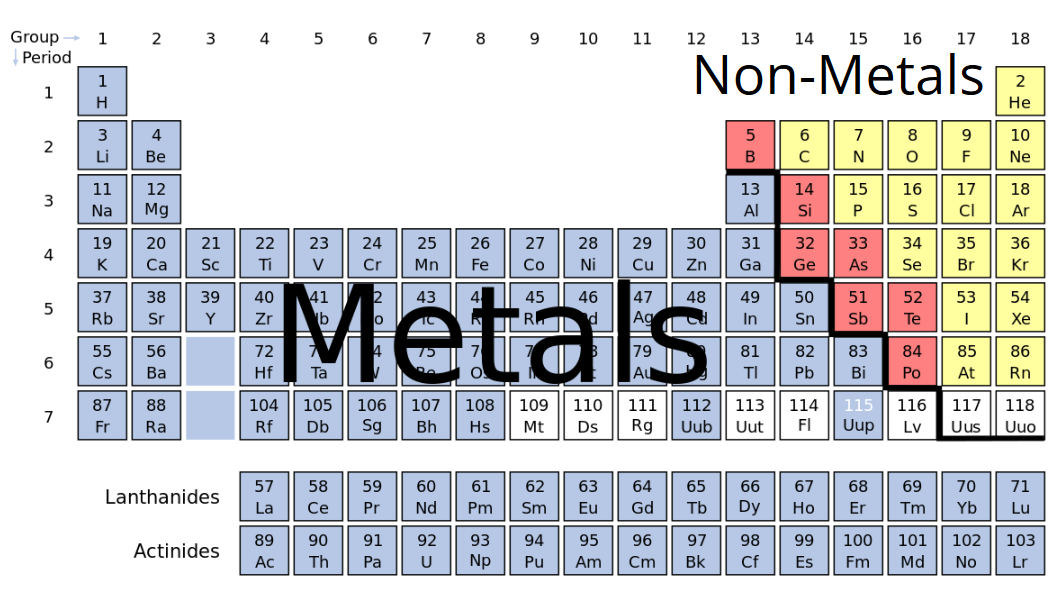
The Nonmetal Vibe: Diverse and Dynamic
Unlike metals, nonmetals exhibit a much wider range of physical properties. They can be:
- Gases: Like oxygen, nitrogen, hydrogen, helium, neon.
- Liquids: Only bromine is a liquid at room temperature, a reddish-brown, volatile substance.
- Solids: Like carbon (in the form of graphite and diamond!), sulfur, phosphorus, iodine.
Many nonmetals are insulators, meaning they don’t conduct electricity or heat very well. Think of the plastic casing around your electrical cords or the ceramic handles on your cookware – these materials often contain nonmetals to prevent shocking or burning yourself. Safety first!
Chemcally, nonmetals tend to gain or share electrons when they react. This electron-grabbing or sharing behavior is what allows them to form complex molecules, especially with each other and with metals.
Nonmetal Personalities: From Diamond to Chlorine
Sulfur, that yellow solid with a distinctive smell, is used in everything from gunpowder to making sulfuric acid, a crucial industrial chemical. It’s also essential for certain amino acids in our bodies.
Phosphorus is another vital element for life, forming part of our DNA and being crucial for bone health and energy transfer in cells. It’s also the reason safety matches work!

Halogens, like chlorine and fluorine, are on the more reactive side of nonmetals. Chlorine is a disinfectant in swimming pools and water treatment, while fluorine is used in toothpaste to prevent cavities. Both are quite potent in their pure forms!
And then there are the noble gases: helium, neon, argon, krypton, xenon, and radon. These guys are the ultimate introverts of the Periodic Table. They are incredibly unreactive because their electron shells are full, making them very stable. This is why helium is used in balloons (it won’t react with the air) and neon signs glow in vibrant colors when an electric current passes through them.
A Practical Periodic Glance
So, how do these elemental divas and supporting stars show up in your daily life?
- Your Kitchen: Stainless steel pots and pans are a blend of iron, chromium, and nickel (metals!). Aluminum foil is pure aluminum (metal). Your non-stick coatings often involve fluorine compounds (nonmetal).
- Your Gadgets: Silicon (a metalloid, a cool hybrid!) is the heart of computer chips. Copper wires transmit electricity. Gold is used for its excellent conductivity in high-end connectors.
- Your Health: Calcium and iron are essential minerals (metals). Oxygen and nitrogen are gases we breathe. Carbon forms the basis of our bodies.
- Your Environment: Water is hydrogen and oxygen. The air is primarily nitrogen and oxygen.
Understanding the basic differences between metals and nonmetals gives you a new appreciation for the materials around you. It’s like having a secret decoder ring for your everyday surroundings.
A Moment to Reflect
Every time you drink a glass of water, scroll through your phone, or admire a piece of art, you’re interacting with the magnificent world of metals and nonmetals. They are the silent architects of our reality, shaping our comfort, our technology, our very existence.
From the brilliant gleam of a silver coin to the invisible breath of oxygen we take in, these elements are interwoven into the fabric of our lives. The Periodic Table, far from being a dusty old chart, is a vibrant testament to the beauty and complexity of the universe, a reminder that even the most fundamental parts of matter have their own unique style and purpose. So next time you touch something made of metal, or simply take a breath, give a little nod to the elements. They’re the true stars of the show.