
Metals Are Found Where On The Periodic Table

Ever find yourself idly scrolling through your phone, maybe sipping on a perfectly brewed latte, and a little whisper of curiosity starts in the back of your mind? Like, where do all these amazing metals we use every single day actually come from? We’re talking about the shiny bits in your tech, the sturdy frames of your bike, even the essential nutrients in your almond butter. It’s a whole world of elemental awesomeness, and guess what? The answer is beautifully organized and laid out for us on the legendary Periodic Table.
Think of the Periodic Table as the ultimate cheat sheet to the universe’s building blocks. It’s not just a dusty old chart for science geeks in lab coats (though they’re pretty cool too!). It’s a map, a guide, and frankly, a work of art that shows us how everything, absolutely everything, is connected. And today, we’re going on a little safari to find our metallic friends.
The Great Metal Migration: Where Do They Hang Out?
Alright, so you’ve probably seen the Periodic Table. It’s that grid of boxes, each with a symbol and a number. Now, imagine it as a city. Some areas are bustling with activity, others are more chill, and some are… well, let’s just say they’re where the real party is happening for metals. And where is that party? Mostly on the left side and in the middle of this magnificent chart.
Think of the Periodic Table like a sprawling mansion. On the far left, you have the alkali metals (like Lithium, Sodium, Potassium). These guys are super reactive, almost like the energetic teenagers of the elemental world. They’re so eager to get involved that they’ll readily give away an electron to make friends. You'll find Lithium in your phone battery, keeping you connected, and Potassium in bananas, giving you that natural energy boost. Pretty cool, right?
Next to them are the alkaline earth metals (like Magnesium and Calcium). They’re a bit more reserved than their alkali neighbors but still quite eager to mingle. Magnesium is vital for everything from photosynthesis in plants to strengthening airplane parts. Calcium? Well, that’s your bones and teeth, keeping you strong and ready to conquer the world (or at least your to-do list).
The Heart of the Mansion: The Transition Metals
Now, let’s head into the grand central hall, the most extensive section of the Periodic Table: the transition metals. This is where the real heavyweights, the workhorses, the rockstars of the metallic world reside. We're talking about elements like Iron, Copper, Gold, Silver, Platinum, and Nickel.
These guys are the backbone of so much of our modern lives. Iron? It’s in your car, your kitchen pots, and the steel that builds our skyscrapers. Copper? It’s the silent hero in all your electronic wiring, carrying signals from your router to your streaming device. And Gold and Silver? Oh, they’re not just for dazzling jewelry and precious coins; they have critical roles in electronics and dentistry too!
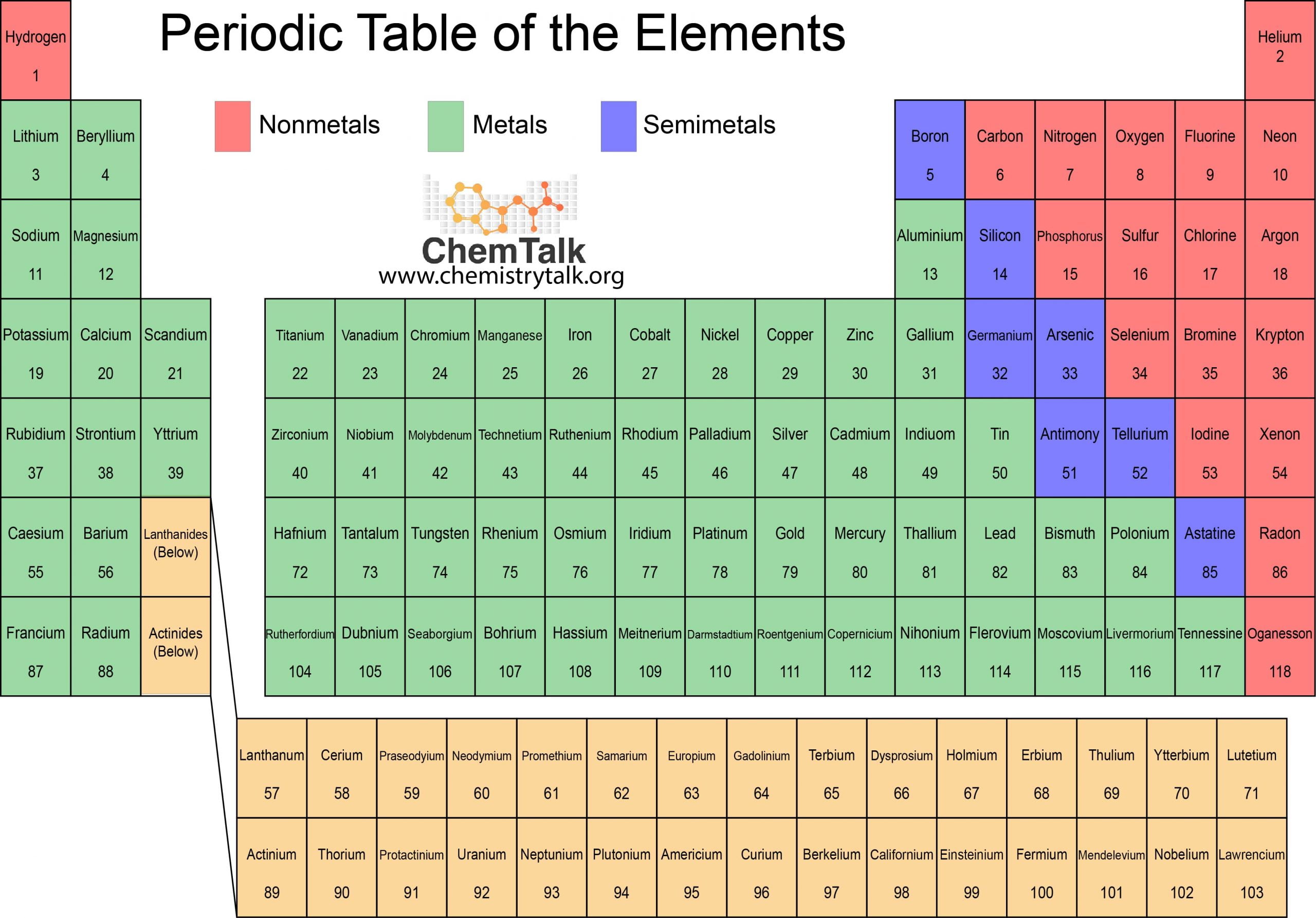
The transition metals are known for their versatility. They can form multiple chemical bonds, have vibrant colors (think of those gorgeous blue and green pigments from copper compounds!), and many are excellent conductors of heat and electricity. They’re like the Swiss Army knives of the element kingdom – always useful, always reliable.
Fun Fact Alert! Did you know that the Statue of Liberty, that iconic symbol of freedom, is actually covered in copper? Over time, the copper has oxidized to form a beautiful green patina, giving it that distinctive look. It’s a giant, stunning example of a transition metal in action!
Practical Tip: When you’re cooking, notice the difference between an iron skillet and a stainless steel one. The iron skillet, being pure iron (or close to it), heats evenly and retains heat beautifully, giving you that perfect sear. Stainless steel often contains a mix of metals, including chromium and nickel, for added durability and rust resistance.
The Lanthanides and Actinides: The Basement Dwellers (But Super Important!)
Now, sometimes, when you look at the Periodic Table, you’ll see two extra rows tucked away at the bottom. These are the lanthanides and actinides. Think of them as the special collections, the more exotic members of the metallic family, usually kept in their own dedicated display cases.
The lanthanides are often called "rare earth elements," but that’s a bit of a misnomer. They’re not necessarily rare, but they are often found together in mineral deposits, making them a bit tricky to separate and purify. Elements like Neodymium and Samarium are crucial for making powerful magnets used in everything from wind turbines and electric car motors to your smartphone speakers.

The actinides are even more fascinating, and some of them are radioactive. This group includes Uranium and Plutonium, which are famous (or infamous) for their roles in nuclear energy and weapons. However, other actinides, like Thorium, are being researched for their potential in future clean energy technologies. It’s a group that demands respect and careful handling.
Cultural Connection: The term "rare earth" has even entered popular culture, often used metaphorically to describe something unique and highly sought after. Just like these elements, finding something truly special can feel like discovering a hidden treasure.
Did You Know? Some of these lanthanide elements are used in the phosphors that create the vibrant colors on your TV or computer screen! So, next time you’re binge-watching your favorite show, give a little nod to these hidden heroes.
The Other Side of the Tracks: Where Are the Non-Metals?
It’s also important to remember where metals aren’t hanging out. If you look at the right side of the Periodic Table, you’ll find the non-metals. This is where you’ll find elements like Oxygen, Nitrogen, Carbon, and Chlorine. These guys have very different personalities. They’re often gases at room temperature, or they can be brittle solids. They tend to gain or share electrons rather than give them away.
/GettyImages-758302997-5c215e3846e0fb0001b8bf7b.jpg)
There's also a fascinating group called metalloids, or semimetals, that straddle the border between metals and non-metals. Elements like Silicon and Germanium are key players here. They have properties of both metals and non-metals, making them incredibly useful in electronics. Silicon, for instance, is the undisputed champion of semiconductors, forming the basis of almost all our computer chips.
Think of it this way: If metals are the sturdy bricks and beams of our world, then non-metals are the air we breathe, the water we drink, and the organic matter that makes life possible. And the metalloids? They’re the clever connectors, the bridge-builders, ensuring everything works smoothly.
Practical Tip: When you're looking at electronics, especially circuit boards, you'll see lots of silicon. This metalloid is what allows electrical current to be precisely controlled, forming the basis of all modern computing. It's a testament to the unique properties found in that transitional zone of the table.
A Peek into the Periodic Pantry
So, to recap our little tour: Metals generally dominate the left half and the entire middle block of the Periodic Table. The far-left are the highly reactive alkali metals, followed by the slightly less reactive alkaline earth metals. Then, we dive into the vast and versatile world of the transition metals, the true workhorses. Tucked away at the bottom are the specialized lanthanides and actinides, full of unique applications.
This organized layout isn't just for show; it's a direct result of the way atoms are structured, specifically the arrangement of their electrons. Elements in the same vertical column (called a group) tend to have similar chemical properties because they have the same number of valence electrons (those outermost, most reactive electrons).

Fun Fact: The symbol for Sodium is "Na," which comes from its Latin name, natrium. This is why you’ll see "Na" on salt shakers and in chemical formulas, even though it has nothing to do with the English word "sodium." Chemistry has its own ancient language!
Cultural Nod: Think about alchemy, the ancient precursor to chemistry, where people sought to turn base metals into gold. While their methods were misguided, their fascination with metals and their transformation was the very beginning of understanding these elements.
Your Daily Dose of Metallic Magic
It’s truly mind-blowing when you stop and think about it. Every time you pick up your phone, drive your car, cook a meal, or even just look at a piece of art, you’re interacting with elements that have their own distinct place on this incredible chart. The shiny silver of your engagement ring, the strong steel of your kitchen knife, the copper wires carrying your Wi-Fi signal – they all have a story, a place of origin on the Periodic Table.
So, the next time you’re admiring something made of metal, or even just feeling a bit curious about the world around you, remember the Periodic Table. It’s not just a scientific tool; it’s a blueprint of our physical reality, a testament to the elegant order of the universe, and a constant reminder that even the most common objects are made of something truly extraordinary.
It’s a reminder that even in the seemingly ordinary, there’s a hidden complexity and beauty waiting to be discovered. And that, my friends, is a pretty metal way to live.