
Periodic Table Color Coded Metals Nonmetals Metalloids
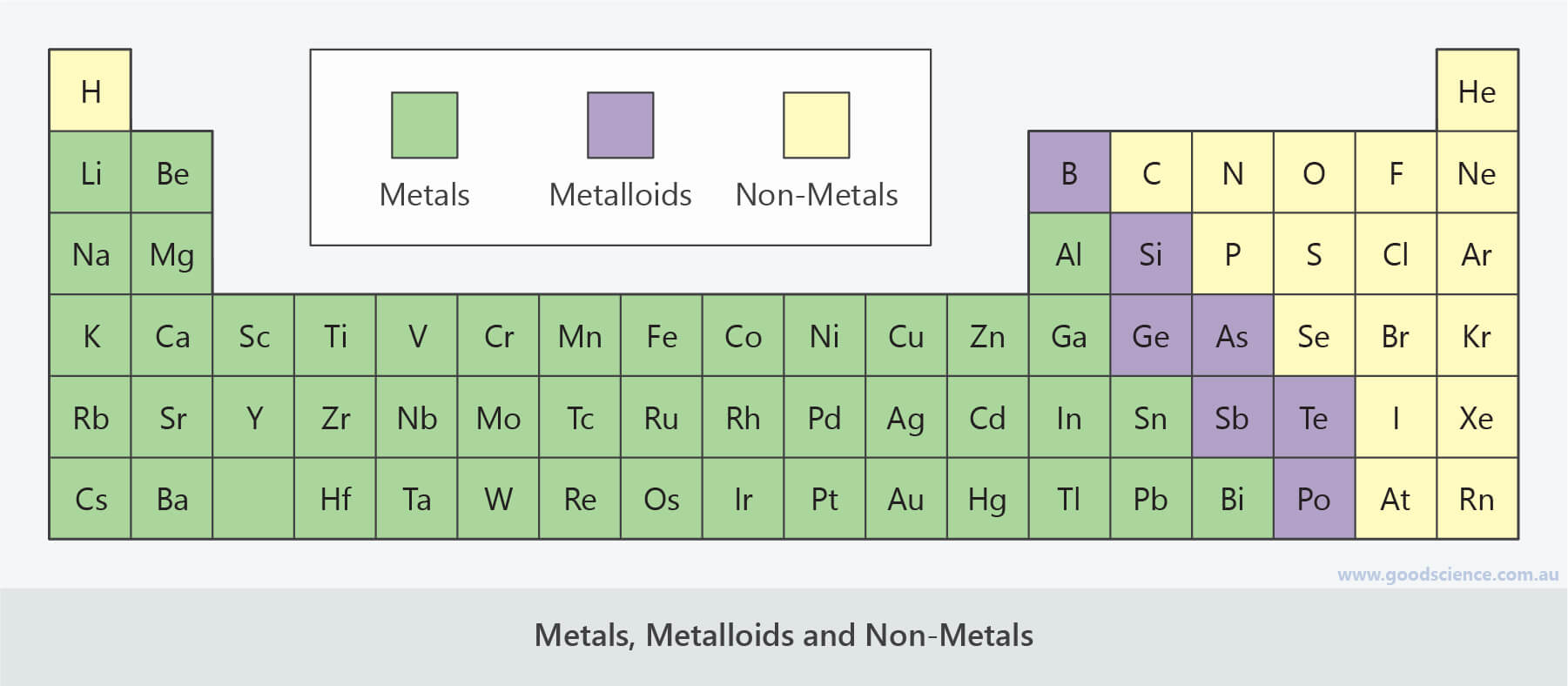
Imagine the Periodic Table as a giant, wonderfully organized pantry. Instead of spices and flour, though, this pantry is stocked with all the fundamental building blocks of everything around us!
And just like a well-organized pantry, the Periodic Table uses colors to help us understand what's what. It's a visual shortcut, a friendly wink from science telling us, "Hey, these guys are similar!"
Let's start with the shiny, happy stars of the show: the metals. Think of your favorite kitchen pot, your trusty bicycle chain, or even that shiny penny you found. Those are all made of metals!
Metals are the chameleons of the elemental world, but in a good way. They're generally great at conducting electricity and heat, which is why your toaster gets hot and your phone can buzz. They're also usually pretty good at being shaped and bent without breaking.
Many metals are so common, we practically forget they're made of pure elements. Iron, for instance, is the backbone of so many things, from skyscrapers to your car. Aluminum is the lightweight hero in your soda can and airplane wings.
And then there's the super-glamorous one: gold! It’s famous for being shiny and not tarnishing easily, making it perfect for jewelry and those special, celebratory medals.
But not all metals are as robust as iron. Mercury, for example, is a metal that’s a liquid at room temperature. It’s a bit of an oddball, and you’ll often see it in old thermometers, though it's less common now due to its, shall we say, interesting properties.
On the other side of the pantry, we have the wonderfully diverse group of nonmetals. These are the elements that often don't behave like our typical metals. They can be solids, liquids, or even gases!
Think about the air you breathe. A big part of that is nitrogen, which is a gas. Oxygen, the stuff that keeps us alive and our fires burning, is also a gas.
And what about the water you drink? It's made of hydrogen (a gas) and oxygen. So, even though water feels so solid and wet, its basic ingredients are invisible gases!
Carbon is another fascinating nonmetal. It’s the basis of life as we know it, making up everything from your body to the diamond in a ring (yes, diamond is just a very pure form of carbon!). It can be soft and squishy like graphite in your pencil, or incredibly hard and dazzling like a diamond.
Then there's sulfur, which gives some things a rather… memorable smell. It's a bright yellow solid and has been used for all sorts of things throughout history, including in gunpowder.
Now, here's where things get really interesting. Tucked away on the staircase-like line between the metals and nonmetals are the metalloids. These are the "in-betweeners," the element world's friendly neighborhood peacemakers.
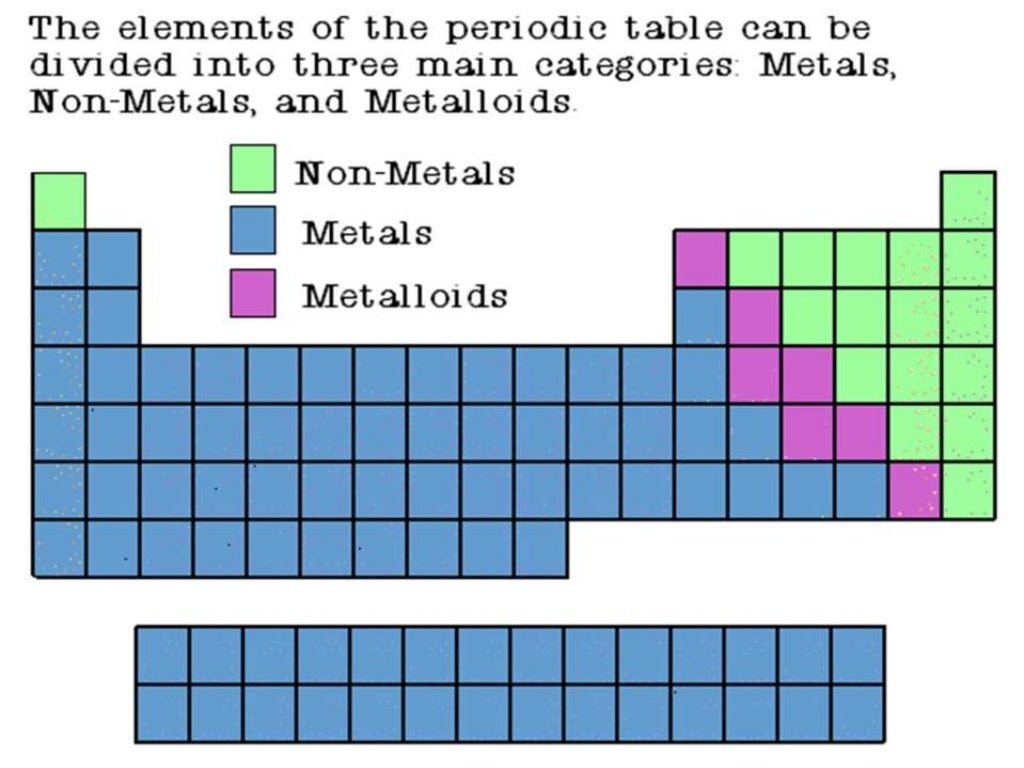
Metalloids have properties that are a bit of both metals and nonmetals. They can sometimes conduct electricity, but not as well as metals. They’re not as shiny as metals, but they’re not as dull as many nonmetals.
One of the most famous metalloids is silicon. This is the stuff that makes our computers and smartphones tick! The tiny chips inside your electronics are made of silicon, allowing them to process all that information.
Think about it: without silicon, no internet, no video games, no scrolling through your favorite social media feed. It’s a quiet hero!
Another important metalloid is germanium. It’s another semiconductor, meaning it plays a crucial role in the world of electronics, though perhaps not as famously as silicon.
The arrangement of these colors on the Periodic Table isn't random. It’s a brilliant way to quickly see the relationships between different elements. If you see two elements next to each other with the same color, chances are they have some similar behaviors.
It’s like seeing all the baking ingredients grouped together in your pantry. You know that the flour, sugar, and baking soda are all going to be used for making something delicious.

The metals, often painted in lovely shades of blue or grey, are like the sturdy pots and pans. They’re reliable and get the job done, whether it's cooking or building.
The nonmetals, perhaps in vibrant reds or greens, are like the delicate spices or the essential water. They add flavor, facilitate reactions, and are vital for life itself.
And the metalloids, often shown in softer hues like yellow or purple, are like the handy mixing bowls or the versatile spatulas. They bridge the gap and help bring different ingredients together.
So, the next time you glance at the Periodic Table, don't just see a bunch of letters and numbers. See a vibrant, colorful map of the universe's ingredients!
See the shiny, strong metals that build our world. See the diverse, essential nonmetals that make life possible. And see the clever metalloids that power our modern technology.
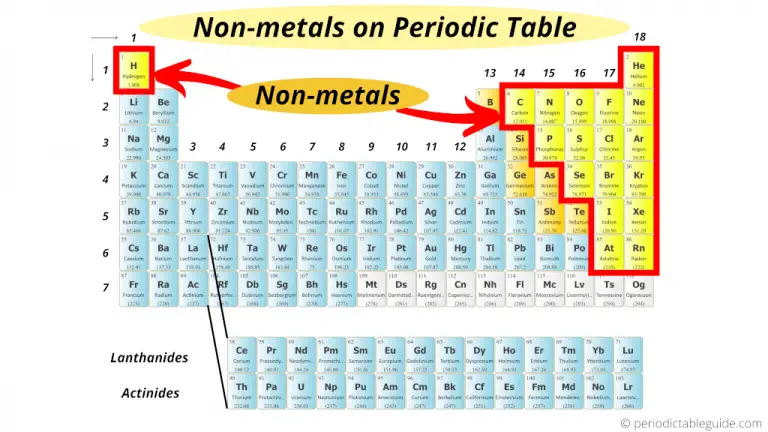
It’s a masterpiece of organization, a story told in color, and a reminder of the amazing diversity of the elements that make up everything we see, touch, and experience.
It’s a little bit like a treasure map, but instead of buried gold, it leads to the very essence of everything!
This simple color-coding is a beautiful testament to how much we've learned about the building blocks of our universe and how science can make even the most complex subjects accessible and, dare I say, even fun!
So, go ahead, embrace the colors. They're not just colors; they're the whispers of chemistry, telling us tales of how the world works, one element at a time.
Next time you hold a metal object, think of its elemental origins. If you breathe in deep, appreciate the nonmetals that make it possible. And if you’re using a smartphone, give a silent nod to the metalloids working their magic.
It's a wonderful, colorful, and surprisingly heartwarming story, isn't it?