
Pickling And Passivation Of Stainless Steel

You know, I remember a time, years ago, when I was helping out a buddy who was renovating his kitchen. He’d splurged on these gorgeous, shiny stainless steel appliances – the kind that practically wink at you. And they did wink, for a while. But then, after a few months, I started noticing… little brown speckles. They weren’t everywhere, thankfully, but they were definitely there, like tiny little rusty freckles on a pristine face. My friend was not happy. He’d spent a small fortune, and his dream kitchen was starting to look a bit… well, less than dreamy. He was ready to throw in the towel and start all over again, which, let me tell you, would have been a massive headache (and wallet-ache!).
It got me thinking, though. Stainless steel. We call it that for a reason, right? Stainless. Like it’s invincible to rust and corrosion. So what was going on with my friend’s shiny new toys? Turns out, there’s a bit more to the story of stainless steel than just its name. And that’s where our little chat today comes in: pickling and passivation. Sounds a bit like something you’d do with cucumbers, doesn’t it? But trust me, it’s way more important for keeping those gorgeous stainless steel surfaces looking their best, and more importantly, performing their best, for years to come.
The "Stainless" Secret: It's All About That Layer!
So, what makes stainless steel so… well, stainless? It’s not magic, though sometimes it feels like it when you see a neglected old sink looking better than some brand-new, poorly maintained ones. The secret ingredient, the real superhero, is chromium. When stainless steel is manufactured, a thin, invisible layer of chromium oxide forms on its surface when it comes into contact with oxygen. Think of it as a protective shield, a force field against all those nasty corrosive elements out there.
This chromium oxide layer is what makes stainless steel resist rust and staining. It’s pretty remarkable, really. It’s naturally occurring and self-healing, which is why you can scratch your stainless steel pot and it usually doesn’t turn into a rusty mess immediately. The fresh metal underneath just reacts with the air again and poof, another protective layer forms. Pretty neat, huh?
But What If Things Go Wrong? Enter the Villains!
So, if it’s so great, why did my friend have those rusty speckles? Ah, here’s where the plot thickens. Even though stainless steel is called "stainless," it’s not completely immune to problems. Several things can compromise that precious chromium oxide layer. One of the biggest culprits is something called free iron contamination.
This can happen during the manufacturing process, during fabrication (like welding or grinding), or even during installation or everyday use. If particles of regular carbon steel (the kind that does rust) come into contact with the stainless steel surface and are left there, they can start to rust. And that’s exactly what happened with my friend's appliances. Those little brown speckles? They were likely bits of free iron that hadn’t been properly dealt with.
Other nasties that can mess with the layer include harsh chemicals, high temperatures during welding (which can actually burn off the protective layer in that area), and even prolonged contact with certain substances. It’s like a microscopic battlefield out there for our stainless steel, and sometimes, the invaders win.
So, What's Pickling? It's Not About the Dill!
This is where pickling comes in. And no, it’s not about making crunchy, briny cucumbers. In the world of stainless steel, pickling is a chemical process. Its main job is to remove surface contaminants and, crucially, to remove any embedded free iron that has compromised the protective oxide layer.

Think of it like a deep cleanse for your stainless steel. It uses a mixture of strong acids, most commonly nitric acid and hydrofluoric acid. Don’t worry, you don’t need to be a mad scientist to get this done! It's usually done by professionals, especially on larger items or in industrial settings. For smaller DIY projects, there are sometimes pickling pastes available, but you really need to follow instructions carefully and wear appropriate safety gear. We’re talking strong chemicals here!
The acids in the pickle solution work to dissolve any oxides, scale (which is basically burnt-on material from welding or heat treatment), and crucially, those pesky iron particles. It basically strips away the damaged or contaminated surface layer, revealing fresh, clean stainless steel underneath.
Imagine your stainless steel surface is a canvas. If it’s got smudges and imperfections, pickling is like using a powerful solvent to wipe away all those unwanted marks, leaving a clean, bare canvas ready for the next step.
The "Why" Behind the Pickle: More Than Just Aesthetics
So, why go through this acidic cleansing? Well, it’s not just to get rid of those unsightly rust spots. While that’s a big win, pickling does a lot more:
- Removes Heat Tint/Oxidation: Welding, for instance, creates a discolored, often brownish or bluish layer called heat tint. Pickling removes this, restoring the natural metallic finish.
- Eliminates Surface Contaminants: It gets rid of oils, greases, dirt, and any other gunk that might be clinging to the surface.
- Removes Free Iron: This is the big one for preventing rust. It ensures there are no little iron bits waiting to start a corrosion party.
- Prepares for Passivation: This is key! Pickling is often the first step before passivation. You need a clean slate for passivation to work its magic.
Without pickling, if you just tried to passivate a contaminated surface, you wouldn't get the full benefit. The protective layer wouldn't be as uniform or as effective. It’s like trying to paint over a dirty wall – the paint won’t stick properly, and it won’t look good.
And Now, For The Star of the Show: Passivation!
Okay, so we’ve pickled. We’ve got our nice, clean, fresh stainless steel surface. What’s next? Enter passivation. If pickling is the deep clean, passivation is the fortifying treatment. It’s the process that enhances and re-establishes the protective chromium oxide layer.
The most common method for passivation is using a mild acid solution, usually a nitric acid solution. This acid reacts with the clean stainless steel surface to encourage the formation of a thicker, more uniform, and more robust chromium oxide layer. It’s like giving that natural shield a supercharge!
Think of it this way: pickling removes the bad stuff. Passivation builds up the good stuff. It’s a dynamic duo, working together to give your stainless steel its ultimate protection.
How Does Passivation Actually Work? A Little Science Snippet
It’s actually quite fascinating. When the nitric acid comes into contact with the clean stainless steel, it oxidizes the chromium present in the alloy. This means it helps the chromium atoms combine with oxygen to form that protective chromium oxide (Cr₂O₃) layer. This layer is incredibly thin – usually only a few nanometers thick – but it’s dense and non-reactive, forming a barrier against corrosive agents.
The goal of passivation is to ensure this layer is as complete and as continuous as possible. Any gaps or weaknesses in the oxide layer are where corrosion can begin. Passivation effectively seals these gaps and strengthens the existing layer.
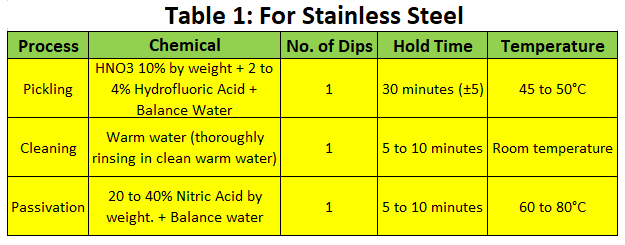
Some people might ask, "But isn't the oxide layer already there?" Yes, it is! But passivation helps to make it better. It removes any residual contaminants from the pickling process (even though it's a mild acid, there can be residues) and ensures the oxide layer is the best it can be. It's like buffing and waxing your car after a wash – it adds an extra layer of protection and shine.
When Do We Need This Dynamic Duo?
So, who needs pickling and passivation, and when? The short answer is: anytime the integrity of the stainless steel’s protective layer might have been compromised. This is particularly important in certain industries and applications:
- Food and Beverage Industry: Think of all those stainless steel tanks, pipes, and processing equipment. Hygiene is paramount, and any rust or corrosion can contaminate food. So, pickling and passivation are essential for preventing this.
- Pharmaceutical Industry: Similar to food, purity is non-negotiable here. Any contamination can have serious consequences.
- Chemical Processing: Many chemicals are highly corrosive, so stainless steel needs all the protection it can get.
- Medical Devices: Implants, surgical instruments – these absolutely must be corrosion-resistant.
- Marine Applications: Saltwater is a notorious destroyer of metals. Stainless steel in boats and offshore structures needs to be in top form.
- Architecture and Construction: While everyday kitchen sinks might not always need a full-on industrial pickling and passivation, for high-end architectural features, facades, and structural components, it’s crucial for longevity and appearance.
- After Fabrication Processes: As I mentioned with my friend’s appliances, welding, grinding, machining, and bending can all damage the oxide layer. So, pickling and passivation are often done after these fabrication steps.
Basically, if your stainless steel is going to be exposed to harsh environments, high temperatures, or anything that could potentially cause corrosion, pickling and passivation are your best friends. And sometimes, even for everyday items, a little extra care can go a long way.
The DIY Dilemma: Can I Pickle and Passivate My Own Stuff?
This is a question I get asked a lot. For large-scale industrial applications or critical components, you absolutely need professional services. They have the specialized equipment, the knowledge, and the safety protocols to do it correctly and safely. Trying to do that in your garage with industrial-strength acids is a recipe for disaster – for you and for your stainless steel.
However, for smaller items or as a maintenance step, there are pickling pastes and passivation solutions available for home use. But and it’s a HUGE but – you must read and follow the manufacturer’s instructions meticulously. This means:

- Wear the right personal protective equipment (PPE): Gloves, eye protection, and even respiratory protection might be necessary.
- Work in a well-ventilated area: Those fumes can be nasty.
- Be mindful of disposal: You can't just pour these chemicals down the drain.
- Test on an inconspicuous area first: You don't want to ruin the main surface.
Often, a good thorough cleaning with a mild detergent and water, followed by a rinse and immediate drying, is sufficient for everyday maintenance of most household stainless steel items. The stainless steel will naturally re-passivate itself to a certain extent. But if you notice the beginnings of staining or if the surface has been subjected to a harsh process, a dedicated passivation product might be helpful. Always err on the side of caution!
Beyond the Kitchen: The Bigger Picture
It’s not just about making your pots and pans look pretty. The ability of stainless steel to be effectively pickled and passivated is what makes it such a versatile and indispensable material in so many critical industries. It’s the reason we can rely on stainless steel for everything from life-saving medical equipment to massive industrial infrastructure.
Think about it: without these processes, the lifespan and reliability of stainless steel would be significantly reduced. We’d be seeing rust and corrosion far more often, leading to premature failure of components, increased maintenance costs, and potential safety hazards. It’s a behind-the-scenes hero, really. You don't always see pickling and passivation, but their impact is enormous.
So, next time you admire a gleaming stainless steel surface, remember the invisible battle being fought to keep it that way. Remember the chromium oxide layer, and how processes like pickling and passivation are its guardians. It’s a little bit of science, a lot of protection, and the reason why "stainless" steel lives up to its name, most of the time!
And for my friend with the appliances? We ended up getting him some specialized cleaning products that helped remove the superficial rust, and he became very diligent about wiping down his appliances immediately after use. No more rusty freckles! It was a good lesson for both of us about the importance of understanding our materials.