
Poisonous Sulfur Shelf Mushroom Look Alike Chicken Of The Woods

Okay, picture this: I’m hiking through this ridiculously beautiful forest, sunlight dappling through the canopy, birds doing their thing, the whole peaceful shebang. I’m feeling like a woodland sprite, you know? And then, BAM! I see it. This massive, vibrant, orange explosion of a mushroom growing right off a fallen log. My first thought? “Chicken of the Woods! Score!” My second thought? “Wait a minute…”
It’s a moment that’s probably happened to more than a few enthusiastic foragers, that giddy rush of discovery followed by a cold splash of “are you SURE about this?” Because while Chicken of the Woods is pretty darn distinctive, and incredibly delicious if you get the right kind, nature, in its infinite wisdom (and sometimes mischief), loves to throw in a curveball. And sometimes, that curveball can be… well, let’s just say less delicious and more… digestively challenging.
So, let’s talk about the glorious Chicken of the Woods, Laetiporus sulphureus (and its cousins). This is the mushroom that makes people who usually shy away from fungi suddenly consider a side of sautéed ‘shrooms with their steak. It’s bright, it’s meaty, it’s often found in generous flushes, and it’s generally a pretty safe bet for beginners… if you can positively identify it. Which brings us, rather dramatically, to its not-so-friendly look-alike.
The Fiery False Friend: Phaeolus schweinitzii
Yep, the culprit behind my momentary panic was likely Phaeolus schweinitzii, commonly known as Dyer’s Polypore or Velvet Top Fungus. And while it might not have a catchy nickname like “Chicken of the Woods,” it’s got its own claims to fame – mostly for being a bit of a bummer to eat. Some sources say it’s mildly toxic, others say it’s inedible, and I’m pretty sure I saw one forum where someone described eating it as “a mistake they regretted for three days straight.” So, you know, not exactly a ringing endorsement for your next culinary adventure.
Now, let’s get down to the nitty-gritty. How do you tell these two apart? Because, trust me, you really want to. It’s not just about avoiding an upset stomach; it’s about respecting the wild and making sure you’re not bringing home something that’s going to cause more harm than good. Think of it as nature’s little pop quiz.
The Big Orange Appeal: What Makes Chicken of the Woods So Coveted
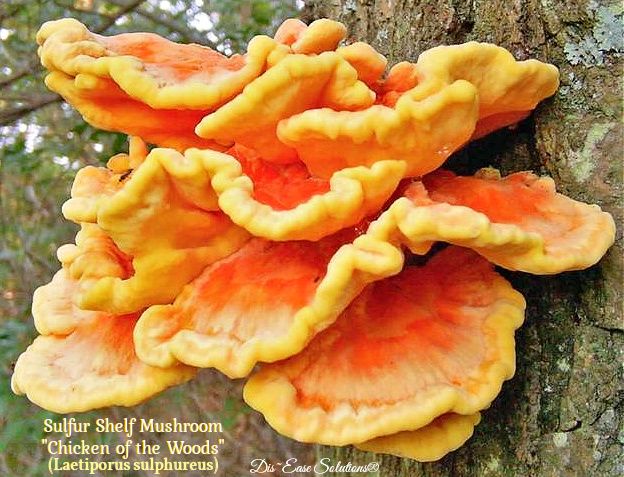
First, let’s appreciate why Laetiporus sulphureus is so darn popular. Imagine a shelf mushroom, but instead of being boring beige or brown, it’s this vibrant, almost neon orange or yellow. It often grows in tiered, overlapping shelves, resembling a cluster of golden or fiery rosettes. It’s a real showstopper in the forest!
The texture? Oh, it’s amazing. When young and tender, it’s surprisingly chicken-like. Hence the name, obviously! Some people even swear they can’t tell the difference in a stir-fry. It’s got a firm, slightly chewy texture that holds up well to cooking. And the flavor? Mildly acidic, with a hint of lemony goodness. It’s genuinely one of the most satisfying wild edibles out there.
And the best part? It grows on wood. Specifically, on dead or dying hardwoods like oak, but occasionally on conifers. This means it’s usually found at a convenient height, not down on the forest floor where all sorts of other less desirable things might be lurking. It’s like nature’s way of saying, “Here you go, easy pickings!” (Though, as we’ll see, “easy” is a relative term in foraging).

The color is usually a really strong indicator. That brilliant, sulfurous yellow to bright orange is its calling card. And the underside? That’s where the magic (and identification) really happens. Chicken of the Woods has pores, not gills. These pores are usually a similar bright yellow or white color.
Key characteristics of true Chicken of the Woods:
- Color: Vibrant yellow to bright orange, fading to pale yellow with age.
- Shape: Fan-shaped or kidney-shaped shelves, growing in overlapping clusters.
- Texture: Fleshy and tender when young, becoming tougher and more brittle with age.
- Underside: Tiny pores (not gills) that are typically yellow or white.
- Habitat: Primarily on dead or dying hardwoods, especially oak.
- Taste: Mildly acidic, lemony, chicken-like when cooked.
Seems pretty straightforward, right? Famous last words!
Enter the Villain (or just the Misguided Twin): Phaeolus schweinitzii
So, what about our friend Phaeolus schweinitzii? This one is also a polypore, meaning it has pores on its underside. It also likes to grow on wood, and it can sometimes present with colors that might make a foraging novice do a double-take. It’s often found at the base of conifers, particularly pines, which is a bit of a clue, but it can also be found on hardwoods. So, the habitat isn’t always a definitive differentiator.
Here’s where things get a little fuzzy, literally and figuratively. Young Phaeolus schweinitzii can indeed be quite colorful, sometimes a reddish-brown or even a rusty orange. The tops can have a velvety texture, and the edges can be yellowish. It’s got a look that, at a quick glance, might fool you into thinking you’ve hit the jackpot.

However, as Phaeolus schweinitzii matures, it tends to become more leathery, woody, and less fleshy. The colors darken, becoming more brown and rusty. The velvety texture on top can also disappear, leaving it looking more like, well, old wood. This is a crucial difference, but if you’re grabbing a younger specimen, that’s when the confusion can arise.
The underside of Phaeolus schweinitzii is also a key differentiator. While it has pores, they are typically larger and more angular than those of Chicken of the Woods. The pore surface often looks more ragged or uneven. And the color? It’s often a yellowish-green or olive-brown, rather than the bright yellow or white of its edible cousin.
Key characteristics of Phaeolus schweinitzii (the look-alike):
- Color: Varies from rusty brown to reddish-orange when young, darkening with age. The edges can be yellowish.
- Shape: Can be shelf-like, but often more irregular or cushion-shaped. Can appear on the ground near tree roots.
- Texture: Velvety on top when young, becoming leathery and woody with age.
- Underside: Pores are typically larger, more angular, and often yellowish-green to olive-brown.
- Habitat: Primarily on conifers (especially pines), but also hardwoods. Often found at the base of trees.
- Edibility: Inedible, and potentially mildly toxic.
See the subtle differences? It’s like comparing a fire engine to a slightly dusty antique car. Both might be red-ish, but they’re distinctly different vehicles with very different purposes.
The Subtle Nuances: Why It’s Worth the Extra Scrutiny
The biggest danger with foraging is what we call the “confirmation bias.” You want to find that delicious mushroom, so you tend to see what you want to see. That bright orange color? “Yup, Chicken of the Woods!” without taking the time to examine the underside, the texture, or the habitat.

Think about it: if you misidentify a mushroom as edible, the consequences can range from a mild stomach ache to serious poisoning, or even death. It’s not something to take lightly. Foraging is a privilege, and with that privilege comes the responsibility of absolute certainty. When in doubt, throw it out! It's the cardinal rule of mushroom hunting, and it's one you should tattoo on the inside of your eyelids if necessary.
Even within the Laetiporus genus, there are actually different species. Most of the commonly foraged "Chicken of the Woods" in North America are Laetiporus sulphureus or Laetiporus cincinnatus. L. cincinnatus tends to grow on the ground at the base of oak trees and is typically pale yellow or white, without the vibrant orange. So, even within the edible group, there are variations. This just goes to show how important it is to be specific in your identification.
My personal rule of thumb? If I’m even hesitating for a second, if there’s any ambiguity, if it’s not 100% screaming “I AM DELICIOUS CHICKEN OF THE WOODS AND NOTHING ELSE,” I leave it. There will always be more mushrooms. There will always be more foraging opportunities. But you only have one digestive system!
Sometimes, even experienced foragers will take multiple photos, consult field guides on the spot, and send pictures to their foraging buddies for a second opinion. It’s not a sign of weakness; it’s a sign of wisdom and caution. Better to be overly cautious and miss out on a potential meal than to be reckless and end up feeling terrible.
Another thing to consider is the age of the mushroom. Both Laetiporus and Phaeolus get less appealing as they age. Young, tender specimens are what you want. If a mushroom is old, brittle, full of bugs, or looks questionable in any way, even if you’re sure it’s edible, it’s probably best to pass. Nobody wants to eat a woody, flavorless fungus, even if it won’t poison them.
Signs of Trouble: What Else to Look Out For
Beyond the direct look-alikes, there are other mushrooms that grow on wood that might give you pause. While none are as commonly confused with Chicken of the Woods as Phaeolus schweinitzii, it’s good practice to be aware of them. Some bracket fungi are woody and inedible, and while they don’t usually mimic the bright colors of Chicken of the Woods, they can add to the general confusion if you’re not paying close attention to details like spore-bearing surfaces.
The key takeaway here is that any mushroom you plan to eat needs to be identified with 100% certainty. This isn’t like picking wild berries where a slight mistake might just mean a slightly bitter taste. With mushrooms, the stakes are much, much higher.
So, how do you get to that level of certainty?
- Get good field guides: Invest in multiple reputable mushroom identification books for your region. Don't rely on just one.
- Go on guided walks: Find local mycological societies or experienced foragers who lead walks. Learning from experts is invaluable.
- Join online communities: But be extremely careful. While helpful, online advice should always be a supplement to, not a replacement for, hands-on learning and solid literature.
- Practice, practice, practice: Document every mushroom you find. Take detailed notes and photos. Even if you don’t plan to eat it, learn to identify it.
- Start with the "foolproof" ones: Some mushrooms are so distinctive that they are considered very safe for beginners (like Giant Puffballs, when young and pure white inside, or Morel mushrooms, once you know their unique features). Build your confidence with these before tackling trickier identifications.
Foraging should be an enjoyable and rewarding experience. It connects you to nature, provides incredible food, and offers a sense of accomplishment. But that sense of accomplishment should never come at the expense of safety. So, the next time you’re out in the woods and spot a flash of orange, take a deep breath, pull out your guide, and do your due diligence. That delicious, chicken-y meal will be all the more satisfying when you know, with absolute certainty, that you’ve earned it the safe way.
And hey, if you do find a suspect mushroom that looks a little bit like Chicken of the Woods but you're not sure? Just admire its beauty, snap a pic for your foraging journal, and move on. There are always more mushrooms, and your health is way more valuable than any meal. Happy (and safe) foraging, everyone!