
Pressurized Water Reactor Vs Boiling Water Reactor
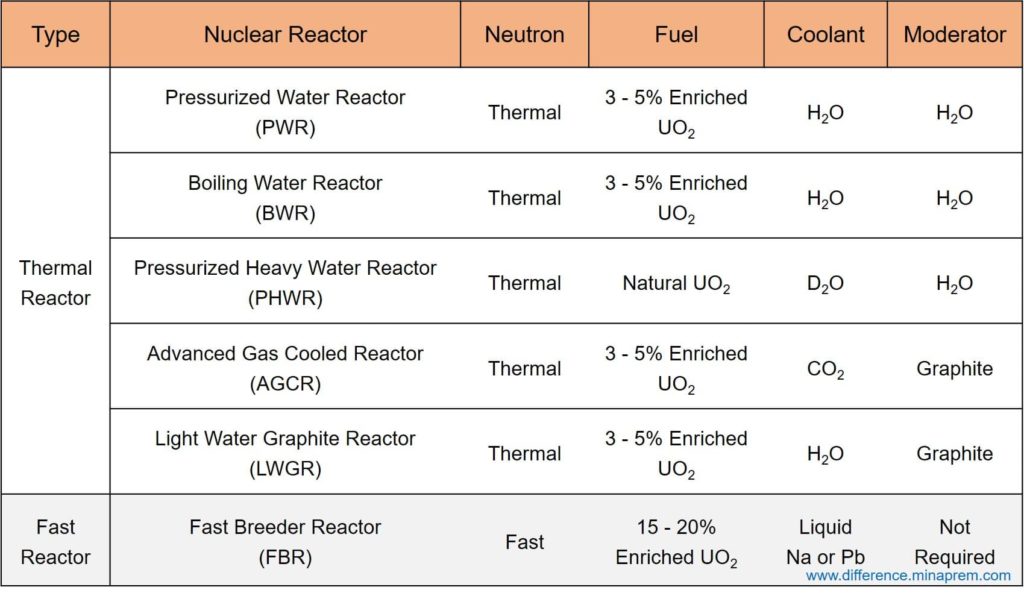
Get ready to dive into the fascinating world of nuclear power, where things get hot, steamy, and oh-so-powerful! We're going to talk about two giants in the nuclear reactor family: the Pressurized Water Reactor (PWR) and the Boiling Water Reactor (BWR). Think of them as two chefs, both making the ultimate energy soup, but with slightly different recipes.
Imagine your kitchen. You've got your trusty stovetop, right? Well, both PWRs and BWRs are like super-duper, industrial-sized versions of that, but instead of cooking pasta, they're cooking up electricity with the power of the atom. It's all about harnessing that incredible energy hidden inside tiny little things called atoms.
First up, let's meet our first chef: the Pressurized Water Reactor, or PWR for short. This guy is like the meticulous chef who likes everything to be just so. He keeps his water under super-duper high pressure, like a superhero holding back a tidal wave.
Why all the pressure, you ask? It's a secret weapon! This immense pressure means that the water in the PWR gets incredibly hot, like hotter than a thousand dragon's breaths, but it doesn't boil. It stays as a super-hot liquid.
So, this super-hot, pressurized water then goes on a journey. It travels through pipes to a special place called a steam generator. Think of this as a fancy tea kettle, but on an epic scale.
Here, the super-hot water from the reactor core transfers its heat to another batch of water, which is not under as much pressure. And guess what happens to that second batch of water? Bingo! It boils and turns into steam, ready to do some serious work.
This steam then blasts through a giant fan called a turbine, making it spin like a runaway merry-go-round. And that spinning turbine is connected to a big ol' generator that churns out all the electricity we need for our lights, our phones, and our ridiculously large TV screens.

The magic of the PWR is that the water that's been right next to the nuclear fuel (where all the atom-splitting magic happens) never actually turns into steam in the main reactor part. It's like the chef keeps his secret ingredients separate from the main cooking pot until the very last moment. This makes things a bit more contained, like a well-behaved party.
Now, let's move on to our second chef, the Boiling Water Reactor, or BWR. This one is a bit more of a free spirit, a "let it rip" kind of cook. The BWR is a bit more hands-on with its steam.
In a BWR, the water is not kept under quite as much pressure as in the PWR. It's like the chef is a little more relaxed about the water temperature. And because it's not under that extreme pressure, the water actually boils right inside the reactor vessel itself!
Imagine your boiling pot of water for spaghetti. That's kind of what's happening in the heart of a BWR. The heat from the nuclear fuel directly boils the water, creating steam. No fancy intermediate tea kettle needed!

This steam, fresh from its rendezvous with the atomic fire, then travels directly to the turbine. It's a shorter, more direct path to power generation. Think of it as the chef saying, "Why wait? Let's get this steam to the turbine pronto!"
So, the steam that spins the turbine in a BWR has actually been in direct contact with the nuclear fuel. It's like the chef is adding a bit of the raw ingredients directly into the steam before it goes off to do its job. This is a key difference, a little twist in their energetic recipe.
Both the PWR and the BWR are incredibly safe and efficient ways to generate electricity. They're the workhorses of the nuclear power world, powering cities and countries reliably. It's all about controlled chaos, in the best possible way!
Think of it this way: the PWR is like a fancy restaurant with a separate kitchen for prep and a main dining area. Everything is super controlled, with multiple layers of separation. It’s the “we’ll get you the best meal, but it might take a tiny bit longer to prepare” approach.
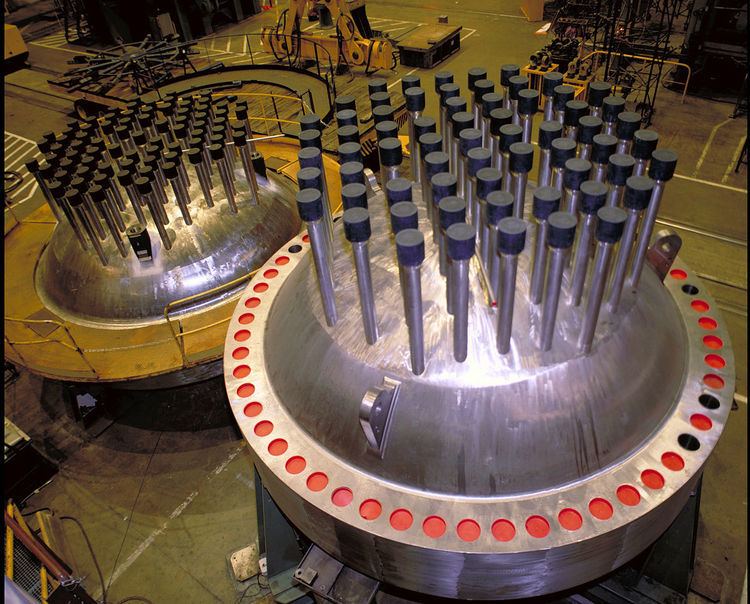
The BWR, on the other hand, is more like a bustling open kitchen where you can see the chefs at work. It’s a bit more direct, a bit more streamlined. It’s the “we’ll get you a fantastic meal, and you can practically feel the heat from the kitchen” experience.
The PWR uses two main loops of water. The first loop is the super-hot, high-pressure water from the reactor core. The second loop is where the steam is made to spin the turbine. It’s like having a secret handshake between two groups of water.
The BWR, however, uses just one main loop of water. This water boils in the reactor, becomes steam, and goes straight to the turbine. It’s a simpler, more elegant dance of water to steam to power.
Both designs have their pros and cons, like any good recipe. Engineers and scientists spend ages tweaking these designs to be as safe and efficient as possible. They are absolute wizards at managing these incredible forces.

The PWR might seem a little more complex with its extra water loop, but that separation can be a really good thing for safety. It’s like having a bodyguard for your secret ingredients. It means the steam hitting the turbine isn't radioactive.
The BWR is often considered simpler in its design because it has fewer major components. This can sometimes make it a bit easier to build and maintain. It’s the streamlined sports car of the nuclear world.
Ultimately, whether it's a PWR or a BWR, the goal is the same: to harness the immense power of nuclear fission to create clean, reliable electricity. They are both marvels of engineering, like intricate clockwork that powers our modern lives.
So, the next time you flip a light switch or charge your phone, remember these amazing machines. They’re out there, quietly doing their powerful work, powered by either a pressurized hug or a steamy embrace of the atom. It’s pretty darn cool when you think about it!