
Rainbow Stain On Stainless Steel

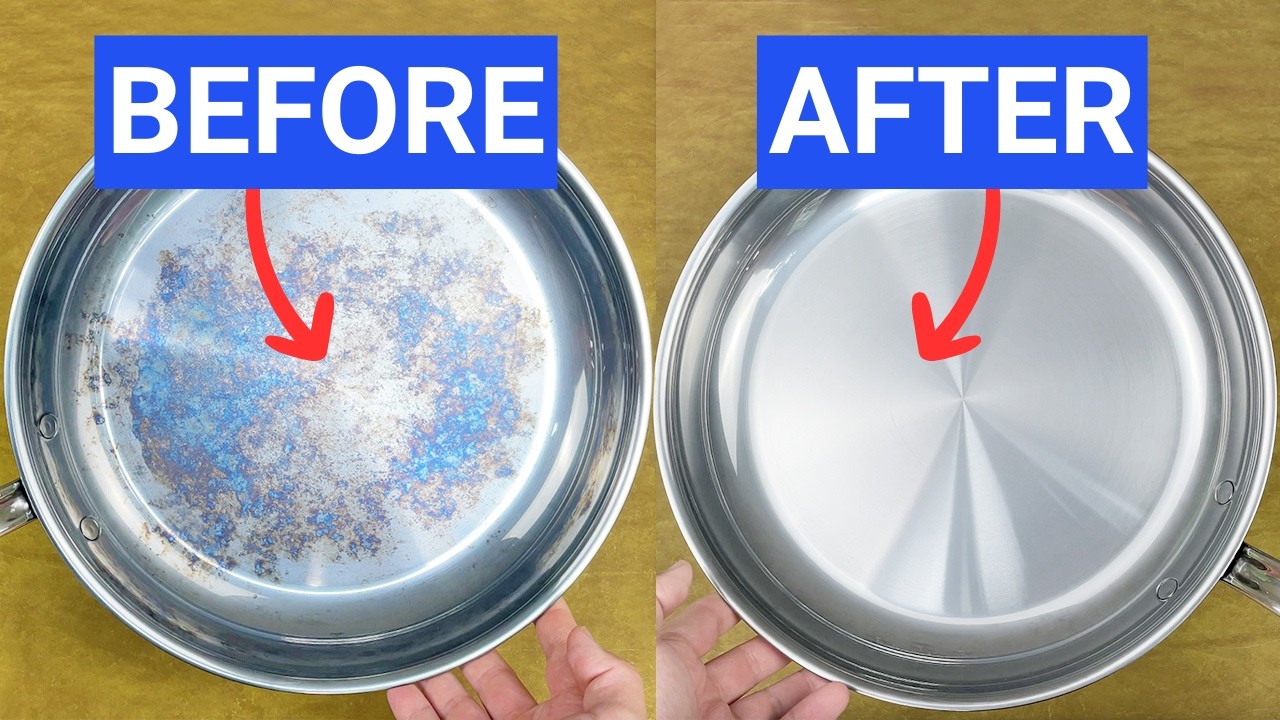
Okay, so you've probably seen it. That weird, shimmery, rainbow-like sheen that sometimes pops up on your beautiful, gleaming stainless steel. Maybe it's on your favorite coffee pot, your sink that’s seen better days, or even that fancy new toaster oven. You might have thought, "Uh oh, is my stainless steel ruined?" or even, "Did I spill nail polish on it and forget?" Don't panic! This little phenomenon is actually quite common and, dare I say, a little bit magical.
Let's call it the "stainless steel's secret sparkle" or the "kitchen chameleon effect." It’s not a stain in the traditional sense, like that stubborn red wine mark or a greasy smudge. Think of it more as a surface phenomenon, a bit like the iridescent shimmer on a soap bubble or the way oil and water play dress-up on the pavement after a rain shower. It’s beautiful, in its own peculiar way.
So, what's actually going on here? It's all about something called thin-film interference. Sounds fancy, right? But don't let the big words scare you. Imagine a super, super, super thin layer of something has formed on top of your stainless steel. This layer is so thin, it's measured in nanometers – that’s smaller than a speck of dust you can’t even see! When light hits this super thin layer, it bounces off in all sorts of directions. Some of the light waves get a little nudged, a little delayed, and when they come back together, they cancel out certain colors and amplify others. And voilà! You get that beautiful, swirling spectrum of colors – reds, blues, greens, yellows – all dancing on your steel.
Where does this magical film come from?
The most common culprit is usually related to the minerals in your water. Yep, the same stuff that makes your tea taste a certain way can also be responsible for this colorful display. When water evaporates, it can leave behind tiny, microscopic mineral deposits. These deposits, when they form in a specific, super-thin layer, are perfect for creating this rainbow effect. It’s like the water is leaving behind its own little art installation!
Another common cause? Certain types of cleaning products. Some soaps, dishwashing detergents, or even the residues from spray cleaners can contribute to this thin film. It’s not necessarily that the product is bad; it’s just that some ingredients, when they dry and leave a minuscule layer, can interact with light in this fascinating way. Think of it like leaving a subtle perfume on your steel, but instead of a scent, it’s a visual effect.

And let's not forget heat! When stainless steel gets hot, its surface can actually change very slightly. This can also create conditions for these thin, colorful films to form. So, that kettle you use every morning for your comforting cuppa? It might be putting on a little rainbow show for you. Your trusty oven, after baking a delicious pie? It might have a subtle shimmer after it cools down.
Why should you even care about this rainbow stain?
Well, for starters, it’s a sign that your stainless steel is still doing its job. It means it’s reacting to its environment, and in this case, that reaction is a harmless, albeit colorful, one. It’s not a sign of rust, corrosion, or anything that’s going to compromise the integrity of your cookware or appliances. In fact, the passivation layer – that protective, invisible shield that makes stainless steel "stainless" – is actually still intact! This rainbow effect is happening on top of that protective layer.
Think of it like this: your stainless steel is wearing a beautiful, temporary scarf made of light. It’s not changing the fundamental fabric of the scarf, just adding a bit of flair. So, you can still trust that your stainless steel is safe, durable, and ready for action. No need to throw out that pot just yet!
Plus, it’s a conversation starter! Imagine having guests over, and someone points to your sink and says, "Wow, what’s that colorful sheen?" You can lean in, a knowing smile on your face, and say, "Oh, that? That's just my stainless steel showing off its artistic side. It's a little thing called thin-film interference." You'll sound incredibly knowledgeable and a little bit like a science wizard. Who doesn't love that?
Is it hard to get rid of?
Usually, no! Because it’s just a thin film, it often comes off with a good, old-fashioned cleaning. A bit of warm water and a mild dish soap, maybe a soft sponge or microfiber cloth, can often do the trick. Gently wipe the affected area, rinse, and dry thoroughly. You might be surprised how quickly the sparkle fades back into plain old shine.

Sometimes, if the film is a bit more stubborn, you might need to try a specialized stainless steel cleaner. Just be sure to follow the product instructions carefully. The key is to be gentle. Stainless steel can be scratched, so avoid abrasive scrubbers or harsh chemicals that could actually damage the surface. We want to remove the rainbow scarf, not rip the whole sweater!
And remember, even if you can get rid of it, you don't always have to. Some people actually quite like the subtle, iridescent effect. It adds a unique character to their kitchen. It’s like a little reminder that even everyday objects can have moments of unexpected beauty. It's a splash of color in the often monochromatic world of kitchen appliances.
So, the next time you spot that rainbow shimmer on your stainless steel, don't fret. Instead, take a moment to appreciate the little bit of science and nature that's playing out right there in your kitchen. It’s a harmless, beautiful reminder of the complex world around us, even in the most ordinary of places. It's your stainless steel's way of saying, "Hey, I'm still here, and I can be pretty darn interesting!" And really, who can argue with that?