
Shell And Tube Type Heat Exchanger
So, picture this: I'm at my aunt Mildred's annual summer BBQ. You know the drill – Uncle Barry’s infamous potato salad (don't ask), enough watermelon to feed a small army, and the general hum of slightly-too-loud politeness. Suddenly, the ice machine, which usually chugs away like a happy little engine, starts making this weird, strained groaning sound. Like it’s trying to digest a bowling ball. Panic! We're talking about a barbeque here. No ice? The drinks would be… well, warm. The horror!
My cousin, bless his engineering-wannabe heart, rushes over, fiddles with some knobs, and mutters something about "the heat exchanger not doing its job." Heat exchanger? I’d heard the term before, mostly in relation to fancy car engines or those giant industrial plants that smell vaguely of sulfur. But a barbecue ice machine? Turns out, even your humble ice maker, that unsung hero of summer refreshment, relies on one of these nifty contraptions. And that, my friends, is how I discovered the surprisingly fascinating world of the Shell and Tube Heat Exchanger.
You see, the basic idea behind pretty much any heat exchanger is simple: you want to move heat from one place to another. Think of it like being really cold and wanting to steal warmth from your dog (don't actually do that, it’s cruel). Or, conversely, you've got something boiling hot and you want to cool it down by, say, letting it sit next to a nice, cool breeze. Heat exchangers are just a much more sophisticated and efficient way of doing that, especially when you're dealing with liquids or gases.
And among the many types of heat exchangers out there, the Shell and Tube one is a real workhorse. It’s like the reliable sedan of the heat exchange world. Not the flashiest, maybe, but it gets the job done, and it does it well, across a huge range of applications. From massive power plants to… well, your aforementioned ice machine. Pretty neat, right?
So, What Exactly Is a Shell and Tube Heat Exchanger?
Alright, let's break it down. Imagine you have two fluids – let's call them Fluid A and Fluid B. Fluid A is, say, really hot, and Fluid B is nice and cool. The goal is to make Fluid A cooler and Fluid B warmer, without actually letting them mix. This is crucial in so many processes. You don't want your coolant in your car mixing with your engine oil, do you? Gross!
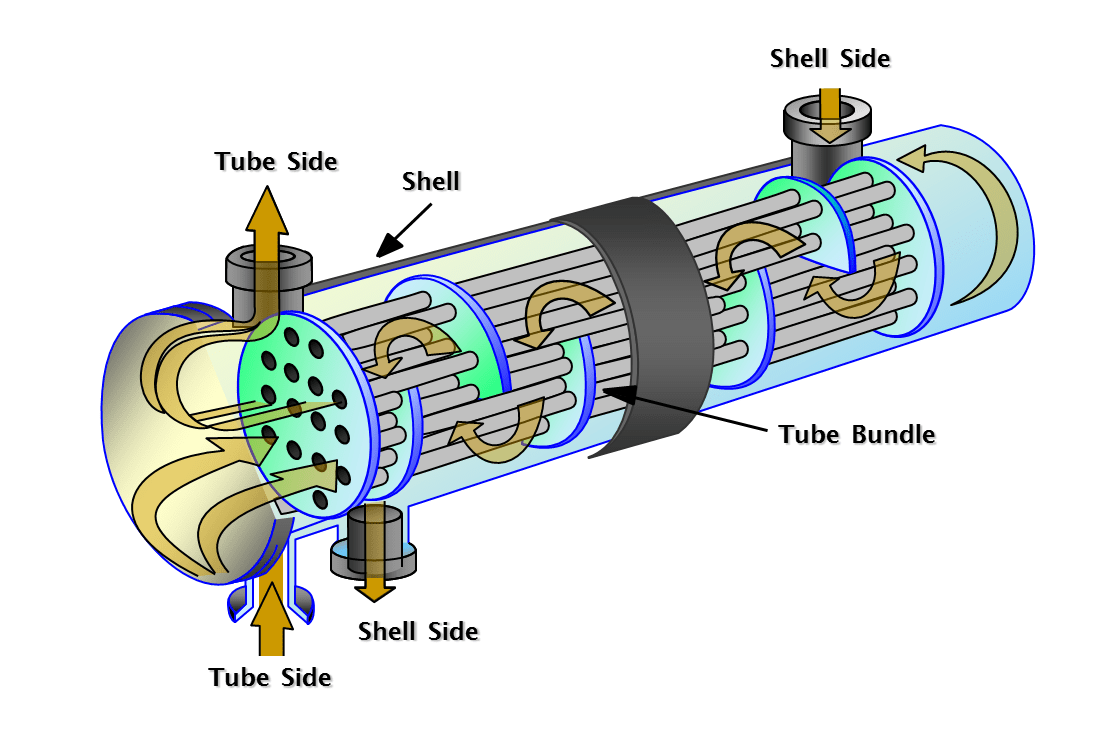
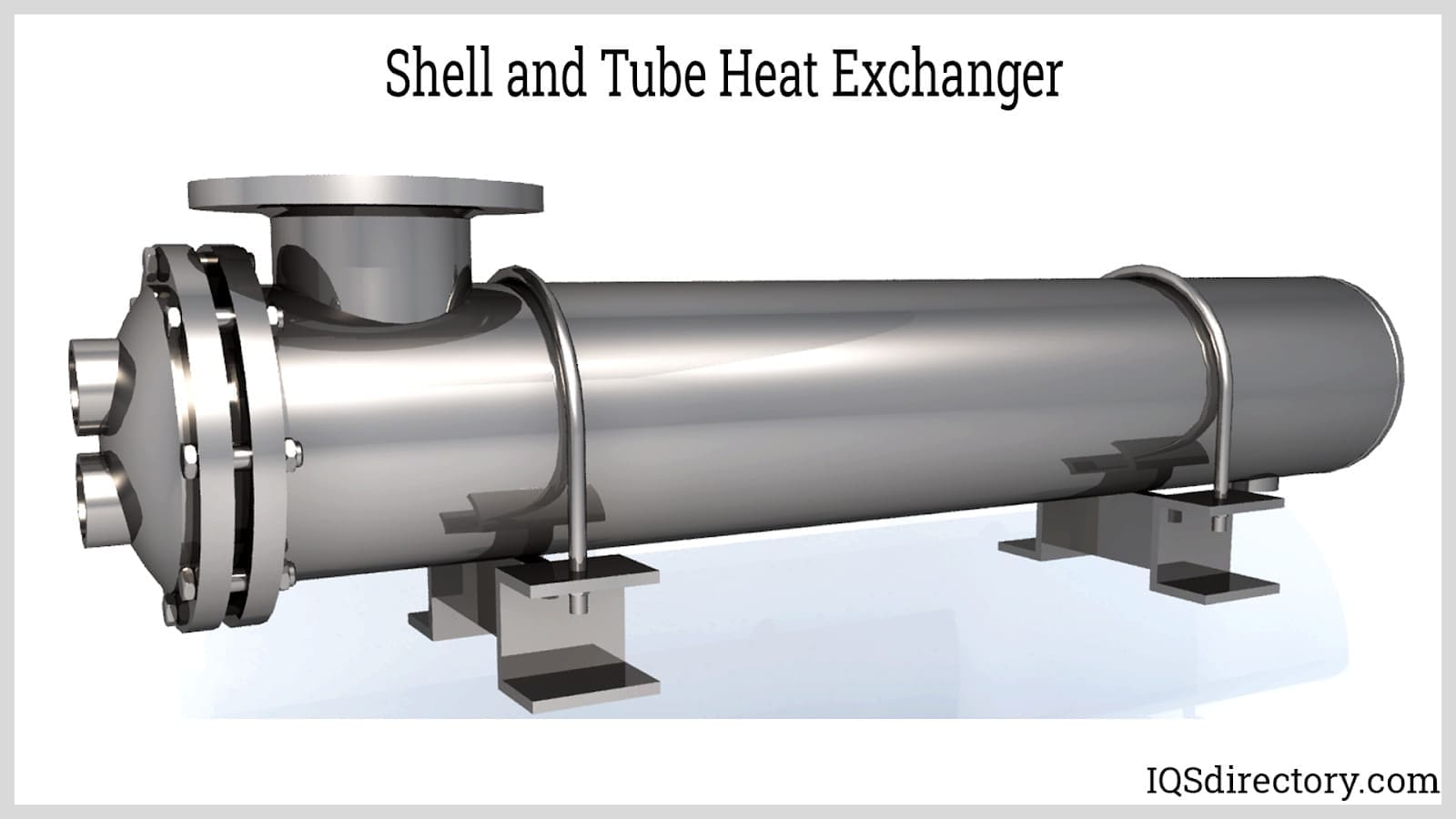
A shell and tube heat exchanger does this by using two main components: a shell and a bundle of tubes. It’s literally in the name! How clever is that? So, the shell is essentially a big, cylindrical vessel. And inside this shell, you have a whole bunch of smaller tubes, usually bundled together like a bunch of metallic spaghetti. These tubes are sealed at both ends, so the fluid inside them is kept separate from the fluid outside.
Now, here’s where the magic happens. One fluid flows through the inside of the tubes, and the other fluid flows through the outside of the tubes, within the shell. The heat from the hotter fluid then conducts through the tube walls and transfers to the cooler fluid. Voila! Heat transfer, without any actual direct contact between the fluids. It's like a really polite handshake where you don't actually touch.
Think of it like this: you have a hot cup of coffee, and you’re holding it with a metal straw. If you put the other end of the straw into a glass of cold water, the metal straw will get warm, and the water will get a little warmer, while the coffee cools down. The shell and tube setup is just a super-sized, much more efficient version of that concept.
The Nitty-Gritty: How It All Comes Together
Let's get a little more technical, but don't worry, we'll keep it light! The design of these things can get pretty complex, and engineers spend a lot of time tweaking them for maximum efficiency. But the core principle remains the same.
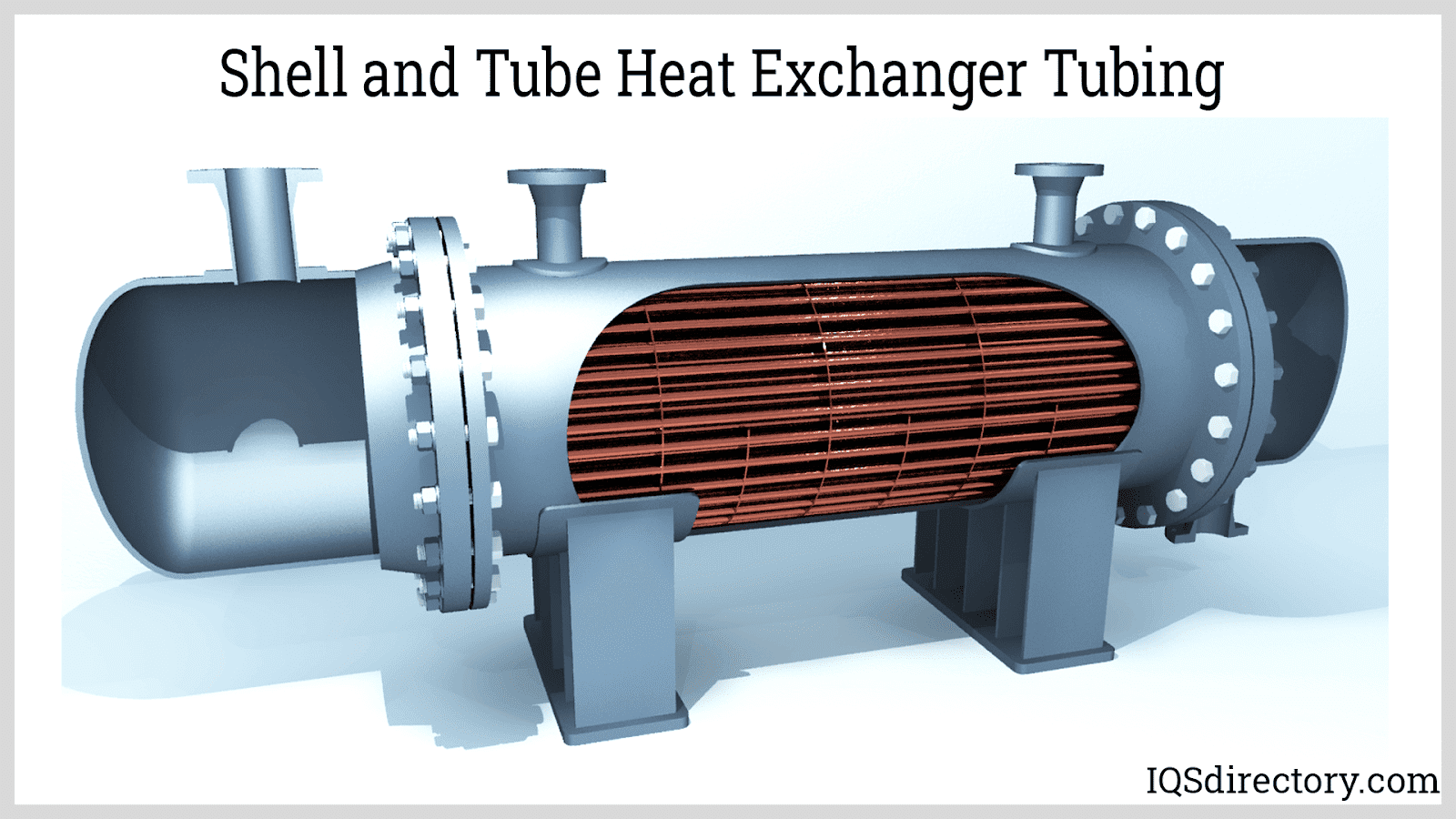
You’ve got your tubes. These are typically made of metal, like stainless steel or copper, because metals are excellent at conducting heat. They're arranged in a bundle, and this bundle sits inside the shell. At each end of the shell, there's usually a tube sheet. These are flat plates that hold the ends of all the tubes in place. They also act as a barrier, preventing the fluid inside the tubes from mixing with the fluid in the shell.
Then you have your baffles. Now, baffles are these clever little things that you can find inside the shell. They're usually plate-like and are positioned perpendicular to the tubes. Their job is to direct the flow of the fluid in the shell. Instead of just letting the fluid flow in a straight line past the tubes, the baffles make it go in a more circuitous route. This forces the fluid to flow across the tubes, rather than just parallel to them. Why is this good? Because it increases the contact time and turbulence, leading to much better heat transfer. It's like making sure you give that hot beverage a good swirl before you try to cool it down!
There are different types of baffles, like segmental baffles or disc-and-doughnut baffles, and the choice depends on the specific application and how you want the fluid to flow. It's all about optimizing that heat exchange. Engineers probably have heated debates (pun intended!) about baffle design.
You'll also have inlets and outlets for both fluids. So, hot fluid A goes in one place, circulates, and out another. Cool fluid B goes in somewhere else, does its thing, and out a different pipe. Simple, yet elegant.
Why Are Shell and Tube So Popular?
So, with all the fancy modern technology out there, why are these classic shell and tube heat exchangers still so darn common? Well, there are a few big reasons:
- Robustness and Reliability: They're built tough. They can handle high pressures and high temperatures without breaking a sweat. This makes them ideal for heavy-duty industrial applications where things can get pretty extreme. Think oil refineries, chemical plants, and yes, even your car’s radiator (though that’s often a more compact version). They’re like the trusty old hammer of the engineering world – gets the job done, year after year.
- Versatility: As I discovered with my aunt's ice maker, they can be used for a massive range of applications. Heating, cooling, condensing, boiling – they can do it all. And they can handle a wide variety of fluids, from water and steam to oil and refrigerants. If you need to move heat between two fluids, a shell and tube is probably on the shortlist of options.
- Ease of Cleaning and Maintenance: While they can be complex to design, once built, they're often relatively straightforward to maintain. In many designs, the tube bundle can be withdrawn from the shell, allowing for easy inspection, cleaning, and repair. This is a huge advantage in industries where fouling (stuff building up on the heat transfer surfaces) is a common problem. Nobody wants to deal with a clogged heat exchanger!
- Cost-Effectiveness: For many common applications, they offer a good balance of performance and cost. While custom designs can get pricey, standard shell and tube units are often more affordable than some of the more exotic heat exchanger types. It's a solid, reliable choice that won't necessarily break the bank.
- Established Technology: Let's face it, this isn't some brand-new, untested gadget. Shell and tube heat exchangers have been around for a long time, and the design principles are well-understood. Engineers know what works, and that confidence translates into reliable designs.
When Things Get a Little Tricky (or Just Plain Hot!)
Of course, it's not all smooth sailing. There are challenges, and these are where the real engineering brains come in.
Fouling: As I mentioned, stuff can build up on the surfaces where heat transfer happens. This is called fouling, and it's a major pain. It reduces the efficiency of the heat exchanger and can eventually lead to blockages. Different fluids and operating conditions contribute to different types of fouling, from mineral deposits to biological growth. So, cleaning is a regular necessity.
Corrosion: If you're dealing with aggressive fluids, corrosion can be a real issue. The materials used for the tubes and shell need to be carefully selected to withstand the chemical environment. Sometimes, special coatings or alloys are needed to prevent the heat exchanger from essentially dissolving itself over time. Nobody wants a leaky heat exchanger, especially when dealing with hazardous materials!
Pressure Drop: As fluids are forced through the tubes and around the baffles, there's a natural resistance to flow, which we call pressure drop. You want to minimize this pressure drop as much as possible, because it requires more energy to pump the fluids. Engineers spend a lot of time designing the flow paths and baffle arrangements to strike a balance between efficient heat transfer and acceptable pressure drop.

Thermal Expansion: When fluids are heated and cooled repeatedly, the materials of the heat exchanger expand and contract. This can put stress on the components, especially the tubes and tube sheets. Different designs have ways of accommodating this thermal expansion, like using expansion joints or special types of tube sheets. It’s like giving the metal some wiggle room so it doesn’t crack under pressure.
The Different Flavors of Shell and Tube
You might think a "shell and tube" is just… a shell and tube. But oh no, my friends. Like a good ice cream shop, there are flavors!
The simplest design is the fixed tubesheet type. In this one, the tubes are permanently attached to the tube sheets at both ends. This is robust and often cheaper to build, but it can’t handle much thermal expansion. So, it’s best for applications where the temperature difference between the shell-side and tube-side fluids isn't too large.
Then you have the U-tube type. Here, each tube is bent into a U-shape. This allows for thermal expansion because the U-bend can flex. It also means you only need one tube sheet! It's a bit of a clever shortcut. However, cleaning the inside of U-tubes can be a bit tricky.
My personal favorite for its sheer ingenuity is the floating head type. In this design, one of the tube sheets is allowed to "float" independently of the shell. This means the entire tube bundle can expand and contract freely without stressing the shell or the tube sheet. This is crucial for applications with large temperature differences, making them very versatile but also a bit more complex and expensive.
There are also different configurations for how the fluids flow. You can have single-pass (fluid goes through the tubes or shell just once) or multi-pass (fluid is guided back and forth multiple times within the shell or tubes). Multi-pass designs generally offer better heat transfer but also increase the pressure drop.
Beyond the BBQ: Where Else Do We Find These Guys?
Honestly, everywhere! Seriously, they’re the unsung heroes of so many industries. Let’s just name a few:
- Power Generation: Cooling the steam in power plants, heating feedwater. These are massive systems, and shell and tube exchangers are vital.
- Chemical and Petrochemical Industries: Processing and refining chemicals, crude oil, and natural gas. High pressures, high temperatures, and often aggressive fluids – shell and tube handles it all.
- Refrigeration and Air Conditioning: They're used in chillers and condensers to move heat around, keeping our buildings cool and our food frozen. That ice machine at Aunt Mildred's? Definitely in this category!
- Food and Beverage Processing: Pasteurizing milk, cooling beer, heating soups – you name it. Maintaining precise temperatures is key, and these exchangers deliver.
- Pharmaceuticals: Sterilizing equipment, controlling reaction temperatures. Purity and precision are paramount here.
- Automotive: As I mentioned, the radiator in your car is a form of heat exchanger, often a plate-fin or shell and tube-like design, to keep your engine from overheating.
It’s kind of mind-boggling, isn’t it? This relatively simple concept of two fluids exchanging heat through a barrier is the backbone of so many essential processes that make our modern world tick. Without them, a lot of things we take for granted simply wouldn't work.
So, the next time you’re enjoying a perfectly chilled drink on a hot summer’s day, or marveling at how your air conditioning keeps you frosty, or even just driving your car without it spontaneously combusting, take a moment to appreciate the humble, yet incredibly important, shell and tube heat exchanger. It’s out there, silently doing its job, probably without any fanfare. Just like Uncle Barry’s potato salad… though one is definitely more essential for survival.
And who knows, maybe the next time your appliance starts making a weird noise, you’ll have a little more insight into what’s going on. You might even be able to impress your friends at the next BBQ with your newfound knowledge of thermal dynamics. Just try not to get too heated about it!