
Sintering Process In Powder Metallurgy
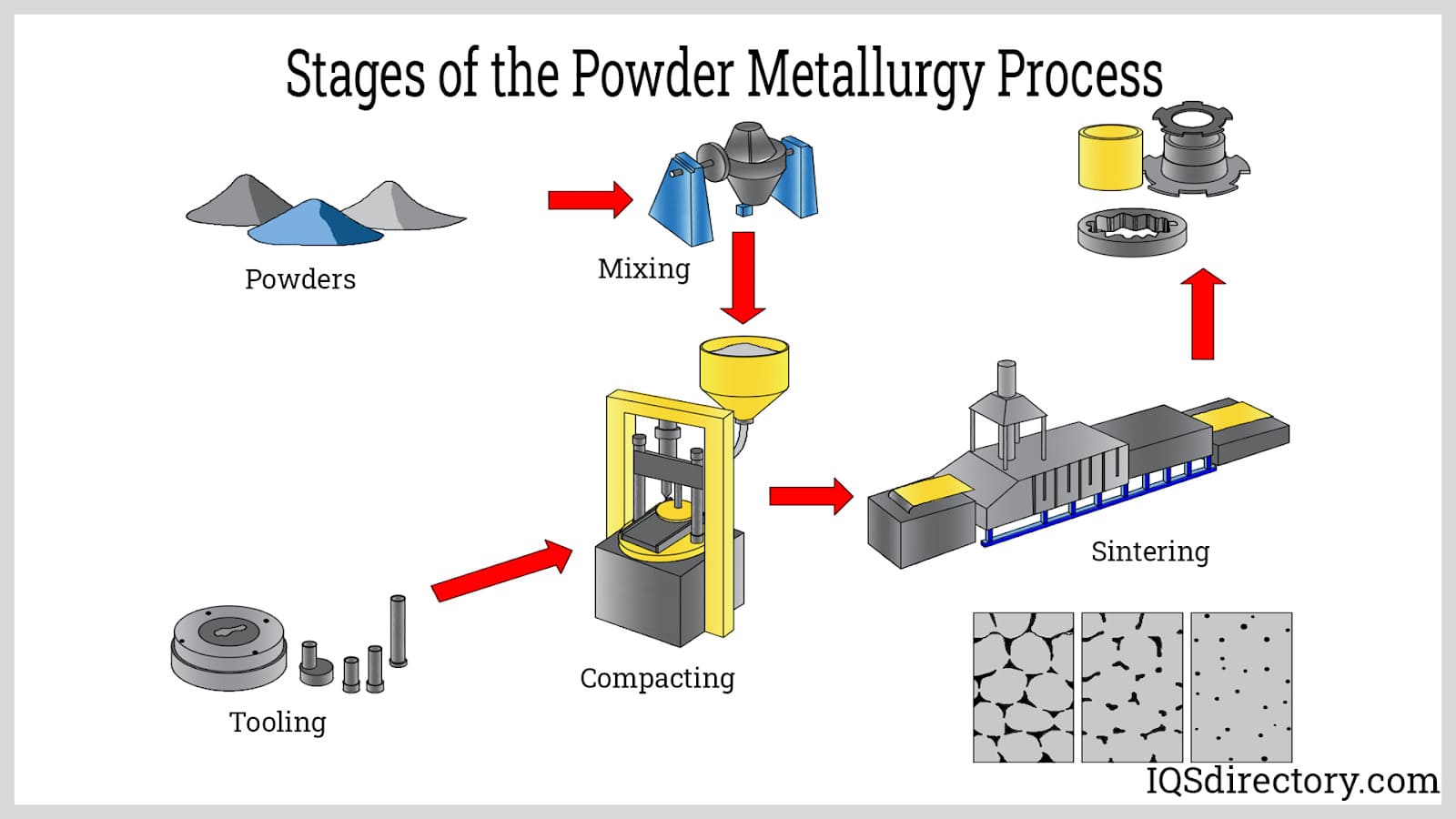
Hey there, curious minds! Ever wondered how those super strong, strangely shaped metal bits you see in everything from your car engine to your fancy kitchen appliances come to be? We're not talking about traditional casting or machining here. Nope, today we're diving into a process that sounds a bit like something from a sci-fi movie, but it's actually a super clever way of making things: powder metallurgy, and specifically, its star player, sintering.
So, what's the big deal about powder metallurgy? Imagine taking ordinary metal, grinding it down into a super fine powder – like, really fine, think dust or even finer. Then, you take this powder, pack it into a mold, and poof! You get a solid object. Sounds a bit like magic, right? But it's not magic; it's science, and the real "poof" moment happens during sintering.
The "Sintering" Secret Sauce
Okay, so you've got your metal powder, all squished into the shape you want. Now what? This is where sintering swoops in to save the day. Think of sintering as a super-gentle, super-controlled "metal hug." We're not melting the metal, not in the traditional sense anyway. Instead, we're heating it up, but not quite to its melting point. It’s like getting a really warm embrace that’s just perfect – not hot enough to burn, but warm enough to make things stick together.
Why is this cool? Well, when you heat metal particles close to their melting point, something amazing happens. The surfaces of these tiny metal grains start to soften and, with a little help from diffusion (that's like the particles politely shuffling around and making friends), they begin to bond together. It’s like they’re saying, "Hey, we're all here, let's stick together and become one strong unit!"
This bonding process creates necking. You can picture it like tiny little bridges forming between the powder particles. The more bridges, the stronger the object becomes. It’s a gradual process, and the longer you heat it (within the right temperature range, of course!), and the higher the temperature, the more these little bridges form, and the stronger and denser your final part gets.
Why Bother With Powders and Hugs?
You might be thinking, "Why go through all this hassle of powders and special heating when we can just melt and pour?" Great question! Powder metallurgy and sintering offer some seriously cool advantages:
- Intricate Shapes: Ever seen a gear with super complex teeth or a very delicate filter? Sintering is fantastic at creating complex geometries that would be a nightmare to machine from a solid block. It’s like being able to sculpt with metal dust!
- Less Waste: When you machine metal, you're essentially carving away a lot of material, creating chips and shavings. With powder metallurgy, you start with the powder and form the shape directly. This means less material waste and a more efficient process. Think of it as building with LEGOs instead of chiseling a statue out of a giant rock.
- Unique Properties: You can actually create metal parts with properties you might not get with traditional methods. For example, you can make parts that are porous (full of tiny holes), which is perfect for things like oil-impregnated bearings that self-lubricate. Or you can mix different metals together in ways that wouldn't be easy to do with melting, creating alloys with special characteristics.
- Cost-Effectiveness: For high-volume production of certain parts, sintering can be incredibly cost-effective. Once you've set up the tooling and the process, making thousands or even millions of identical parts can be much cheaper than other manufacturing methods.
- Hard-to-Melt Metals: Some metals have incredibly high melting points (like tungsten, used in light bulbs!). Melting and working with these can be extremely difficult and expensive. Sintering offers a way to process these materials more easily.
The Sintering Steps – A Peek Behind the Curtain
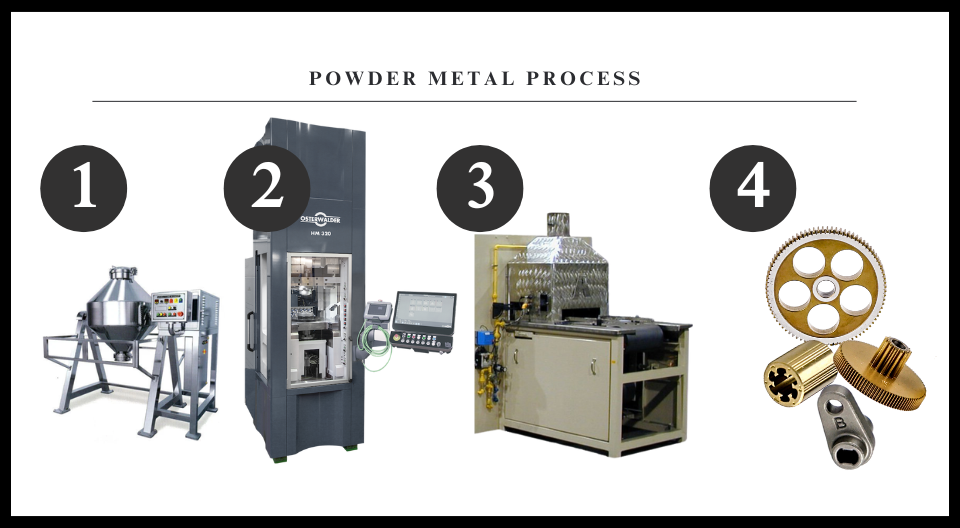
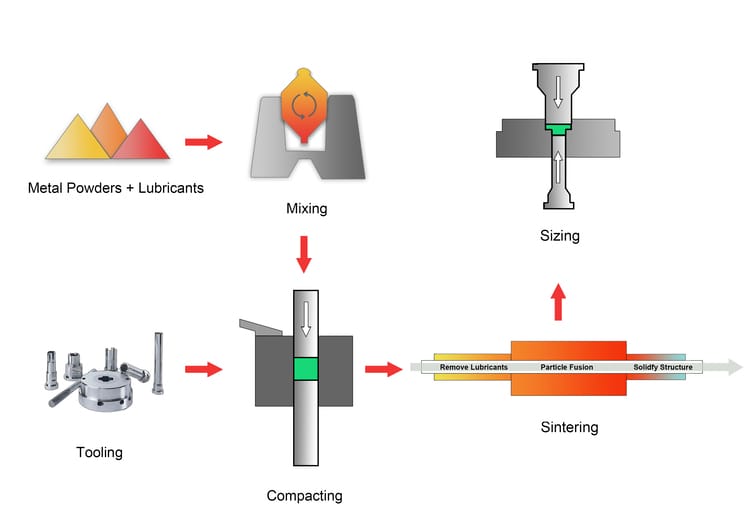
So, what does this "metal hug" process actually look like? It’s generally a few key steps:
1. Compaction: First, as we mentioned, the metal powder is put into a die (a special mold) and squeezed under high pressure. This is where the basic shape is formed. Think of pressing Play-Doh into a cookie cutter, but with way more force and very fine metal particles.
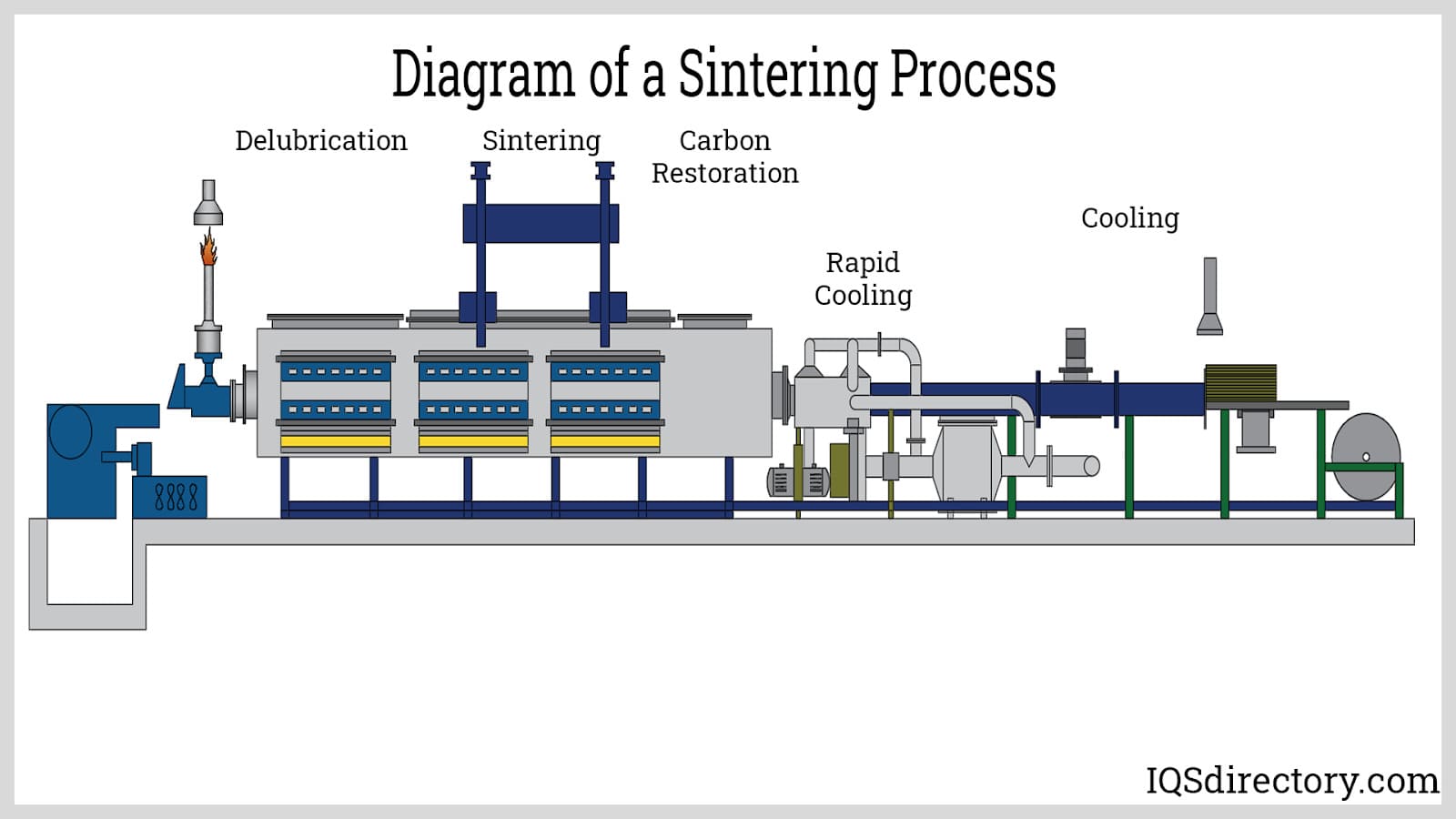
2. Sintering: Then comes the star of the show. The compacted part, often called a "green compact" (because it's not fully solid yet), is placed into a furnace. This isn't just any old oven; it's a specially designed, controlled atmosphere furnace. Why controlled atmosphere? Because we don't want our precious metal powder to react with oxygen or other gases in the air while it's getting friendly. We want it to bond with itself, not rust! The part is heated to a specific temperature, usually 70-90% of the metal's melting point, and held there for a set amount of time. This is the crucial bonding phase.
3. Cooling: After the sintering time is up, the part is slowly cooled down. This needs to be controlled to prevent any stresses or cracking from forming.
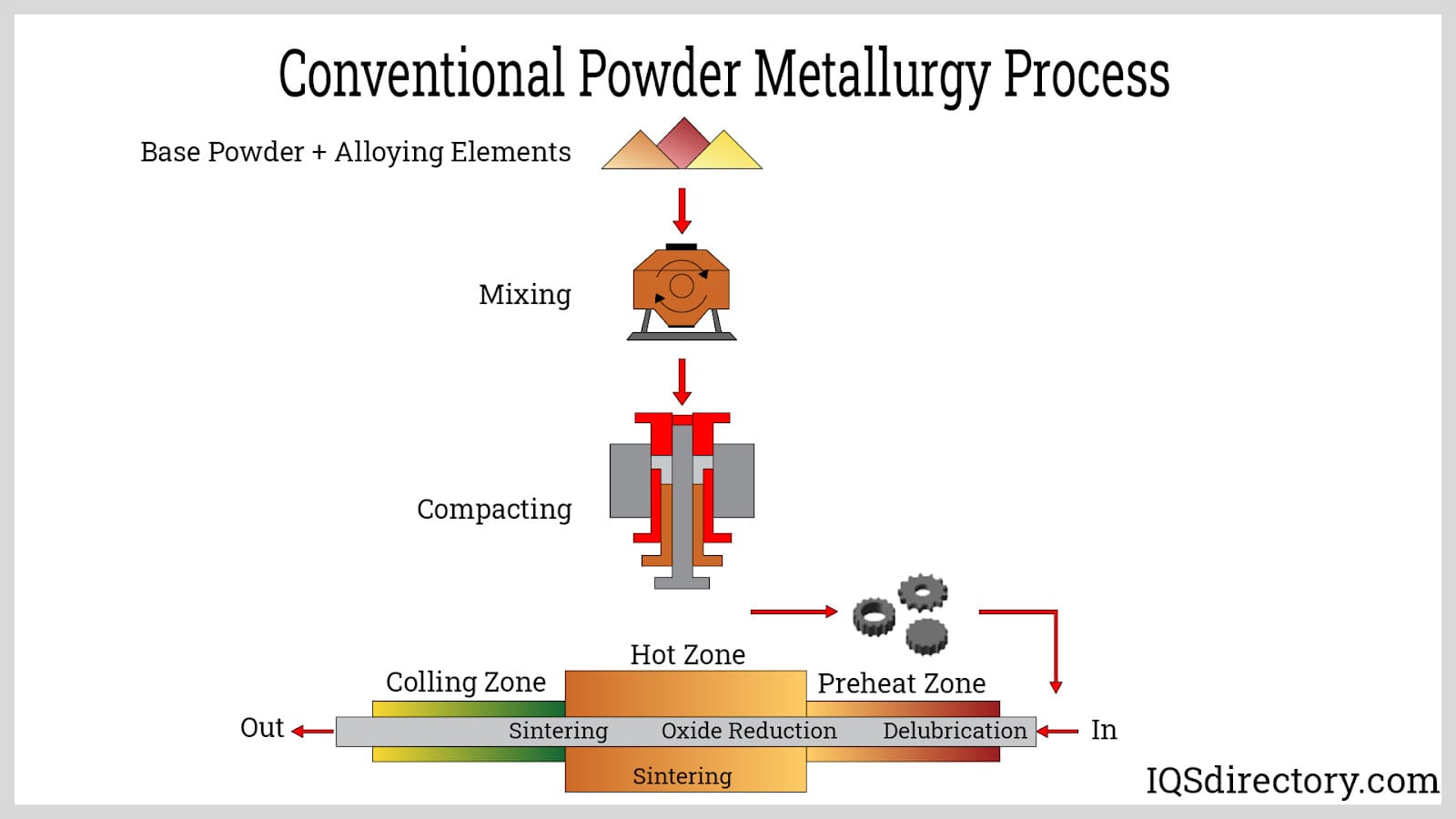
4. Secondary Operations (Sometimes): Depending on the desired properties and tolerances, the sintered part might undergo further processing. This could include resizing (a light press to ensure perfect dimensions), infiltration (filling any remaining pores with another metal), or heat treatment. But often, the part is ready to go right after sintering!
It’s Not Just About Strength
While strength is a huge benefit, sintering also allows for the creation of parts with specific densities. A fully dense part will be stronger and less porous, while a less dense part might be lighter or allow for lubrication. It's all about tailoring the material to the job it needs to do.
Imagine making a bicycle frame. You want it strong, but you also want it light. Powder metallurgy could be a way to achieve this by controlling the density and composition of the metal. Or consider a tiny filter for a medical device – it needs to let fluid through, so some porosity is actually a good thing!
The Future is Powder
Powder metallurgy and sintering are not new technologies – they’ve been around for a while. But they are constantly evolving. With advancements in powder production, furnace technology, and computational modeling, we’re seeing even more complex and high-performance parts being made this way. From aerospace components that need to withstand extreme conditions to intricate medical implants, sintering is playing an increasingly important role.
So, the next time you marvel at a precisely engineered part, remember the humble metal powder and the gentle, bonding embrace of sintering. It’s a fascinating process that turns dust into durable, functional components, all without a single drop of molten metal!