
Stainless Steel 304 Temperature Limits
Ever glanced at your trusty kitchen sink, your sleek cookware, or maybe even that trendy coffee thermos and thought, "You know, I wonder how this stainless steel thing actually works?" Well, settle in, because we're about to dive into the fascinating, yet surprisingly chill, world of Stainless Steel 304 and its temperature limits. Think of it as a casual chat over a perfectly brewed cup of coffee – the kind that’s kept warm (or cool!) by our star material.
Stainless steel 304. It sounds a bit like a secret agent code name, doesn't it? Like it’s got a license to withstand... well, pretty much anything life throws at it. And for the most part, it does. This is the workhorse of the stainless steel family, the one you’ll find everywhere from fancy restaurant kitchens to your very own humble abode. It’s the shy, reliable friend who always shows up, never complains, and looks good doing it.
So, what makes this stuff so special? It’s all about its chemical makeup. 304 stainless steel is an austenitic stainless steel, which basically means it’s got a specific crystal structure that makes it tough, malleable, and resistant to rust and corrosion. The key players are typically around 18% chromium and 8% nickel. This dynamic duo is what gives it that signature shine and, more importantly, its impressive resilience.
The Cool Side of Things: Keeping it Chilly
Let's start with the colder end of the spectrum. If you’ve ever marvelled at how your ice cream stays frozen on the journey home, or how that craft beer stays crisp in its can, you can give a little nod to stainless steel 304. It’s a champ at staying cool.
So, what are the actual limits? For practical purposes, stainless steel 304 is excellent at very low temperatures. We’re talking about temperatures that would make most things brittle and sad. Think cryogenic applications, like the storage of liquid nitrogen or helium. While we're not suggesting you're keeping liquid nitrogen in your pantry (though, who are we to judge?), this illustrates just how robust it is.
In everyday terms, your freezer is a walk in the park for 304. Your chilled wine glasses? No sweat. The temperature limits for 304 in cryogenic conditions are quite impressive. It can maintain its strength and ductility down to temperatures as low as -200°C (-328°F) and even lower, without becoming excessively brittle. This is a huge deal for industries dealing with super-cooled substances.
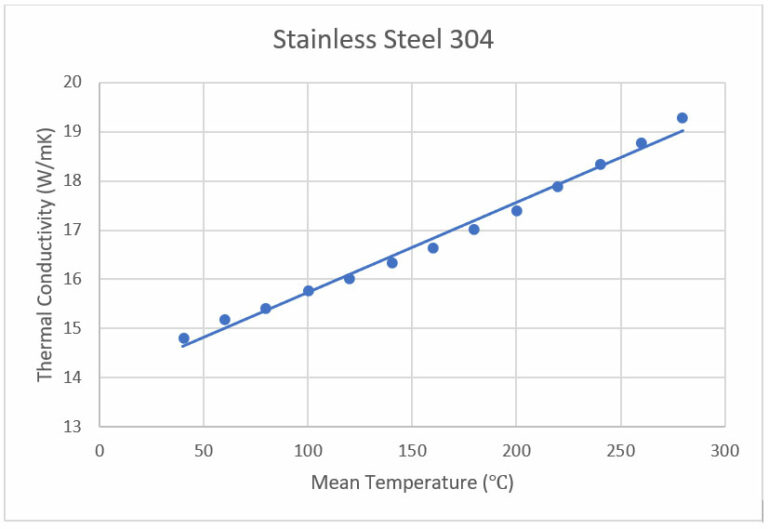
Imagine the science behind it. At these frigid temperatures, many metals become as fragile as a dropped teacup. But 304, with its austenitic structure, remains surprisingly flexible. It’s like it puts on its thermal long johns and shrugs off the cold. Pretty neat, right?
A fun little fact: The development of stainless steel itself has roots in the early 20th century, a time of burgeoning industrialization and a growing need for materials that could withstand the elements. It’s a relatively modern marvel, considering how integral it is to our lives today.
Heating Things Up: Where 304 Shines (and Sometimes Gets a Little Warm)
Now, let’s turn up the heat. This is where you’re likely to interact with stainless steel 304 most directly – in your kitchen, at your barbecue, or even in industrial settings where things get properly toasty.
For most common kitchen applications, like baking trays, saucepans, and ovens, 304 stainless steel performs beautifully. It can handle the everyday heat of cooking without a fuss. Think of your favourite baking sheet going into a 200-250°C (400-480°F) oven. That’s a gentle warm-up for 304.

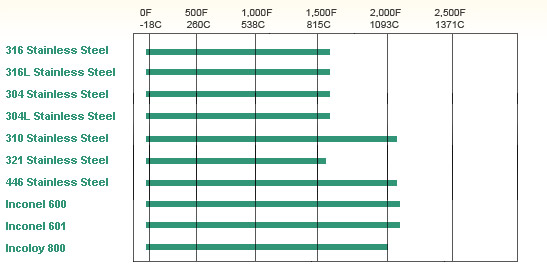
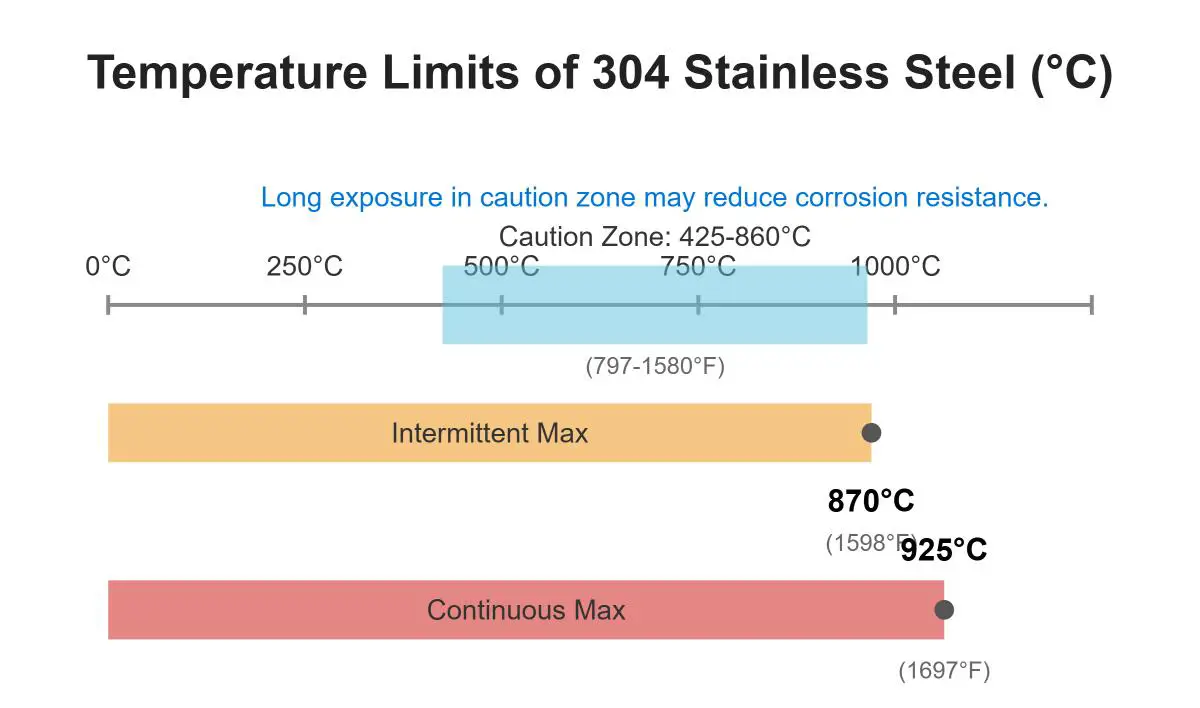
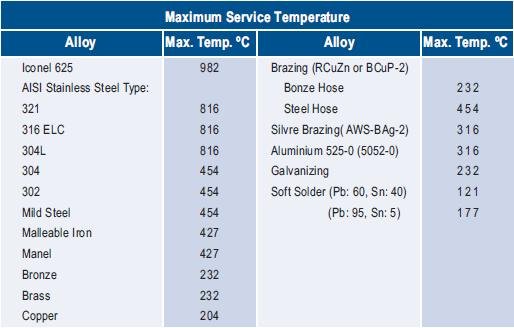
However, it’s when we start pushing the boundaries of sustained, high temperatures that we need to be a bit more mindful. The generally accepted continuous service temperature limit for 304 stainless steel is around 870°C (1600°F). Beyond this, things start to get a bit… fuzzy.
What happens when it gets too hot? Well, it doesn't suddenly melt into a puddle like the Wicked Witch of the West. Instead, it begins to lose some of its desirable properties. The main concern at very high temperatures, especially above 425°C (800°F) for prolonged periods, is a phenomenon called sensitization. This occurs when carbide precipitates form at the grain boundaries, making the steel more susceptible to intergranular corrosion. In simpler terms, it weakens the steel’s resistance to corrosion, which is one of its superpowers!
So, while a quick blast from a torch during a jewellery-making session might be fine, using a 304 pot to continuously melt lead is probably not the best idea. It's all about the context and duration of the heat.
There’s also the issue of maximum temperature before significant deformation occurs. While it won’t warp from a typical oven bake, if you were to expose it to temperatures significantly above its continuous limit, you might see some distortion. Think of it like your favourite t-shirt – comfortable at room temperature, but put it in a very hot dryer for too long, and it might shrink or lose its shape.
Practical Tips for Your Stainless Steel Buddies
Knowing these limits isn't just for engineers and scientists. It helps us use our stainless steel items better and make them last longer, which is the essence of an easy-going, sustainable lifestyle.
- Your Cookware: Most modern cookware is designed with these limits in mind. However, if you're using older pieces or are unsure, avoid extreme, prolonged heat. For instance, don't leave an empty stainless steel pan on a scorching burner for ages. It’s like leaving your phone in direct sunlight – not ideal.
- Barbecuing Bliss: Love grilling? Your stainless steel grates are built for that! They can handle the direct heat of charcoal or gas grills. Just remember to clean them properly to maintain their corrosion resistance. A good scrub after a smoky session is like a spa day for your grill.
- Oven Savvy: Baking, roasting, broiling – your stainless steel trays and racks are up for the challenge. Just be aware of the maximum temperature your oven can reach and avoid leaving items in for excessively long periods at the absolute highest settings if you can help it.
- Thermos Tech: Those double-walled stainless steel thermoses? They are designed to keep things hot or cold for hours. The vacuum insulation works wonders, and the steel itself is more than capable of handling the temperature differential between your piping hot coffee and the outside air.
- Cleaning Cues: To maintain the beauty and integrity of your stainless steel, avoid abrasive cleaners that can scratch the surface. A gentle soap and water, or a specialized stainless steel cleaner, is usually all you need. Think of it like this: would you use sandpaper on your favourite mug? Probably not!
Cultural tidbit: Stainless steel has become so ubiquitous that it’s almost invisible. It’s the silent partner in countless everyday rituals, from preparing family meals to enjoying a picnic in the park. Its reliability is so ingrained that we rarely give it a second thought, much like the dependable hum of the refrigerator.
And here’s a fun fact to ponder: the first commercially successful stainless steel was developed in Sheffield, England, in 1913. It was initially intended for knife blades, a testament to its durability and resistance to staining – hence the name!
When to Be Extra Careful
While 304 is incredibly versatile, there are scenarios where you might want to consider alternatives or be extra cautious:
- Extremely High Temperatures: For applications involving sustained temperatures significantly above 870°C (1600°F), you might look towards other, more specialized stainless steel alloys or high-temperature alloys.
- Corrosive Environments: While 304 is great against general corrosion, if you're dealing with very aggressive chemicals or saltwater exposure over long periods, you might need a more resistant grade like 316, which has added molybdenum. Think of it as upgrading from a sturdy umbrella to a full-on rain suit for a hurricane.
- Specific Chemical Reactions: Certain strong acids can affect even 304. If your work involves handling these, always consult specific material compatibility charts.
Ultimately, understanding the temperature limits of stainless steel 304 is about appreciating its strengths and using it wisely. It's not about rigid rules, but about informed choices that lead to longevity and optimal performance.
A Daily Dose of Stainless Steel Wisdom
So, the next time you pour yourself a glass of ice-cold water from a stainless steel pitcher, or slide a freshly baked batch of cookies out of the oven on your trusty steel tray, take a moment. That gleaming surface is a testament to materials science, to the subtle interplay of elements that makes our lives just a little bit easier, a little bit cooler, and a little bit hotter when we need it to be.
It’s a reminder that even the most mundane objects in our lives have a story, a purpose, and a set of capabilities. And for stainless steel 304, those capabilities extend across a wonderfully broad range of temperatures, making it a truly indispensable material in our modern, easy-going lives. It's the unsung hero of our kitchens and beyond, silently serving us, day in and day out, without ever asking for much in return. A true friend, indeed.