
Stainless Steel Tubing Size Chart

Hey there, fellow adventurers in the land of awesome stuff! Ever found yourself staring at a piece of shiny metal tubing and thinking, "Hmm, I wonder what size this is?" No? Just me? Alright, well, get ready, because we're about to dive headfirst into the surprisingly fascinating, slightly quirky, and downright useful world of stainless steel tubing size charts!
Now, I know what you're thinking. "Tubing? Sizes? Is this going to be as exciting as watching paint dry?" Oh, my friends, prepare to have your minds blown (in a good, not-requiring-medical-attention way). This isn't just about numbers; it's about the unsung heroes of countless projects, the silent workhorses that hold everything together. Think of it as the secret handshake for builders, makers, and anyone who's ever said, "I could totally build that!"
So, why stainless steel, you ask? Because it's the superhero of materials! It resists rust like a boss, it's super strong, and it looks darn good doing it. It’s like the little black dress of the metal world – always appropriate, always stylish. And when you combine that with the magic of tubing, you've got a recipe for success. Whether you're building a killer bike frame, a sleek bookshelf, or even a fancy robot butler (hey, we can dream!), the right tubing size is crucial.
But here's the rub: tubing doesn't just come in "big" or "small." Nope, it’s a whole spectrum of dimensions, and that's where our trusty size chart swoops in to save the day. It’s like a cheat sheet for awesome projects, a Rosetta Stone for metal connectors. Forget guessing games; this chart is your GPS to tubing perfection.
The Nitty-Gritty: OD, ID, and WT, Oh My!
Let's get down to brass tacks, or rather, to metal measurements. You'll often see three main measurements when you're looking at tubing:
- OD (Outside Diameter): This is pretty straightforward. It's the measurement across the tube, from one outer edge to the opposite outer edge. Think of it as the tube's waistline.
- ID (Inside Diameter): This is the measurement across the hollow part of the tube, from the inner wall to the opposite inner wall. It’s the space available for… well, whatever you want to shove through it! (Let's keep it clean, people.)
- WT (Wall Thickness): This is the thickness of the metal itself. A thicker wall means a stronger tube. It's like the muscle of your tubing!
These three amigos work together to define a tube's identity. You might see something like "1.5" OD x 0.065" WT." This means the tube is 1.5 inches across on the outside and its walls are 0.065 inches thick. Pretty neat, right? It’s like getting to know your tubing on a first-name basis.

Why Are These Sizes So Important? It's Not Just About Fitting!
Okay, so you've got a measurement. Cool. But why does it matter? Imagine trying to put a square peg in a round hole. Yeah, that's what happens when you get your tubing sizes wrong.
Firstly, fit is king. If you're connecting tubes, they need to mate like soulmates. A snug fit prevents wobbly joints and ensures your creation stands tall and proud. No one wants a bookshelf that groans under the weight of their prized novel collection, right?
Secondly, strength matters. A thin-walled tube might be lighter, but it won't be able to handle the same loads as a thicker-walled one. For structural projects, you need to choose tubing that can take a beating. Think of it as choosing the right armor for your project. You wouldn't send a knight into battle with a flimsy shield, would you?

And thirdly, it's about cost and availability. Different sizes have different price tags and might be easier or harder to find. A super-specialized size might cost you an arm and a leg, while a more common one is readily available at your local hardware hero's den.
The Quirky Corner: Fun Facts and Funny Details
Now for the good stuff! Did you know that the way tubing is measured can sometimes be a bit… confusing? Some systems use nominal sizes, which aren't always the exact measurements you'll get. It’s like calling your dog "Fluffy" when he’s actually a miniature poodle with a sleek haircut. It's a general idea, not a precise science. This is where the size chart becomes your best friend and translator.
Also, ever noticed how some tubes look the same but have different "grades" of stainless steel? We're talking 304, 316, and more. While we’re focusing on size today, remember that the type of stainless steel also plays a huge role in its properties. It's like choosing between different flavors of ice cream – they might look similar, but the taste (and performance!) is totally different.

And here's a little insider tip: tolerance is a big deal. Even within a specified size, there's a small range of acceptable variation. This is usually super tiny, like fractions of a millimeter, but for precision projects, it can be important. It's the universe's way of keeping things interesting, I guess!
So, Where Do You Find This Magical Size Chart?
Fear not, intrepid explorer! These charts are surprisingly easy to find. A quick online search for "stainless steel tubing size chart" will bring up a treasure trove. You’ll find charts from manufacturers, metal suppliers, and even helpful DIY websites.
Many suppliers will have their own charts tailored to the specific products they offer. It’s always a good idea to check the chart from the place you intend to buy from, just to be absolutely sure. Think of it as getting the official rules for your game.
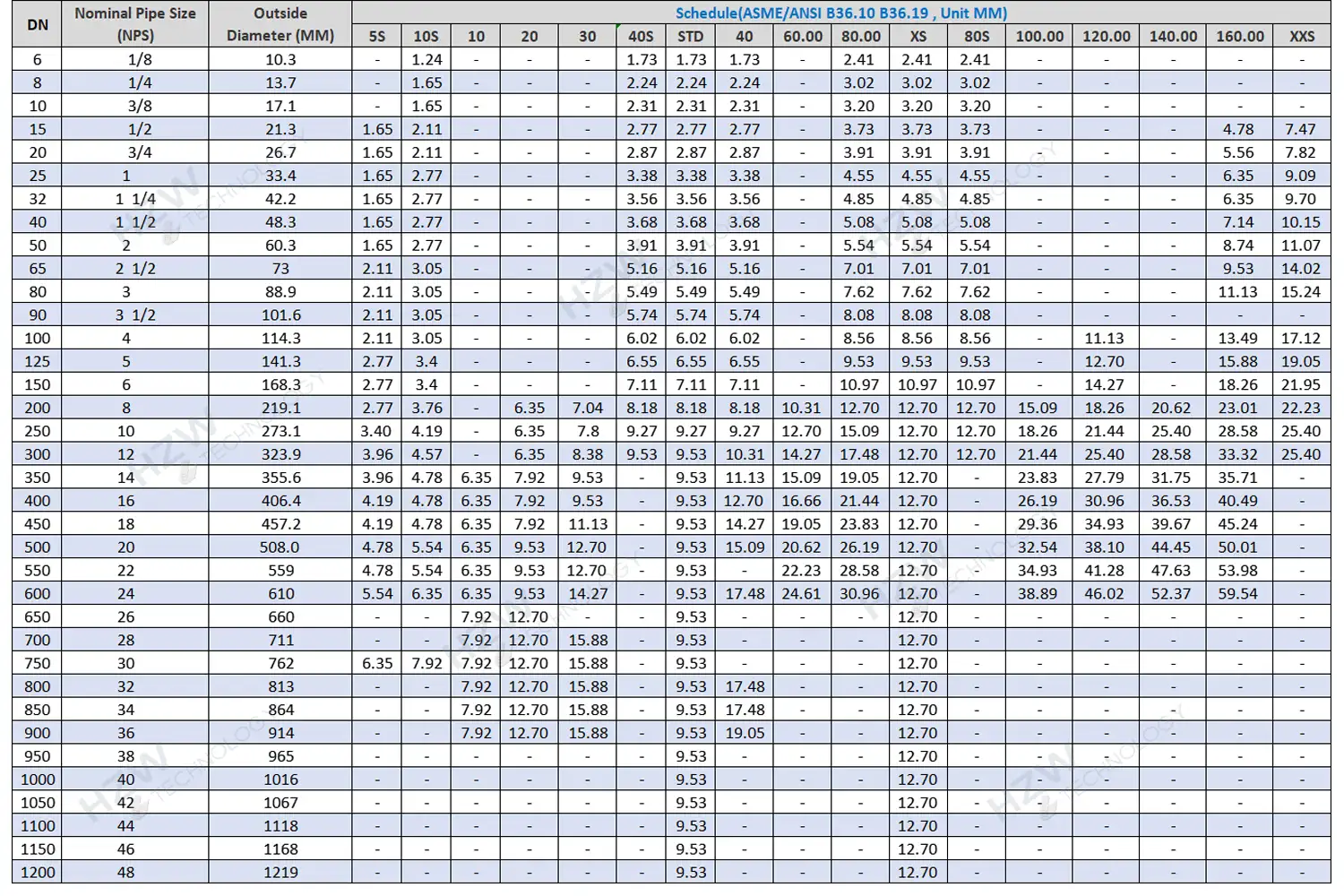
You'll often see them laid out like a table, with columns for OD, ID, WT, and sometimes even the approximate weight per foot. It's organized, it's clear, and it’s your ticket to tube-sanity (the good kind, of course!).
The Takeaway: Tubing Sizes Are Your New Superpower!
See? Who knew that talking about stainless steel tubing sizes could be so… well, fun? It's the hidden knowledge that separates the "oops, that didn't work" from the "wow, that's amazing!" moments in any project.
So, the next time you're embarking on a creative endeavor that involves shiny metal tubes, don't just grab the first thing you see. Consult your trusty stainless steel tubing size chart. Understand its OD, ID, and WT. It might seem like a small detail, but it’s a superpower waiting to be unleashed!
Go forth, build something awesome, and remember: with the right tubing size, your creations will be stronger, more stable, and just plain cooler. Happy building, my friends!