
Stress Strain Curve A36 Steel
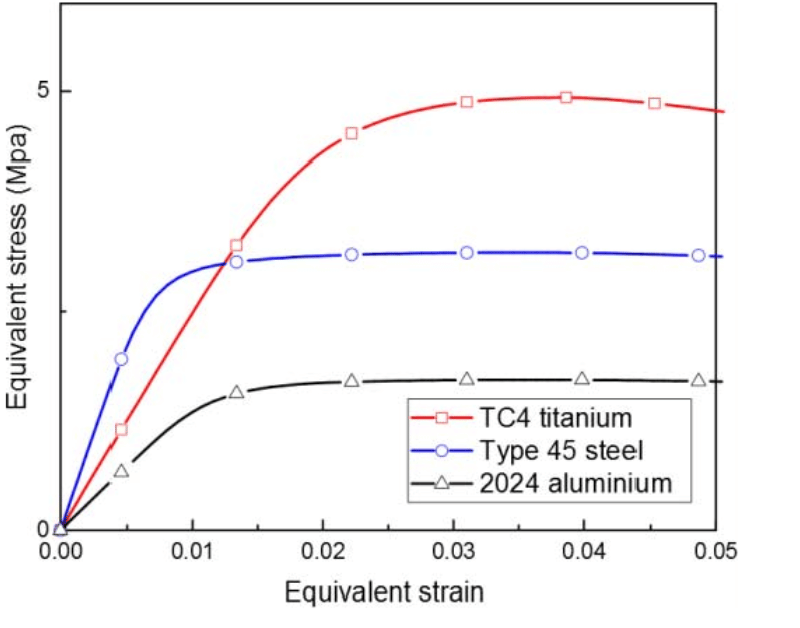
Alright, settle in, grab your latte – or your builder's tea, no judgment here – because we're about to dive into something that sounds about as exciting as watching paint dry, but I promise you, it’s actually got more drama than a telenovela. We're talking about the stress-strain curve of… wait for it… A36 steel. Yeah, I know, heart racing already, right?
Now, if you’re picturing a bunch of guys in lab coats squinting at a piece of metal like it’s the Mona Lisa, you’re not entirely wrong. But what they’re really doing is figuring out how much a piece of steel can handle before it throws a tantrum. Think of it like testing your relationship. How much pressure can it take before things get… bendy? Or, you know, snappy.
So, what is this magical curve? Imagine you’ve got a strip of A36 steel. It’s pretty common stuff, used in everything from bridges (you know, the ones that don’t spontaneously decide to become abstract art) to buildings. It’s like the reliable, slightly boring cousin of the steel family. But even the reliable ones have their limits, and that’s where our friend, the stress-strain curve, comes in.
We're gonna put this poor steel strip through the wringer. We pull it. Gently at first. Like a polite handshake. As we pull, we measure two things: stress and strain. Stress is basically the force we’re applying, divided by the area it’s acting on. Think of it as the demand you’re putting on your poor, unsuspecting steel. Strain, on the other hand, is how much the steel stretches or deforms, relative to its original length. It’s the response to that demand. Like your friend sighing dramatically after you ask them to help you move.
Now, the fun part begins. We plot these two things on a graph. Force applied vs. stretch. And what we see is this wonderfully revealing line, or rather, a series of segments, that tells us the steel’s entire life story under duress. It’s like reading its diary, but with more science and less angst about that haircut you got in 2008.
The “Hooky-Doo” Phase: Elasticity City
At the very beginning, when we’re just giving our A36 steel a gentle tug, it behaves itself beautifully. It stretches a bit, sure, but the moment we stop pulling, it snaps right back to its original shape. This is the elastic region. It’s like a perfectly calibrated rubber band. This is where the steel is feeling pretty smug, thinking, "Ha! I can handle this. This is nothing!"

The relationship between stress and strain here is super predictable. It’s a straight line. If you double the pull, it doubles the stretch. Simple! This is governed by a fancy guy’s law named after him, Mr. Hooke. He was probably really good at pulling on things. So, this initial bit is called the proportional limit, and then the elastic limit. Basically, the point up to which it’s a happy camper and will return to its former glory.
Think of it like this: you’re asking your friend to lend you $5. They do, and you pay it back immediately. No harm, no foul. They’re still your friend. That’s elastic. Easy peasy.
The “Uh Oh” Moment: Yielding to Pressure
But then, we keep pulling. We get a bit more forceful. And suddenly, something changes. The steel reaches a point where it stops snapping back perfectly. It’s like your friend finally saying, "Okay, lending you $5 was fine, but this $500 thing? My shoulder's starting to ache, and I'm not sure I'm getting it back."
This is the yield point. It’s a really, really important spot. For A36 steel, it's like a significant milestone. Before this, it’s just stretching elastically. After this, it starts to undergo plastic deformation. This means it’s permanently changing its shape. It's not going back to its original form, no matter how much you beg. It’s like your friend deciding they’re not lending you that $500, and you’ve subtly strained the friendship.

For A36 steel, the yield strength is around 36,000 pounds per square inch (psi). That’s a LOT of pulling power! Imagine trying to hold up a small elephant with a single strand of spaghetti – okay, maybe that’s a bit of an exaggeration, but you get the idea. This yield strength is what engineers obsess over. It's the "this is where things get serious" marker.
Here’s a quirky fact for you: A36 steel often has a distinct “yield point.” It’s like the steel is saying, “Okay, this is the line. You cross it, and I’m officially giving up my youthful elasticity and embracing a new, permanently stretched life.” It’s a bit of a dramatic flair for a piece of metal, don’t you think?
The “Getting Serious” Stretch: Work Hardening
Now, even though the steel has permanently deformed, it doesn't just lie down and give up. Oh no! As we continue to pull, it actually gets stronger. Weird, right? It’s like your friend, after the initial loan issue, decides to work overtime and starts saving up to pay you back, and then some. They’re becoming more resilient, even though they’re still a bit stretched out.

This phenomenon is called work hardening or strain hardening. The steel’s internal structure is rearranging itself, becoming more resistant to further stretching. So, the stress we need to apply to get it to deform even more increases. This is the middle section of our curve, where the line starts to climb again, but it's not a straight line anymore. It's got some curves, some attitude.
This is where A36 steel shows its stubborn side. It’s been through a lot, it’s got a permanent bend, but it’s not going down without a fight. It’s still got a lot of fight left in it, even when it’s looking a bit worse for wear. Imagine your friend, who’s now lending you money regularly, but with a stern warning and maybe a slightly tighter grip on their wallet.
The “Tired Out” Moment: Ultimate Tensile Strength
But everything has its limit, even a tough old piece of A36 steel. Eventually, we reach the absolute peak of its strength. This is the ultimate tensile strength. It’s the maximum stress the steel can withstand before it starts to seriously give up the ghost. Think of it as the moment your friend, after all the drama, finally says, "You know what? I’ve lent you enough. I’m done."
This is the highest point on our stress-strain curve. After this point, the steel starts to weaken, even though it’s still stretching. It's like your friend is now so tired of your financial escapades that they’re actually starting to avoid you. The relationship, as you know it, is weakening.
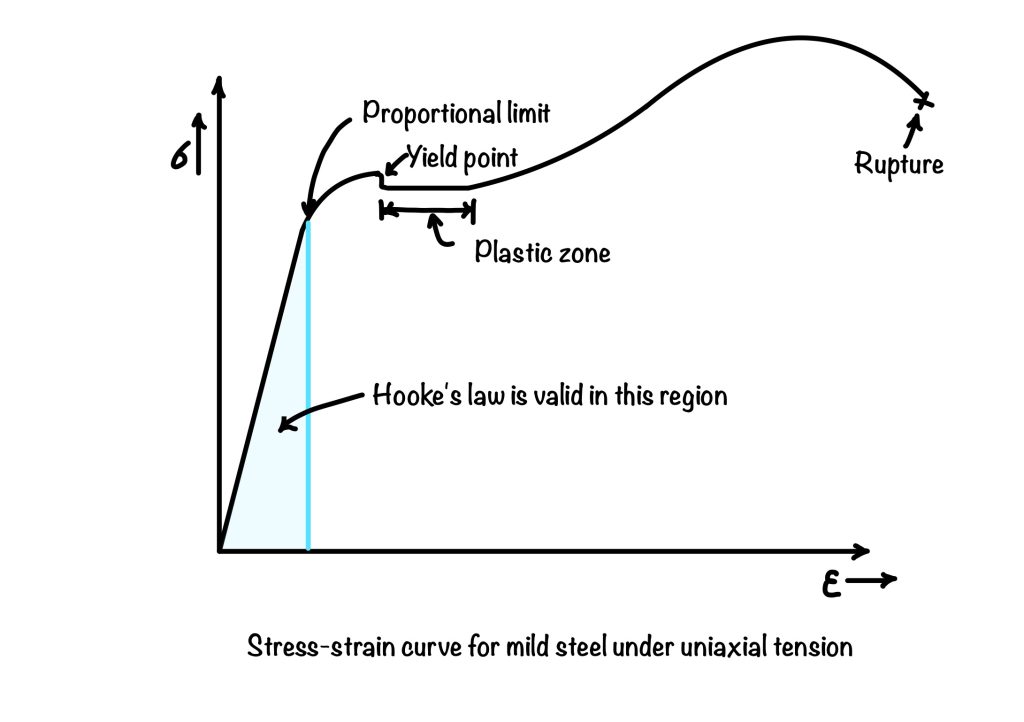
For A36 steel, this ultimate tensile strength is typically around 58,000 to 80,000 psi. It’s impressive, but it’s the point of no return. It’s the summit before the inevitable slide.
The “Breaking Point”: Fracture
And then, the grand finale. The moment of truth. The steel continues to stretch, but with less and less stress, until… snap! It breaks. It’s fractured. It’s no longer a coherent piece of metal. It’s like your friend finally blocking your number. The relationship is officially over. The connection is severed.
This is the fracture point. The very end of our stress-strain story. The graph plummets, showing that the steel can no longer sustain any significant load before failing completely. It’s the tragic, yet inevitable, conclusion.
So, there you have it. The stress-strain curve of A36 steel. It’s not just a boring line on a graph. It’s a story of elasticity, yielding, stubborn resistance, and eventual failure. It’s a tale of how even seemingly simple materials have a complex personality when pushed to their limits. Next time you see a bridge or a building, give a little nod to A36 steel and its epic stress-strain journey. It’s seen some things, man. It’s seen some things.