
The Duality Of Man Full Metal Jacket
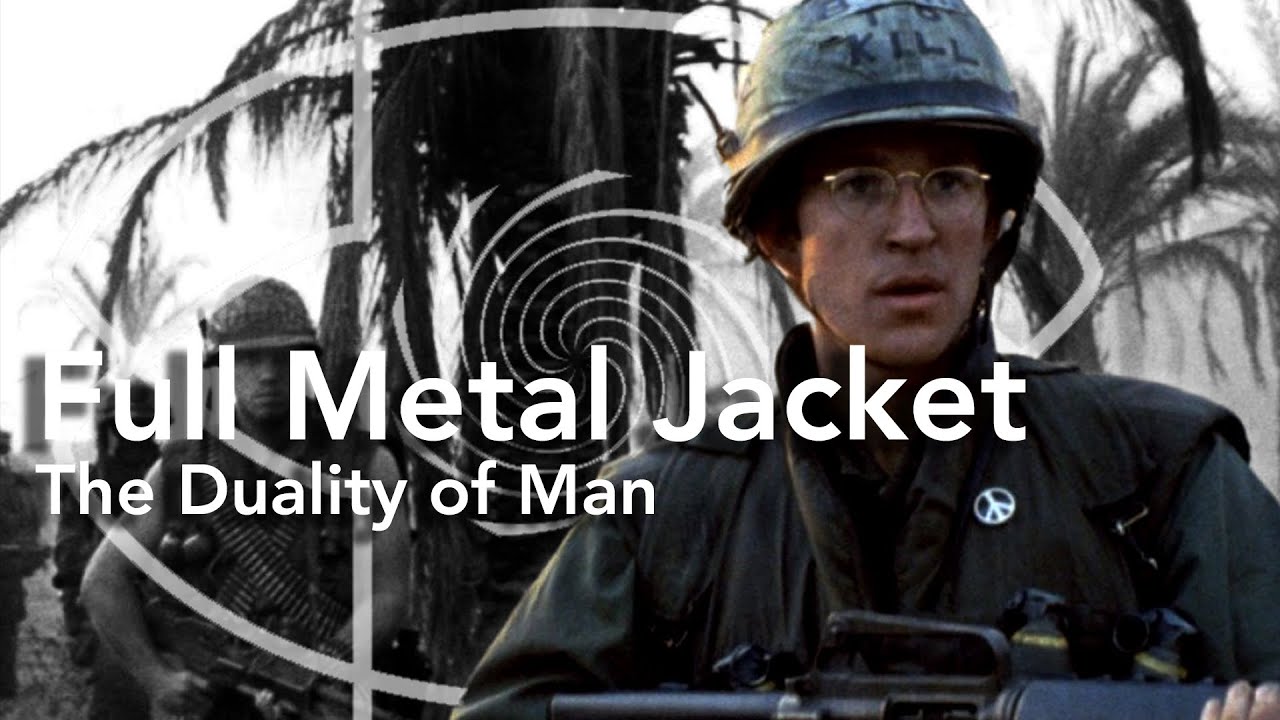
Hey there, movie buffs and philosophy nerds (no judgment, we love you too!). Let’s dive into something that’s probably been rattling around in your brain since you first saw it: the utterly bonkers and strangely profound duality of man in Stanley Kubrick’s masterpiece, Full Metal Jacket. Seriously, if you haven’t seen it, stop reading and go watch it. But if you have, buckle up, buttercup, because we’re going on a journey. A journey that starts with a drill sergeant yelling at you and ends… well, it ends, doesn't it?
So, what exactly is this "duality of man" thing we're banging on about? Think of it like this: deep down, we’re all a messy jumble of good intentions and… let's just say, less-than-stellar impulses. We want to be kind and compassionate, right? But then, sometimes, you just want to punt that person who cut you off in traffic into the next dimension. It's that internal tug-of-war, the angel on one shoulder and the devil on the other, whispering sweet nothings (or very loud, offensive things) into your ear. And Full Metal Jacket, oh boy, does it nail this concept. It’s like Kubrick held up a giant, slightly grimy mirror to our messy souls and said, “Look at yourselves, you beautiful, terrible creatures!”
The movie, in case you've managed to live under a rock for the past few decades, is split into two very distinct halves. It's like a perfectly baked soufflé with a surprisingly rotten core, or maybe a chocolate cake with a hidden layer of existential dread. The first half, the boot camp from hell, is all about stripping away individuality. Sergeant Hartman, played with terrifying perfection by R. Lee Ermey (who, by the way, was a real-life drill instructor and probably just lived this role), is basically a human bulldozer, flattening these young recruits into identical, obedient killing machines. He’s a master of dehumanization, reducing them to nothing more than… well, let's just say he’s not afraid of a few choice words. And trust me, he’s got a lot of choice words.
Think about it. These guys come in as individuals, with their own hopes, dreams, and probably some questionable fashion choices from their civilian lives. But Hartman, bless his terrifying heart, is determined to break them down. He’s not interested in their hopes; he’s interested in their ability to follow orders, even if those orders involve something truly awful. He’s essentially trying to excise the "man" part and leave only the "soldier." It’s a brutal, relentless process. You can practically feel the recruits’ personalities crumbling like week-old cookies under his verbal onslaught.
The Uniformity of Destruction
The whole point of boot camp, at least in this movie’s universe, is to create a single, unified force. They’re all dressed the same, they all march the same, they all (supposedly) think the same. It's all about suppressing those individual quirks and desires that might get in the way of efficiency. It’s like a factory assembly line for soldiers, where the product is… well, you know. And it’s incredibly effective, at least in its own twisted way. They are becoming one. They are becoming the machine.
But here’s the kicker: even in this environment designed to crush individuality, the duality of man still peeks through. You have Private Pyle, poor, sweet, simple Pyle. He’s the one who’s struggling the most, the one who can’t quite shed his… well, his Pyle-ness. He tries so hard to be the perfect soldier, to please Hartman, but it just isn’t in him. He’s the embodiment of someone who can’t quite reconcile the brutal demands of their environment with their innate, maybe slightly fragile, self. He’s the canary in the coal mine for the psychological toll this process takes.

Then you have Joker, our main man, the observer. He’s the one who’s trying to navigate this hellish landscape, trying to find some semblance of meaning or humor amidst the madness. He’s the guy who’s quoting Donny Osmond one minute and then contemplating the horrors of war the next. He’s a walking, talking paradox, and he’s our guide through this descent into the abyss. He’s the one who’s trying to hold onto his humanity, even as it’s being systematically chipped away.
The Shift: From Training to Trauma
And then, BAM! We’re in Vietnam. The second half of the movie is a stark, terrifying contrast. The orderly, almost sterile environment of boot camp is replaced by the chaotic, brutal reality of war. It’s like going from a meticulously organized laboratory to a dumpster fire. And suddenly, that duality we’ve been witnessing isn’t just an internal struggle; it’s playing out on a massive, devastating scale. The lessons learned in boot camp, the supposed transformation into perfect soldiers, are put to the ultimate test. And as we all know, things… don’t always go according to plan.
This is where the "duality of man" really starts to get ugly. We see these soldiers, trained to kill, now faced with the horrific consequences of that training. They’re supposed to be killing the enemy, but who is the enemy, really? And what does it do to a person when they’re forced to take another human life? This is where the veneer of civilization cracks, and the primal instincts, both the horrific and the surprisingly noble, start to surface.

Think about Joker again. He’s the one who famously pins a peace symbol on his helmet while wearing a bulletproof vest that says “Born to Kill.” Talk about duality! He’s trying to reconcile the contradictory messages he’s receiving, both from his training and from the world around him. He’s trying to hold onto his ideals while participating in something that fundamentally challenges those ideals. It’s a perfect, heartbreaking visual representation of the internal conflict.
And then there’s the sheer barbarity we witness. The casual cruelty, the moments of inexplicable violence, the soldiers who seem to have fully embraced their inner demons. It’s a testament to how quickly the “good” part of our duality can be overwhelmed by the darker, more primal urges when the stakes are high enough and the rules of society are suspended. It’s like the carefully constructed walls of civilization are suddenly ripped down, and we’re left with the raw, unadulterated human animal.
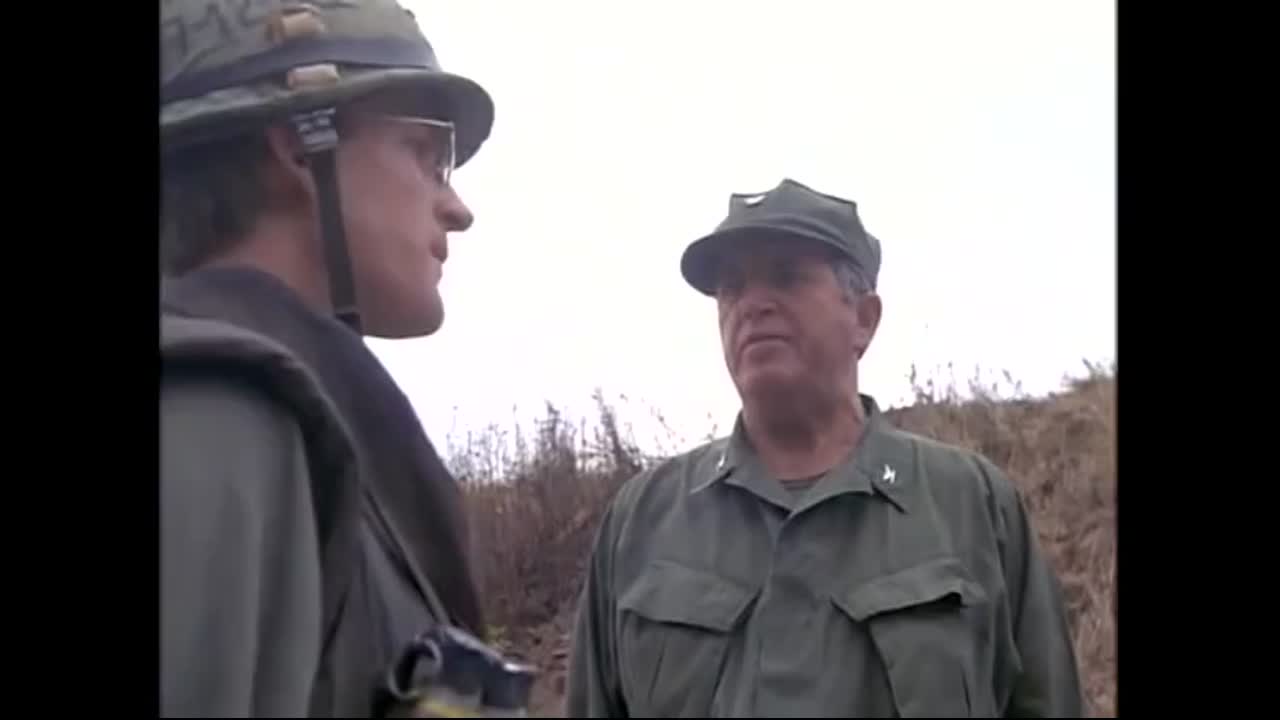
But here’s the thing that makes Full Metal Jacket so enduringly brilliant: it doesn't just revel in the darkness. Even amidst the utter despair and destruction, there are flashes of something else. There are moments of camaraderie, of dark humor that acts as a coping mechanism, and even, dare I say it, of genuine humanity. The soldiers, despite everything they’ve been through, still find ways to connect with each other, to look out for one another, to find brief moments of respite from the nightmare.
The Price of Being Human
The movie forces us to confront the idea that perhaps being a "good" person isn’t about never having bad thoughts or impulses. Maybe it’s about the struggle to control them, to choose the better path, even when it’s the harder path. It’s about the internal fight, the constant effort to keep the darker parts of ourselves in check. And war, this ultimate crucible, just amplifies that struggle to an unbearable degree.
Pyle’s tragic arc is a stark reminder of what happens when that struggle is lost. His inability to cope, his eventual breakdown, is a devastating commentary on the psychological toll of war and the immense pressure to conform to a brutal system. He’s the ultimate casualty of the duality, unable to reconcile the person he is with the person he’s being forced to become.
Joker, on the other hand, survives. But he’s not the same person who went through boot camp. He’s been scarred, both literally and figuratively. He’s seen the worst of humanity, and he’s participated in it. Yet, he still manages to find a sliver of hope, a reason to keep going. He’s the survivor who carries the burden of what he’s witnessed, the living embodiment of the internal battle that continues long after the bullets stop flying.

Kubrick, in his inimitable way, doesn't offer easy answers. He doesn't tell us that war is inherently evil (though it’s pretty clear he thinks so). Instead, he shows us the complex, often contradictory nature of the human beings who are caught up in it. He shows us that even in the most hellish circumstances, the capacity for both incredible cruelty and surprising kindness exists within us. It's like a dark, twisted garden where both weeds and wildflowers can bloom, often in the same patch of soil.
And that, my friends, is the beauty and the terror of the duality of man, as depicted in Full Metal Jacket. It’s a raw, unflinching look at the messy, complicated truth of who we are. We’re not just good or evil; we’re a swirling vortex of both, constantly striving, often failing, but always trying to find our way. It’s a reminder that even when we’re forced into uniforms and told to march in lockstep, our individual souls, with all their quirks and contradictions, are still there, fighting for air.
So, the next time you find yourself wrestling with your own inner demons (or perhaps just contemplating whether to have that second slice of cake), remember the boys of Full Metal Jacket. They were thrust into a situation that stripped them bare, revealing the profound, often perplexing duality that makes us human. And while the movie is undoubtedly dark and disturbing, it also, in its own unique way, leaves us with a sense of… well, a sense of profound understanding. We’re all in this messy, beautiful, terrifying existence together, and the fight for our humanity, that internal duality, is the most important battle of all. And hey, if we can get through boot camp and Vietnam, maybe we can get through Tuesday. You got this!