
The Eye Of A Female Humpback Whale
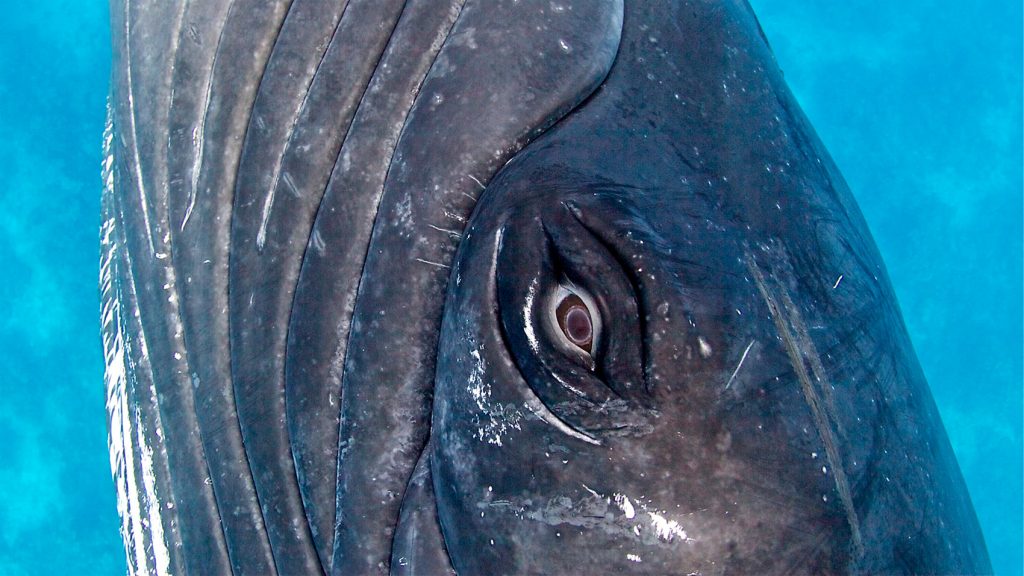
I remember standing on the deck of a small research vessel, the salty spray kissing my cheeks, utterly mesmerized. We were a few miles off the coast of Maui, and the water, a shimmering sapphire, was surprisingly clear. Suddenly, a shadow, a colossal, undulating silhouette, broke the surface. It was a humpback whale, and then, as if on cue, another. They were a mother and calf, their immense bodies performing a slow, graceful ballet in the deep. But it was the mother, the matriarch of this underwater kingdom, who truly captured my attention. Her head, larger than my car, slowly turned. And then, I saw it. Her eye.
Honestly, you hear about whale eyes, you see pictures, you might even think you know what to expect. But nothing, absolutely nothing, prepares you for the reality. It wasn't just an eye; it was a portal. A dark, fathomless orb, fringed with what looked like the most delicate, ancient eyelashes. And in that moment, staring into the eye of this magnificent creature, I felt a connection, a silent communication that transcended words. It was a profound, humbling experience that has stuck with me ever since.
And that’s what got me thinking. What is it like to see the world through the eyes of a female humpback whale? We tend to think of these gentle giants as these massive, mysterious beings, and they are, don't get me wrong. But they are also individuals, with their own lives, their own families, their own perspectives. And their eyes, these incredible organs, are how they navigate their vast, watery domain. So, let’s dive in, shall we? (Pun intended, because, you know, whales.)
The Sheer Scale of It All
First off, let’s talk about size. Humpback whales are, to put it mildly, huge. We’re talking lengths of up to 50 feet and weights of around 40 tons. Imagine carrying that much bulk around. Your perspective must be entirely different, right?
And their eyes? They're not exactly pinpricks, either. They're big, round, and capable of taking in a massive amount of visual information. This isn't just about spotting a tasty krill buffet; it's about survival, about family, about navigating the immense, often murky, ocean. Think about it: you’re not exactly going to be spotting a specific leaf on a tree with that kind of visual apparatus, but you are going to be seeing the whole forest, and probably the entire national park it's in, if that forest were made of plankton.
The sheer size of their visual field must be incredible. They can likely see a huge panorama around them, a constant stream of movement and light. I mean, even our human peripheral vision is pretty good, but I’m guessing a humpback whale’s is on a whole other level. It’s like having a built-in IMAX screen, constantly playing the greatest ocean documentary ever.
A World of Shades and Shapes
Now, here’s where things get a bit speculative, but also super interesting. How do whales actually see color? We humans have a pretty good handle on it, thanks to our cone cells. But whale vision is a bit of a different ballgame.

Scientific research suggests that whales, including humpbacks, are likely dichromatic. This means they probably see the world in two primary colors, likely shades of blue and yellow. So, that vibrant coral reef, bursting with reds, oranges, and purples? To a humpback whale, it might appear as a spectrum of blues and yellows, with varying degrees of brightness. Kind of like looking at a black and white photo that’s been subtly tinted.
It’s a fascinating thought. We see a world saturated with color, a rainbow of possibilities. They see a world perhaps more defined by light and shadow, by the subtle shifts in the blue hues of the ocean, the bright shimmer of sunlight filtering down, or the dark, mysterious depths. It makes you wonder if our human obsession with color is just… a human thing. Maybe their appreciation of beauty lies in the form, the movement, the sheer presence of things, rather than their chromatic display.
And what about detail? While their eyes are large, they don't have the sharp, focused vision that humans do for fine details. They’re not reading the fine print on a krill packet. Their vision is optimized for detecting movement, for spotting large shapes in a vast, often cloudy environment. Think of it as seeing the broad strokes of a painting, rather than the intricate brushwork. It’s about the big picture, the essential information for survival and social interaction.
More Than Just Seeing: Sensing the World
But here’s the kicker, and it’s something that really blew my mind when I started reading about it. Whale vision, while important, isn't their only, or even primary, way of understanding their environment. They have other senses that are just as, if not more, crucial.

Their hearing is absolutely phenomenal. They use echolocation (though humpbacks are not as reliant on it as toothed whales for hunting, they still use it) and simply incredible auditory processing to navigate, communicate, and find food. They can hear sounds from miles away, and their brains are wired to interpret this sonic landscape with incredible detail. It’s like they’re constantly “seeing” with their ears, creating a 3D map of their surroundings through sound.
And then there's touch. Imagine being a creature that big, that sensitive. Their skin is covered in nerve endings, allowing them to feel the subtlest changes in water pressure, temperature, and currents. When they breach, that feeling of air on their skin, the rush of water as they re-enter – that’s all part of their sensory experience. It’s a rich, multi-layered understanding of their world that goes far beyond what we typically associate with "seeing."
So, while I was captivated by the visual aspect of the female humpback’s eye, it’s important to remember it’s just one piece of a much larger, more complex sensory puzzle. It’s like trying to understand a symphony by just listening to the violins. You’re missing the bassoon, the percussion, the whole glorious ensemble.
The Social Gaze: What Does She See in Us?
This is where the romance and the mystery really kick in. When that female humpback looked at me, what was she seeing? Was she curious? Indifferent? Wary?
Scientists believe whales have social intelligence. They recognize individuals within their pods, form complex social bonds, and can even exhibit what looks like empathy. So, when a whale looks at a boat, or a diver, it’s likely assessing it, categorizing it. Is this a threat? Is it something interesting? Is it something that might offer a new experience?

I like to think that her eye, in its vastness and depth, held a kind of ancient wisdom. A recognition of life in all its forms. Perhaps she saw us not as intruders, but as fellow travelers on this planet, albeit with very different modes of transport. Maybe she saw our curiosity, our awe, and felt a faint echo of her own ancient, inquisitive nature.
It’s also important to remember that human activity can be a significant factor in their lives. Noise pollution from ships can disrupt their communication, entanglement in fishing gear can be deadly, and climate change is impacting their food sources. So, while we might project our own feelings of wonder onto them, their reality is often shaped by our actions.
When a female humpback whale looks at you, you’re not just looking at an animal; you’re looking at a being who has navigated the oceans for decades, perhaps even a century. She’s seen countless sunrises and sunsets paint the water, felt the fury of storms, and nurtured generations of calves. Her eye holds a history, a lineage, a perspective that is almost unfathomable to us land-bound creatures.
The Allure of the Unknown
There’s so much we still don’t know about whale vision and perception. Scientists are constantly learning, using advanced technology to study their eyes, their brains, and their behavior. It’s a field that’s ripe with discovery, and every new piece of information just makes them seem even more incredible.
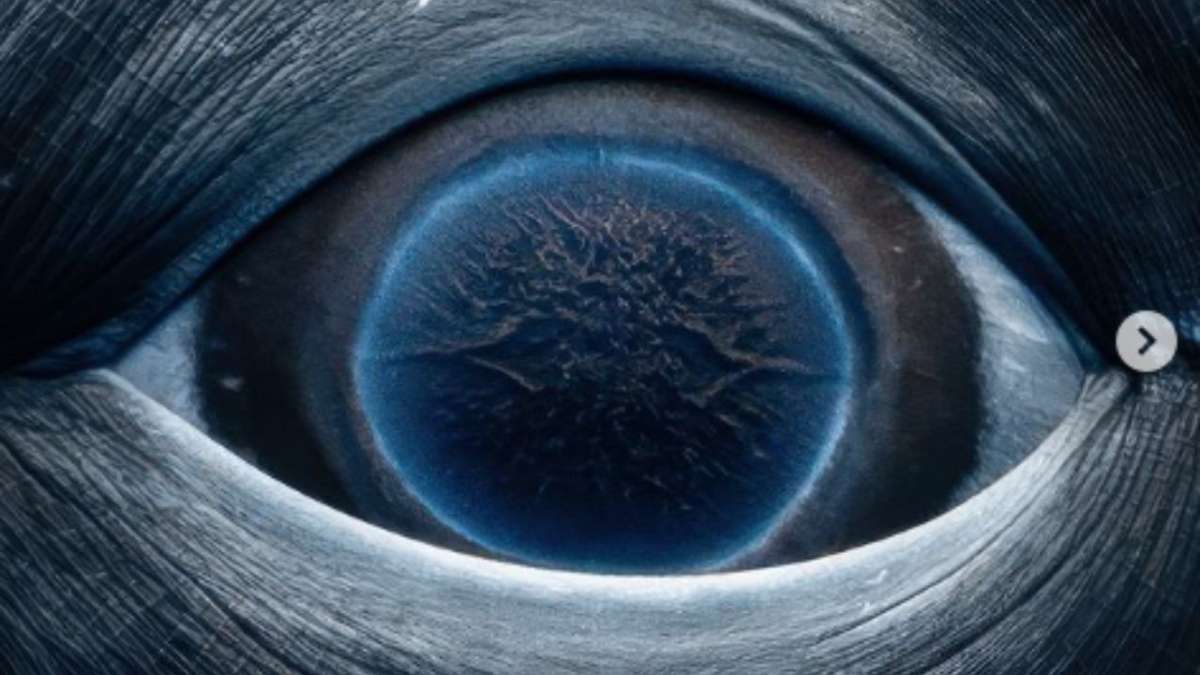
The fact that their eyes are adapted for low-light conditions, for seeing in the murky depths where sunlight barely penetrates, is amazing. They have a higher concentration of rod cells, which are sensitive to dim light, allowing them to navigate and hunt even in near darkness. Imagine being able to see clearly when it’s almost pitch black. That’s a superpower, right?
And the way their eyes are positioned on the sides of their heads gives them a near 360-degree field of vision, crucial for detecting predators from all angles. They’re not going to be caught off guard easily. It’s a constant state of awareness, a vigilance that comes with living in such a vast and sometimes dangerous world.
Ultimately, the eye of a female humpback whale is a window into a world vastly different from our own. It’s a reminder of the incredible diversity of life on Earth and the many ways in which creatures have adapted to thrive in their unique environments.
The next time you see a documentary, or better yet, have the chance to witness these magnificent beings in their natural habitat, take a moment to consider their gaze. Try to imagine what they see, what they feel, and the immense, silent universe that unfolds before their ancient, knowing eyes. It’s an experience that can change your perspective, quite literally, and leave you with a profound sense of wonder and respect for these gentle giants of the deep.
So, yeah. That’s the eye of a female humpback whale. Big, mysterious, and capable of seeing a world we can only begin to imagine. And honestly? I wouldn't trade that fleeting glimpse into her world for anything. It was a moment that, much like the whale herself, will forever be etched in my memory. Pretty cool, right?