
The Persistence Of Memory 1931 Salvador Dalí
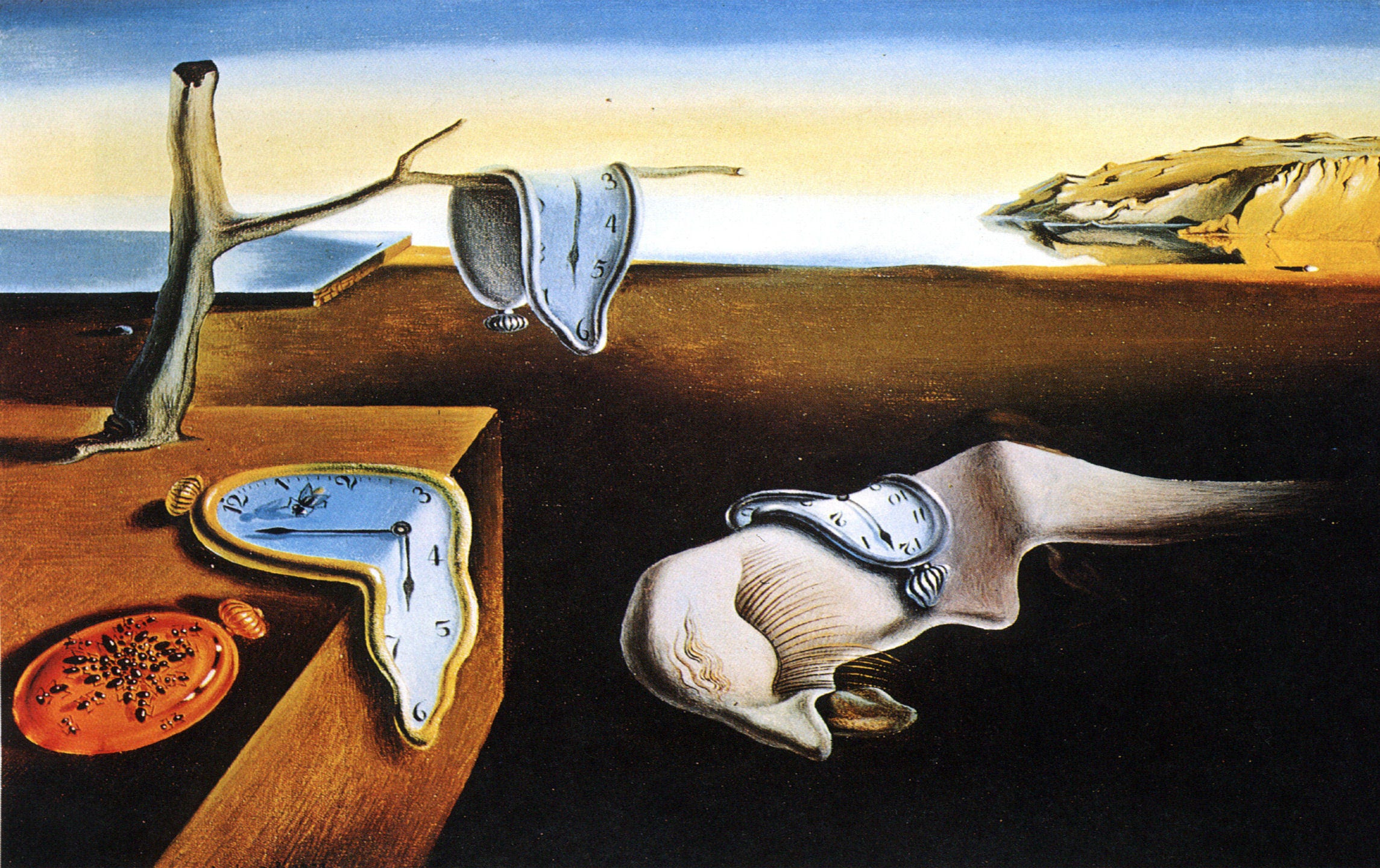
Ever looked at a clock and thought, "Man, time just melts away sometimes?" Well, get ready for a mind-bender that basically bottled that feeling and put it on a canvas. We're talking about a painting that's as famous for its melting clocks as it is for making you scratch your head in the most delightful way: The Persistence of Memory by the one and only Salvador Dalí.
Picture this: it’s 1931. You’re probably humming a tune, maybe worrying about the price of bread, or trying to figure out how to make that newfangled radio work. Meanwhile, in Spain, a rather eccentric artist named Salvador Dalí is having… well, let’s just say a very interesting afternoon. He was apparently having a bit of a nap, a cheesy kind of nap, after a dinner featuring some very melty camembert cheese. And somehow, that cheesy dream, combined with his incredibly wild imagination, sparked the idea for this now-iconic artwork.
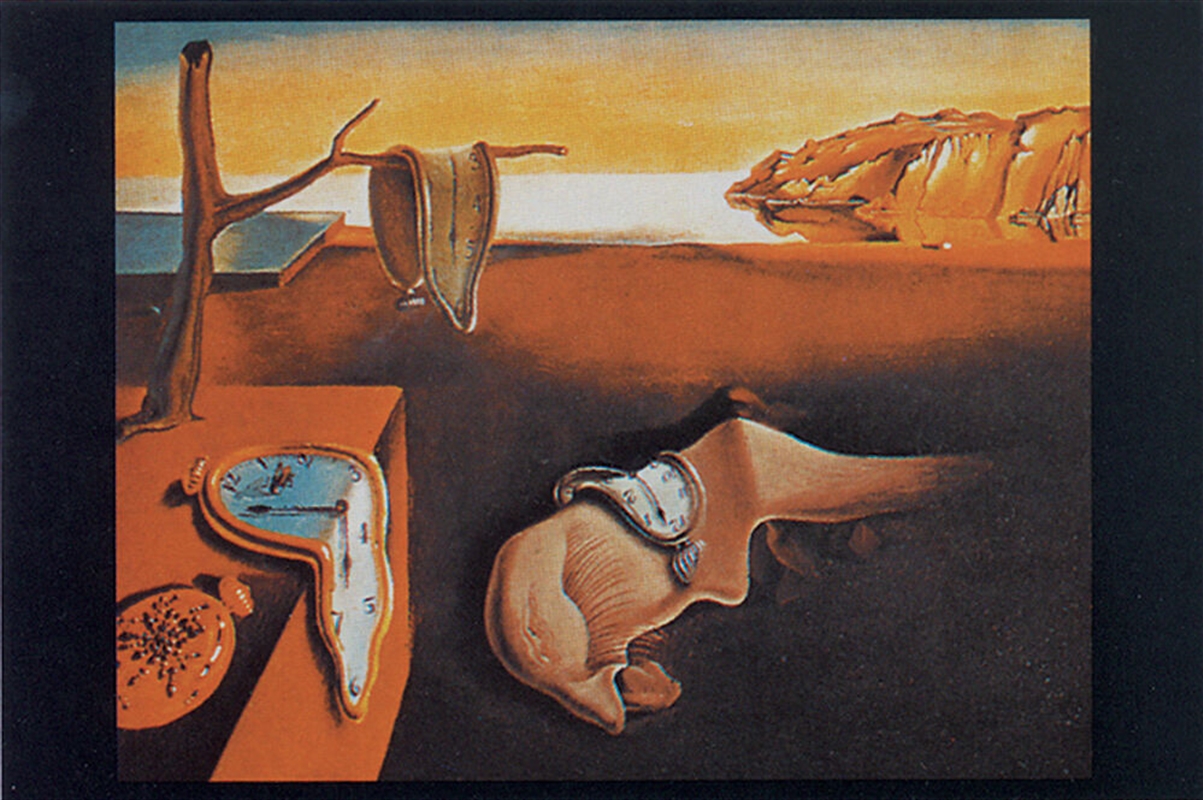
When you first see The Persistence of Memory, it’s like your brain does a little wobble. There they are, those famous clocks, looking like they’ve just given up on being rigid and decided to go with the flow. They’re draped over branches, slumping off the edge of a table, and even seem to be melting onto some sort of strange, fleshy-looking blob in the middle. It’s less "tick-tock" and more "sliiiiide."
You might be thinking, "What’s the big deal about some droopy clocks?" Ah, but that's where the magic of Dalí comes in! He wasn't just painting clocks; he was painting the feeling of time. You know how sometimes a day can feel like it's dragging on forever, and then suddenly a whole week has vanished like a puff of smoke? That's what these melting clocks are all about. They're a cheeky wink at how our perception of time is, well, pretty darn flexible. It's not a rigid, mathematical thing; it's something we experience, something that stretches and squishes depending on our mood, our memories, and maybe even how much camembert we've had!
And that strange, soft thing in the middle? Some people reckon it's a self-portrait of Dalí himself, snoozing away, letting his subconscious run wild. Others see it as a more universal symbol of the softness of the mind or the fluidity of dreams. Whatever it is, it adds to the wonderfully bizarre landscape of the painting. It's a bit like a desert scene, but instead of sand dunes, you've got these weird, rocky formations and a solitary tree that looks like it's seen better days. It feels vast and a little lonely, but also incredibly intriguing. You want to step right into it, even if you're not entirely sure what you'll find.
One of the really fun things about Dalí is his fearless embrace of the strange. He wasn't afraid to show us the world as he saw it, or rather, as he dreamed it. He’d take ordinary things, like clocks, and twist them into something extraordinary. It's like he’s saying, "Hey, the world isn't always neat and tidy, and that's perfectly okay! In fact, it can be way more interesting this way."
And the name itself, The Persistence of Memory? It’s just brilliant. It suggests that even though time might feel like it’s melting and slipping away, our memories are the things that stick. They persist. That’s a rather heartwarming thought, isn’t it? Even as everything else seems to change and flow, our memories, those precious moments and feelings, remain. They’re the anchors that keep us grounded, even when the clocks are doing their funky dance.

Think about your own favorite memories. Do they feel rigid and perfectly formed, or do they have a certain softness, a warmth that makes them unique? That’s the essence of what Dalí captured.
It’s easy to see why this painting has captivated people for so long. It's not just a pretty picture; it’s an invitation to explore the depths of our own minds, to question our perceptions, and to appreciate the whimsical, the surreal, and the wonderfully, persistently weird. So, next time you’re feeling like time is slipping through your fingers, or perhaps when you’re enjoying a particularly delightful, cheesy snack, spare a thought for Salvador Dalí and his melting clocks. They’re a reminder that sometimes, the most profound truths are found in the most unexpected, and deliciously melty, places.