
Tracheostomy Tube Vs Laryngectomy Tube

So, my neighbour, Mrs. Gable, bless her cotton socks, she’s got this thing called a "neck stoma." Now, I’m not one to gossip, but the way she’d explain it to anyone who’d listen (and even some who tried not to) was always a bit… hazy. She’d talk about breathing differently, about needing a special little gadget. For ages, I pictured it as some sort of fancy air freshener for her throat. You know, like one of those little reed diffuser things, but for humans. Oh, the things my brain comes up with when it’s left to its own devices!
Then, one day, a visiting nurse, a lovely woman named Sarah, was helping her out, and I happened to be popping by with some of Mrs. Gable’s favourite ginger snaps. Sarah, with the patience of a saint and a smile that could melt glaciers, was explaining how Mrs. Gable was using a tracheostomy tube. And my little brain, which had been busy imagining miniature pine-scented diffusers, suddenly did a massive U-turn. A tracheostomy? Not a throat air freshener? My world, as I knew it, had been slightly… misinterpreted.
This whole Mrs. Gable episode got me thinking. It’s funny how we hear terms, often related to medical stuff, and we have a vague idea of what they mean, but the details? They can be as fuzzy as a well-loved teddy bear’s ear. And when it comes to things that affect how someone breathes and speaks, well, that’s a pretty big deal, right? So, I decided to do a bit of digging, fuelled by my misplaced ginger snap theory and a genuine curiosity. What's the real scoop on these tracheostomy tubes and their sometimes-confused cousins, the laryngectomy tubes?
Diving Down the Rabbit Hole: Tracheostomy Tube vs. Laryngectomy Tube
Let’s be upfront here. Both of these involve a little opening in the neck, a stoma, and a tube that goes into it. That’s where the superficial similarity ends. Think of it like looking at two different types of doorways. One might lead to your living room, the other to your shed. Both are doors, sure, but what’s inside and how you use them are worlds apart.
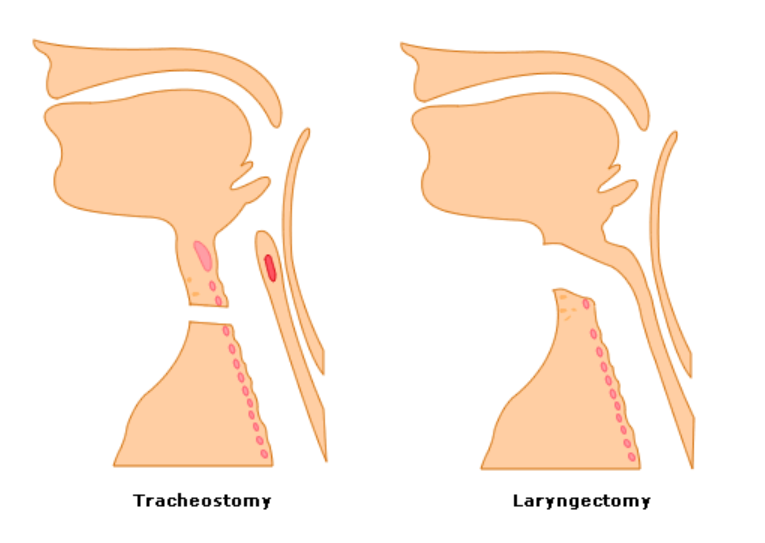
So, what exactly is a tracheostomy tube, and why might someone need one? Imagine your normal breathing pathway. It’s like a well-worn highway: nose/mouth, down the pharynx, through the larynx (voice box), down the trachea (windpipe), and into your lungs. A tracheostomy is essentially a surgical procedure that creates an opening, called a stoma, in the front of your neck, and a tube is inserted into this opening to access your trachea directly.
Why would someone need this detour on their breathing highway? Loads of reasons, actually. Sometimes, it's to bypass an upper airway obstruction. This could be due to swelling from an injury, an infection that’s making your throat close up, or even a tumour. It’s like building a temporary bypass road when the main highway is blocked. You still want to get to your destination (your lungs!), you just need a different route for a while.
Another common reason is for long-term mechanical ventilation. If someone needs a breathing machine, or ventilator, for an extended period, a tracheostomy is often preferred over a tube that goes through the mouth or nose. Why? Because it’s generally more comfortable for the patient, it makes oral hygiene easier (which is surprisingly important when you’re on a machine!), and it allows them to potentially eat and speak more easily with some adjustments. It’s like swapping a temporary tent for a more permanent, comfortable dwelling for that ventilator guest.
Think of the tracheostomy tube itself. It's usually a curved, hollow tube, often made of plastic or silicone. It has an outer cannula (the main tube that stays in place) and sometimes an inner cannula that can be removed and cleaned. There’s usually a cuff around the outer cannula, which can be inflated to create a seal. This seal is important for preventing air from leaking around the tube, especially when someone is on a ventilator. It also helps prevent saliva and other secretions from entering the lungs. Pretty clever engineering, if you ask me!
And the breathing? With a tracheostomy, air comes in and out directly through the stoma in the neck, bypassing the nose, mouth, and larynx. This means that natural warming and humidifying of the air by the nose and mouth is lost. So, people with tracheostomies often need humidification. Also, because the air isn’t passing through the vocal cords in the larynx, speaking can be difficult or impossible without special adaptations. We’ll get to that!
Now, About That Laryngectomy Thing…
Okay, so Mrs. Gable, in my initial (and very wrong) imaginings, was a tracheostomy case. But what about a laryngectomy? This is where things get a bit more permanent, and the name itself gives a big clue. "Laryng-" refers to the larynx, or voice box. "-ectomy" means surgical removal. So, a laryngectomy is the surgical removal of the larynx. Period.
This is a significant surgery, usually performed for cancer of the larynx, but sometimes for severe trauma or other conditions. When the larynx is removed, the normal pathway for breathing is permanently altered. The trachea, the windpipe, is then surgically disconnected from the rest of the upper airway and brought forward to create a stoma on the neck. This stoma is the only way the person can breathe.

So, the big, life-altering difference: in a tracheostomy, the trachea is still connected to the upper airway, and the stoma is an alternative or additional route for breathing. In a laryngectomy, the trachea is diverted to the neck stoma, and the nose and mouth are no longer connected to the lungs for breathing. They become part of the digestive tract. Mind. Blown.
This means that someone who has had a laryngectomy will always breathe through their neck. There’s no going back to breathing through their nose or mouth. The stoma is their permanent airway. And because the larynx, the voice box, has been removed, they can no longer produce voice in the way they used to. No more vocal cords vibrating, no more sound from that source. It’s a profound change, and one that requires significant adaptation and support.
The Tubes: What’s the Difference?
Here’s where the "tube" part comes in, and it’s a bit like comparing apples and… well, different kinds of apples, but with very different jobs. The tracheostomy tube, as we’ve discussed, is inserted into the stoma created during a tracheostomy. Its purpose is to keep that stoma open and allow for air to enter the lungs, often bypassing a blockage or facilitating mechanical ventilation. As mentioned, it can have an inner cannula, and often a cuff.
Now, for the laryngectomy tube. This is also placed in the stoma created during a laryngectomy. However, its primary role is different. Because the person breathes exclusively through their neck stoma, this tube's job is to keep that stoma open and patent. It might be made of different materials and have a different design to suit the permanent nature of the airway. Sometimes, a laryngectomy tube will have a speaking valve attached. Ah, the speaking valve! This is where a bit of that "voice box magic" can be brought back.
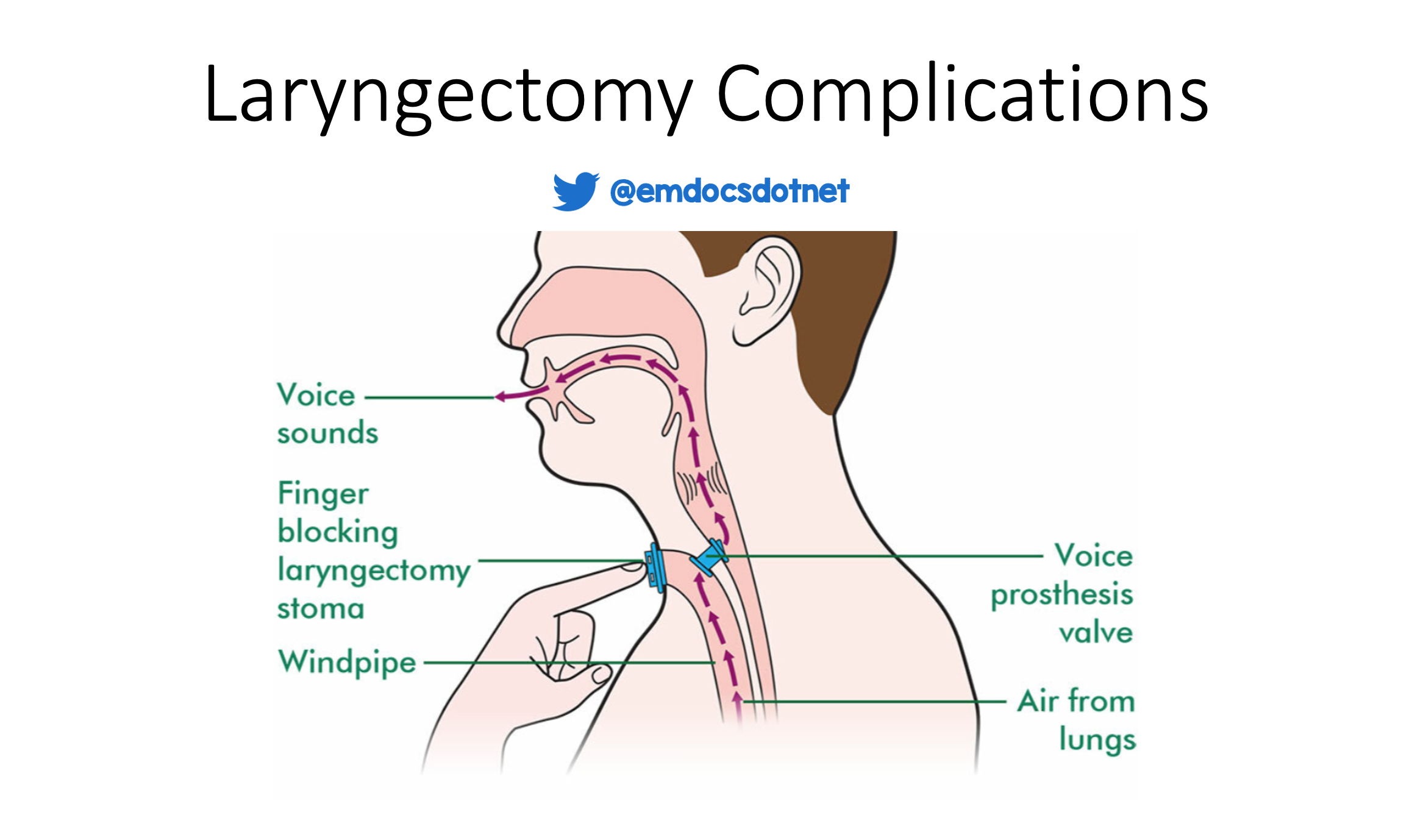
A speaking valve is a small device that fits onto the end of the laryngectomy tube. When the person inhales, the valve opens to allow air in. When they exhale, the valve closes, redirecting the exhaled air up through the upper airway, over the (now absent) vocal cords, and out through the mouth and nose. This allows the person to produce sounds, albeit different from their natural voice. It’s a clever way to regain some form of vocal communication. Imagine using your own breath to speak again, even if it’s a new voice. It’s pretty darn remarkable.
So, while both tubes sit in a stoma in the neck, the tracheostomy tube is often for temporary or managed breathing, while the laryngectomy tube is for a permanent airway after the removal of the voice box. And that, my friends, is a crucial distinction.
Living with a Stoma: Adaptations and Challenges
Life with either a tracheostomy or a laryngectomy involves a significant period of adjustment. For someone with a tracheostomy, depending on why they have it, they might be able to eat and speak with modifications. They might use a speaking valve with their tracheostomy tube if their larynx is intact but bypassed. They might need suctioning to clear secretions. They might still be able to eat and drink normally if their swallowing mechanism is unaffected.
With a laryngectomy, as we’ve touched on, breathing is always through the neck. Eating and drinking also change because the passageways for food and air are now separated. Food goes down the esophagus, which is now accessed from the back of the throat (which is now part of the digestive tract), and air goes into the lungs via the trachea stoma. This separation is designed to prevent food from entering the lungs, a very serious risk without a functioning larynx.
Speaking is a whole other ballgame. With a laryngectomy, the primary methods of speech are:

- Tracheoesophageal Puncture (TEP) voice prosthesis: This is a surgically created opening between the trachea and the esophagus, into which a small valve is inserted. When the stoma is covered, exhaled air is diverted through the prosthesis into the esophagus, causing the tissues in the esophagus to vibrate and produce a voice. This often sounds more natural than other methods.
- Electrolarynx: This is a battery-powered device that creates vibrations when placed against the neck. The person then shapes these vibrations with their mouth and tongue to form words. It sounds a bit robotic, but it’s a very effective communication tool.
- Esophageal speech: This involves learning to swallow air and then releasing it from the esophagus in a controlled way to create vibrations. It takes a lot of practice and isn't achievable for everyone, but it can produce a natural-sounding voice.
It’s easy for us, breathing and speaking without a second thought, to underestimate the impact of these procedures. Imagine relearning how to do something as fundamental as speaking. It takes immense courage and resilience. And let’s not forget the practicalities: keeping the stoma clean, managing secretions, and adapting to new ways of eating. It’s a whole new way of living.
So, to Recap (Because My Brain Likes Summaries)
Let’s bring it back to Mrs. Gable and my initial, slightly goofy, misconception. A tracheostomy is generally a procedure to create an alternative or managed airway, often for breathing support or to bypass an obstruction. The larynx (voice box) is usually intact. A laryngectomy involves the surgical removal of the larynx, meaning the person breathes exclusively through a permanently altered airway in their neck. The tubes are designed for these specific purposes.
The key takeaways are:
- Tracheostomy: Larynx intact, stoma as an alternative/additional airway. Breathing and speaking can often be restored or managed with adaptations.
- Laryngectomy: Larynx removed, stoma is the permanent airway. Breathing is exclusively through the neck. Speaking requires alternative methods.
It’s fascinating, isn’t it? How science and surgery can intervene to help people breathe and communicate when their natural pathways are compromised. It’s a testament to human ingenuity and the incredible work of medical professionals. And it’s a good reminder that even when things sound similar, like tubes in a neck stoma, the underlying reasons and the long-term implications can be profoundly different.
So, the next time you hear about a "stoma" or a "neck tube," you'll have a slightly better idea of the incredible stories and adaptations that lie behind those terms. And perhaps, like me, you’ll appreciate the complexity and wonder of how our bodies work, and how medicine can help us navigate those complexities. Now, if you’ll excuse me, I think I’ve earned another ginger snap for all this brainpower expenditure!